

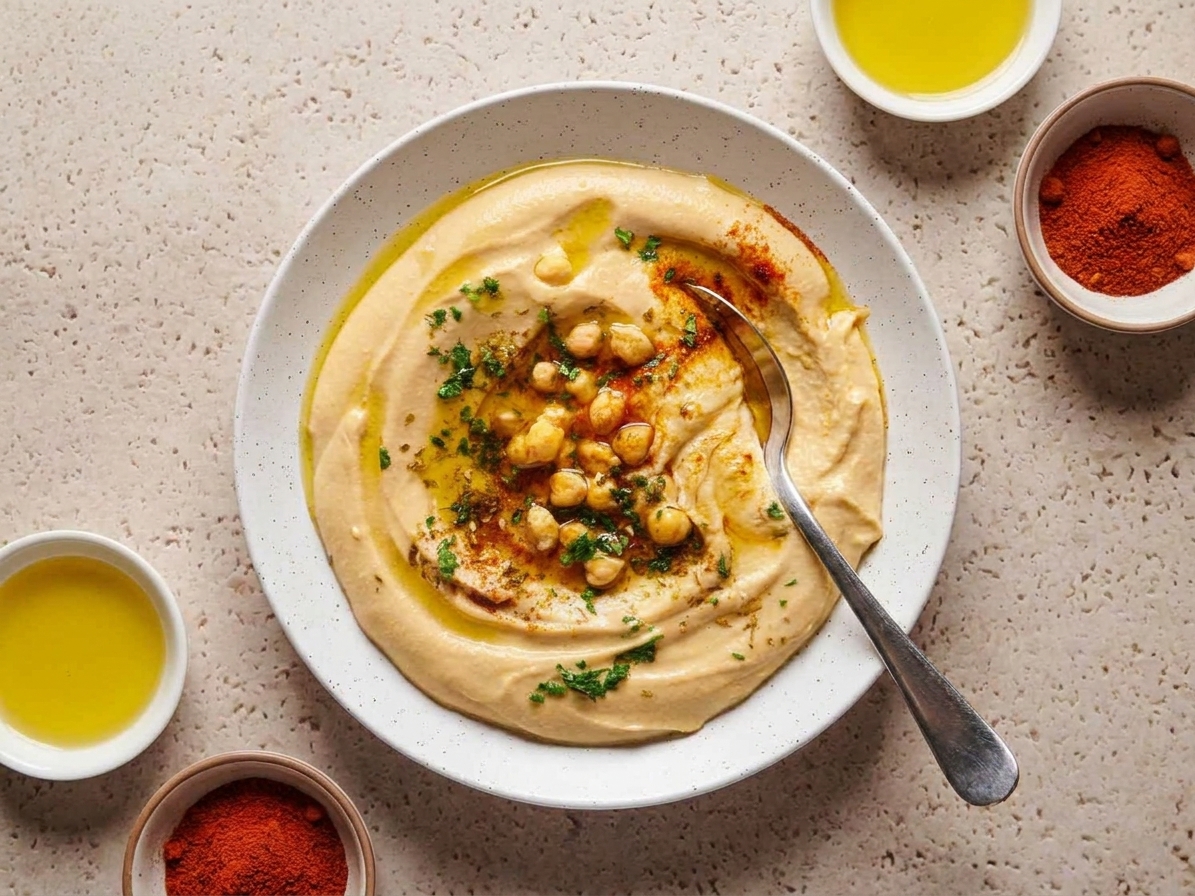
If you have ever wondered why restaurant hummus feels so impossibly creamy, it is usually not because they have a single secret ingredient that you do not. More often, it is a few small technique choices that add up to a big payoff. This homemade version is the one I make when I want that silky, almost whipped texture with the kind of flavor that makes you keep “testing” one more bite.
We are sticking to everyday supermarket staples like canned chickpeas, tahini, lemon, garlic, olive oil, and a pinch of cumin (optional, but I love what it adds). The magic is in how you treat them: gently warming the chickpeas, blending longer than you think, and thinning with very cold water as needed. Ice water is one of my favorite tricks for a lighter, glossier finish, even if it is not the only road to creamy.

Keep it classic for pita nights, or use it as a sauce for grain bowls and roasted veggies. I also love it slathered on a sandwich in place of mayo. And yes, there is no such thing as too much garlic. I will stand by that forever.
The idea
Why This Recipe Works
- Warm chickpeas blend smoother. Heating canned chickpeas for just a few minutes softens them and helps the tahini blend into a silkier puree.
- Tahini gets blended first. Starting with tahini, lemon, garlic, and ice water creates a light, creamy base before the chickpeas even enter the party.
- Ice water helps it turn fluffy. A few tablespoons of very cold water can help the mixture lighten and loosen without tasting watery.
- Baking soda optional, but powerful. A pinch while warming chickpeas can help soften skins and create an extra smooth finish.
- Balanced seasoning. Lemon for brightness, cumin for warmth, and enough salt to make the chickpeas taste like themselves, only better.
Shopping
Ingredient Notes
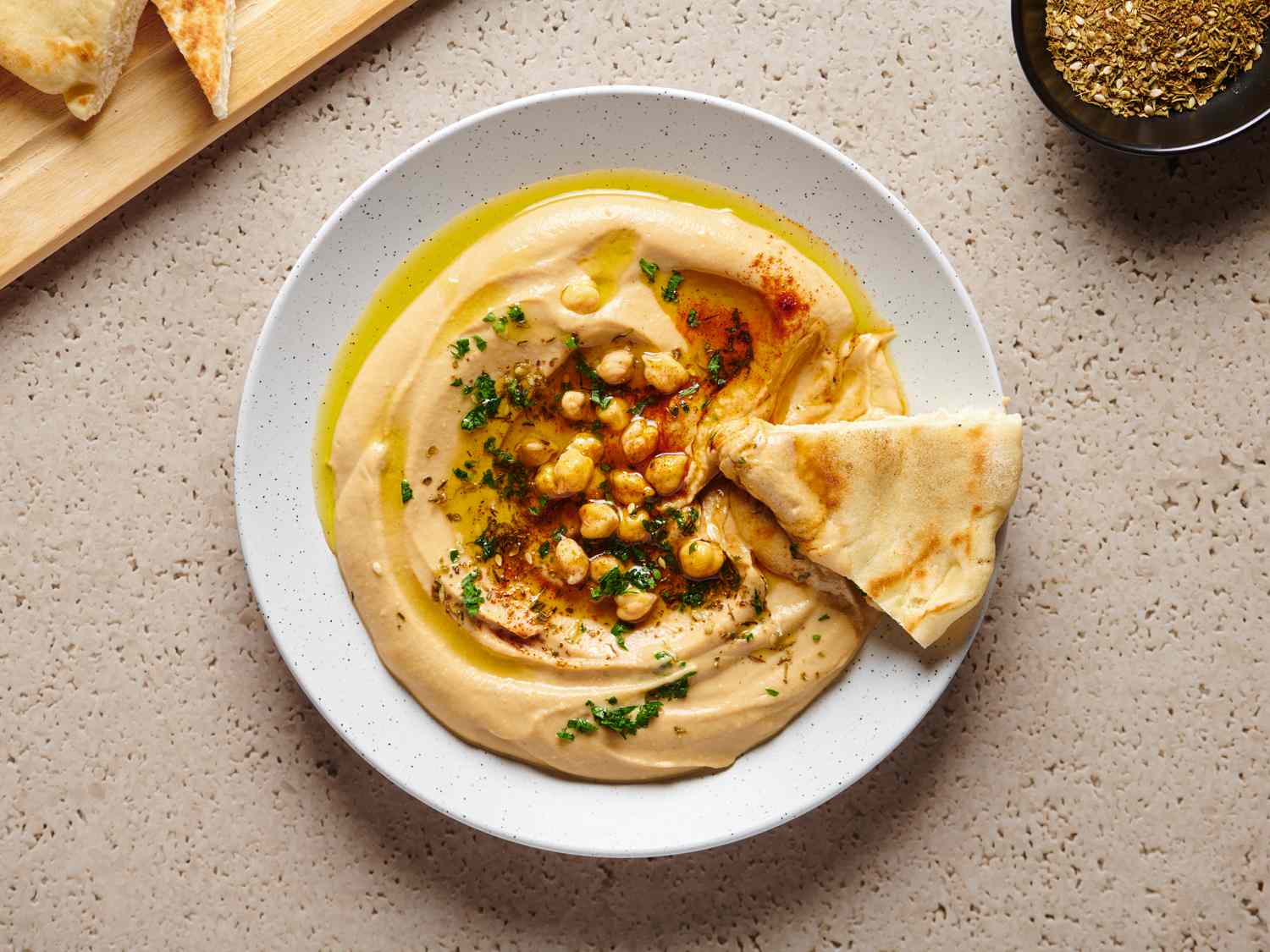
Chickpeas
Canned chickpeas are perfect here. Drain and rinse well to remove the canning liquid taste. If you want the absolute smoothest hummus, take a few minutes to slip off loose skins after warming, but do not stress if you do not. The recipe still turns out creamy.
Tahini
Use a tahini you enjoy on its own, because it is the backbone of the flavor. If your tahini is very thick or separated, stir it thoroughly before measuring. A slightly runny tahini (after stirring) is ideal for smooth blending.
Lemon juice
Fresh lemon juice makes hummus taste bright and alive. Bottled lemon juice can work in a pinch, but start with a bit less and adjust to taste.
Garlic
Raw garlic gives that classic punch. If you are sensitive to harsh garlic bite, you can mellow it by letting minced garlic sit in the lemon juice for 5 minutes before blending. Same flavor, softer edges.
Olive oil
Use a good extra virgin olive oil for serving. For blending, any decent olive oil works, but the finishing drizzle is where you really taste it.
Get set up
Equipment You Will Need
- Food processor for classic hummus texture. A high-speed blender also works, but you may need to stop and scrape more often.
- Small saucepan to warm the chickpeas quickly.
- Microplane or garlic press for very fine garlic, which blends more smoothly.
- Citrus juicer (optional) to get the most juice from your lemons.
- Rubber spatula for scraping down the bowl and tasting as you go.
Technique
Tips for Getting It Right
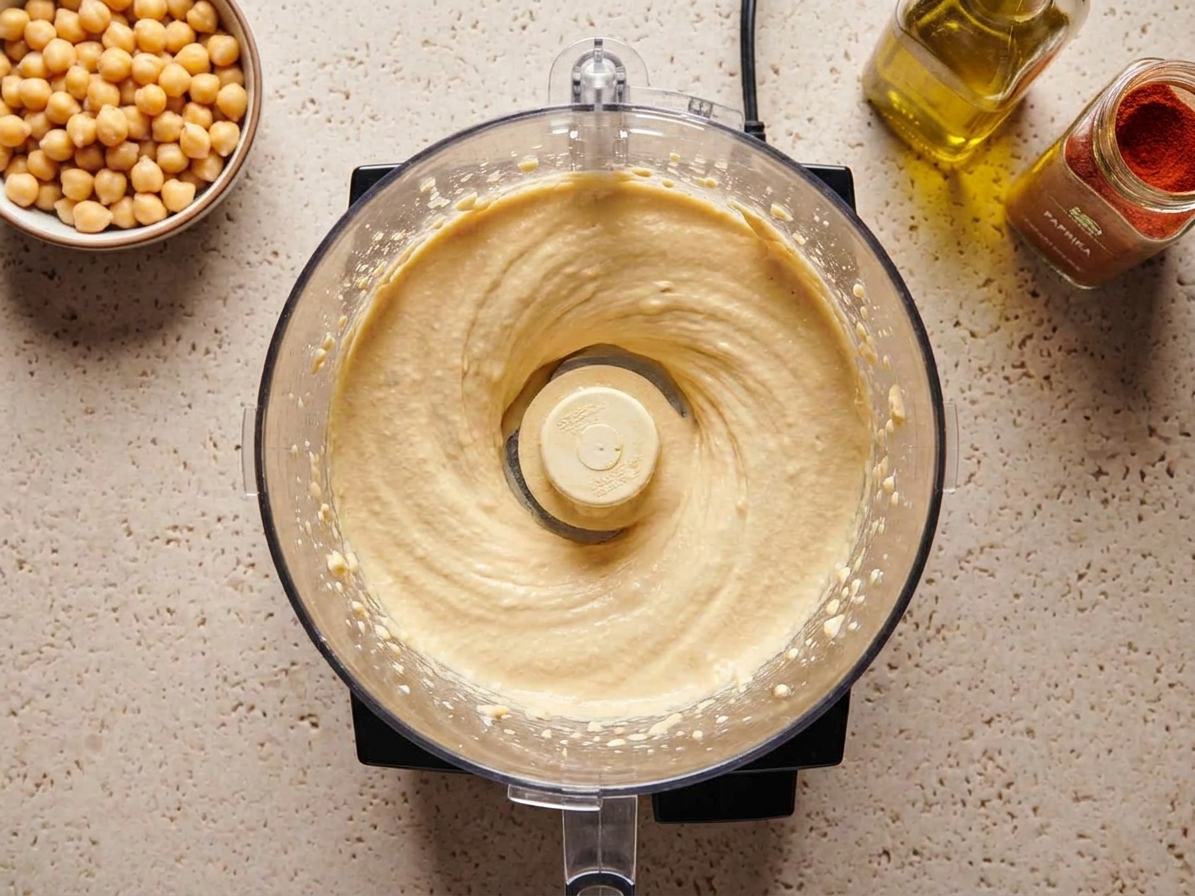
- Blend tahini and lemon first. Give it a full 30 to 60 seconds before adding chickpeas. It will look thick at first, then lighten as you add cold water.
- Add water gradually. Hummus thickens as it sits. I like it a touch looser in the processor so it chills to the perfect scoopable consistency.
- Let the processor run. Truly smooth hummus needs time. Think 2 to 4 minutes total blending time, with a few scrapes in between.
- Season in layers. Salt early, then taste after blending. Chickpeas can eat salt, so a final pinch at the end often makes everything pop.
- For the fluffiest texture, finish with a quick whip. Once it tastes right, let it run another 20 seconds to aerate.
If you want that restaurant swoop on top, use the back of a spoon and make a spiral, then drizzle olive oil into the groove. It is simple and looks so satisfying.
Flexibility
Substitutes That Work
- No tahini? You will lose some authentic flavor, but you can substitute smooth, unsweetened sunflower seed butter or cashew butter. Start with a little less, then adjust. The hummus will be slightly sweeter and less sesame-forward.
- No fresh lemon? Use bottled lemon juice, or swap in a splash of white wine vinegar plus a little extra water. Add slowly and taste as you go.
- Garlic alternatives: Use 1/4 to 1/2 teaspoon garlic powder for a gentler flavor, or roast the garlic for a sweet, mellow hummus.
- Lower oil: You can reduce the olive oil in the blend and use a bit more ice water instead. Finish with a small drizzle for flavor.
- Chickpeas from dry: Cook until very tender, almost creamy. Homemade cooked chickpeas make incredible hummus, especially if you cook them a little past “salad tender.”
Make it yours
Variations to Try
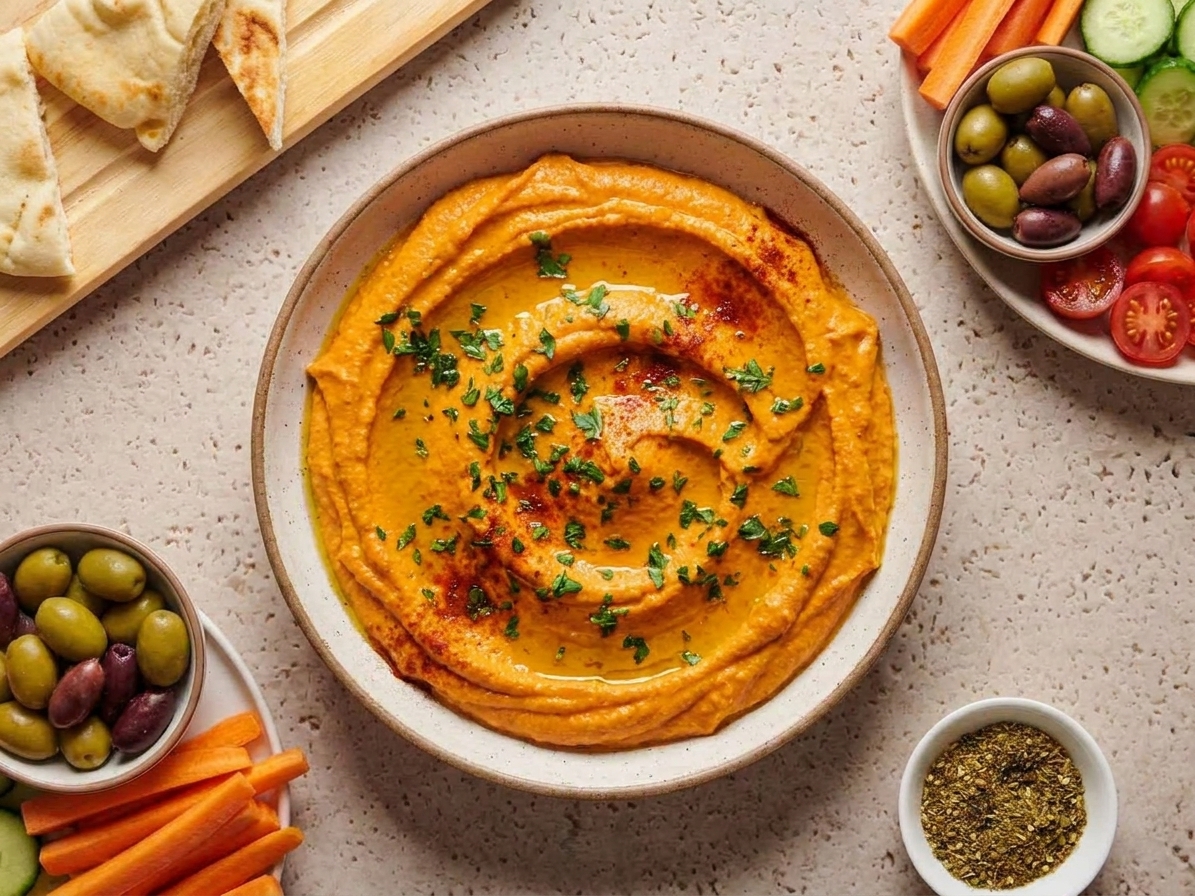
- Roasted red pepper: Blend in 1/2 cup drained roasted red peppers and a pinch of smoked paprika.
- Spicy harissa: Add 1 to 2 teaspoons harissa paste (plus extra lemon to balance).
- Herby green hummus: Add a big handful of parsley or cilantro and a small handful of spinach for color.
- Lemon dill: Add 1 to 2 tablespoons fresh dill and extra lemon zest. Gorgeous with salmon or cucumbers.
- Extra garlicky: Add 1 more clove, or finish with a tiny grate of raw garlic on top for serious garlic lovers.
On the table
What to Serve It With
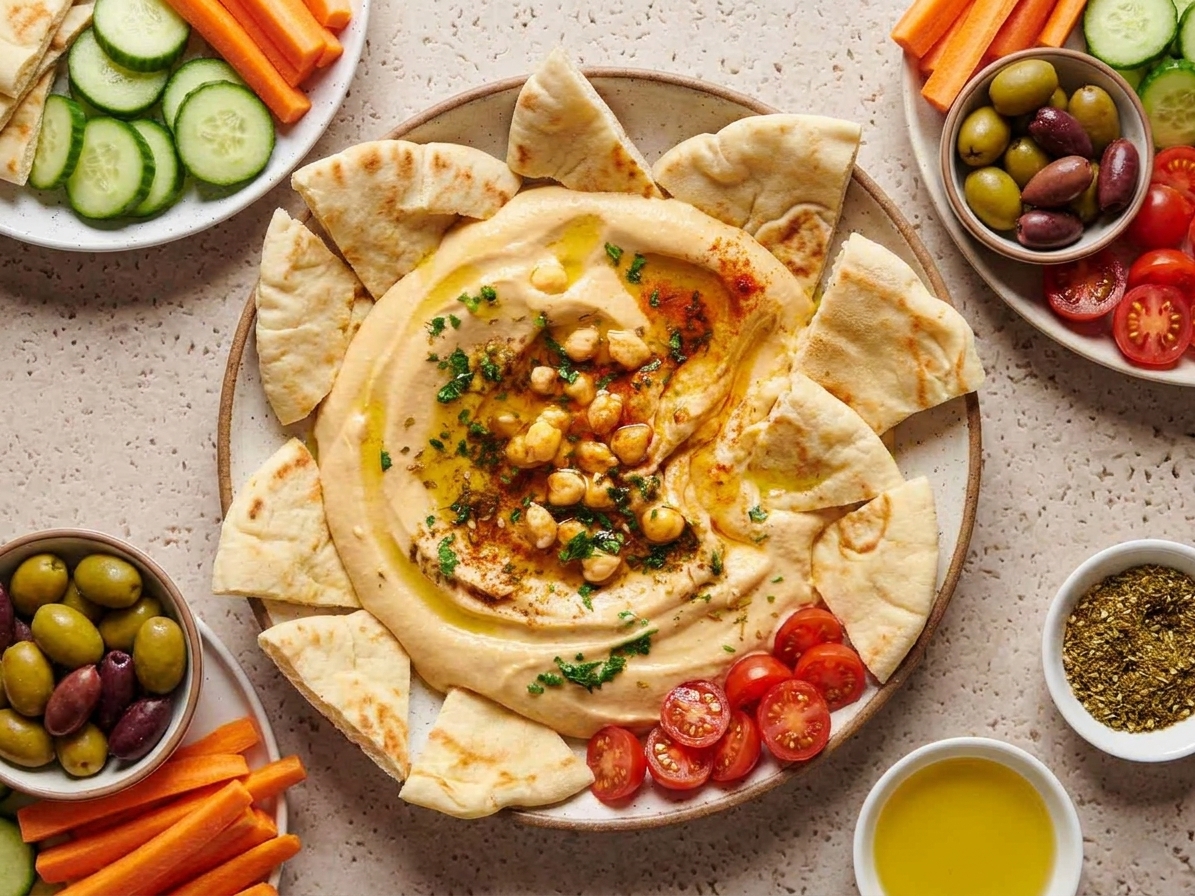
- Classic dip night: Warm pita, pita chips, cucumbers, carrots, sweet peppers, and cherry tomatoes.
- Mediterranean mezze: Pair with olives, feta, sliced radishes, and a simple tomato cucumber salad.
- Sandwich spread: Use it on wraps, veggie sandwiches, or grilled chicken pitas instead of mayo.
- Protein bowl sauce: Spoon over quinoa or rice with roasted veggies and a soft boiled egg.
- Hummus toast: Thick spread on toasted sourdough, topped with cucumbers and flaky salt.
Later
Storage, Freezing and Reheating
- Refrigerate: Store in an airtight container for up to 5 days. For best texture, press plastic wrap directly onto the surface to prevent drying, then add the lid.
- Expect thickening: Hummus tightens in the fridge. Stir in 1 to 2 teaspoons cold water (or lemon juice) to loosen.
- Freezing: You can freeze hummus for up to 3 months. Thaw overnight in the fridge, then stir vigorously. The texture can be slightly less fluffy, but still tasty.
- Serving after chilling: Let it sit at room temperature 10 to 15 minutes, then re-swish and drizzle with olive oil to bring it back to life.
Watch out
Common Mistakes to Avoid
- Not blending long enough. If your hummus is grainy, keep going. Time in the processor is a main ingredient here.
- Adding chickpeas too fast. If you dump everything in at once, the tahini does not get the chance to emulsify smoothly. Build the base first.
- Using warm water. Ice cold water helps create a lighter, creamier texture. Warm water can make hummus feel heavy.
- Under-salting. Chickpeas are mild. Salt is what turns “bean paste” into “I cannot stop eating this.”
- Skipping the scrape-down. Thick tahini loves to cling to the sides. Scrape a few times so everything blends evenly.
Questions
Frequently Asked Questions
Do I have to peel chickpeas for smooth hummus?
No. Peeling makes hummus extra silky, but it is optional. Warming the chickpeas and blending longer gets you very close without the extra step. If you do peel, focus on removing the loose skins that practically fall off.
Why is my hummus bitter?
The usual culprit is tahini (some brands are more bitter than others), or too much garlic. Balance bitterness with more lemon juice, a pinch more salt, and a drizzle of good olive oil. If your tahini tastes very bitter straight from the jar, consider trying a different brand next time.
How do I make hummus super creamy without adding tons of oil?
Use ice water while blending and warm chickpeas. You can keep the olive oil modest and rely on water plus tahini emulsification for creaminess. Finish with a small drizzle for flavor.
Can I make hummus without a food processor?
You can use a high-speed blender, or even an immersion blender in a deep container. You may need more stopping and scraping, and a splash more water to keep it moving.
How do I fix hummus that is too thick?
Blend in ice water 1 tablespoon at a time until it loosens. Lemon juice also helps. Give it 15 seconds of blending after each addition so it fully smooths out.
How do I fix hummus that is too thin?
Blend in a few more chickpeas if you have them, or let it chill. Hummus thickens as it rests in the fridge.
The recipe
Creamy Homemade Hummus
Silky, fluffy homemade hummus with bright lemon, plenty of garlic, and a smooth tahini base. A quick warm-up for canned chickpeas and a splash of ice water are the simple tricks that make it taste restaurant-level.
Ingredients
- 2 (15-ounce) cans chickpeas, drained and rinsed
- 1/2 teaspoon baking soda (optional, for extra soft chickpeas)
- 1/3 cup tahini, well stirred
- 1/4 cup fresh lemon juice (about 1 to 2 lemons), plus more to taste
- 2 to 3 garlic cloves, finely grated or pressed
- 1 teaspoon kosher salt, plus more to taste
- 1/2 teaspoon ground cumin
- 3 to 6 tablespoons ice cold water, as needed for texture
- 2 tablespoons olive oil (plus more for serving)
- Paprika or smoked paprika, for serving (optional)
- Chopped parsley, for serving (optional)
Instructions
- Warm the chickpeas. Add the drained, rinsed chickpeas to a small saucepan and cover with water by about 1 inch. Stir in the baking soda (if using). Bring to a simmer over medium heat and cook 3 to 5 minutes. Drain well and let them steam dry in the colander for 1 minute.
- Start the creamy base. In a food processor, add tahini, lemon juice, garlic, salt, and cumin. Process for 30 seconds, scrape down, then process another 30 seconds.
- Loosen with ice water. With the processor running, drizzle in 3 tablespoons ice water. The mixture should lighten and look creamy. Scrape down.
- Add chickpeas and blend until smooth. Add the warm chickpeas and process 2 to 4 minutes, stopping to scrape down as needed, until very smooth.
- Finish the texture and flavor. With the processor running, drizzle in the olive oil. If you want it softer and fluffier, blend in additional ice water 1 tablespoon at a time until it is swoopy and creamy. Taste and adjust with more salt and lemon if needed.
- Serve. Spoon into a bowl and use the back of a spoon to make a swirl. Drizzle with olive oil and sprinkle with paprika and parsley if you like.
Recipe notes
Tahini thickness varies: If your tahini is very thick, you may need the full 6 tablespoons ice water (or even a splash more) to reach a creamy, whipped texture.
Garlic control: For a mellower garlic flavor, let the garlic sit in the lemon juice for 5 minutes before blending, or use 2 cloves instead of 3.
Make-ahead: Hummus tastes even better after a few hours in the fridge. Stir well before serving and add a small splash of water if it has tightened up.
Nutrition (per serving, approximate)
- Calories: 170
- Protein: 5 g
- Carbohydrates: 14 g
- Fiber: 4 g
- Sugars: 1 g
- Fat: 11 g
- Saturated Fat: 2 g
- Sodium: 360 mg