

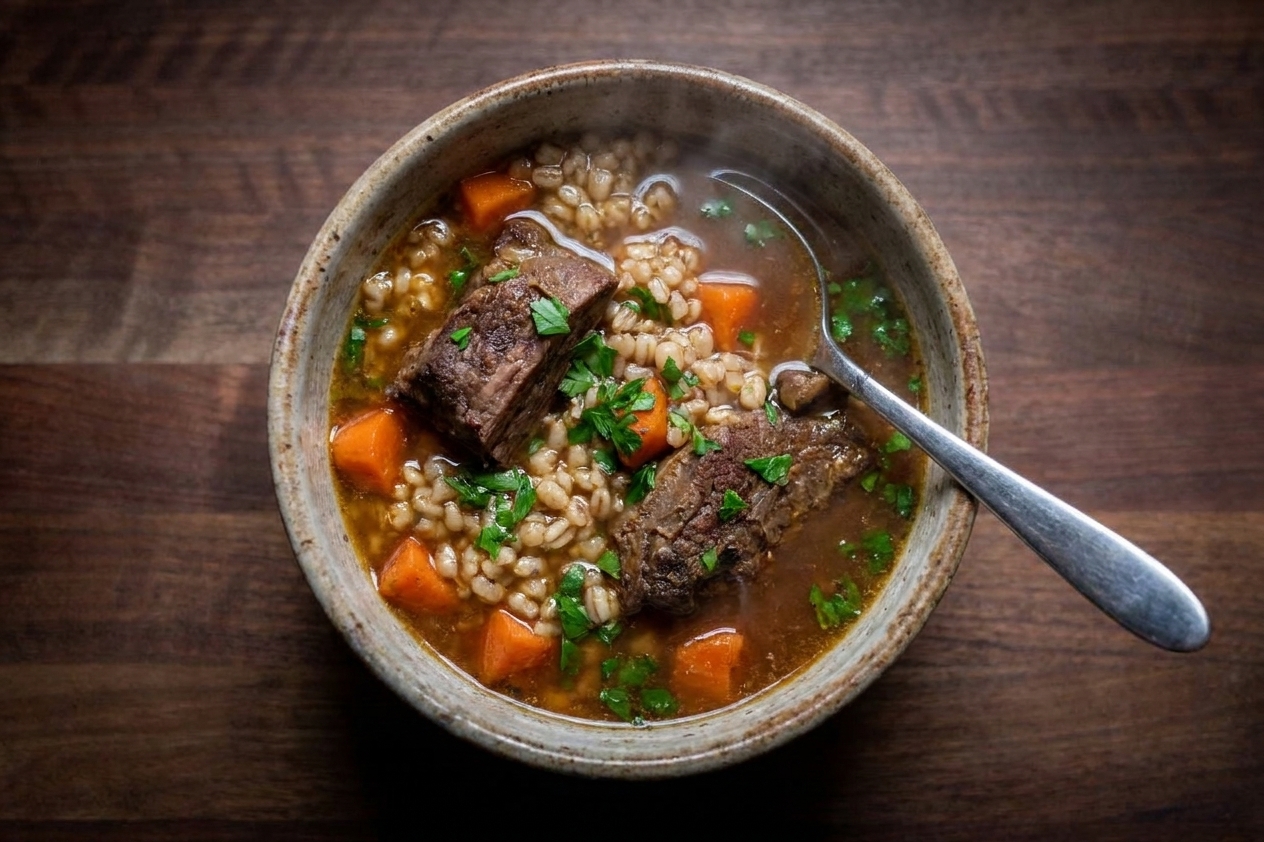
There are two kinds of “hearty” beef soup in this world: the kind that still feels like soup, and the kind that accidentally turns into a pot of edible cement once the starches do their thing. This beef and barley soup is firmly in the first category. You get tender beef chunks, a savory broth that tastes like it has been simmering all day, and pearled barley that is plump and satisfying without taking over the whole pot.
I grew up in the Pacific Northwest where rainy-day soups are practically a love language, and beef and barley was always the one that felt both comforting and practical. It is the soup I make when I want something truly filling but I also want to be able to ladle it, not slice it.

We keep the vegetables classic and supportive, not bulky. No potatoes here to blur the line into vegetable beef soup. The flavor gets its backbone from browned beef, a little tomato paste, and a slow, gentle simmer that turns everything rich and cozy.
And to keep it brothy, not gluey, the barley gets a quick rinse and goes in once the beef is nearly tender. That timing matters more than anything. It keeps the grains pleasantly chewy and distinct instead of swelling until they claim the whole pot. This is the kind of soup that makes your kitchen smell like you have your life together, even if you are cooking in sweatpants.
The idea
Why This Recipe Works
- Browned beef builds the backbone. Searing the beef creates deep flavor in the pot, so the broth tastes rich without needing a ton of extra ingredients.
- Pearled barley thickens just enough. It gives body to the broth while still keeping everything spoonable, especially when you control the timing.
- Barley goes in after the beef is tender. This keeps the grains from overcooking and turning the soup starchy and gluey.
- A gentle simmer keeps beef juicy. Boiling makes beef tough. Low and slow is the cozy way.
- A bright finish wakes it up. A splash of vinegar or lemon at the end makes the flavors taste more “beefy” and less flat.
Shopping
Ingredient Notes
Beef chuck roast: My go-to for soup. It has enough marbling to become tender and flavorful with a simmer. Cut into 3/4 to 1-inch chunks for true “beef bites” in every bowl.
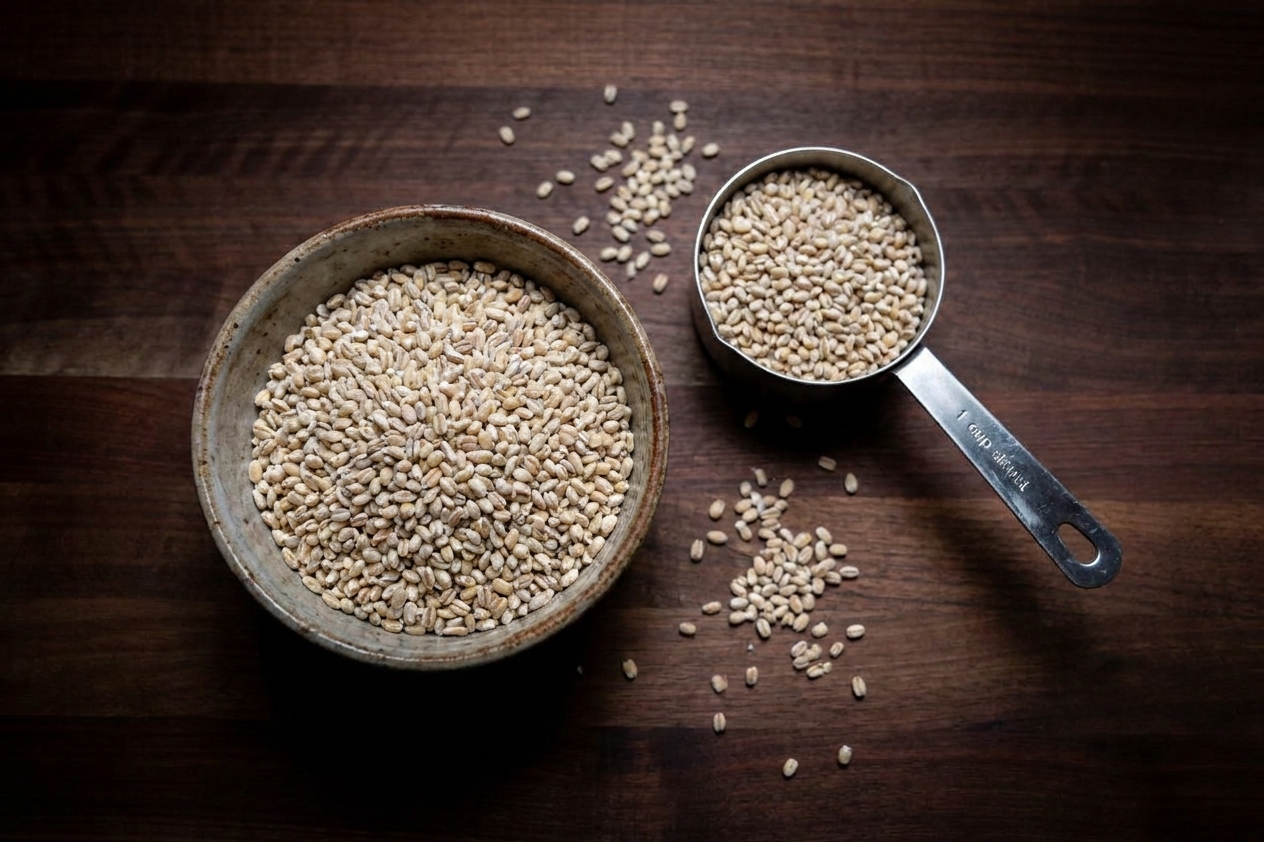
Pearled barley: Use pearled, not quick-cooking, for the best texture. Rinse it in a fine-mesh strainer to wash away surface starch that can make the broth cloudy and overly thick.
Mirepoix (onion, carrot, celery): This is your flavor base. Dice them fairly small so they melt into the broth instead of taking over.
Garlic: I am firmly in the “there is no such thing as too much garlic” camp. Four cloves is a starting point, not a limit.
Tomato paste: Not enough to make it tomato soup. Just a spoonful to deepen the broth and boost savoriness.
Beef broth or stock: Use low-sodium if you can, then salt to taste at the end. Barley and beef both drink up saltiness as they cook.
Bay leaf and thyme: Classic, cozy, and subtle. If you have fresh thyme, toss in a few sprigs and pull them out later.
Finishers: Parsley for freshness, and a teaspoon or two of red wine vinegar (or lemon juice) right at the end for balance.
Get set up
Equipment You Will Need
- Large Dutch oven or heavy soup pot (5 to 7 quarts is ideal)
- Fine-mesh strainer (for rinsing barley)
- Wooden spoon (for scraping up browned bits)
- Sharp knife and cutting board
- Ladle
Technique
Tips for Getting It Right
- Do not crowd the pot when browning beef. Brown in two batches if needed. Crowding steams the meat and you lose those flavorful browned bits.
- Scrape the bottom when you add broth. Those browned bits are pure flavor. I like to pour in a small splash first and really work the spoon around before adding the rest.
- Rinse the barley. It is a small step that helps keep the broth from going cloudy and overly starchy.
- Add barley when the beef is close to tender. If the beef needs 75 to 90 minutes to get tender, barley usually wants about 30 to 35 minutes. Time it so both finish together.
- Keep it at a gentle simmer. Think lazy bubbles, not a rolling boil. Your beef will thank you.
- Control thickness with broth. Barley keeps absorbing liquid as it sits. If the soup tightens up, just add a splash of broth or water when reheating.
Flexibility
Substitutes That Work
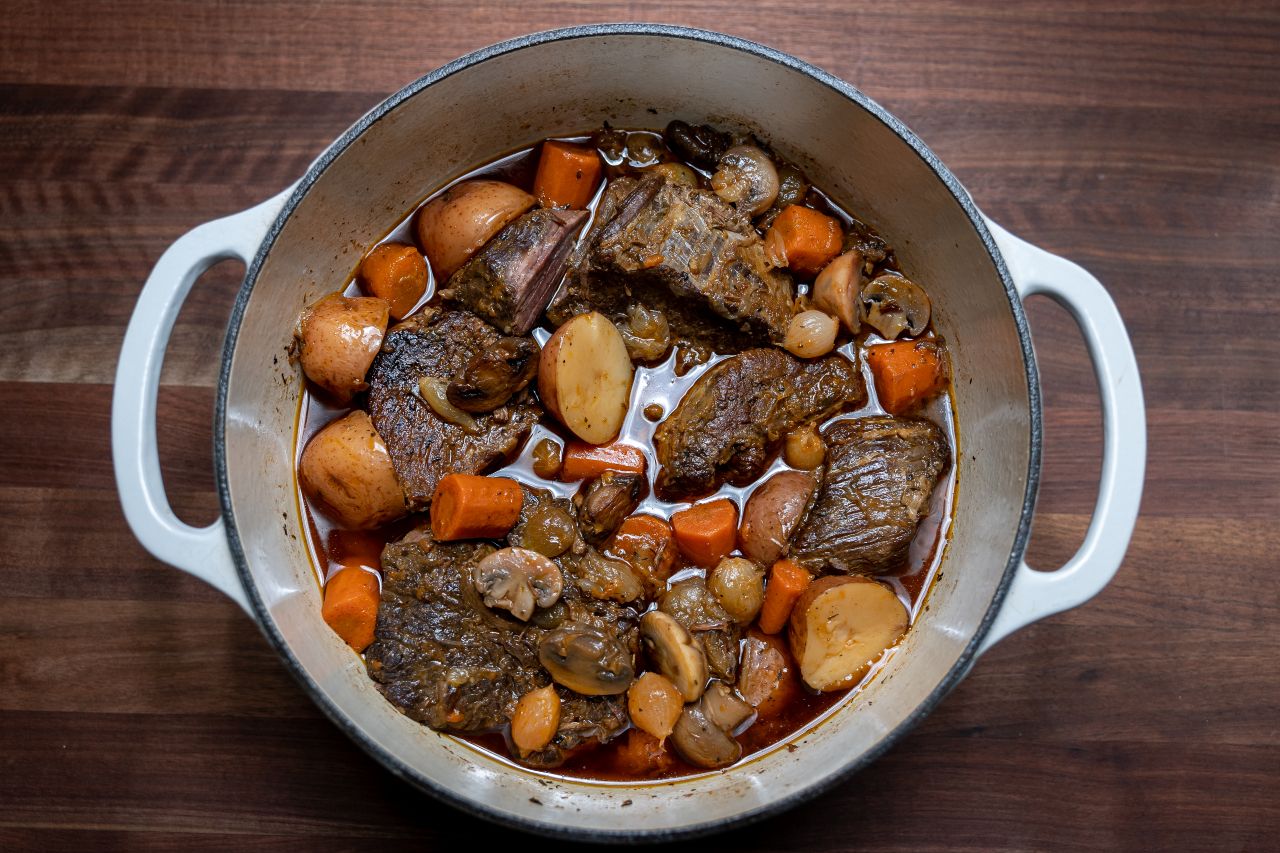
- Beef chuck substitute: Stew meat works in a pinch, but chuck is usually better and more consistent. Brisket can also be lovely, just allow enough simmer time.
- Broth substitute: Chicken broth works if that is what you have, but add a little extra tomato paste and taste for salt to keep the beefy vibe.
- Herb swaps: Rosemary is strong but delicious. Use a small sprig and remove it early if it starts to dominate.
- No wine vinegar? Use lemon juice or a tiny splash of apple cider vinegar. The goal is gentle brightness, not sour soup.
- Gluten-free note: Barley is not gluten-free. For a similar feel, try brown rice, but it will be less creamy and you may need a bit more simmer time.
Make it yours
Variations to Try
- Mushroom beef and barley soup: Add 8 ounces sliced cremini mushrooms when you saute the onions, and cook until they give up their moisture and start to brown.
- Herby finish: Stir in a handful of chopped dill or chives with the parsley for a fresher, brighter bowl.
- Spiced and cozy: Add 1 teaspoon smoked paprika with the tomato paste for gentle smoky warmth.
- Extra garlicky: Add 1 to 2 additional cloves at the very end, grated or pressed, and let them mellow in the hot soup off the heat for 2 minutes.
On the table
What to Serve It With
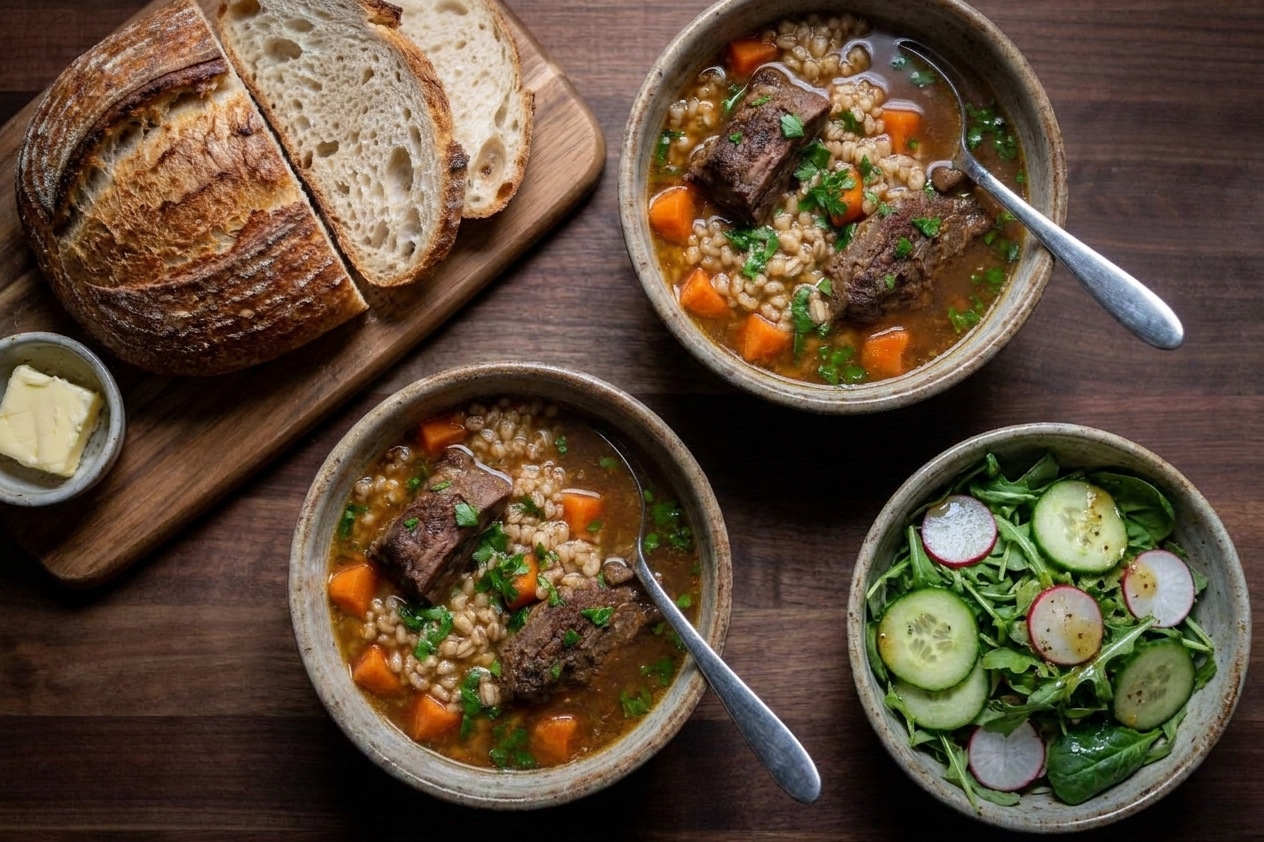
- Crusty bread: Sourdough or a chewy baguette for dunking.
- Simple green salad: Something crisp and tangy helps balance the richness.
- Roasted vegetables: Especially broccoli or Brussels sprouts if you want a more complete dinner.
- Optional toppings: A sprinkle of flaky salt, extra parsley, or freshly cracked black pepper.
Later
Storage, Freezing and Reheating
- Refrigerate: Store in an airtight container for up to 4 days. The barley will continue to absorb broth, so expect it to thicken in the fridge.
- Reheat: Warm gently on the stove over medium-low heat, adding broth or water as needed to loosen back to a soup consistency.
- Freeze: You can freeze it for up to 3 months, but know the barley softens further after thawing. If you are making this specifically for freezing, consider cooking the barley separately and adding it to each reheated portion.
- Thaw: Overnight in the fridge is best. Then reheat on the stovetop and adjust seasoning.
Watch out
Common Mistakes to Avoid
- Adding barley too early: It overcooks, releases more starch, and can push the soup toward paste territory.
- Boiling hard: A rolling boil can make beef tough and can break down vegetables too much.
- Not browning the beef: You will still have soup, but it will taste flatter and less satisfying.
- Forgetting to taste at the end: Barley dulls seasoning as it cooks. Always finish with salt, pepper, and a tiny splash of acid.
- Letting the pot sit uncovered for a long time: Evaporation concentrates starch and thickens the soup faster than you want. Keep it covered during simmering, then adjust at the end.
Questions
Frequently Asked Questions
How do I keep barley from making the soup too thick?
Add the barley only for the last 30 to 35 minutes of cooking, keep the simmer gentle, and do not overdo the amount. If the soup still thickens as it sits, just add more broth when reheating. That is normal and easy to fix.
Do I need to cook the barley separately?
Not for a same-day pot of soup. Cooking it in the broth is part of the flavor. If you are meal-prepping for several days or freezing, cooking barley separately can help keep it from swelling too much.
Is pearled barley the same as hulled barley?
No. Hulled barley is more whole and takes much longer to cook. This recipe is written for pearled barley, which cooks in about 30 to 35 minutes once simmering.
What cut of beef is best for beef and barley soup?
Chuck roast is the sweet spot: flavorful, affordable, and it becomes tender with a simmer. Avoid very lean cuts because they can dry out.
Can I make this in a slow cooker?
Yes. Brown the beef first if you can, then cook with the broth and aromatics on low until the beef is tender. Add rinsed pearled barley for the last hour or so, until it is tender but still distinct.
The recipe
Beef and Barley Soup
A brothy, cozy beef and barley soup with tender beef chunks, pearled barley, and a savory herb-scented broth. Hearty enough for dinner, but still truly a soup.
Ingredients
- 1 3/4 lb beef chuck roast, cut into 3/4 to 1-inch chunks
- 1 1/2 tsp kosher salt, plus more to taste
- 3/4 tsp black pepper, plus more to taste
- 2 tbsp olive oil
- 1 large yellow onion, diced
- 2 medium carrots, diced
- 2 celery ribs, diced
- 4 to 6 garlic cloves, minced
- 2 tbsp tomato paste
- 1 tsp dried thyme (or 3 to 4 fresh thyme sprigs)
- 1 bay leaf
- 8 cups low-sodium beef broth (plus more as needed)
- 3/4 cup pearled barley, rinsed and drained
- 2 tbsp chopped fresh parsley
- 1 to 2 tsp red wine vinegar (or lemon juice), to finish
Instructions
- Season the beef. Pat the beef dry, then season with 1 1/2 teaspoons kosher salt and 3/4 teaspoon black pepper.
- Brown the beef. Heat a large Dutch oven over medium-high heat. Add the olive oil. Working in 2 batches if needed, brown the beef on 2 to 3 sides, about 6 to 8 minutes total per batch. Transfer browned beef to a plate.
- Saute the vegetables. Reduce heat to medium. Add onion, carrots, and celery to the pot. Cook, stirring and scraping up browned bits, until softened, about 6 to 8 minutes.
- Add garlic and tomato paste. Stir in the garlic and cook 30 seconds. Add tomato paste and cook, stirring constantly, 1 minute to caramelize slightly.
- Build the broth. Stir in thyme and bay leaf. Pour in the beef broth, scraping the bottom of the pot well. Return the beef and any juices to the pot.
- Simmer until the beef is nearly tender. Bring to a gentle simmer, then reduce heat to low. Cover and simmer, stirring occasionally, until the beef is close to tender, about 60 to 75 minutes.
- Add the barley. Stir in the rinsed pearled barley. Cover and continue to simmer gently until the barley is tender but not mushy and the beef is fully tender, about 30 to 35 minutes.
- Finish and serve. Remove bay leaf (and thyme sprigs if using). Stir in parsley and 1 teaspoon red wine vinegar. Taste and adjust with more salt, pepper, and vinegar as needed. If the soup is thicker than you want, add a splash of broth or water to loosen.
Recipe notes
- Keeping it soup, not stew: If you prefer a more brothy bowl, start checking barley at 30 minutes and add extra broth right before serving.
- Make-ahead tip: This soup thickens as it sits. Plan on adding broth when reheating to bring it back to a ladleable consistency.
- Barley texture cue: It should be tender with a pleasant chew, and the grains should look distinct in the broth.
Nutrition (per serving, approximate)
- Calories: 420
- Protein: 34 g
- Carbohydrates: 30 g
- Fat: 19 g
- Fiber: 6 g
- Sodium: 780 mg