

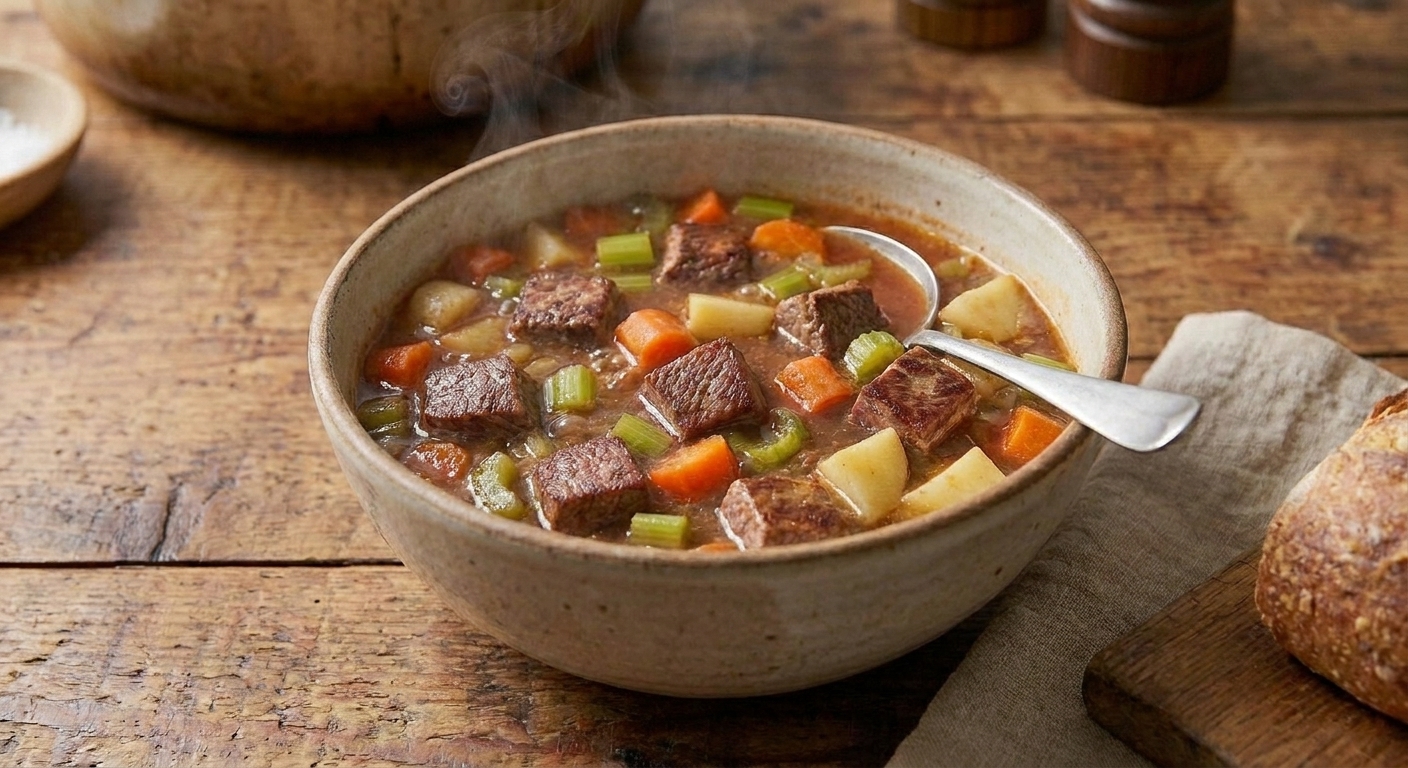
There are nights when I want the comfort of a beef stew vibe, but I do not want something so thick a spoon can stand up in it. That is where this vegetable beef soup lives. It has a gently tomato-tinged broth, smaller pieces of beef, and neat, spoon-sized vegetables so every spoonful feels balanced and easy.
This one is built for weeknights because most of the work is hands-off. A quick brown on the beef builds flavor, then the pot does the heavy lifting while it simmers gently. I like chuck roast here, cut small, because it is forgiving and turns tender with time.
The rhythm matters: let the beef simmer until it is nearly tender, then add the potatoes and finish cooking. That way the vegetables stay pleasantly intact instead of melting into the broth. Plan on roughly 60 minutes for the beef, then another 20 to 25 minutes once the potatoes go in, depending on your cut and how small you cube it.
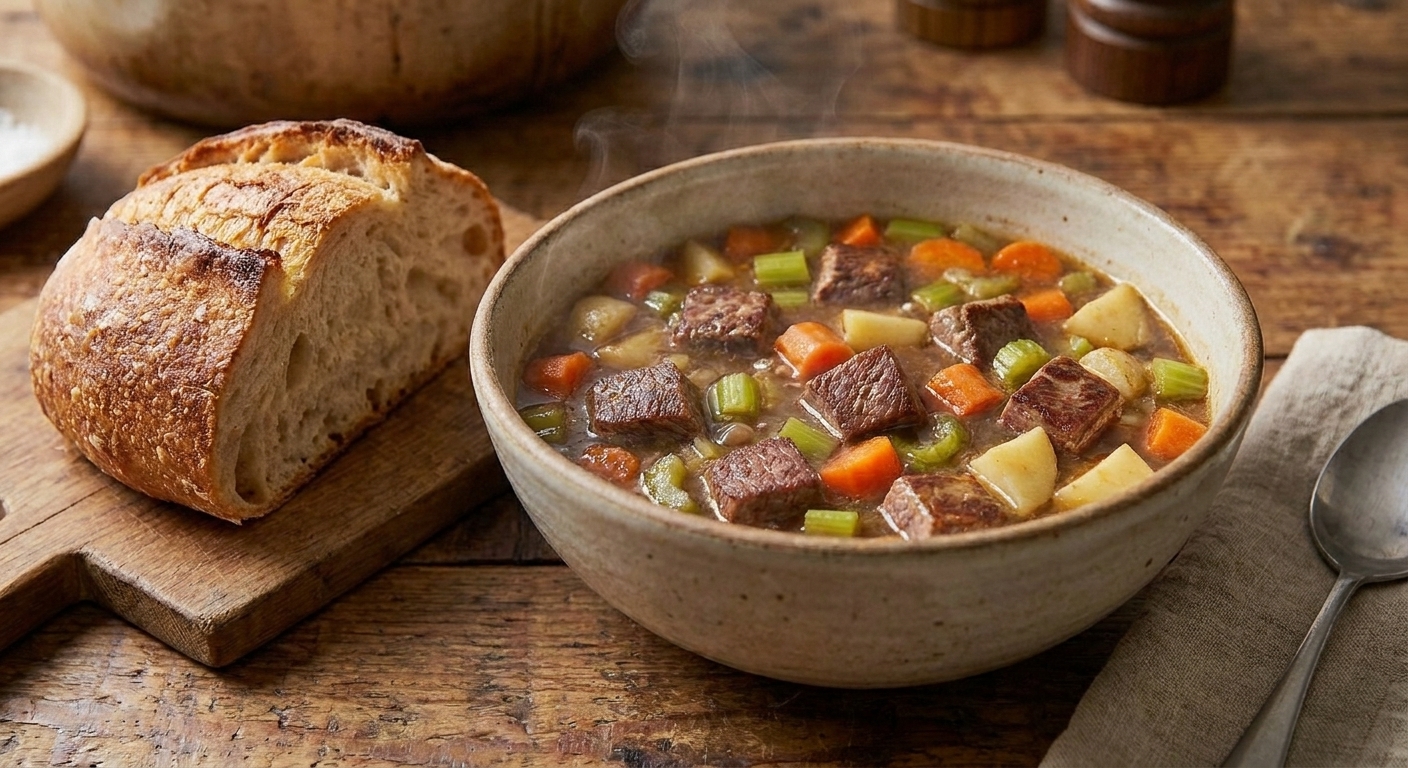
Think of the broth like this: it should look like a rich soup with visible liquid pooling around the beef and vegetables, not a glossy, gravy-thick stew. If you can ladle it easily, you are in the right place.

Make it on Sunday, and you have the best kind of leftovers. In my experience, it usually tastes even better the next day. A quick, gentle reheat and a splash of broth if it tightens up gets dinner on the table without any stress.
The idea
Why This Recipe Works
- Two-stage simmering keeps everything tender, not mushy. The beef gets the time it needs first, then the vegetables join later so they keep their shape.
- Small beef pieces cook more evenly. Cutting into smaller cubes helps the meat turn tender faster and makes the soup truly spoonable.
- Tomato paste plus diced tomatoes gives a tomato-kissed broth. You get depth and color without turning the soup into a heavy sauce.
- No flour, no slurry, no thickening. This stays a real soup: brothy, ladleable, and light enough for seconds.
Shopping
Ingredient Notes
Beef
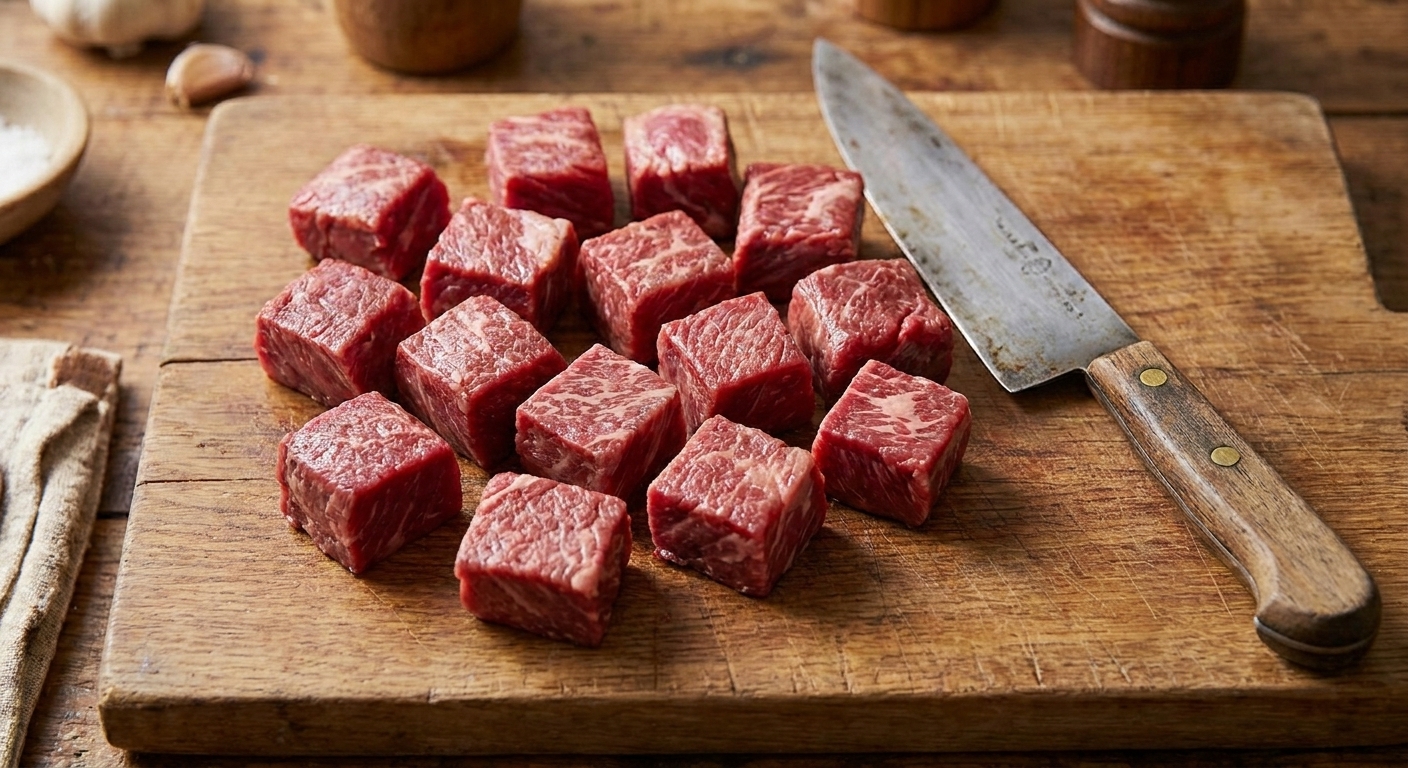
Chuck roast is my first choice for flavor and tenderness. Cut it into small, bite-size cubes so it becomes easy to eat with a spoon. Avoid extra-lean stew meat if you can. It tends to dry out before it gets tender.
Tomato base
Tomato paste adds deep, roasted tomato flavor. Diced tomatoes keep the broth bright and lightly tangy. If you prefer a smoother broth, you can choose crushed tomatoes, but diced is the classic texture here.
Vegetables
Carrots, celery, and onion form the backbone of flavor. Yukon Gold or red potatoes hold their shape nicely in soup. Russets work too, but they can break down more and cloud the broth.
Broth
Beef broth makes it hearty, but low-sodium is best so you can control salt as it reduces.
Seasonings
A little bay leaf and thyme go a long way. And yes, I add generous garlic, because I truly believe there is no such thing as too much.
Get set up
Equipment You Will Need
- Large Dutch oven or heavy soup pot (5 to 7 quarts)
- Cutting board and sharp knife
- Wooden spoon for scraping the browned bits
- Ladle for serving
- Measuring spoons
Technique
Tips for Getting It Right
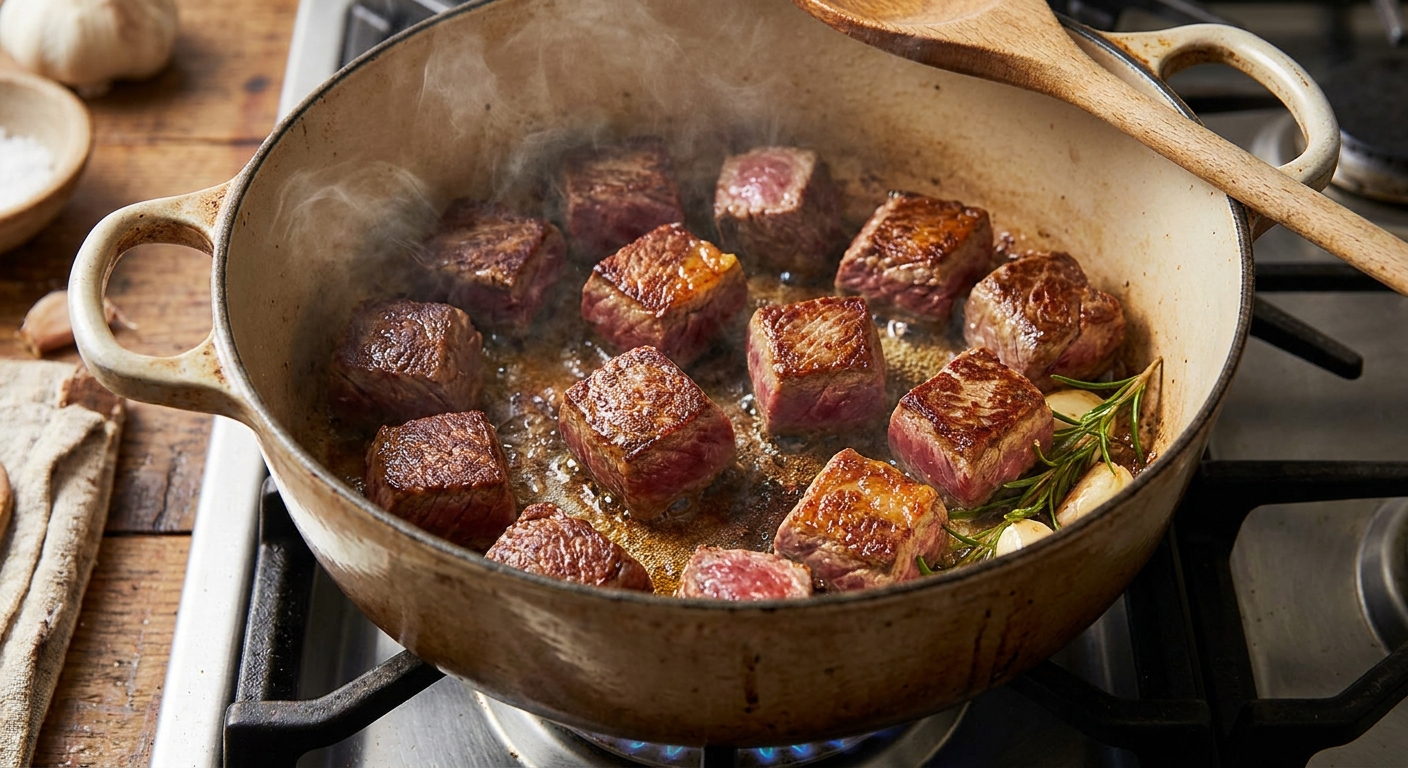
- Brown in batches. If you crowd the pot, the beef steams instead of browning. Browning equals flavor in the final broth.
- Simmer gently, not hard. A low simmer with a few lazy bubbles keeps beef tender. A rolling boil can make it tougher.
- Add potatoes later. For soup that stays brothy with distinct pieces, add potatoes after the beef is mostly tender. This also prevents starchy breakdown that can make soup feel stew-like.
- Watch the broth level. If it reduces too much while the beef cooks, add a splash of broth or water. You want plenty of liquid for ladling.
- Skim if needed. If you see excess foam or fat on top early on, skim with a spoon. You can also chill the soup and lift off the fat after it solidifies.
Flexibility
Substitutes That Work
- Beef: Swap chuck roast for boneless short ribs (rich) or bottom round (leaner, can be slightly less tender). Keep the pieces small.
- Broth: Use chicken broth in a pinch. It will be lighter, but still delicious with the tomato base.
- Tomatoes: If you only have tomato sauce, use it, but reduce the amount slightly and add a bit more broth so it stays soup, not stew.
- Potatoes: Use sweet potato for a slightly sweeter soup. Add it with the regular potato timing so it does not over-soften.
- Herbs: Dried Italian seasoning can stand in for thyme and bay. Start small and adjust at the end.
Make it yours
Variations to Try
- Old-school mixed veg: Stir in a cup of frozen mixed vegetables in the last 5 minutes for a classic diner-style finish.
- Barley version: Add 1/3 cup pearl barley with the broth and simmer until tender. Keep extra broth on hand because barley drinks it up.
- Spicy edge: Add a pinch of red pepper flakes with the garlic.
- Greens at the end: Stir in chopped kale or baby spinach during the last 2 to 3 minutes, just until wilted.
- More tomato-forward: Add an extra tablespoon of tomato paste, but keep broth volume steady so it stays ladleable.
On the table
What to Serve It With
- Crusty bread or a warm baguette for dipping
- Buttered crackers for a cozy, nostalgic side
- Simple green salad with a tangy vinaigrette to balance the richness
- Grated Parmesan on top if you like a salty finish
Later
Storage, Freezing and Reheating
Refrigerator
Store cooled soup in airtight containers in the refrigerator for up to 4 days. The broth may thicken slightly as it sits because potatoes release starch, but it should still be clearly soup-like. Add a splash of broth or water when reheating if needed.
Freezer
This soup freezes well for up to 3 months. For best texture, cool completely, portion into freezer containers, and leave a little headspace for expansion. Potatoes can soften a bit after freezing, but the soup is still very enjoyable.
Reheating
Reheat gently on the stovetop over medium-low heat until steaming hot, stirring occasionally. If reheating from frozen, thaw overnight in the fridge or warm slowly on the stove with a small splash of water or broth to get it moving.
Watch out
Common Mistakes to Avoid
- Boiling the soup hard. A rapid boil can tighten the beef and turn tender pieces chewy. Keep it at a gentle simmer.
- Adding vegetables too early. If potatoes, carrots, and celery cook the whole time, they can break down and make the soup feel thick like stew. Let the beef lead.
- Cutting beef too large. Big chunks take longer to tenderize and are less spoon-friendly. Aim for small, even cubes.
- Over-reducing the liquid. This is soup. If the pot looks more like a pot roast situation, add broth or water to bring back that ladleable consistency.
- Under-seasoning at the end. Brothy soups need a final taste for salt and pepper once everything is done simmering.
Questions
Frequently Asked Questions
How do I keep the beef tender?
Brown it first, then simmer gently until it is tender before adding the potatoes. Low and slow is the goal. You are looking for a few bubbles, not a rolling boil.
When should I add the potatoes so they do not turn to mush?
Add potatoes when the beef is mostly tender, usually after about 60 minutes of gentle simmering. Then cook 20 to 25 minutes more, just until the potatoes are tender.
What should the broth look like compared to a stew?
You should be able to ladle it easily. The broth should pool around the ingredients and look lightly tomato-red, not thick, glossy, or gravy-like. If it starts to look like stew, add a bit more broth or water.
Can I make this in a slow cooker?
Yes. Brown the beef and sauté the onion first if you can for best flavor. Cook on low until the beef is tender, then add potatoes and cook until just tender.
Is it better the next day?
Usually, yes. The flavors tend to meld and deepen overnight. Just plan to add a splash of broth when reheating if the soup tightens up a bit in the fridge.
The recipe
Vegetable Beef Soup
A cozy, spoonable vegetable beef soup with a tomato-tinged broth, tender small pieces of beef, and classic carrots, celery, and potatoes. Gentle simmer timing keeps the beef tender and the soup brothy, not thick like a stew.
Ingredients
- 1 1/2 lb beef chuck roast, cut into 1/2-inch cubes
- 1 1/2 tsp kosher salt, plus more to taste
- 3/4 tsp black pepper, plus more to taste
- 2 tbsp olive oil
- 1 large yellow onion, diced
- 3 carrots, peeled and cut into small dice
- 3 celery ribs, diced
- 5 cloves garlic, minced
- 2 tbsp tomato paste
- 1 (14.5 oz) can diced tomatoes, with juices
- 6 cups low-sodium beef broth, plus more as needed
- 1 bay leaf
- 1 tsp dried thyme
- 1 1/2 lb Yukon Gold or red potatoes, cut into 1/2-inch pieces
- 2 tbsp chopped fresh parsley (optional, for serving)
Instructions
- Season the beef. Pat the beef dry with paper towels. Season with 1 1/2 teaspoons kosher salt and 3/4 teaspoon black pepper.
- Brown the beef. Heat a large Dutch oven over medium-high heat. Add the olive oil. Working in batches, brown the beef on 2 to 3 sides, about 5 to 7 minutes per batch. Transfer browned beef to a plate.
- Sauté the aromatics. Reduce heat to medium. Add the onion, carrots, and celery. Cook, stirring and scraping up browned bits, until the onion softens, about 6 to 8 minutes.
- Add garlic and tomato paste. Stir in the garlic and cook 30 seconds. Add the tomato paste and cook 1 minute, stirring constantly, until it darkens slightly and coats the vegetables.
- Build the broth. Stir in the diced tomatoes, beef broth, bay leaf, and thyme. Return the browned beef and any juices to the pot.
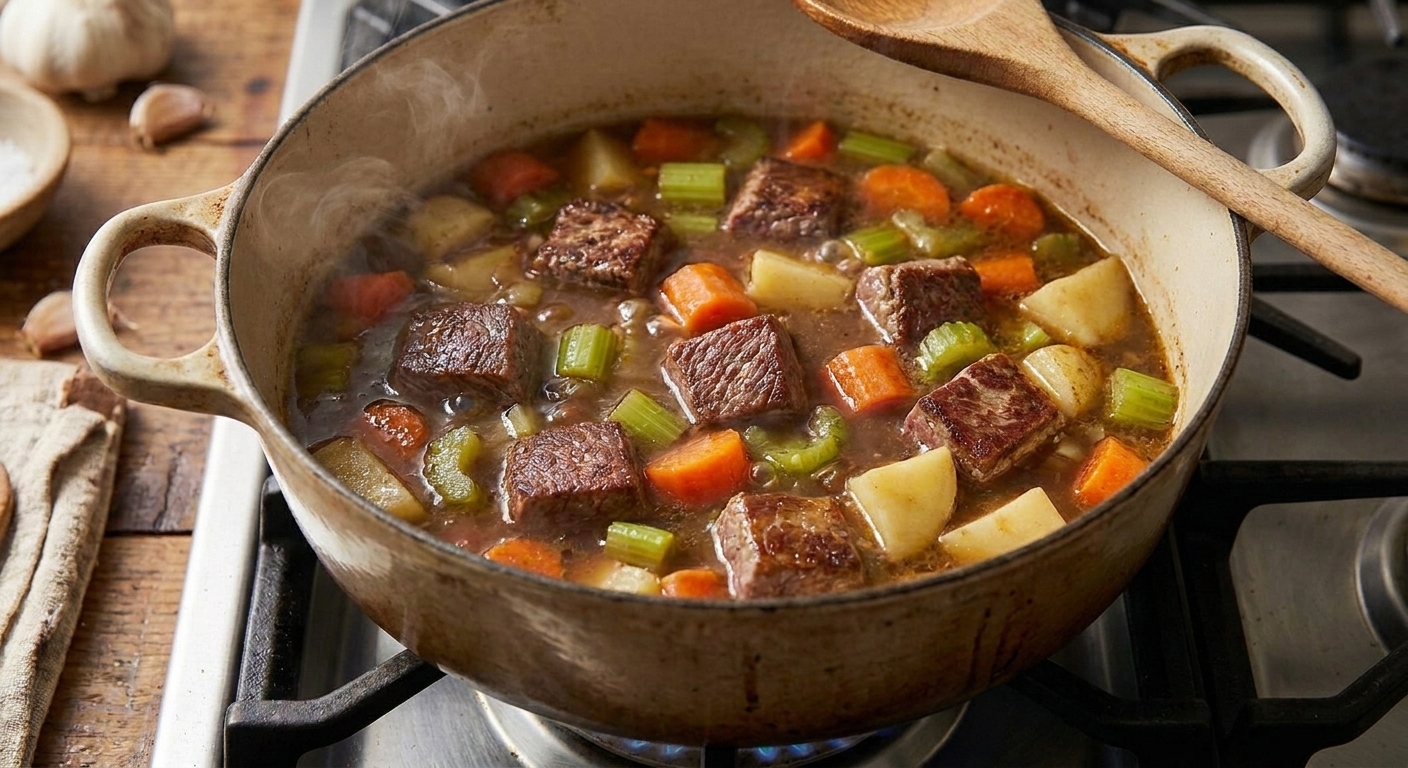
- Simmer until the beef is nearly tender. Bring to a gentle simmer, then reduce heat to low. Cover partially and simmer gently for about 60 minutes, stirring occasionally. Keep the soup at a low simmer, not a hard boil. If the liquid reduces too much, add a splash more broth or water.
- Add potatoes and finish simmering. Stir in the potatoes. Continue to simmer gently, partially covered, until the potatoes are tender and the beef is fully tender, about 20 to 25 minutes.
- Taste and serve. Remove the bay leaf. Taste and adjust salt and pepper. Ladle into bowls and top with parsley if using.
Recipe notes
Keep it soup, not stew: This should be easy to ladle, with visible broth pooling around the beef and vegetables. If it reduces too much, add broth or water a little at a time until it looks brothy again.
Make-ahead tip: The soup often tastes even better the next day. Reheat gently and add a splash of broth if needed.
Nutrition (per serving, approximate)
- Calories: 360
- Protein: 26 g
- Carbohydrates: 28 g
- Fat: 16 g
- Fiber: 4 g
- Sodium: 720 mg