

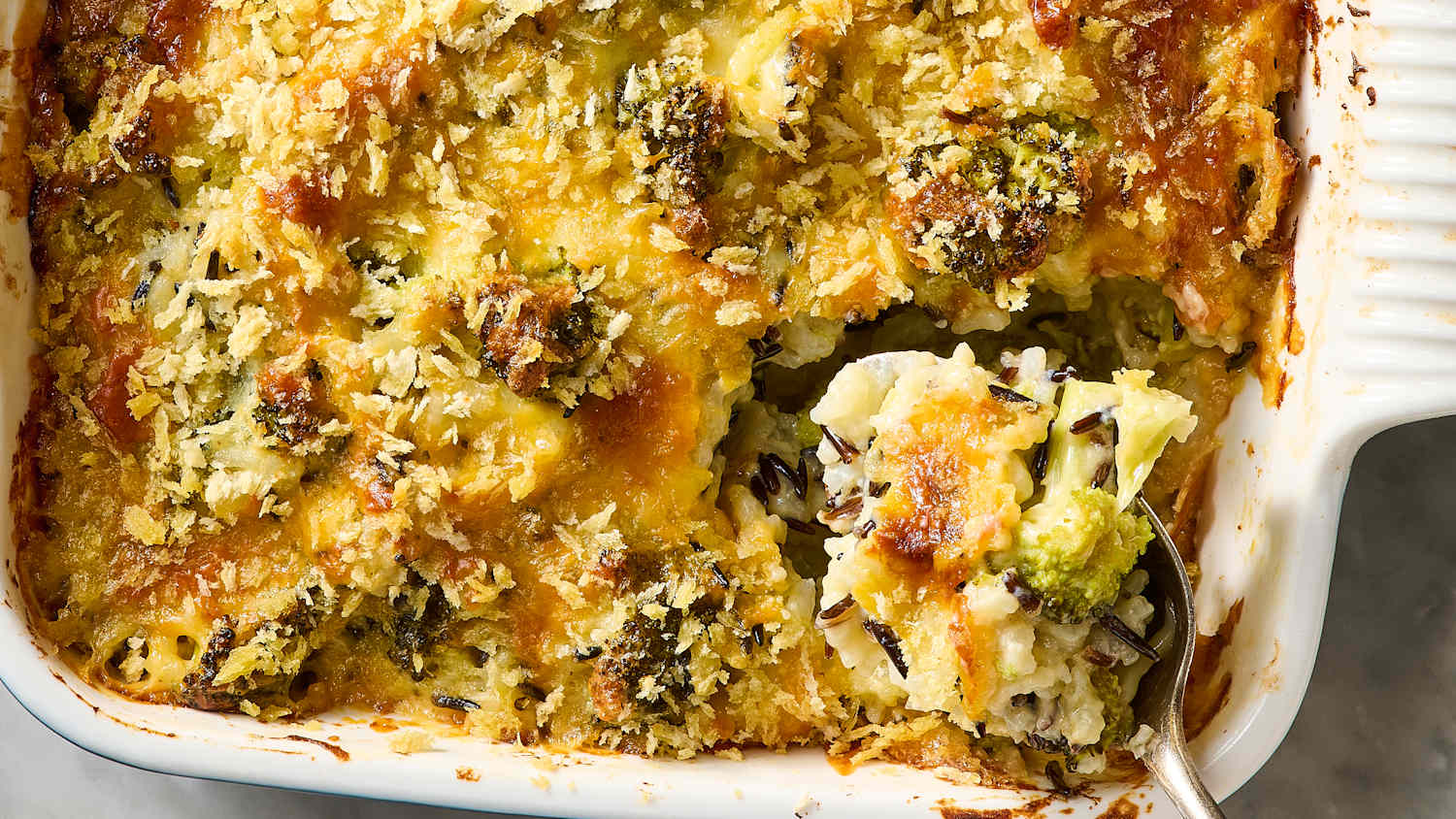
I have absolutely been there: you pull your broccoli rice casserole from the oven, the top looks gorgeous, you scoop in, and a puddle forms like you accidentally made broccoli rice soup. The good news is this is one of the easiest casserole “oops” situations to rescue because excess moisture is often either steam/condensation that needs a chance to evaporate or water released from the broccoli that needs a little help cooking off.
Below I’ll walk you through quick fixes for a casserole that’s already watery, plus the most common culprits (hello, thawed broccoli) so your next pan bakes up creamy and scoopable.

First: what “watery” means
Broccoli rice casserole can look watery for three main reasons:
- Too much free moisture in the pan (often from broccoli or added liquid).
- Not enough evaporation (covered too long, oven temp low, or a deep dish).
- Rice didn’t absorb the sauce (rice type, not enough time, not enough heat, or competing liquid from vegetables).
That means your fix is almost always some combination of: vent, bake a little hotter, stir strategically, and rest so the starches can set up.
Fix it while it’s baking
If your casserole is currently baking and you can tell it’s swimming (you peeked under the foil or it’s visibly sloshy), do this:
1) Uncover and bump the heat
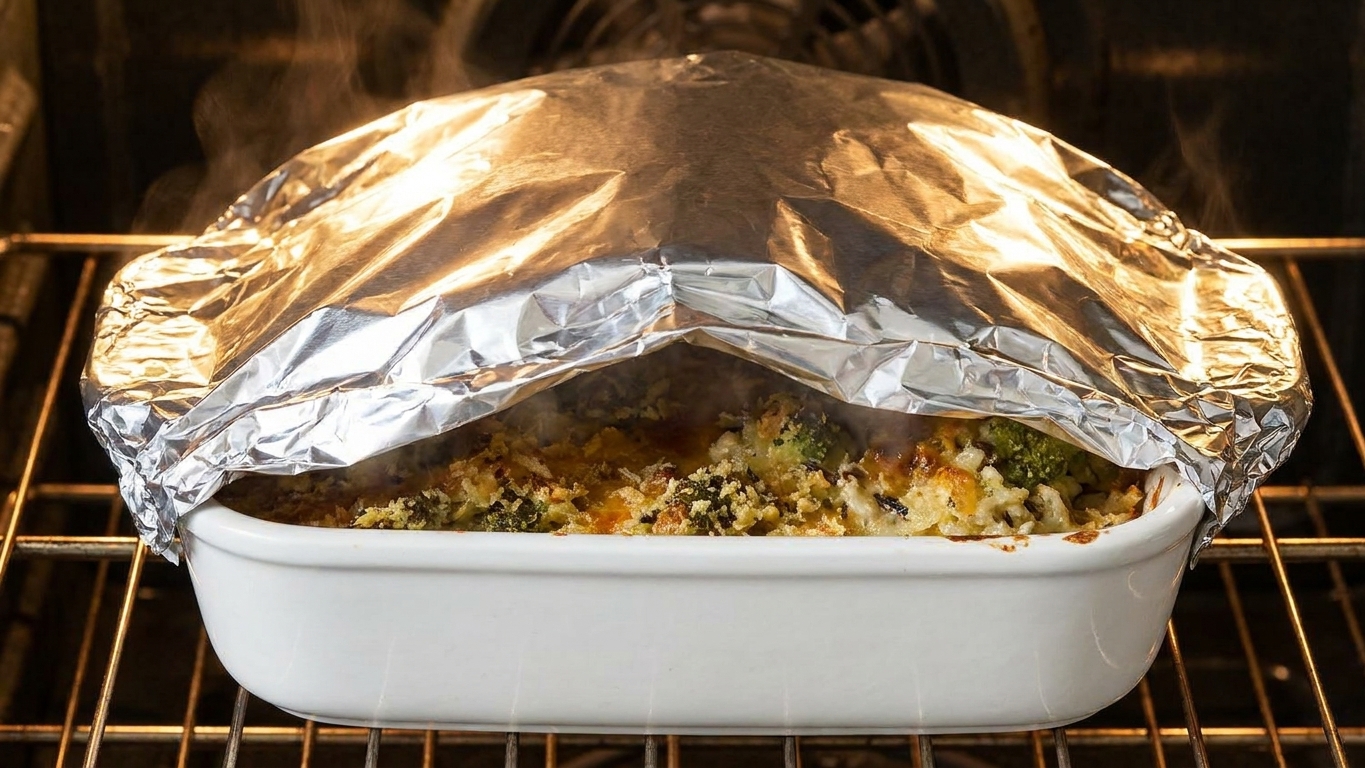
Remove the foil or lid so steam can escape. If your recipe is baking at 350°F, bump to 375°F for the remainder of the bake. You are aiming for steady bubbling around the edges, which drives off water and helps the rice finish absorbing.
2) Bake until you see active bubbling
Do not go by “time left on the recipe” at this point. Go by what you see: visible bubbling in multiple spots, not just one little simmer at the corner. Bubbling is your sign the casserole is hot enough to evaporate excess moisture and help the rice absorb the sauce.
3) If the top browns too fast, tent loosely
If the cheese topping is getting too dark but the casserole is still loose, lay foil over the top loosely. Do not seal it tight. You want protection from browning, not trapped steam.
Rescue it after it’s baked
If it’s out of the oven and you’ve got a puddle, here’s the order I use in my kitchen.
1) Let it rest
Rest the casserole 15 to 25 minutes before you judge it. Hot sauce is looser. As it cools slightly, rice starch and cheese proteins tighten the texture.
2) Spoon off only truly “free” liquid
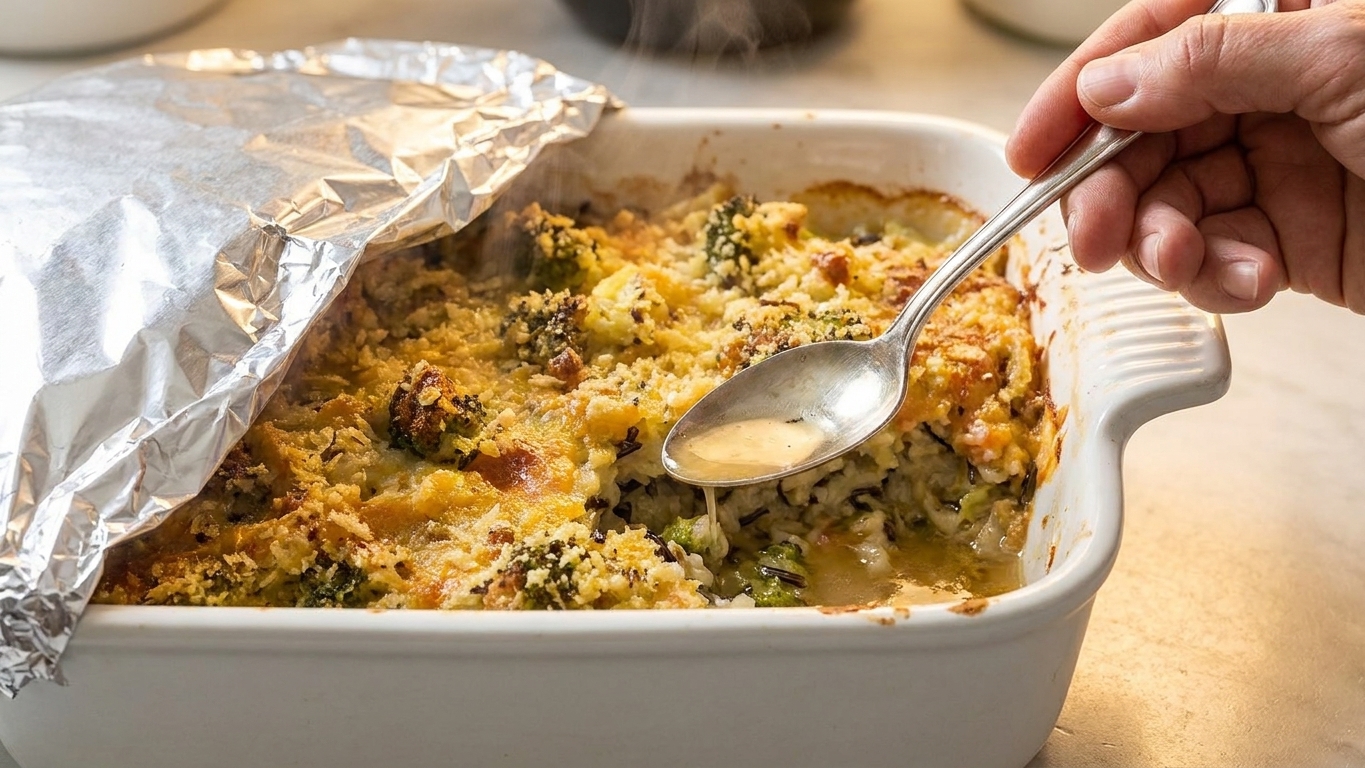
If there’s a clear layer of liquid pooling at the edge, you can carefully tilt the dish and spoon off a few tablespoons. Do not dump aggressively, you’ll lose the creamy part too.
3) Put it back in uncovered
Put it back in at 375°F uncovered for 10 to 20 minutes, then rest again. This is the fastest, least fussy fix because it removes moisture the way the casserole was meant to: by evaporating it.
4) Last resort: stir and add a thickener
If the rice is still firm and the sauce is thin, stirring can help distribute heat and starch. Then pick one thickener:
- Cheese: Stir in 1/2 to 1 cup shredded cheddar or mozzarella and bake 5 to 10 minutes. Cheese helps emulsify and “grab” water.
- Instant potato flakes: Sprinkle 1 to 2 tablespoons over the surface, stir, and rest 5 minutes. Add more only if needed. This is shockingly effective, but too much can make the texture pasty.
- Cornstarch slurry: Whisk 1 tablespoon cornstarch with 2 tablespoons cold water until smooth. Stir in a little at a time, then bake 5 to 10 minutes. (Adding gradually helps you avoid gumminess.)
Avoid adding flour directly to the casserole. It tends to clump and can taste raw.
Quick safety note: If your casserole has been sitting out a while, refrigerate it and reheat later rather than letting it hang out at room temperature for an extended time.
Watery look-alike: cheese sauce separating
Sometimes what looks like “water” is actually a cheese sauce that has broken, meaning the fat separates and you see greasy bits plus thin whey. This can happen if the casserole bakes too hot for too long, or if the sauce is very low-fat.
If that’s what you’re seeing, try a rest first, then reheat gently uncovered. Stirring in a few tablespoons of cream cheese (or a little sour cream) can also help the sauce come back together.
Big culprit: frozen broccoli
Frozen broccoli is convenient and totally works for broccoli rice casserole, but it is also one of the most common reasons casseroles turn watery. Ice crystals damage the broccoli’s structure, so when it heats, it releases a lot of water.
What to do next time
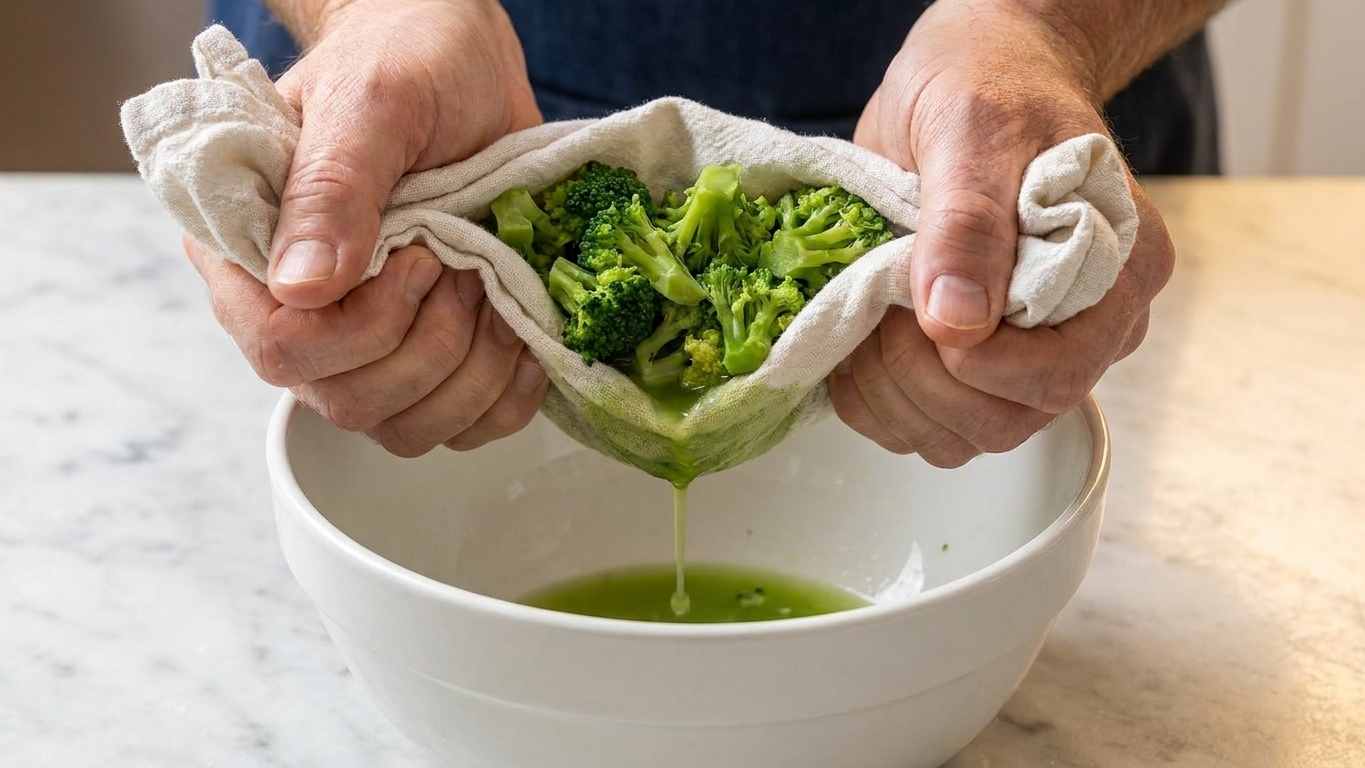
- Thaw and squeeze: Thaw broccoli fully, then squeeze it dry in clean kitchen towels or several layers of paper towels.
- Roast to dry it out: Spread thawed broccoli on a sheet pan, roast at 425°F for 10 to 15 minutes to drive off moisture, then stir into the casserole.
- Use smaller florets: Big chunks hold more water. Chop into bite-size pieces for more even baking and less pooling.
If the broccoli is already in the casserole
If your pan is watery because the broccoli released liquid mid-bake, your best move is uncover and bake longer to evaporate. Stirring once halfway through can help expose trapped moisture, but do it quickly so the oven stays hot.
Thin or bland cooking liquid
I see this a lot when someone uses what they have on hand: unsalted vegetable broth, watery homemade stock, or even liquid from canned vegetables. None of those are “bad,” but they can leave you with a sauce that is both thin and underseasoned.
Why it turns watery
- Thin broth adds water without adding much body (gelatin, fat, or concentrated flavor).
- Low seasoning does not change texture, but it can make the casserole taste less rich, which many people interpret as “watery.”
How to fix this batch
- Evaporate and season: Uncover, bake a bit longer, then taste and add salt. If you can, add a pinch at a time after the casserole rests.
- Add richness: Stir in a few tablespoons of sour cream or cream cheese, or add more shredded cheese, then bake briefly to melt and tighten.
- Boost flavor without more liquid: Garlic powder, onion powder, mustard powder, black pepper, and a little paprika go a long way.
If you are using canned condensed soup as the base, avoid thinning it with extra broth “to stretch it” unless your recipe was built for that. That is a classic watery-pan setup.
Rice that won’t absorb
If the rice is still a little firm and the casserole is watery, it feels unfair, right? Like, pick a lane. This usually comes down to the rice type and the bake environment.
Common reasons
- Wrong rice type: Parboiled, converted, or some “instant” rices behave differently than long-grain white rice. Brown rice needs longer and more liquid, plus more time to absorb.
- Rinsed rice or pre-cooked rice: Rinsing can reduce surface starch (less natural thickening), and using already-cooked rice in a recipe designed for uncooked rice can throw off the liquid balance.
- Not enough time at a true simmer: Rice absorbs when the mixture is hot enough for steady bubbling. A gentle, barely-warm bake can leave liquid unabsorbed.
- Covered too long: Covering can help the center heat through, but it also reduces evaporation. That means the casserole can stay wetter even if it cooks faster.
- Wet fresh broccoli: If you steamed or blanched broccoli and did not drain it very well, it can add a surprising amount of water.
How to save the pan
- Uncover and bake longer at 375°F until the rice is tender and the edges are bubbling.
- Stir once to bring rice from the center to the hotter edges, then smooth the top and continue baking.
- If the top is dry but the middle is watery, move the dish to a lower rack so the center gets more consistent heat.
If after extra bake time the rice is still undercooked, you can add a small splash of hot broth or hot water (a few tablespoons at a time), stir, cover for 10 minutes, then uncover again to finish. This is only for the situation where rice is crunchy, not for a casserole that is already too wet.

Quick troubleshooting checklist
- Soupy but rice tender: Uncover, bake 10 to 20 minutes at 375°F, rest 15 minutes.
- Soupy and rice firm: Uncover and bake longer, stir once, keep going until bubbling is steady.
- Watery after using frozen broccoli: Bake uncovered longer now, and next time thaw and squeeze dry.
- Thin, bland sauce from unsalted veg broth: Evaporate, then season and add richness (cheese, sour cream, cream cheese).
- Looks watery right out of the oven: Rest before you do anything else.
- Looks watery and a little greasy: Sauce may have separated. Rest, reheat gently, and consider stirring in a bit of cream cheese.
Questions I get a lot
Can I fix it by adding more rice?
Not mid-bake, unfortunately. Dry rice needs time and the right amount of heat to absorb. If you stir in more rice at the end, it will likely stay crunchy. Your better bet is evaporation (uncovered baking) and a small amount of thickener if needed.
Why did my casserole get watery after sitting?
This is often broccoli continuing to release moisture as it cools, or the casserole not resting long enough before serving. Next time, drain or squeeze frozen broccoli very well. For this pan, reheat uncovered so some moisture can cook off.
Should I cover broccoli rice casserole while baking?
Covering early can help the center heat through and cook rice, but if your casserole tends to run watery, uncover for the final portion so steam can escape and the sauce can tighten.
Will it thicken as it cools?
Yes, within reason. Most broccoli rice casseroles tighten noticeably after a 15 to 25 minute rest. If it is still soupy after resting, it needs more uncovered oven time or a small thickener.