

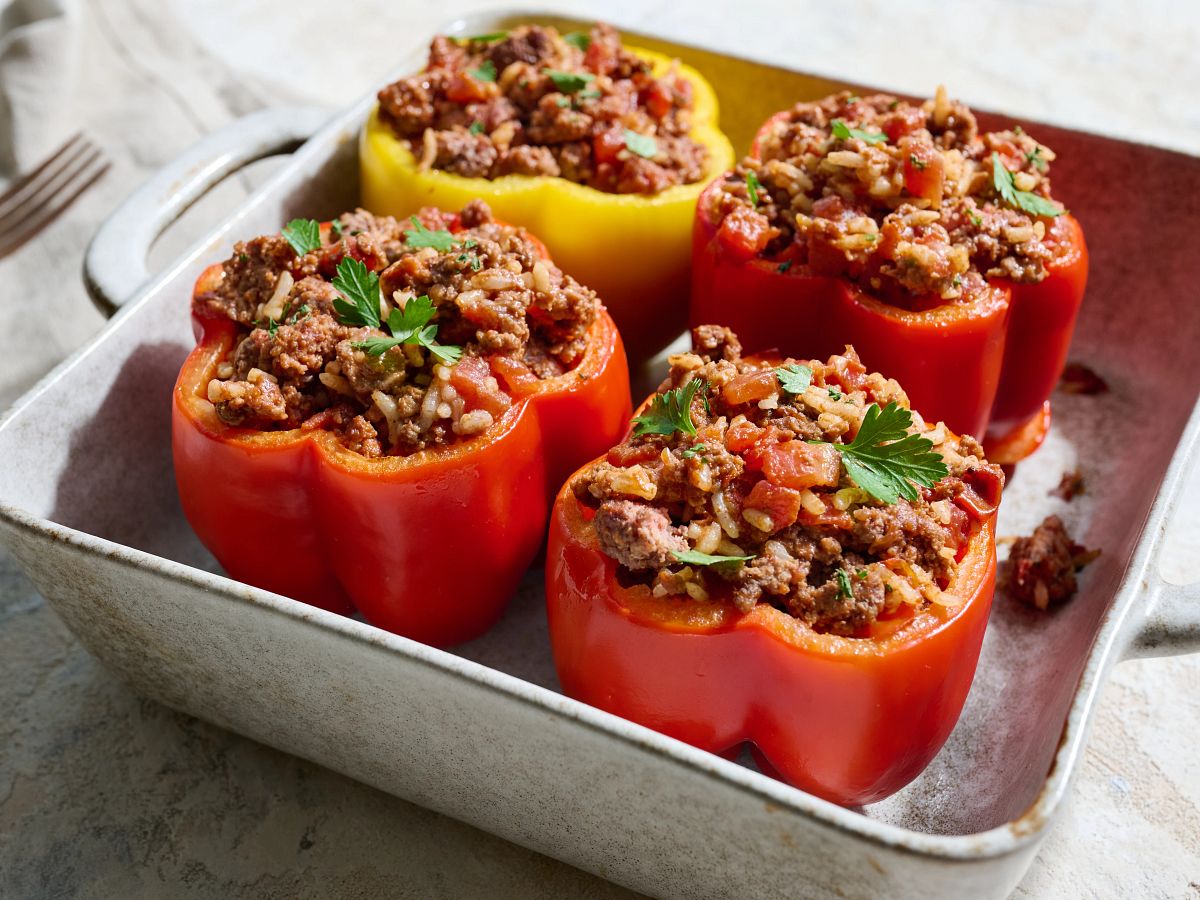
The first time I made stuffed bell peppers for a neighborhood potluck, I pulled the pan out of the oven feeling very proud… until I saw it. A shallow pepper “hot tub” at the bottom of the baking dish. The peppers were tender, the filling tasted great, and yet everything was swimming.
Here’s the good news: watery stuffed peppers are almost always a moisture management problem, not a cooking skill problem. Bell peppers release liquid as they bake, vegetables sweat, sauces thin out, and foil can trap steam. Let’s walk through what causes it and exactly how to fix it, so your peppers come out juicy (in a good way) but not soggy.

Quick diagnosis
If you are not sure what went wrong, this cheat sheet narrows it down fast.
- Pan is flooded but filling tastes fine: usually foil steaming and or too much (or too thin) sauce in the dish.
- Filling is mushy or loose: often raw high-water vegetables, too-wet rice, or not enough binder.
- Liquid looks greasy: meat was not browned and drained (or it was very high fat).
- Peppers are super soft and slumping: overbaked, or baked covered the whole time.
Why stuffed peppers get watery
In most home kitchens, one or more of these culprits is responsible. If you can identify which one fits your batch, the fix becomes very straightforward.
1) Peppers naturally release water
Bell peppers are crisp edible cups full of moisture. When they heat up, their cell walls break down and that water escapes. This is especially noticeable if your peppers are very fresh, extra large, or baked for a long time.
2) Raw vegetables in the filling sweat
Onions, mushrooms, zucchini, spinach, tomatoes, and even shredded carrots can drop a surprising amount of liquid. If you mix them into the filling raw, they release that moisture in the oven and it ends up in the pan.
3) A loose filling that does not bind
If your filling is mostly meat and vegetables with very little binder (like cooked rice, quinoa, breadcrumbs, eggs, or cheese), it can shrink as it cooks and release juices. Those juices have nowhere to go but down into the pepper and into the baking dish.
4) Too much sauce or a thin sauce
Marinara, salsa, tomato sauce, broth, and canned diced tomatoes all bring extra water. If you pour sauce into the bottom of the pan or stir a lot into the filling, it can dilute as everything cooks and end up soupy.
5) Foil covering causes steaming
Covering peppers tightly with foil traps steam. Steam condenses, drips back down, and prevents evaporation. The result: very tender peppers, but also extra liquid hanging around at the bottom.
Fast rescue for watery peppers
If your peppers are cooked and you are staring at a puddle, you can still save dinner. Here are my favorite quick fixes.
- Uncover and bake 10 to 15 minutes more: This is the simplest fix. Move the pan back in uncovered to let liquid evaporate and to help the tops brown. Keep going until the pool looks noticeably reduced and the surface of the sauce looks glossy, not soupy.
- Carefully pour off liquid: Use tongs to steady a pepper, then tilt the baking dish and spoon or pour the liquid into a measuring cup.
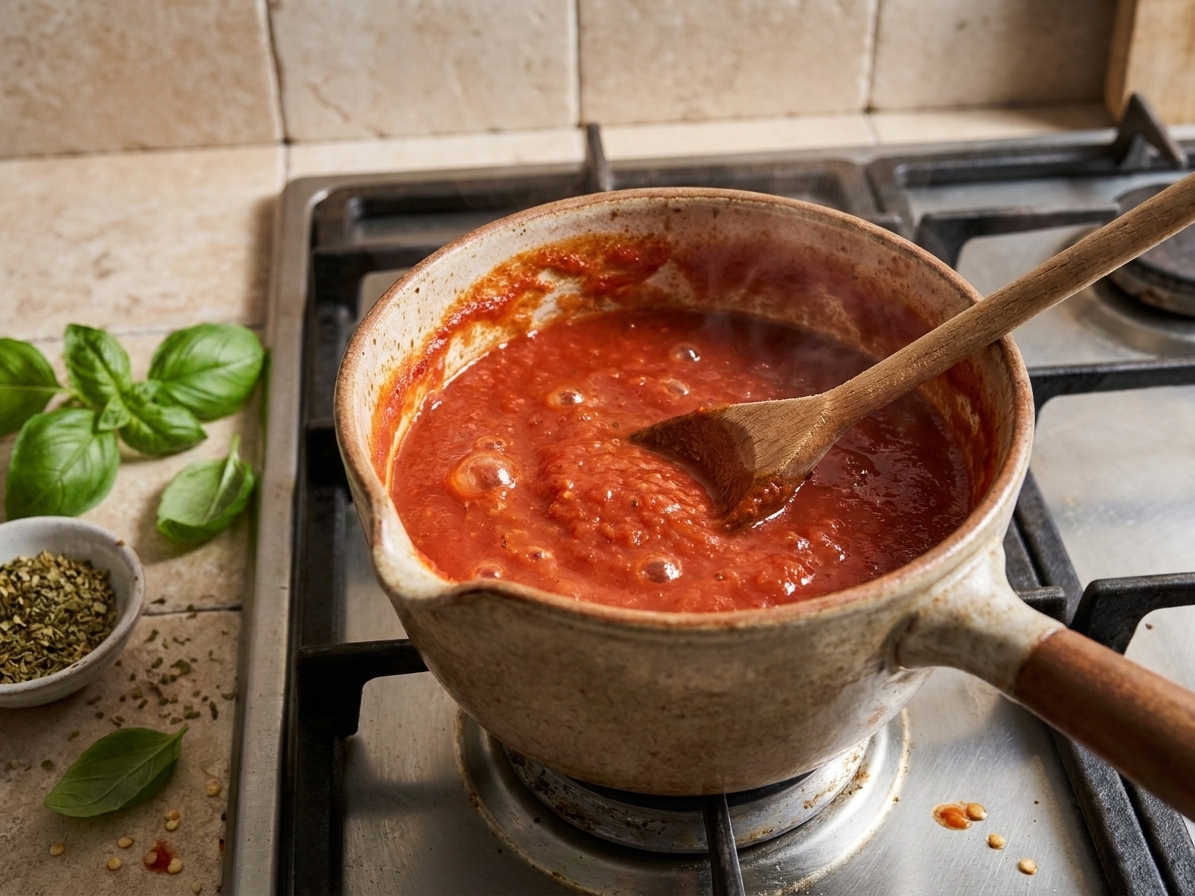
- Thicken the pan liquid: Pour the liquid into a small saucepan and simmer to reduce, then spoon a little over each pepper at serving time. It tastes great and looks intentional.
- Rest before serving: Let peppers sit 5 to 10 minutes after baking. The filling firms up and juices redistribute, so it eats less wet.
How to prevent watery peppers
If you want peppers that slice cleanly and do not flood the pan, focus on three strategies: reduce moisture before baking, give moisture a place to go, and allow evaporation during baking.
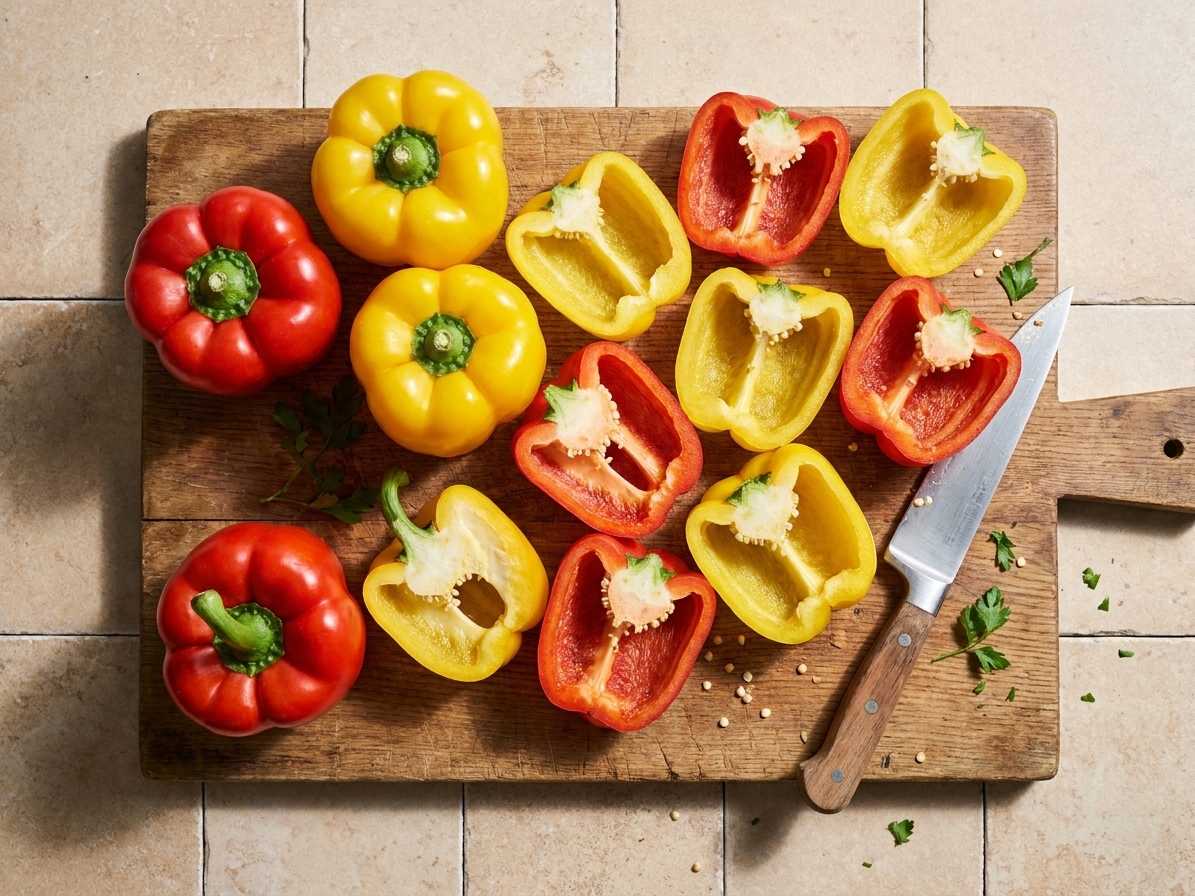
Pre-roast or par-cook the peppers
This sounds like an extra step, but it is one of the most reliable ways to control moisture and texture.
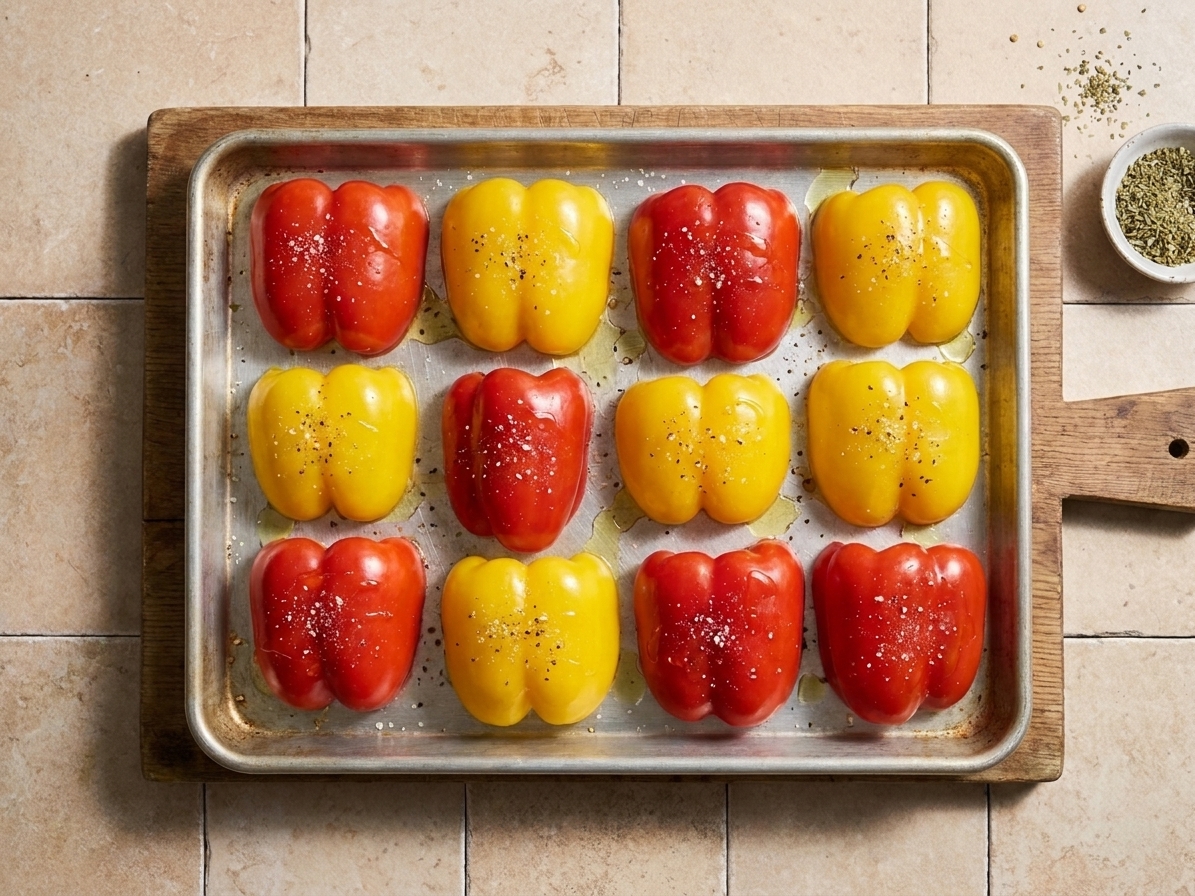
- Oven method: Halve peppers or keep them whole with tops removed. Brush lightly with oil and sprinkle with salt. Roast at 400°F for 10 to 15 minutes, cut-side down for halves.
- What it does: It drives off some moisture and starts softening the pepper so you do not need to bake as long after stuffing.
Bonus: pre-roasted peppers tend to taste a little sweeter.
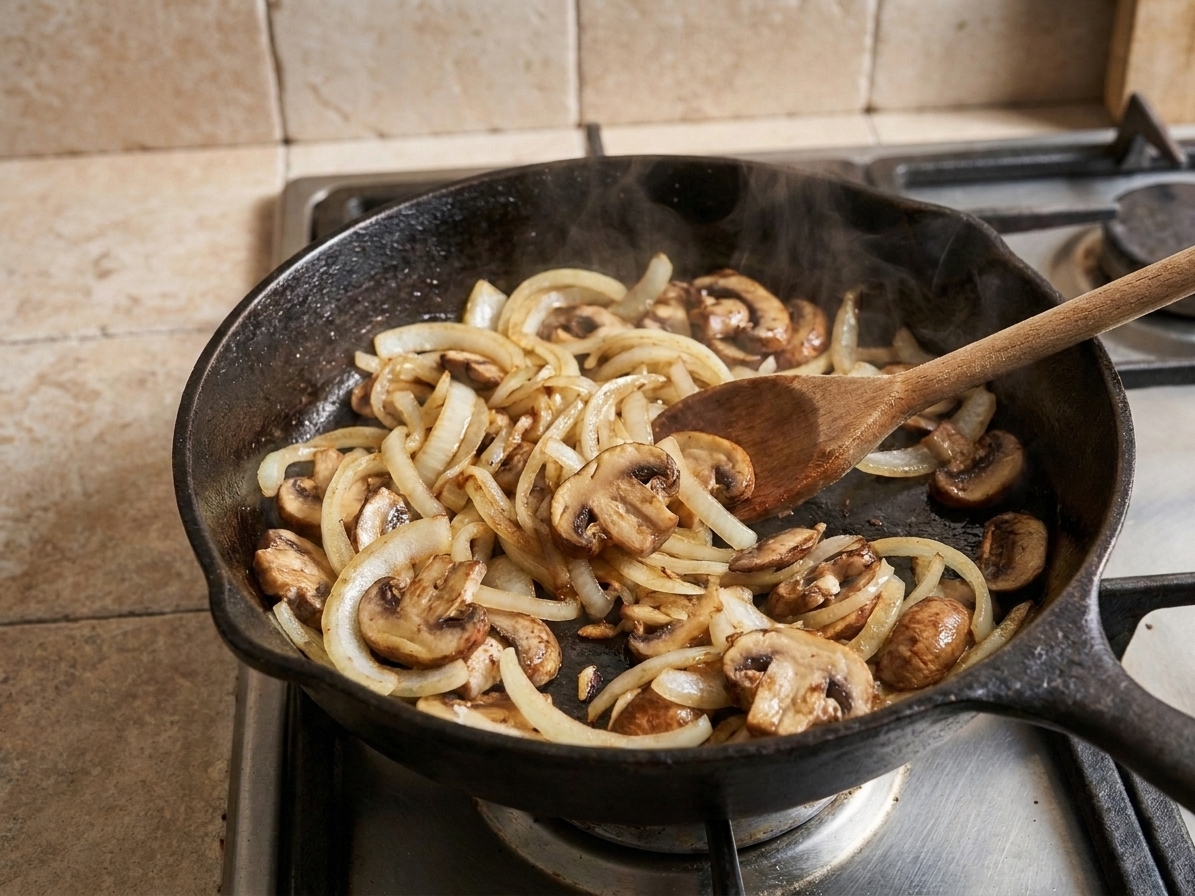
Cook and drain watery vegetables
If your filling includes any high-moisture vegetables, sauté them first.
- Mushrooms: Cook until they give up their liquid and the pan is mostly dry.
- Onions: Sauté until translucent to remove some water and mellow their bite.
- Spinach: Wilt, then squeeze dry in a clean kitchen towel or paper towels.
- Zucchini: Sauté or salt and drain briefly, then pat dry.
- Tomatoes: Drain canned diced tomatoes well, or use a thicker crushed tomato product.
Use cooked grains and keep them on the dry side
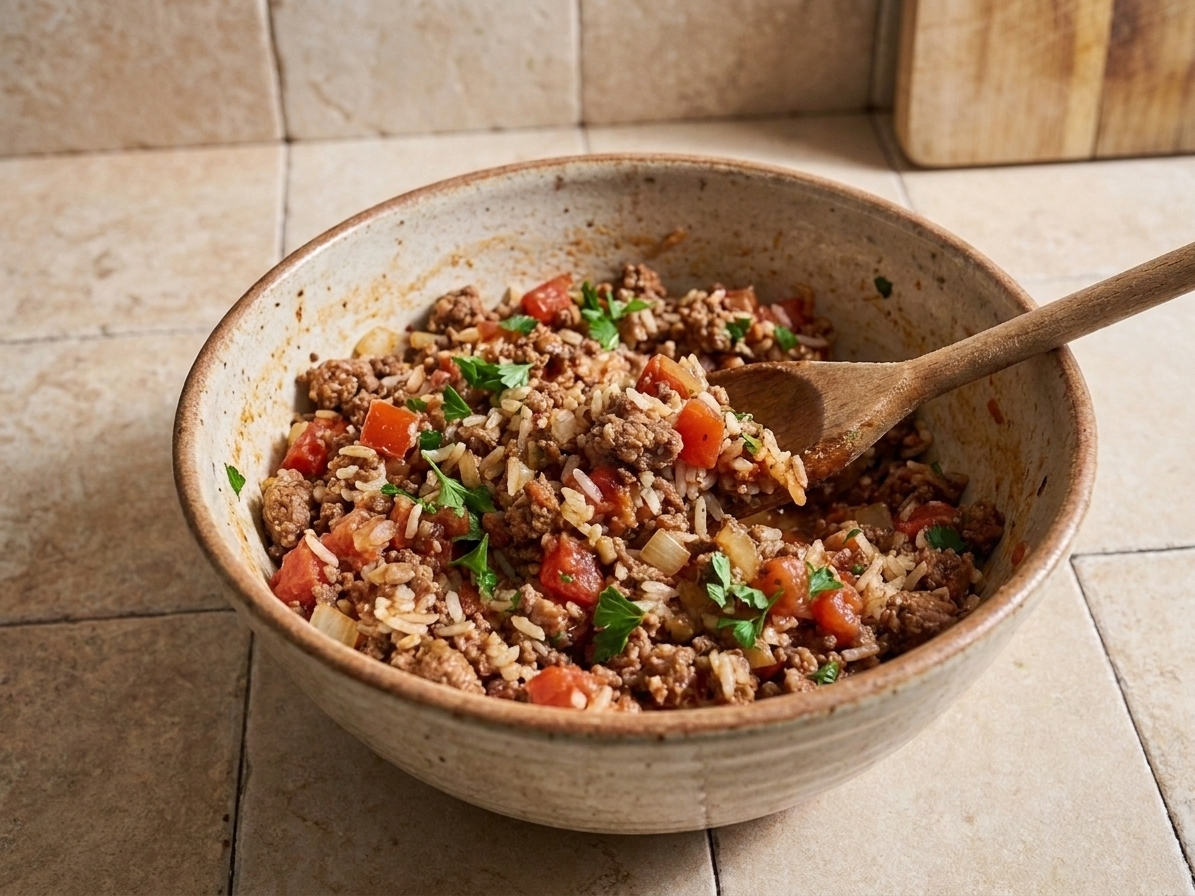
Cooked rice, quinoa, farro, or even a handful of breadcrumbs can absorb juices as the peppers bake, but only if they are not already waterlogged.
- Avoid steamy, freshly cooked rice: Spread it on a plate or sheet pan for a few minutes to cool and dry out. Day-old rice works especially well.
- Aim for: Warm filling, not sizzling hot, so it does not start steaming the second it hits the pepper.
Brown the meat and drain
This one is sneaky. If you use higher-fat ground beef, sausage, or turkey and do not drain it, you can end up with a greasy liquid layer in the pan. Brown the meat first, then drain. If you want max flavor, keep a tablespoon or two of fat in the pan for sautéing your aromatics, then drain the rest.
Go easy on sauce in the pan
Many recipes call for adding sauce or broth to the bottom of the baking dish to prevent sticking. That can work, but it also increases your odds of a watery result.
- Try this instead: Spread a thin layer of thick marinara, or skip liquid entirely and use a light oil rub on the dish.
- If you love extra sauce: Serve sauce on the side or spoon on top after baking, not underneath.
Use foil on purpose
I still use foil sometimes, but I use it strategically.
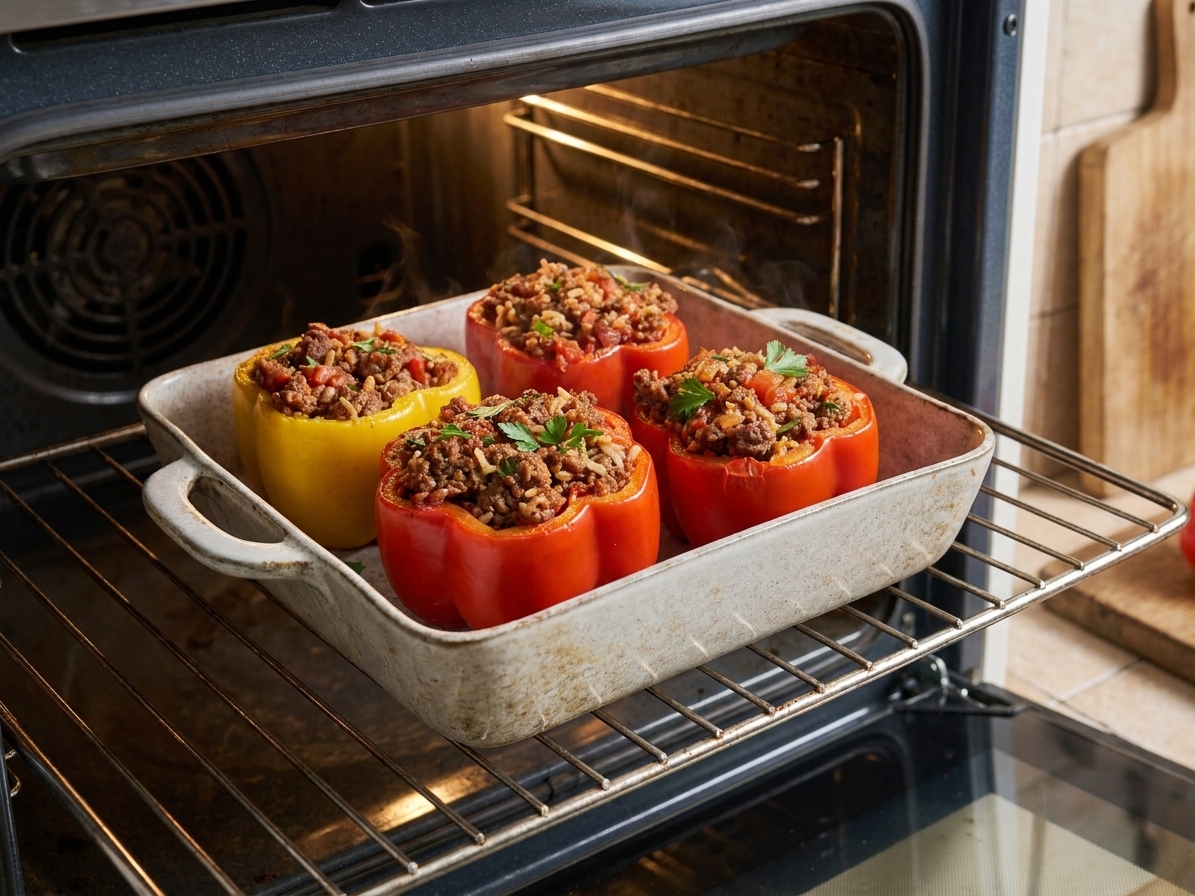
- If your peppers always turn out watery: Bake uncovered the whole time, or cover loosely.
- If your peppers dry out: Cover for the first 20 to 30 minutes, then uncover for the last 10 to 15 minutes to let steam escape and the tops brown.
Choose a pan that helps evaporation
A wider, shallower baking dish gives moisture more surface area to evaporate. Also, avoid packing peppers too tightly together. A little breathing room helps the pan reduce instead of steam.
Small tweaks that matter
These are the practical habits I lean on when I want consistent results.
- Salt peppers lightly and let them sit: After hollowing out the peppers, sprinkle the insides with salt and let them sit upside down on paper towels for 10 minutes. Pat dry before stuffing.
- Pack the filling firmly: Gently compress the filling so there are fewer air pockets that encourage steaming and shrinkage.
- Lift peppers slightly: If you have a baking rack that fits inside a casserole dish, you can elevate peppers so they are not sitting directly in liquid. Even a bed of thick onion slices helps.
- Use thicker tomato products: Tomato paste, thick marinara, or a reduced sauce keeps the filling rich, not runny.
- Do not overbake: Overbaking breaks down pepper walls further and increases liquid release. Bake until peppers are tender but still holding their shape.
FAQ
Should I boil peppers before stuffing them?
You can, but boiling can waterlog peppers and push them from tender into too-soft fast. If you like the idea of par-cooking, I prefer roasting because it drives off some moisture instead of adding more.
Why are my stuffed peppers watery even with cooked rice?
Usually it is one of three things: you used watery vegetables (like mushrooms or spinach) without cooking and draining first, you covered tightly with foil so everything steamed, or you added a lot of sauce or broth to the pan. Cook down the veggies, uncover at the end, and keep liquid in the baking dish to a minimum. Also make sure your rice is not freshly cooked and steamy.
Is it normal to have some liquid in the pan?
Yes. A little liquid is completely normal because peppers naturally release water. The goal is not zero liquid, it is avoiding a pan full of it and keeping the filling from getting soggy.
Can I freeze stuffed peppers without them getting watery?
You can freeze them, but peppers tend to soften after thawing. For the least watery result, cool completely, wrap well, and reheat uncovered so moisture can evaporate. If you know you will freeze them, pre-cook and drain any watery vegetables in the filling, use a thicker sauce, and do not add extra liquid to the baking dish.
How do I keep the filling from turning mushy?
Use a binder (cooked rice, quinoa, breadcrumbs, cheese, or an egg), cook and drain watery add-ins first, and bake uncovered at the end for better evaporation. Also, let the peppers rest before serving so the filling can set up.