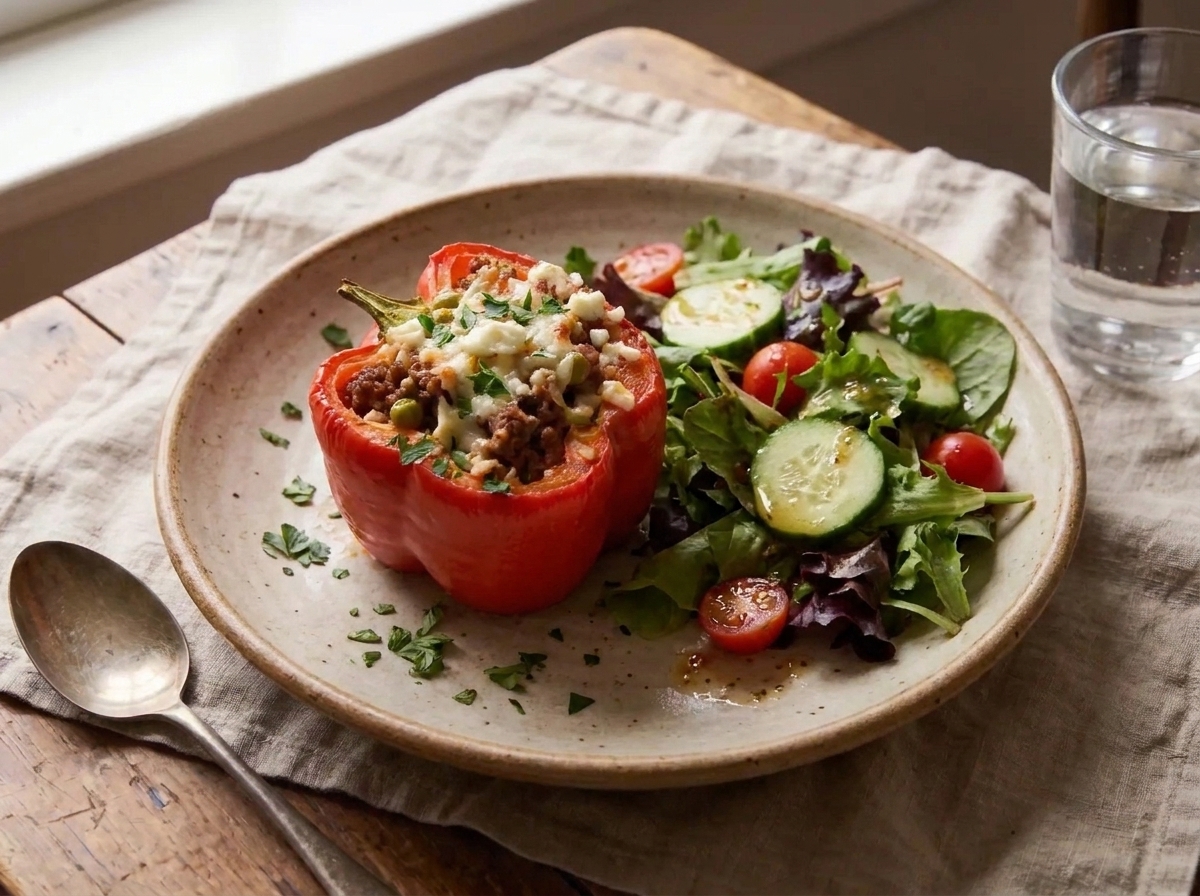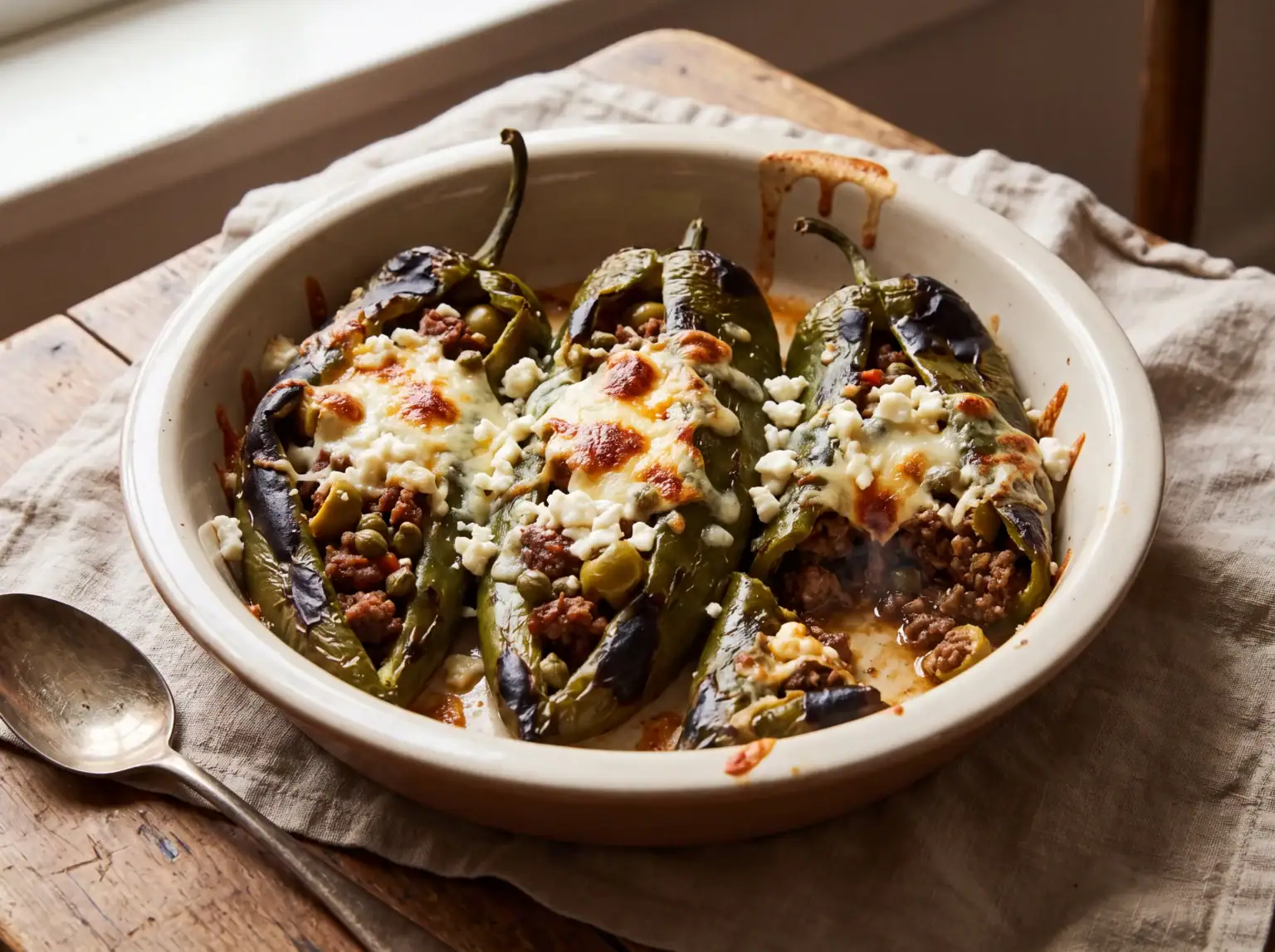
The first time I tried making stuffed bell peppers in a slow cooker, I was convinced I had found the ultimate hands-off dinner. I set them in, walked away, and came back to a kitchen that smelled amazing. The only problem was that my peppers looked like they had taken a nap on their sides. Delicious, yes. Proud and perky like the oven version I grew up with in the Pacific Northwest, not quite.
Both methods work, and both can be fantastic. But they behave differently, especially when it comes to pepper softness, how much liquid the rice needs, the real-world cook time, and whether your peppers stay standing instead of slumping. Here is how I decide.

The biggest difference: dry heat vs. gentle steam
Oven stuffed peppers cook with dry heat surrounding the pan. You get a little evaporation, a little browning, and more control over texture. The peppers soften, but they can still keep their shape if you do it right.
Slow cooker stuffed peppers cook in a moist environment. Even if you do not add much liquid, the peppers release moisture and the lid traps steam. That steam makes peppers very tender, but it also makes them more likely to slump.
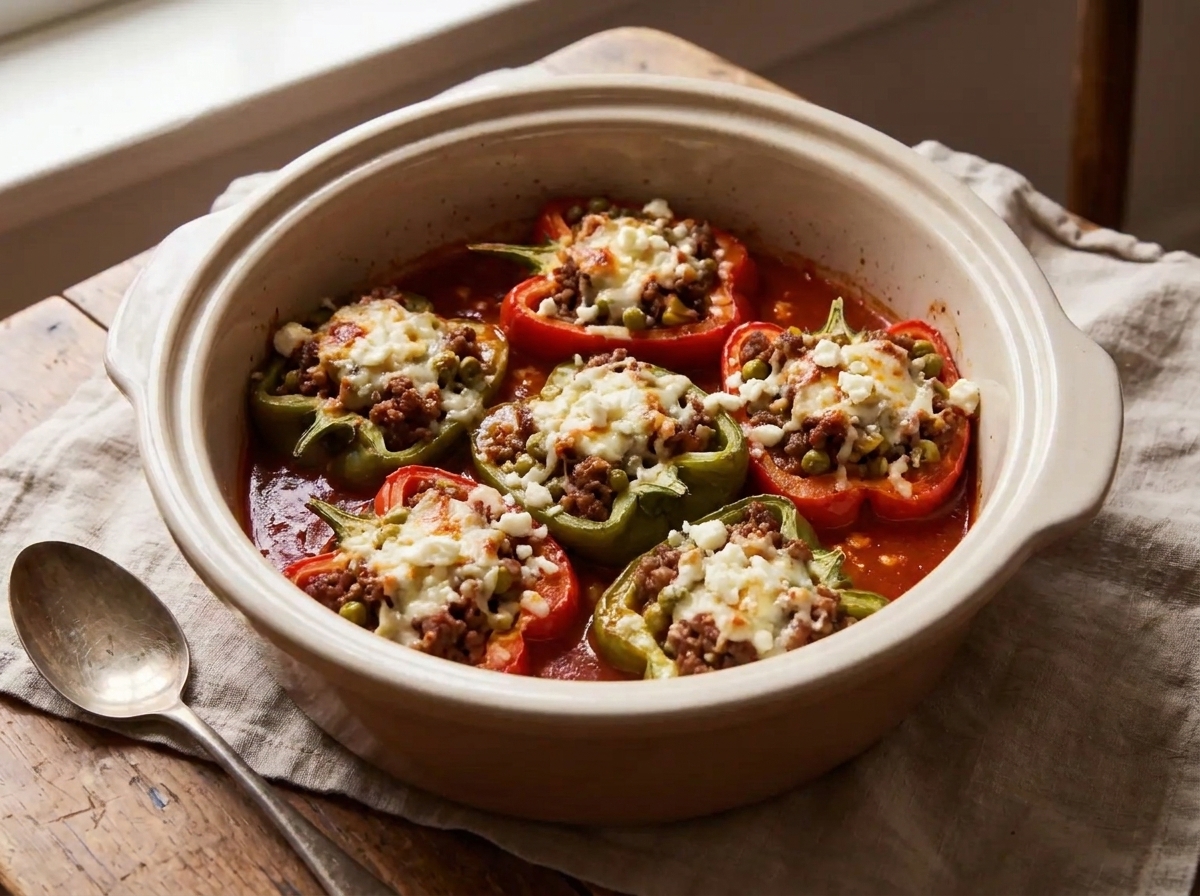
Pepper softness: pick your texture
Oven: tender with a little bite, if you want it
In the oven, you can land anywhere from fork-tender to soft but still slightly structured, depending on temperature, pan sauce, and how long you bake. If you like peppers that are tender but not falling over, the oven is your friend.
- Best for: peppers that hold their shape, a bit of roasted flavor, and a filling that can brown slightly on top.
- Typical texture: tender walls, but still clearly “a pepper,” not a silky stew texture.
Slow cooker: very soft, almost silky
The slow cooker makes peppers much softer. This is great if you love ultra-tender vegetables, or if you are cooking for someone who struggles with chewier textures. Just know that the softer they get, the more likely they are to slump.
- Best for: very tender peppers and a cozy, saucy vibe.
- Typical texture: soft and yielding, sometimes a little wrinkly around the rim.
Maya tip: If you want slow cooker convenience but slightly firmer peppers, cook on LOW and start checking earlier than you think. Once peppers pass “tender,” they go to “slumped” pretty quickly.
Rice and liquid: the make-or-break detail
This is the question that decides everything: Is your rice already cooked, par-cooked, or totally uncooked? The oven and slow cooker handle moisture very differently.
If your rice is already cooked
Oven: You only need a little liquid in the baking dish, mostly to keep the peppers from drying out and to create a sauce. Think a thin layer in the bottom of the pan.
Slow cooker: You need even less added liquid than you think, because the peppers will release moisture and the cooker traps it. Too much sauce can make the filling watery.
- Oven baseline: a small pour of sauce or broth in the bottom of the dish.
- Slow cooker baseline: a modest amount of sauce in the bottom, not enough to submerge the peppers.
If your rice is uncooked
This is where I gently nudge you toward caution. Uncooked rice needs enough liquid and time to hydrate, and it needs that liquid to actually reach the grains inside the pepper.
Oven: Uncooked rice can work if your filling is quite saucy and you cover the pan tightly for most of the bake. But it is finicky, and rice texture can vary depending on how tightly you pack the peppers and how much sauce is around them.
Slow cooker: Uncooked rice is even trickier. The environment is moist, but the liquid tends to pool at the bottom, and rice inside a tightly packed pepper does not always cook evenly. You can end up with rice that is still a bit crunchy near the center while the pepper itself turns very soft.
- If you insist on uncooked rice: choose a quick-cooking rice, keep the mixture looser with extra sauce, and plan on a longer cook. Even then, results vary.
- My go-to solution: use cooked rice, or use cauliflower rice if you want the filling to stay lighter and less moisture-sensitive.
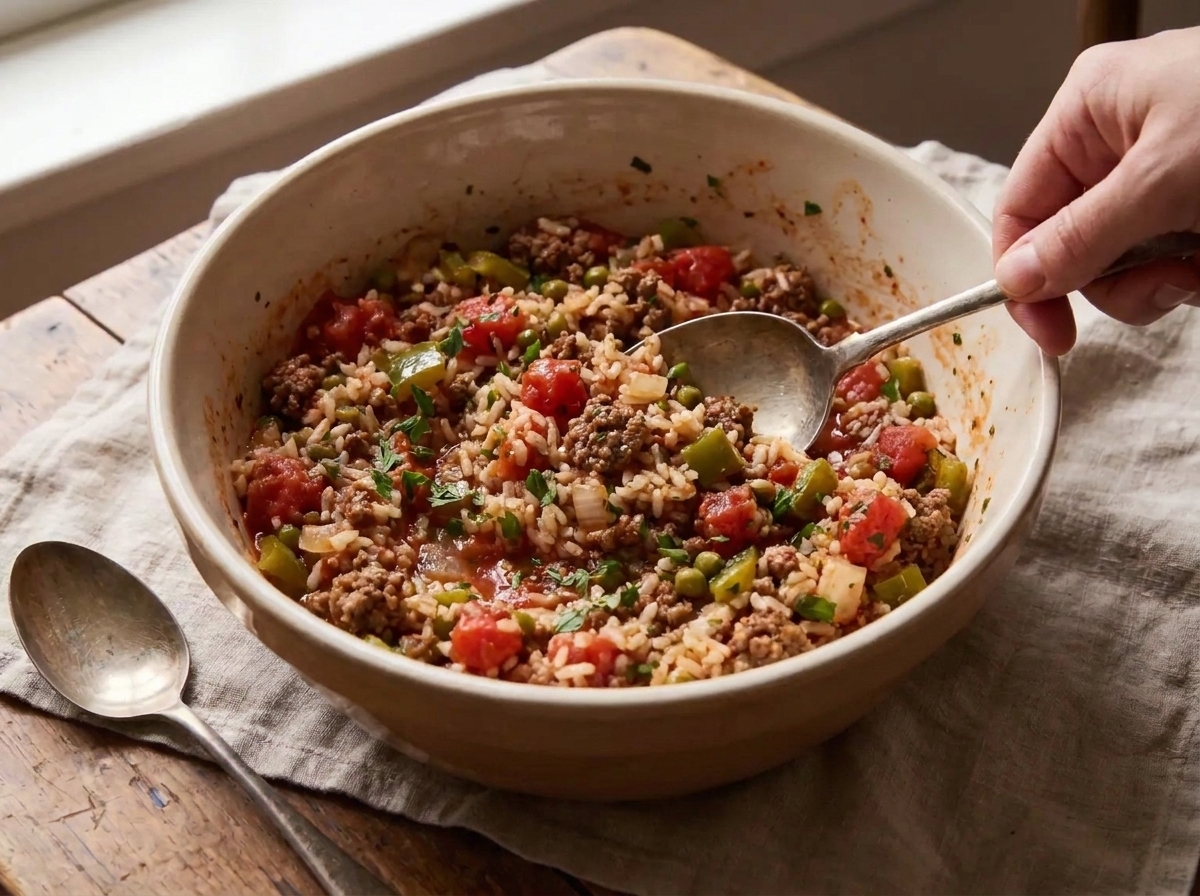
Cook time: what it looks like on a weeknight
Timing varies a lot based on pepper size, how tightly they are packed, your sauce amount, and whether your filling starts hot or cold. The most reliable cue is doneness, not the clock: peppers should be tender to your liking and the filling should be hot all the way through.
Oven timing
The oven wins for speed. For medium bell peppers with warm filling, you are usually looking at about 35 to 55 minutes, depending on how soft you like the peppers and whether you cover the dish.
- Faster finish: bake covered until peppers are tender, then uncover briefly to reduce sauce and lightly brown the tops.
- More control: check at the 35 minute mark, then keep going until they are exactly where you want them.
Slow cooker timing
The slow cooker is not fast, but it is wonderfully hands-off. For medium bell peppers with cooked (already hot) filling, expect 3 to 5 hours on LOW, depending on your slow cooker and pepper size. On HIGH, you may be closer to 1.5 to 3 hours, but peppers soften faster and are more likely to slump.
- Best for: days when you want dinner ready when you walk in.
- Reality check: slow cookers vary. If yours runs cool or your peppers are extra large, plan for the longer end.
Maya tip: If you want the slow cooker but need a firmer pepper, do not default to “all day.” Treat it like a window, not a set-it-and-forget-it marathon.
Food safety: do not skip this
If your filling includes raw meat, I recommend browning it first for both texture and predictability. Either way, cook until the filling reaches a safe internal temperature: 160°F/71°C for ground meats and 165°F/74°C for ground poultry. I check the center of the filling with an instant-read thermometer, not the pepper wall.
Keeping peppers upright
If your vision is a pan of tidy, upright peppers with their little hats on, the oven is simply easier. The slow cooker can do it, but you have to stack the odds in your favor.
Oven: easiest method for upright peppers
- Start with raw peppers: I usually stuff them raw. They soften as they bake, and you avoid the floppy, hard-to-fill stage that comes with par-boiling.
- Trim for a flat base: slice a whisper-thin piece off the bottom if needed so the pepper stands level. Do not cut into the cavity.
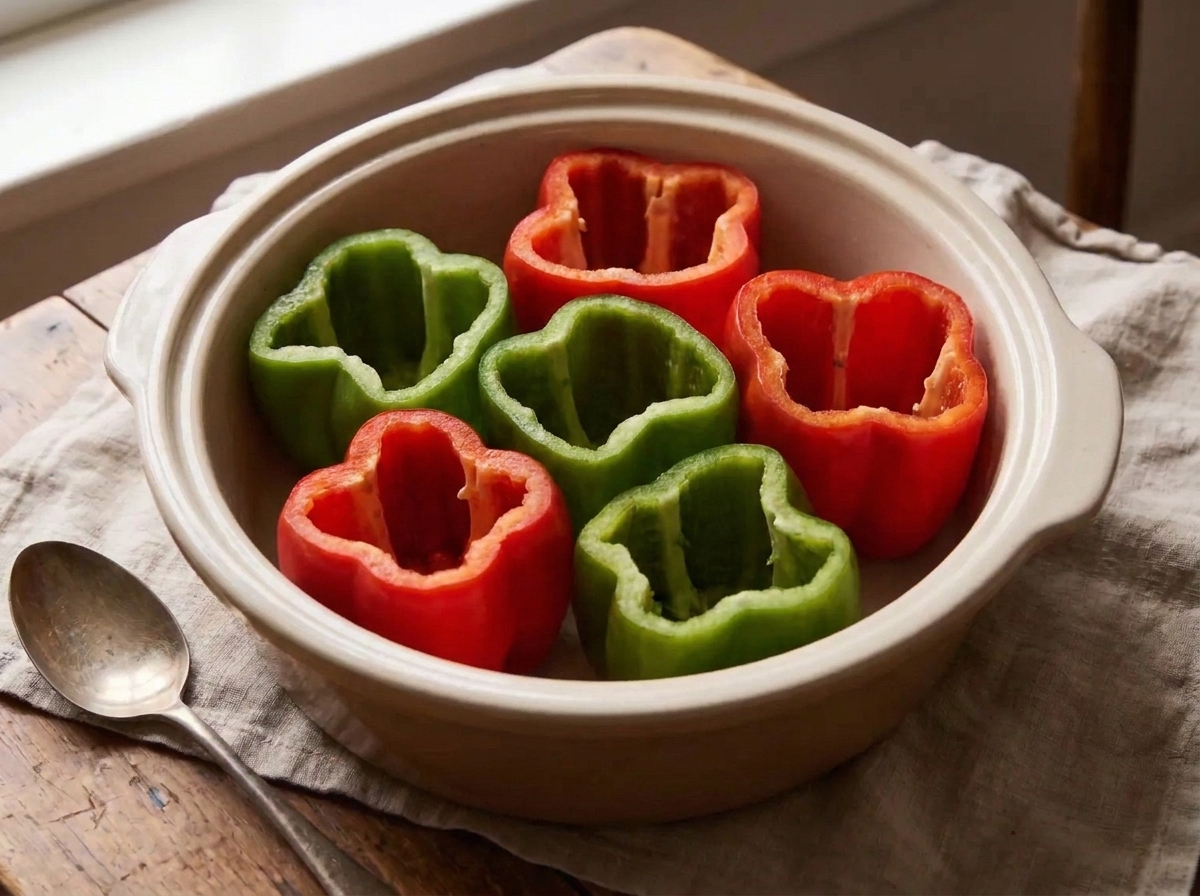
- Use the right dish: choose a baking dish where peppers fit snugly shoulder-to-shoulder. They should help hold each other up.
- Add a shallow sauce layer: too much liquid makes them bob and shift; too little can scorch.
- Cover first: covering helps cook the pepper evenly without over-reducing sauce, then uncover at the end for a better top.
Slow cooker: snug is everything
- Choose similar-sized peppers: uneven peppers cook unevenly, and the softest one will be the first to slump.
- Pack them tightly: the peppers need to brace each other. A wider slow cooker where peppers have space to tip is the hardest setup.
- Prop them if you need to: if your crock is wide, crumple a few balls of foil and tuck them between peppers to act like little bumpers and help keep them standing.
- Keep liquid low: use a small amount of sauce at the bottom, not a bath.
- Do not overcook: once peppers are very soft, they lose the structure needed to stay upright.
Oven or slow cooker: my cheat sheet
Here is my real-life decision tree when I am standing in my kitchen, garlic in one hand, peppers in the other.
- Choose the oven if: you want peppers that hold their shape, you like a little browning, you want a faster cook, or you care about a neater presentation.
- Choose the slow cooker if: you want a very tender pepper, you want hands-off cooking, or you are okay with a softer, saucier end result.
| Category | Oven | Slow cooker |
|---|---|---|
| Pepper softness | Tender, can keep structure | Very soft, more likely to slump |
| Liquid needs (cooked rice) | Moderate sauce in pan | Less added liquid, moisture builds |
| Liquid needs (uncooked rice) | Possible but finicky | Tricky, can cook unevenly |
| Cook time | About 35 to 55 minutes (medium peppers, warm filling) | LOW 3 to 5 hours, HIGH 1.5 to 3 hours (varies by cooker) |
| Keeping peppers upright | Easier with snug baking dish | Harder, needs tight packing or foil supports |
Quick questions I get a lot
Do slow cooker stuffed peppers get watery?
They can. The pepper walls release liquid as they cook, and the slow cooker lid traps steam. If your filling is already saucy and you also add a lot of liquid to the crock, the filling can turn loose. Use cooked rice, drain any watery ingredients well, and keep added sauce to a modest layer at the bottom.
Can I get browning on top in a slow cooker?
Most slow cookers do not brown well. If you want a golden top, finish the peppers in the oven or under the broiler for a few minutes after slow cooking. Be gentle when transferring because they will be softer.
Why did my rice turn out crunchy inside the pepper?
Most often it is because there was not enough accessible liquid for the rice to absorb, or the rice was packed too tightly inside the pepper. This is especially common with uncooked rice in a slow cooker. For the most consistent results, use cooked rice, or make sure your filling is quite loose and saucy if you are starting with uncooked.
How do I keep peppers from tipping over in the oven?
Use a snug baking dish and peppers with relatively flat bottoms. If a pepper wobbles, shave off a paper-thin slice from the bottom to level it without making a hole. Nestling peppers shoulder-to-shoulder is the simplest trick that works almost every time.
Is it better to cook stuffed peppers covered or uncovered in the oven?
Covered first, uncovered last is my favorite. Covering helps the peppers soften and keeps the filling from drying out. Uncovering for the final stretch lets excess sauce reduce a bit and gives you a better top texture.
My personal pick
If I am cooking stuffed peppers for a cozy weeknight dinner with the prettiest presentation and the best texture control, I go oven. If I am making them on a day I know I will be running around, I go slow cooker, but I accept that the peppers will be softer and I keep the sauce minimal.
Either way, I fully support adding one more clove of garlic than the recipe suggests. That part is non-negotiable in my kitchen.