

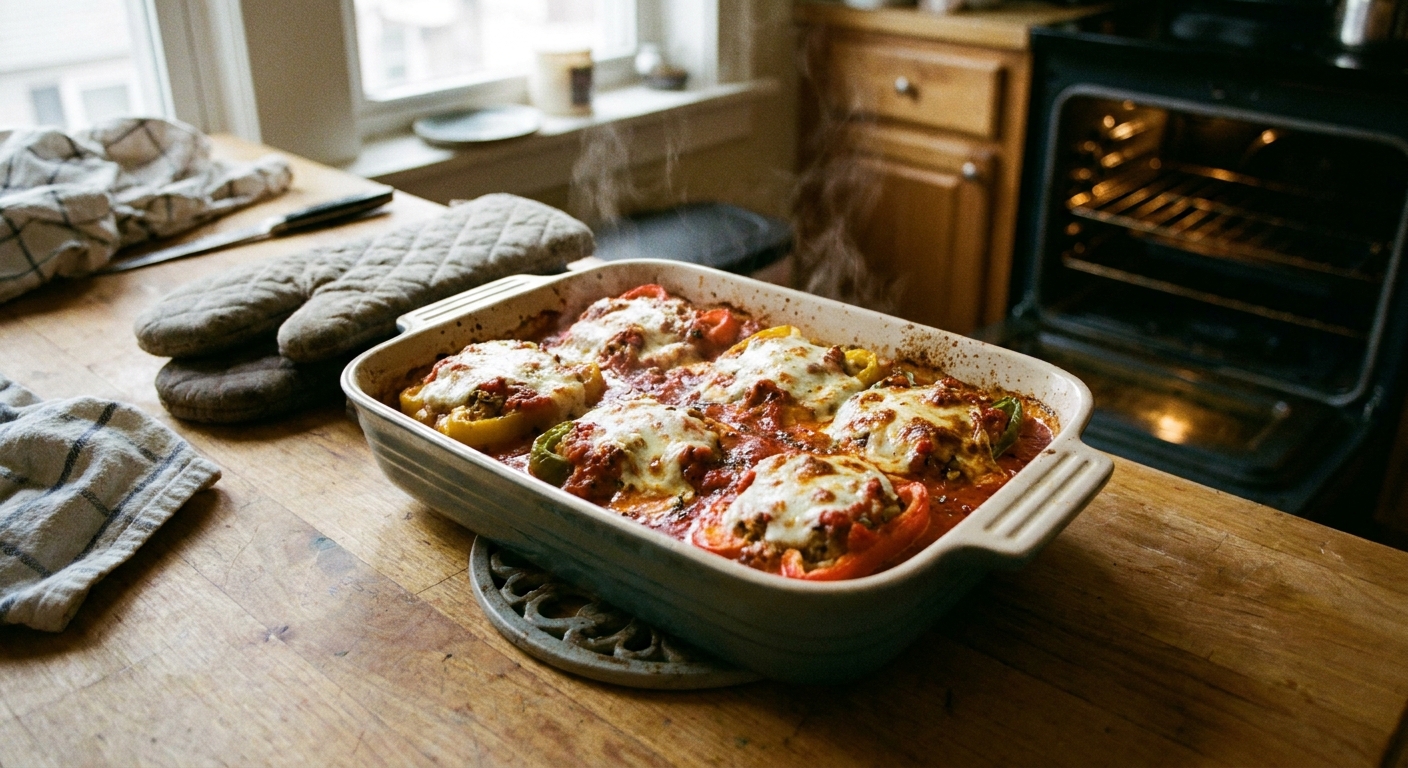
I have made stuffed peppers for years, and the funny thing is, it is rarely the filling that decides whether dinner feels like a win. It is the pepper. Choose the right one and your peppers hold their shape, stay tender, and taste like they belong with whatever you are stuffing inside. Choose the wrong one for your recipe or timeline, and you can end up with a pepper that is either too bitter, too sweet, or a little too floppy for the time you want it in the oven.
So if you are standing in the produce aisle debating green vs. red bell peppers for stuffing, here is exactly how I decide, with real-world details like sweetness, wall thickness, price, and how long they stay tender without collapsing.

The quick answer: which should you buy?
If you just want the decision without the deep dive, here is my weeknight rule of thumb.
- Choose green bell peppers if you want a more savory, traditional stuffed pepper vibe, especially with tomato sauce and a rich filling. They are also usually the most budget-friendly.
- Choose red bell peppers if you want a sweeter, mellow pepper flavor and a softer bite that feels extra cozy and family-friendly.
- Worried about them collapsing? In my experience, green peppers often hold their structure a bit longer, while red peppers often get tender faster. The difference is not huge, but you will notice it if you bake for a long time or reheat multiple times.
Flavor: sweet vs. green bite
In many grocery stores, green bell peppers are typically the earlier, less ripe stage of the same general type of pepper that can ripen to red (and sometimes yellow or orange, depending on the variety). That is why the flavor difference can be so clear.
Green bell peppers
- Flavor: grassy, slightly bitter, very peppery.
- Best when: your filling is bold and savory and you want the pepper to taste like a vegetable, not a sweet background note.
- My favorite use: classic, tomato-forward stuffed peppers where you want contrast.
Red bell peppers
- Flavor: noticeably sweeter, fruitier, and rounder.
- Best when: you want the whole dish to taste mellow and comforting, or you are feeding kids or anyone sensitive to bitterness.
- My favorite use: cheesy stuffed peppers, or fillings with herbs and grains where you want the pepper itself to add sweetness.
One helpful mental picture: green peppers act like a savory wrapper. Red peppers act like a naturally sweet sauce ingredient that happens to be edible as a bowl.
Quick note on yellow and orange peppers: if you love the idea of red but want something a little less sweet, yellow and orange are a great middle ground. In my kitchen they usually land between green and red in both flavor and tenderness.
Wall thickness: which is sturdier?
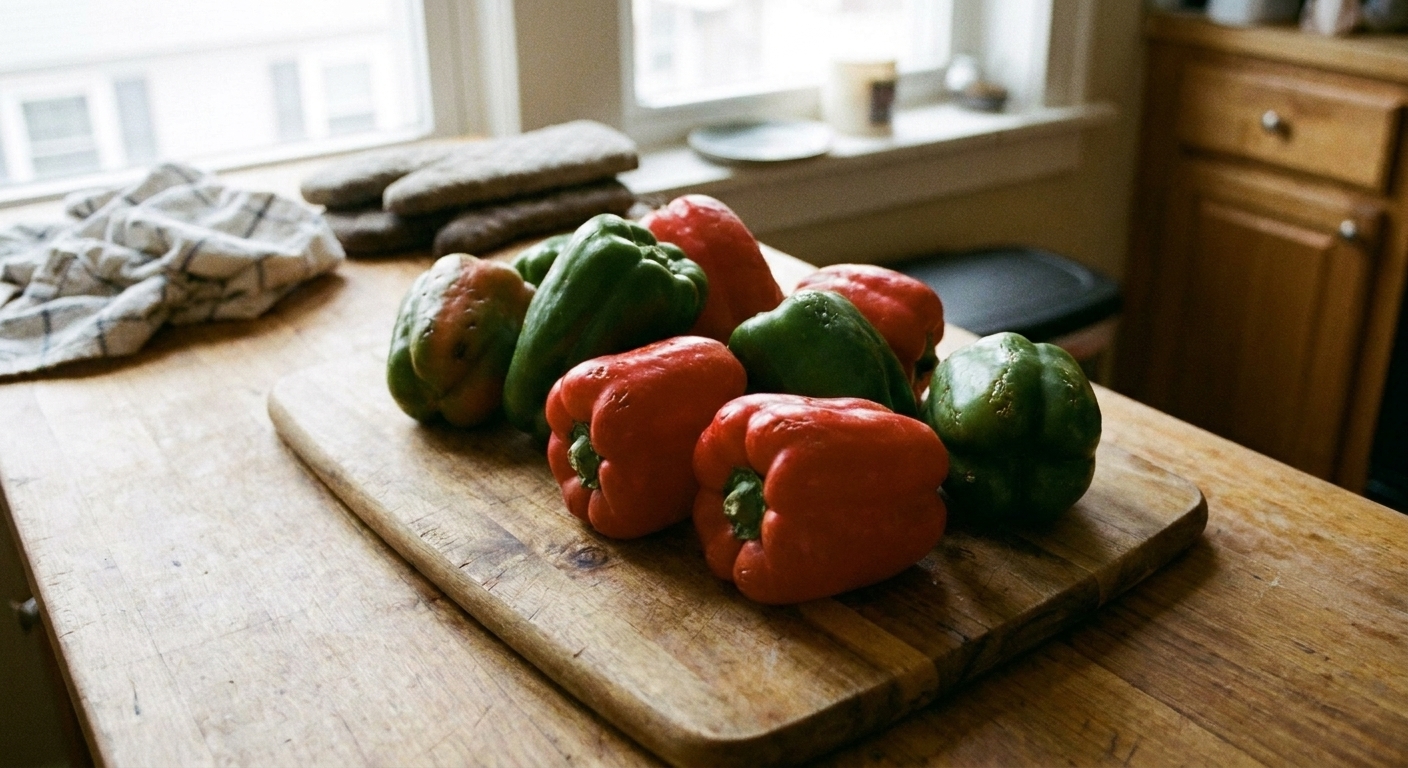
When people say a pepper is “good for stuffing,” they usually mean two things: it has enough interior space and it has sturdy walls that do not slump.
Here is the honest truth from my kitchen: wall thickness varies more by the individual pepper than by the color. That said, shopping patterns are real.
- Green bell peppers are often a touch firmer in the store and can feel sturdier because they are less ripe.
- Red bell peppers are often slightly softer, which can read as thinner even when the wall is not actually much thinner.
How to pick thick-walled peppers fast
- Look for a blocky shape with 3 to 4 distinct lobes. It is not a guarantee, but it is a good sign the pepper will stand up well and have a roomier interior.
- Lift it. A good stuffing pepper feels heavy for its size.
- Give a gentle squeeze. You want firm with a little give, not hard as a rock, and not squishy.
- Check the skin. Deep wrinkles and soft spots usually mean it will collapse sooner in the oven.
If you have ever had a pepper tip over in the baking dish, that blocky, stable shape matters as much as thickness.
Price: why green is usually cheaper
In most grocery stores, green bell peppers cost less than red. One big reason is time: peppers that stay on the plant longer to fully ripen take more resources, and there is more chance of damage before harvest. Season and location can still swing prices, but the general pattern holds.
- Green: typically the best value for a big batch of stuffed peppers.
- Red: often priced higher, but the sweetness can let you rely less on added sugar or extra sauce for balance.
If you are cooking for a crowd, I often suggest going green and putting your money into a great jarred marinara, better cheese, or fresh herbs. If you are making a smaller batch and want the peppers to taste special, red can be worth it.
Tender without collapsing
This is the part most people actually care about: How long can the pepper bake and still hold its shape?
Both green and red bell peppers can work beautifully for stuffing, but they soften differently, and a lot depends on the individual pepper, how fresh it is, and how long it sits in sauce.
Green peppers often stay structured longer
Because they are less ripe, green peppers usually keep a firmer bite for longer. If you like your stuffed peppers to stand tall and slice neatly, green is a safe bet, especially if you bake on the longer side.
Red peppers often get tender sooner
Red peppers are riper and naturally softer. They often reach that “perfect tender” stage earlier, but if you keep baking well past tender, they can slump more readily.
My no-collapse tips (either color)
- Do not overbake. Pull them when the pepper is tender but still has a little resistance at the thickest part.
- Use a timing guardrail. Most stuffed peppers bake somewhere around 350 to 400 degrees F. I start checking around the 30 to 40 minute mark, then decide from there based on the pepper thickness and how soft I want them.
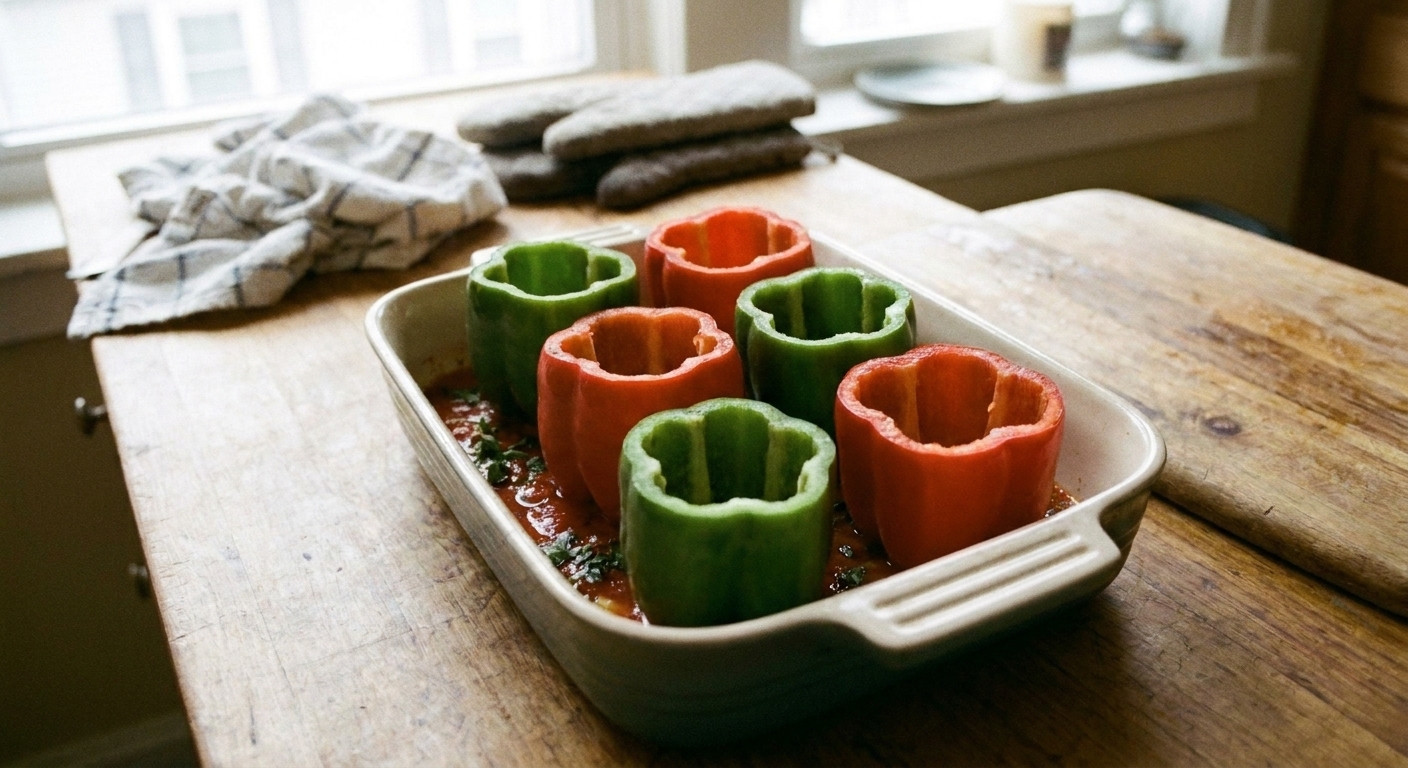
- Keep them snug. Arrange peppers tightly in the baking dish so they support each other and stay upright.
- Choose flat-bottomed peppers. If the bottom is pointy, trim a paper-thin slice off the base so it stands. Just do not cut so much that the filling leaks.
- Avoid very thin, wrinkly peppers. Thin peppers soften fast and once they start to slump, they do not regain structure.
If you want very tender peppers: you can par-bake or blanch them briefly before stuffing. Just go easy. Over-softening at the start makes collapsing more likely by the end, especially with red peppers.
How the filling affects your pick
I am not going to get into filling types here, but I will say this: the stronger and more savory your stuffing is, the more you might enjoy the contrast of green peppers. The milder and cheesier the stuffing is, the more red peppers can feel like the perfect match.
- Want a bold, classic stuffed pepper flavor? Green peppers keep the dish firmly in savory territory.
- Want a gentler, slightly sweeter overall bite? Red peppers make the whole thing feel softer and rounder.
FAQ
Do red bell peppers cook faster than green for stuffed peppers?
Usually, yes. Red peppers tend to become tender sooner because they are riper. If you like a firmer pepper, start checking earlier when using red so you can pull them at “tender, not collapsing.”
Are green peppers tougher than red peppers?
They can be. Green peppers often have a firmer texture and a more assertive flavor. That firmness is helpful if you want the peppers to hold their shape through a longer bake or multiple reheats.
Which color is best if I am meal prepping stuffed peppers?
If your priority is structure after reheating, I lean green. Red works too, but it can soften more by day two or three, especially if there is plenty of sauce in the dish.
Can I mix colors in one pan?
Absolutely, and it is one of my favorite moves for a dinner party. Just know the reds may get tender a little sooner, so aim for “just tender” and let carryover heat finish the job.
What matters more than color when choosing peppers for stuffing?
Shape and freshness. Look for peppers that are blocky, heavy for their size, and firm with glossy skin. Those traits do more to prevent collapsing than the color alone.