

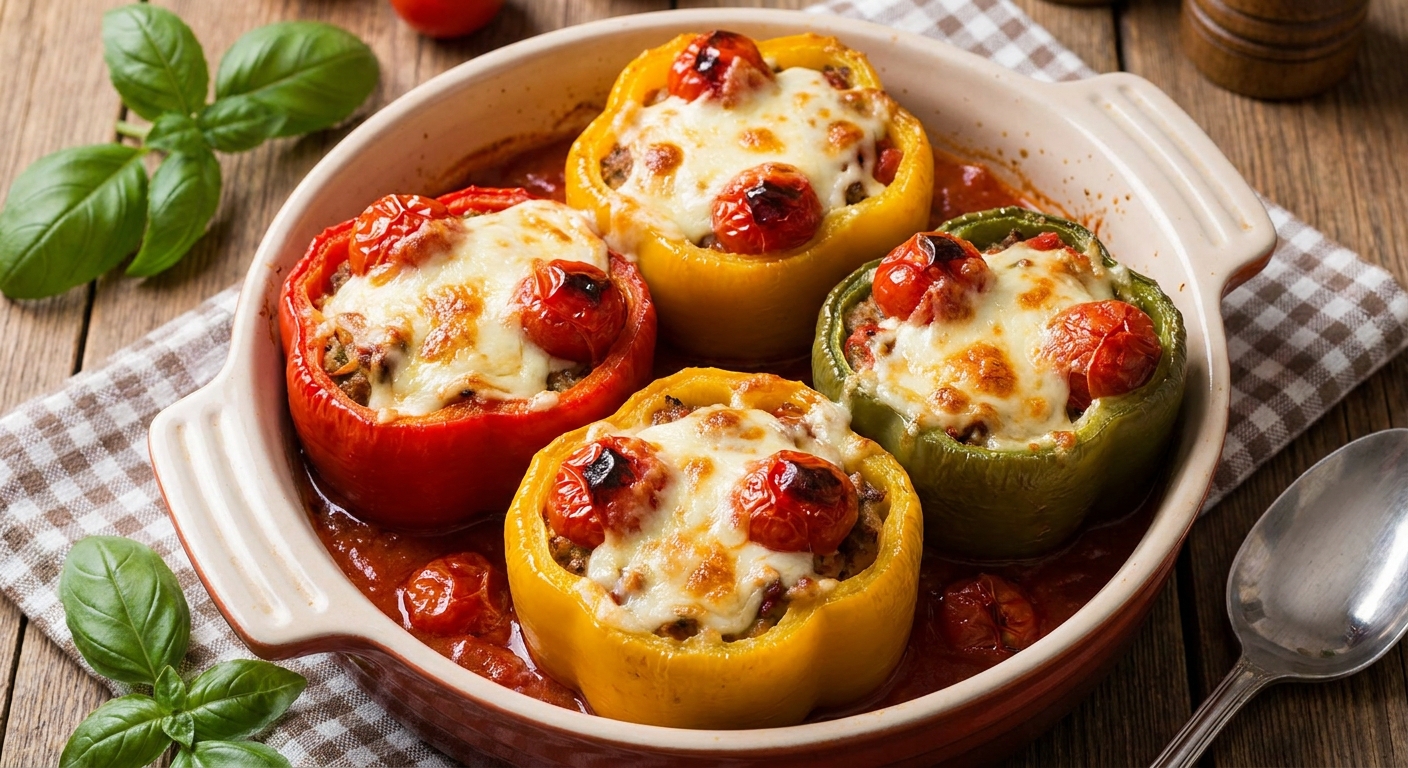

I have made stuffed bell peppers more times than I can count, and if there is one thing that makes or breaks them, it is the rice. Too dry and you get that dreaded crunchy center. Too wet and the peppers slump, split, and spill their cozy filling all over the pan. The good news is you can use either cooked rice or uncooked rice successfully, as long as you match the liquid and bake setup to the choice you make.
Below is exactly when I use each method, how much liquid it needs, and the little “teacher tricks” I rely on so the peppers bake up tender with a filling that tastes like it was meant to be there.
The quick answer
Most classic stuffed bell pepper recipes work best with cooked rice. It is reliable, faster, and easier to season correctly.
Uncooked rice can work, but it needs extra liquid and a tight, steamy bake. If you do not build in that steam, the rice absorbs the available moisture in the filling and can stay crunchy in the center.
- Choose cooked rice if you want predictable texture, shorter bake time, and easy make-ahead.
- Choose uncooked rice if you want a one-pan, no-pre-cook approach and you are willing to watch liquid and cover time closely.
What changes when rice is raw
Stuffed peppers are a small, enclosed cooking environment. Rice behaves differently inside a pepper than it does in a pot because it has limited access to liquid and heat.
Cooked rice
- It is already hydrated. It mainly needs heat and a little moisture so it does not dry out.
- Bake time is based on the peppers, not the rice. You are waiting for the pepper walls to soften and the filling to heat through.
- Seasoning is easier. You can taste and adjust the filling before stuffing.
Uncooked rice
- It must absorb liquid inside the pepper. If it cannot, it stays firm or crunchy.
- It needs time plus steam. Rice cooks best with trapped moisture, so covering matters.
- It competes for moisture. Raw rice absorbs available liquid from the tomatoes, meat, and any sauce in the pan unless you add enough extra.
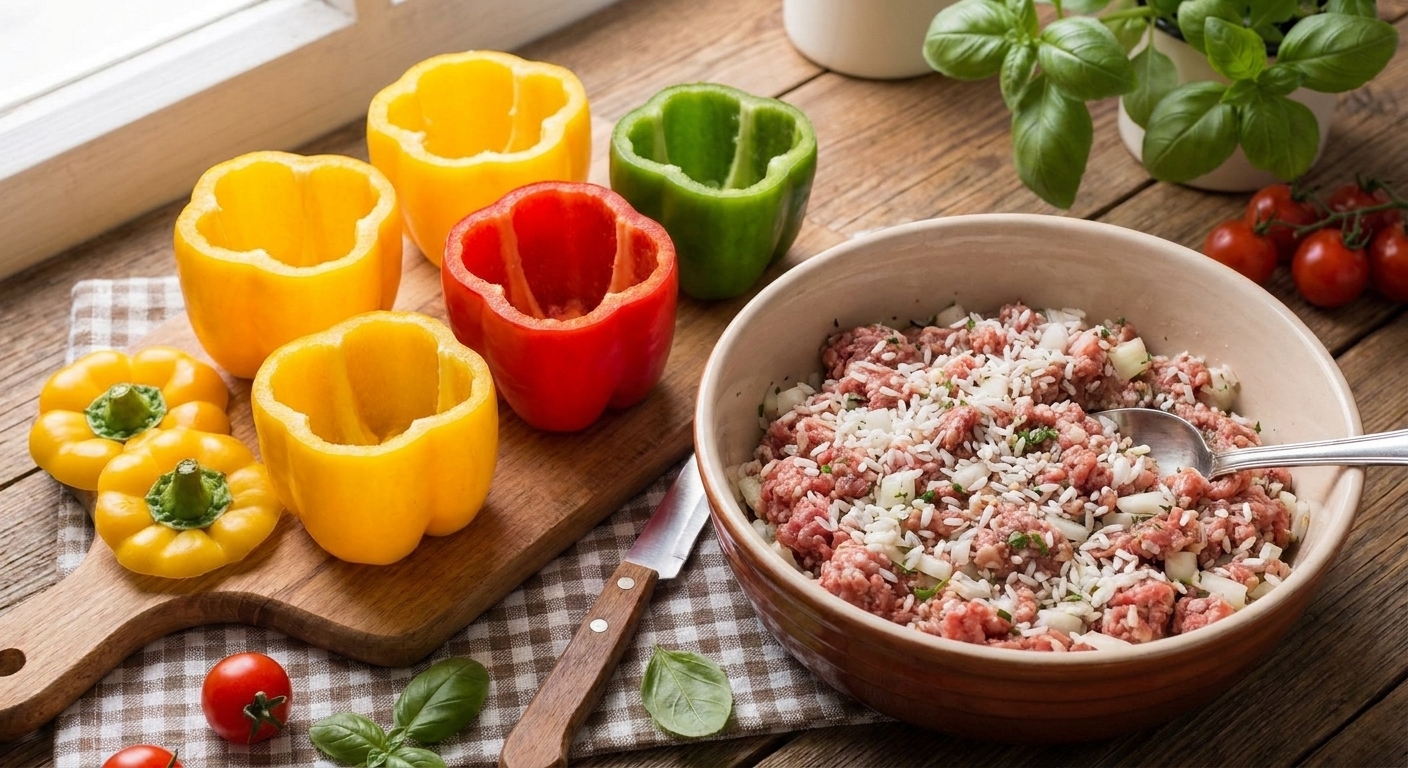
Cooked rice liquid needs
With cooked rice, think “moist, not soupy.” You want the filling to be cohesive and juicy, but not loose enough to slosh around. The peppers will release some moisture as they bake, and any sauce in the pan will steam up and help.
My baseline rule
For every 1 cup cooked rice added to the filling, start with 2 to 4 tablespoons of moisture in the filling itself, then adjust based on what you see. (Very lean meat, extra-dry leftover rice, or a longer reheat often wants the higher end.)
That moisture can be:
- Tomato sauce, crushed tomatoes, or salsa
- Broth
- A few spoonfuls of the pan sauce
- Rendered juices from browning meat (do not drain it bone-dry)
What you should see
The mixture should look glossy and spoonable, not crumbly, and not swimming. If you squeeze a spoonful against the side of the bowl, it should hold together but still look juicy.
Pan liquid still helps
Even with cooked rice, I love adding a shallow layer of liquid to the baking dish. It prevents scorching and creates gentle steam so the peppers soften evenly.
- Add about 1/2 cup liquid to the bottom of a 9x13-inch dish, or enough for a thin layer around 1/4 inch deep (tomato sauce, broth, or a mix).
- Cover for the first part of baking if you want softer peppers, then uncover to finish.
Typical bake setup
Every oven and pepper size is a little different, but this is my reliable starting point for meat fillings with cooked rice:
- 350 to 375 F
- Covered 25 to 35 minutes, then uncovered 10 to 15 minutes to brown the top
- They are done when the peppers are tender and the filling is hot all the way through
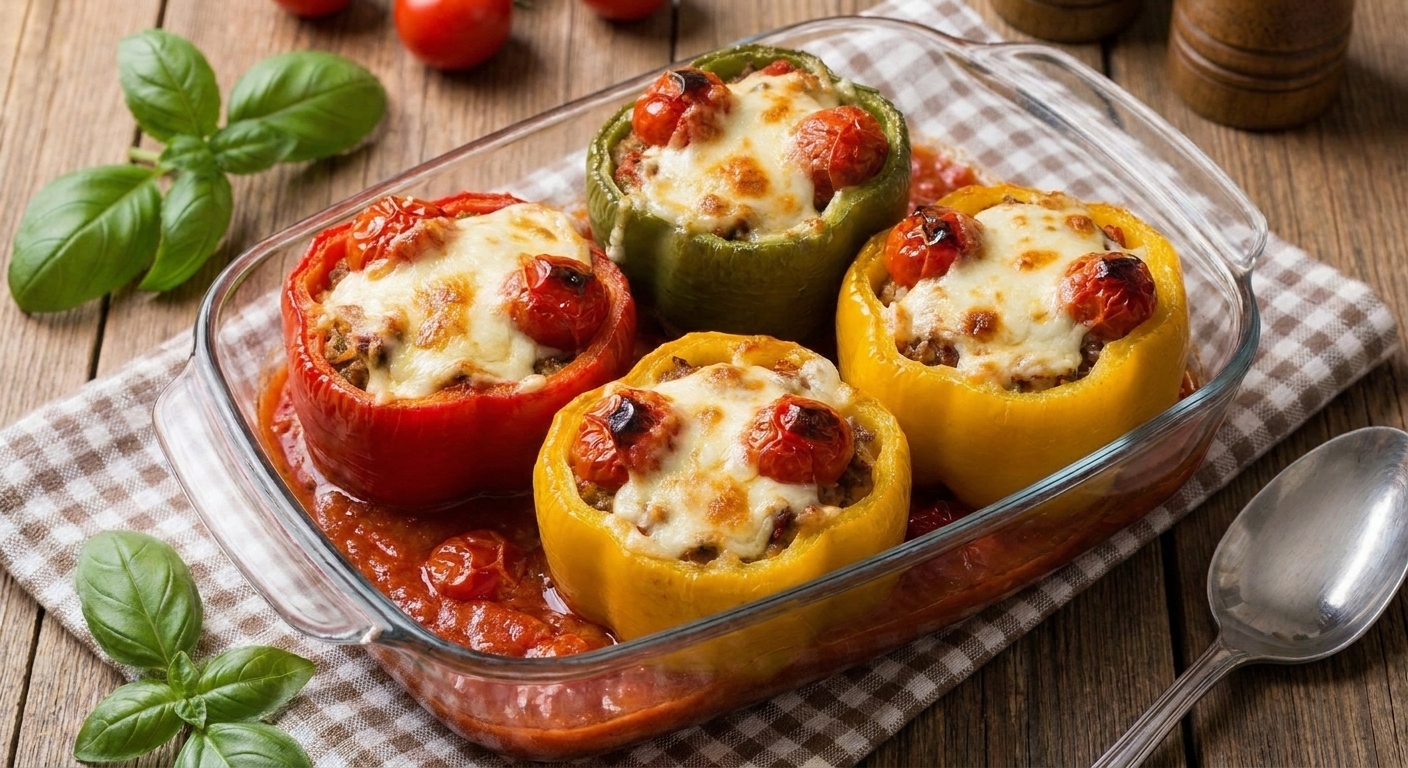
Uncooked rice liquid needs
If you want to use uncooked rice inside the pepper, you have to treat the pepper like a mini rice cooker. That means enough liquid and a covered bake long enough for absorption.
Choose the right rice
Use long-grain white rice for best results. It cooks more predictably in this setup.
Jasmine and basmati can work too, but they can cook a little softer and more fragrant, and the exact liquid needed may shift slightly by brand. Short-grain rice tends to turn stickier and can feel more dense in the center of a pepper.
Brown rice and wild rice blends take much longer and are more likely to stay chewy unless you par-cook them first.
My baseline rule
For every 1/2 cup uncooked long-grain white rice in the filling, start with 3/4 to 1 cup liquid somewhere in the system. This assumes a tightly covered bake and at least some liquid in the pan. If your “liquid” is thick sauce (not broth), you may need a bit more.
In practice, that liquid is usually split between:
- In the filling: tomatoes plus broth so the mixture is noticeably wet.
- In the pan: a generous layer of sauce or broth to create steam.
What “wet enough” looks like
Before stuffing, the raw-rice filling should look looser than you think it should. If it resembles a tidy meatball mixture, it is too dry for raw rice. I want it to mound on a spoon, but I also want to see moisture around the edges of the bowl.
Covering is not optional
Plan to cover tightly for most of the bake. “Tight” means a lid that fits well, or foil crimped firmly to the rim of the baking dish so steam cannot easily escape. Avoid a loose foil tent if you are trying to cook rice from raw.
Typical bake setup
For raw rice, give it the time and steam it wants:
- 375 F
- Covered 45 to 60 minutes, then uncovered 10 to 15 minutes to reduce and brown
- If the rice is still firm at the end, add a small splash of hot broth to the pan, re-cover tightly, and give it 10 more minutes
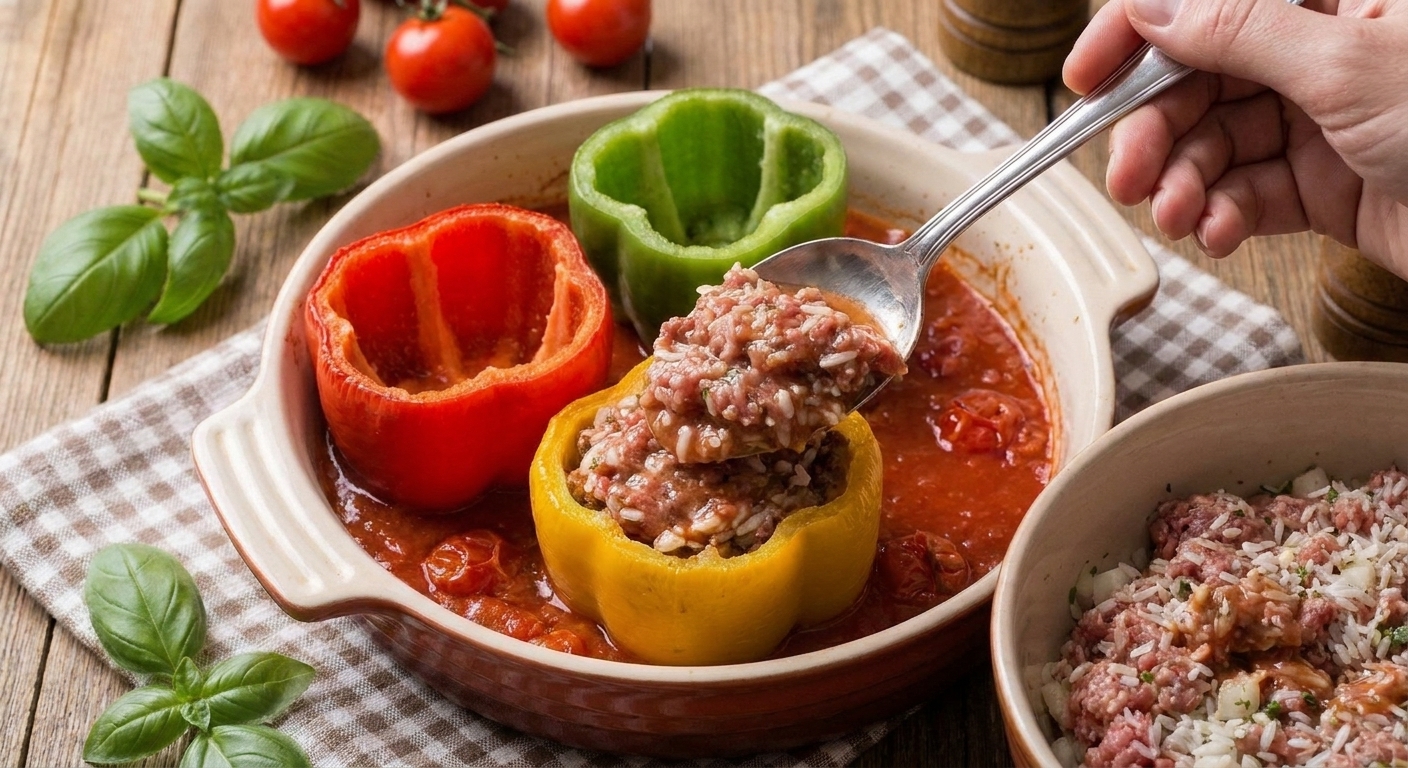
How to avoid crunchy centers
Crunchy rice happens for three reasons: not enough liquid, not enough time, or not enough trapped steam. Here is how to fix all three.
1) Add liquid in two places
- In the filling so the rice has direct contact with moisture.
- In the pan so the peppers bake in a humid environment.
2) Pack lightly
This one is sneaky. If you pack the filling down hard, you create a dense plug that heat and moisture struggle to penetrate. Spoon it in and gently settle it. Think “snug,” not “compressed.”
3) Cover tightly, then uncover
A good pattern is:
- Covered first to steam-cook the rice and soften the peppers.
- Uncovered at the end to reduce excess moisture and brown the top.
4) Watch your pepper size
Extra-large peppers create a thicker, deeper filling column, which makes the center slower to cook. If your peppers are jumbo, either:
- Use cooked rice, or
- Extend the covered baking time and make sure your filling is very moist.
5) Rest before serving
Let stuffed peppers sit 5 to 10 minutes after baking. Rice continues to absorb and soften during this rest, and the filling firms up so it slices and scoops nicely.
How to stop split peppers
When peppers split or cave in, it is usually because the pepper was overbaked dry, under-supported in the dish, or stuffed too aggressively.
Pick peppers that can stand up
- Look for peppers with wide, stable bottoms.
- If they wobble, slice a paper-thin sliver off the bottom to level them. Go slow so you do not create a hole.
Do not overfill
Leave a little space at the top. Rice expands, cheese bubbles, and the filling needs room to breathe. Fill to about 1/4 inch below the rim.
Use pan sauce as insurance
A dry oven is rough on peppers. Even a small amount of sauce or broth in the dish helps moderate the heat and keeps the pepper walls from wrinkling and tearing.
Cover for tenderness, uncover for strength
If you bake uncovered the whole time, pepper edges can dry out and split. If you bake covered the whole time, they can get very soft. A mixed approach gives you tender peppers that still hold their shape.
Which method to choose
Here is how I decide on a busy weeknight.
Use cooked rice when you want:
- The most consistent results
- A shorter bake time
- A filling you can taste and adjust before stuffing
- Great make-ahead leftovers
Use uncooked rice when you want:
- Fewer pots and pans
- A softer, more casserole-like filling texture
- A method that leans on a tight cover and enough sauce
My personal default
I reach for cooked rice almost every time, especially if I am teaching a friend how to make stuffed peppers for the first time. It removes the biggest variable.
FAQ
Can I use leftover rice from the fridge?
Yes, and it is honestly perfect for stuffed peppers. Cold rice is a little drier, so add an extra splash of tomato sauce or broth to the filling so it reheats tender instead of chalky.
What about instant rice or parboiled rice?
Instant rice can turn mushy because it is designed to cook quickly, and stuffed peppers cook more slowly. Parboiled rice is more forgiving than instant and can work, but it still needs enough liquid and a covered bake if you are using it uncooked.
Can I use brown rice if I really want to?
You can, but I strongly recommend using cooked brown rice in stuffed peppers. If you try to cook brown rice from raw inside the pepper, it often finishes unevenly unless you extend the bake significantly and keep the dish covered with plenty of liquid.
Why is my filling watery even when the rice is cooked?
Usually it is one of these: the meat was not browned first (so it released liquid later), the tomatoes were very juicy, or the dish stayed covered too long. Uncover for the last portion of baking so steam can escape and the filling can set.
Should I pre-cook the peppers?
You do not have to, but a quick pre-soften helps if you like very tender peppers. You can bake them empty with a little water in the pan for 10 to 15 minutes, or blanch briefly. If you are using uncooked rice, pre-cooking peppers can help the pepper texture match the longer covered bake the rice needs.
How do I know meat stuffed peppers are safe to eat?
If your filling includes meat, the safest way is to use an instant-read thermometer. Aim for 160 F for ground beef or pork and 165 F for ground turkey or chicken in the center of the filling. This matters even more with raw rice methods since the bake is longer and more dependent on a tight cover.