

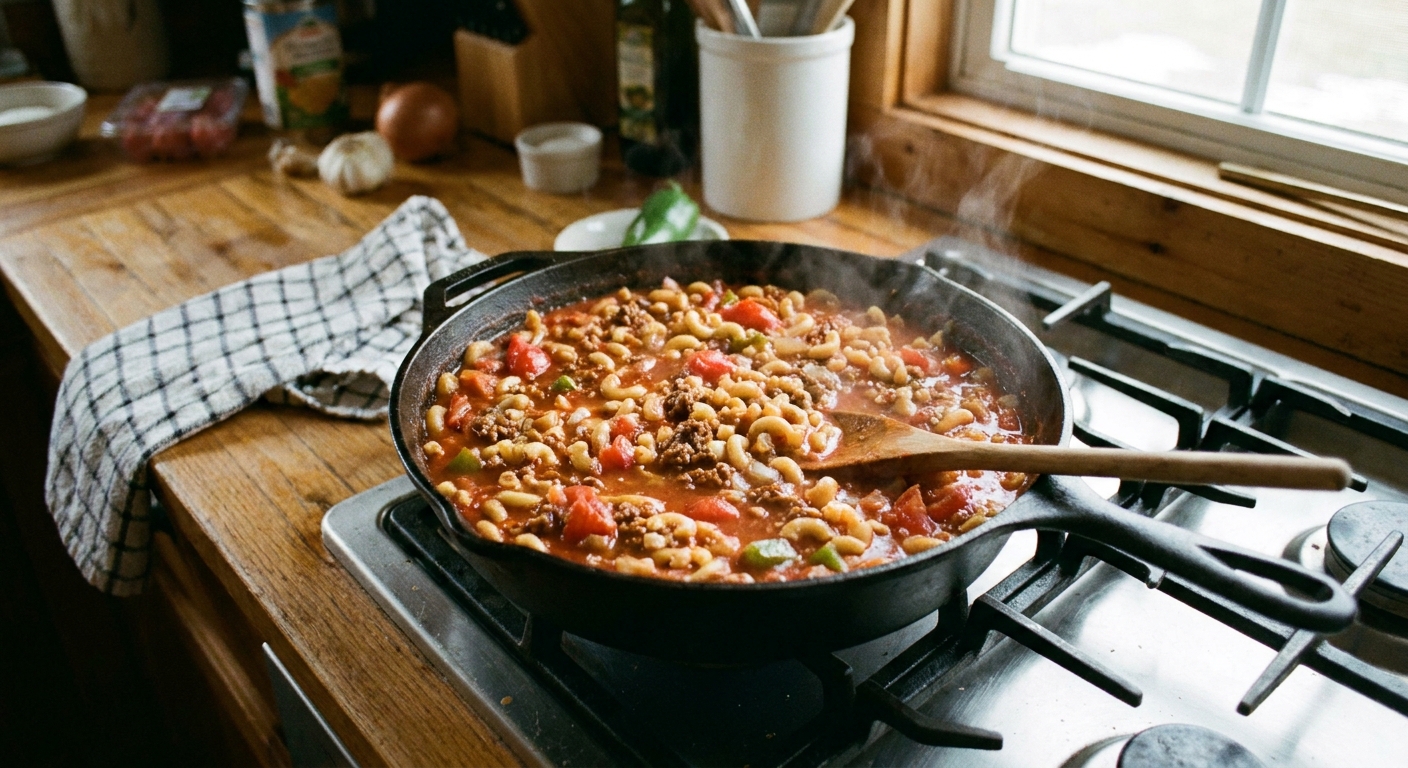
The quickest way to make American goulash go from cozy to frustrating is adding the macaroni at the wrong time. I have done it both ways: too early (hello, swollen noodles that steal all the sauce) and too late (tough pasta floating in tomato soup). The sweet spot is simple once you know what the pasta needs and what it does to your pot over time.

The best time to add macaroni
Add dry elbow macaroni when your goulash base is already simmering steadily, the meat is fully cooked, and the sauce tastes the way you want it to taste.
In practical terms, that means:
- After browning the beef and softening aromatics (like onion and garlic)
- After stirring in tomatoes, sauce, broth, and seasonings
- After bringing the pot to a gentle simmer for a few minutes so everything is hot and cohesive
- Before the sauce reduces too far
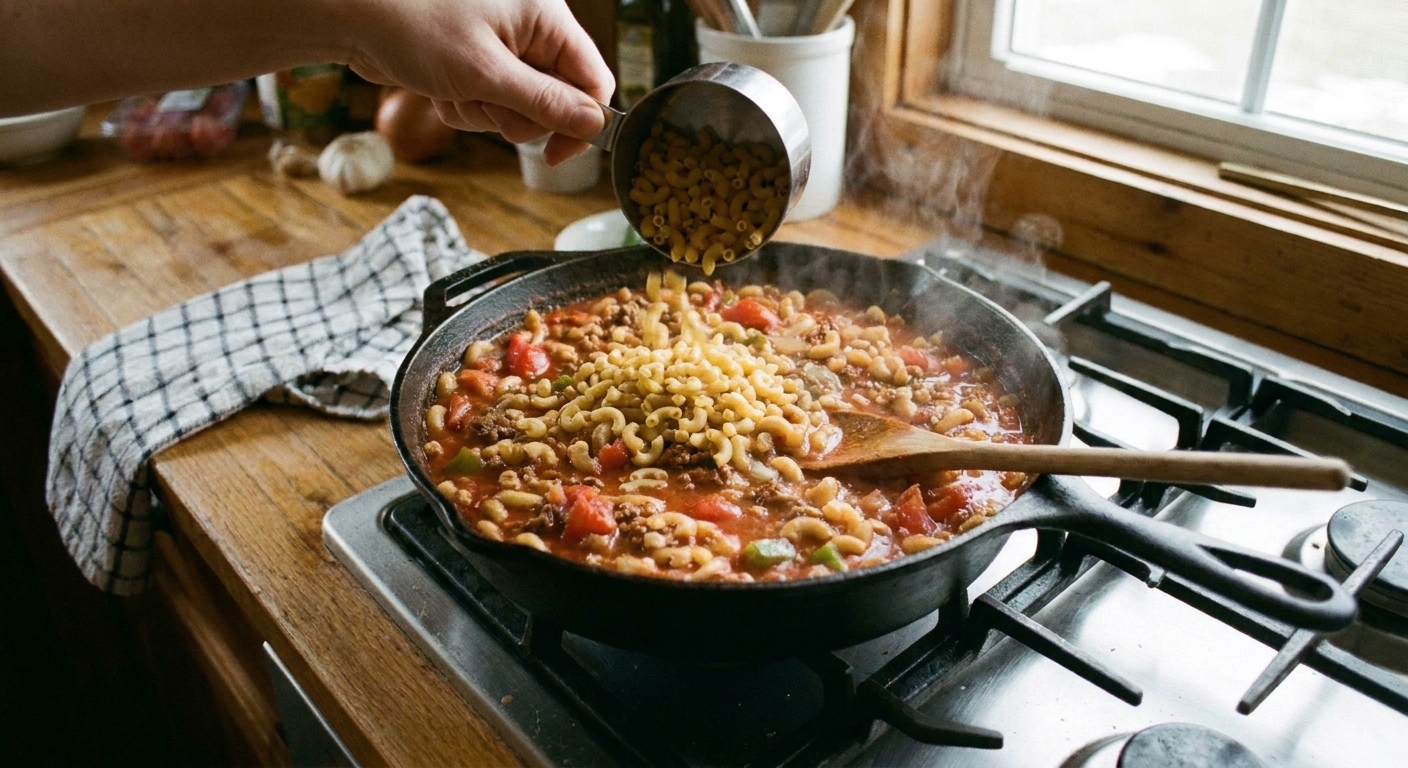
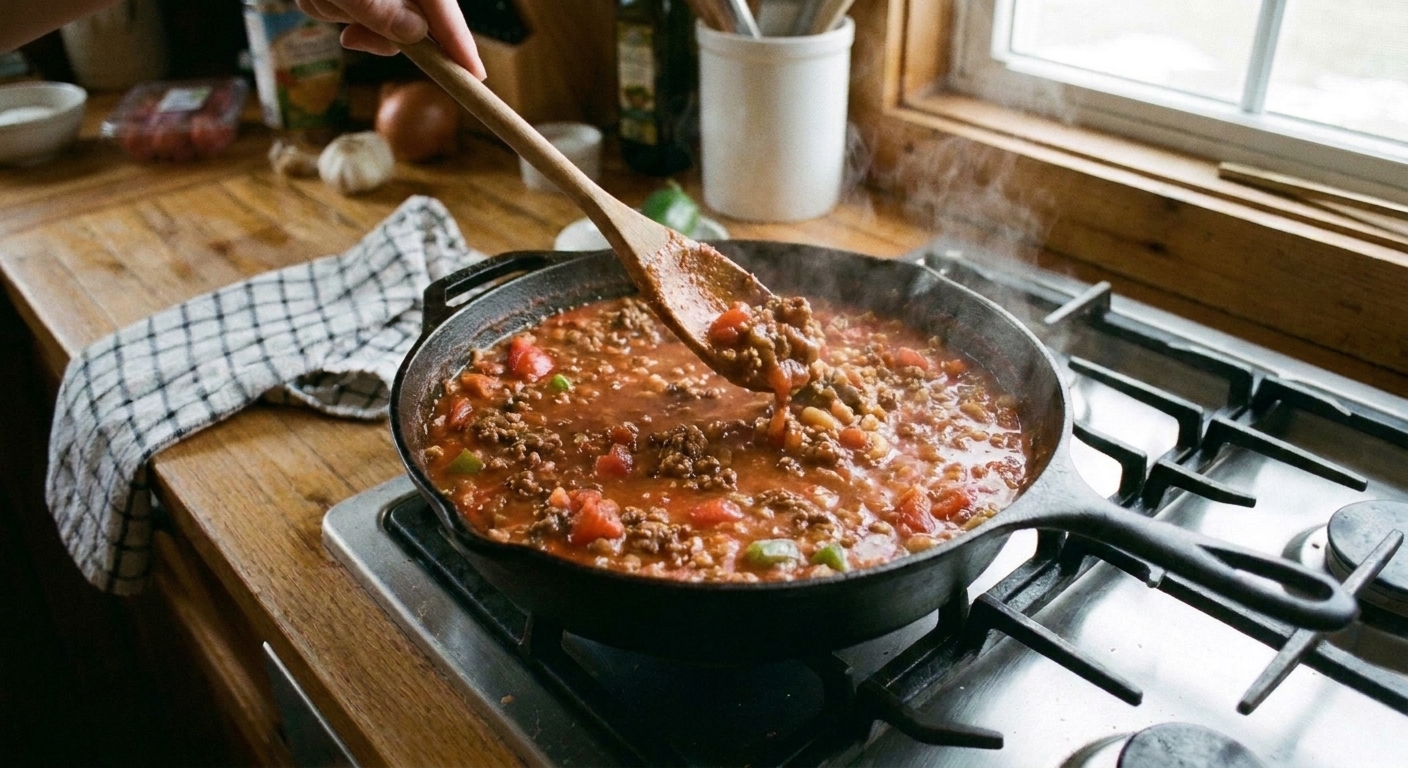
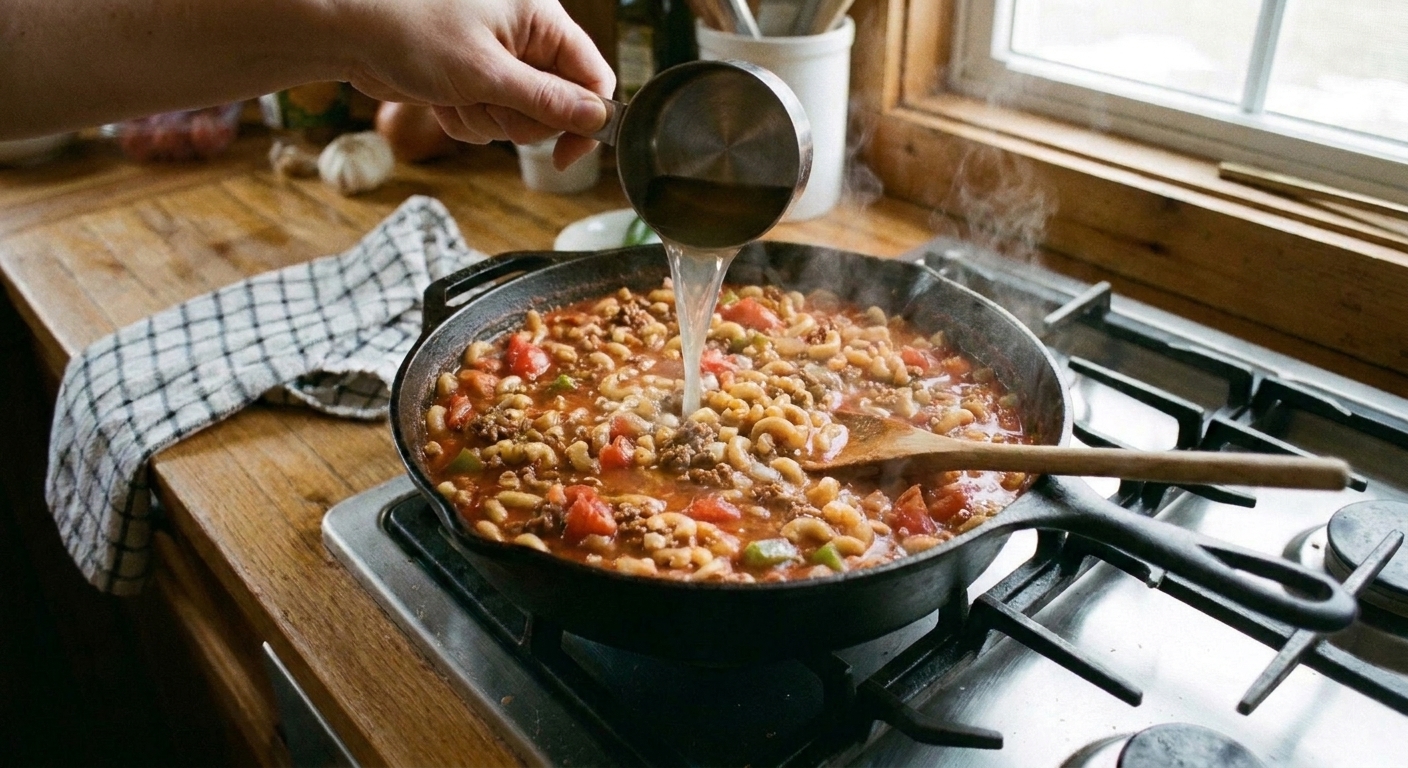
Once the sauce is simmering, stir in the pasta, reduce heat to maintain a gentle simmer, and cook until just tender. Stir a couple of times while it cooks so the elbows do not sit on the bottom and so they hydrate evenly.
Lid tip: If you want more predictable results, cover the pot for the first half of the pasta cook time to limit evaporation, then uncover at the end if you want the sauce to tighten up.
Why timing matters
Macaroni acts like a sponge. Add it too early and it has extra time to soak up liquid and go soft. Add it at the right time and it absorbs enough sauce to taste seasoned while still keeping a pleasant bite.
Use a simmer, not a hard boil
For goulash, you want the pasta to cook in a gentle simmer. A hard boil adds a lot of agitation and can reduce the sauce faster than you think, which is how you end up chasing the texture by adding liquid over and over.
Stop a touch early
If you are planning leftovers, cook the macaroni to just shy of al dente. It will continue softening from carryover heat and it will keep absorbing sauce as it sits. Those extra 1 to 2 minutes in the pot are often the difference between “perfect tonight” and “mushy tomorrow.”
How much liquid you need
The exact amount depends on your pot size, heat level, whether you cook covered, and how saucy you like your goulash. But here is a dependable starting point that you can adjust as you go:
For 1 cup of dry elbow macaroni, you will often end up needing about 2 to 3 cups of simmering, loose sauce (brothy tomato base) available in the pot.
That “loose sauce” includes the broth plus the watery portion of canned tomatoes and tomato sauce. You are not measuring it separately in most home kitchens, so use this as a checkpoint:
- Before adding pasta: the goulash base should look looser than you want to serve it. It should spoon like a thick soup, not like a finished pasta skillet.
- After adding pasta: the pot should return to a simmer quickly. If it looks dry right away, the pasta will cook unevenly.
A quick moisture test
Right after stirring in the macaroni, drag a spoon through the pot. If the trail fills in slowly and you see sauce bubbling up, you are in great shape. If the trail stays open and looks pasty or tight, stir in a splash of broth or water, about 1/4 cup at a time.
How long to cook macaroni
Most elbow macaroni takes 8 to 10 minutes to become tender, but cooking it in a thicker tomato sauce can take a bit longer than the box suggests.
- Start checking at 8 minutes.
- Stir, taste one elbow, and decide from there.
- If it is still chalky in the center, give it 2 more minutes and add a splash of liquid if the pot is tightening up.
When it is done, take the pot off the heat and let it sit for 3 to 5 minutes. This rest helps the sauce thicken evenly without overcooking the pasta on active heat.
Seasoning note: Pasta cooking in the sauce can mellow the salt and spices. Taste and adjust seasoning after the macaroni is tender, especially salt, pepper, and any Italian seasoning.
Preventing thick leftovers
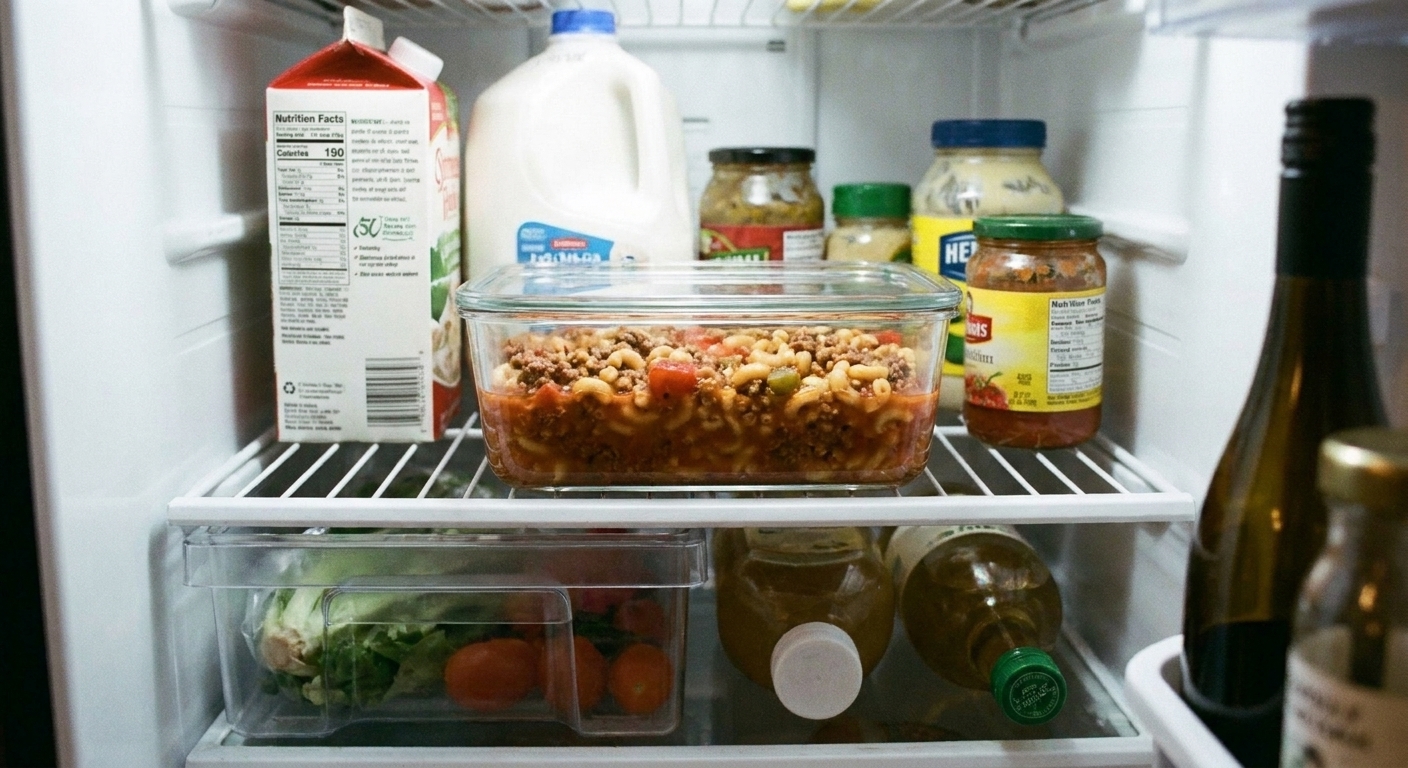
If you have ever opened the fridge to find your goulash turned into a thick, scoopable casserole, you did nothing wrong. Pasta keeps absorbing liquid as it sits. Tomato sauce also thickens as it cools. Together, they create that next-day texture shift.
Here are the two most reliable ways to keep leftovers pleasant:
Option 1: Keep it a little looser
When the macaroni is nearly done, consider stirring in an extra splash of broth and then turning off the heat. The goulash will look slightly looser at dinner, but it will reheat much more smoothly the next day.
Option 2: Store with a broth buffer
If you know you are making it mainly for leftovers, cool it and store it with a small amount of extra broth mixed in. Not enough to make it soupy, just enough to keep the pasta from drinking every last drop overnight.
How to loosen leftovers
My go-to move is to reheat gently and add liquid like you would for risotto: a little at a time, stirring until it becomes saucy again.
On the stovetop
- Put leftovers in a saucepan over medium-low heat.
- Add 2 to 4 tablespoons broth or water per bowl-sized portion.
- Cover for a few minutes so steam helps loosen everything.
- Stir, then add another splash if needed.
In the microwave
- Place goulash in a microwave-safe bowl.
- Add 1 to 3 tablespoons broth or water, then stir.
- Cover loosely.
- Microwave in 45 to 60 second bursts, stirring between rounds.
Broth adds the most flavor. Water works fine in a pinch. If you want extra richness, a spoonful of tomato sauce plus a splash of water is also lovely.
Quick questions
Can I cook the macaroni separately to avoid mushy leftovers?
Yes, and it is the most foolproof way to prevent bloating. Cook elbows separately to just al dente, then drain well and stir into hot goulash right before serving. If you are worried about carryover cooking, spread the drained pasta on a tray for a minute to let steam escape. I skip rinsing unless I truly need to stop the cooking fast, because rinsing washes off starch that helps sauce cling.
Should I rinse the macaroni if I cook it in the goulash?
No. When pasta cooks in the pot, you want the starch. It helps the sauce cling and gives goulash that cozy, slightly thick body.
My pasta is tender but the sauce is too thin. What now?
Take the pot off the heat and let it sit 5 minutes. If it is still thinner than you like, simmer uncovered for 2 to 3 minutes, stirring often. Tomato sauces tighten quickly once you stop adding liquid.
My sauce got too thick before the pasta finished cooking. Did I ruin it?
Not at all. Add broth or water in small splashes, stir well, and keep the heat at a gentle simmer. Thick sauce can insulate pasta and slow cooking, so loosening it actually helps the noodles finish properly.
Does pasta type change the timing?
A little. Elbows are the classic choice because they cook evenly and hold sauce well. If you use larger shapes, expect longer cook time and plan on a bit more liquid. Very small shapes can overcook quickly, so start checking early.