

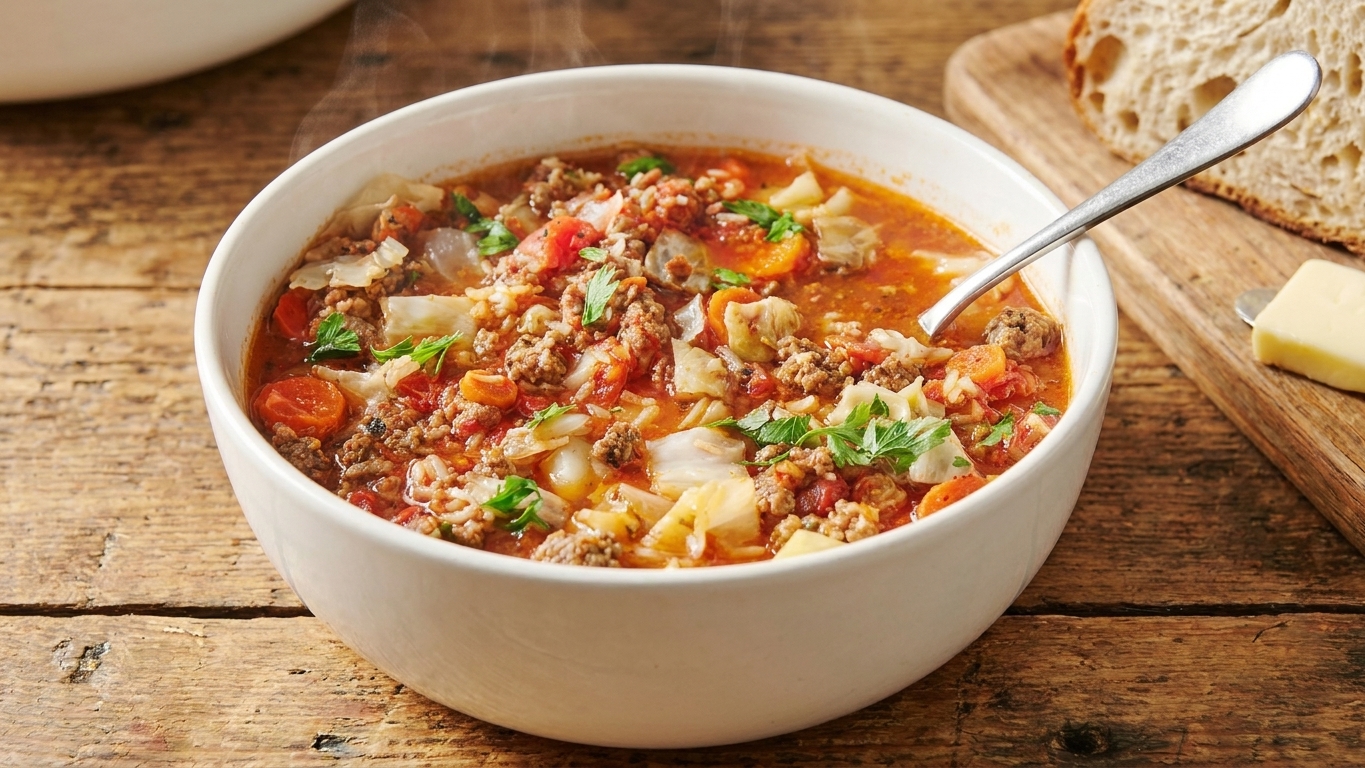
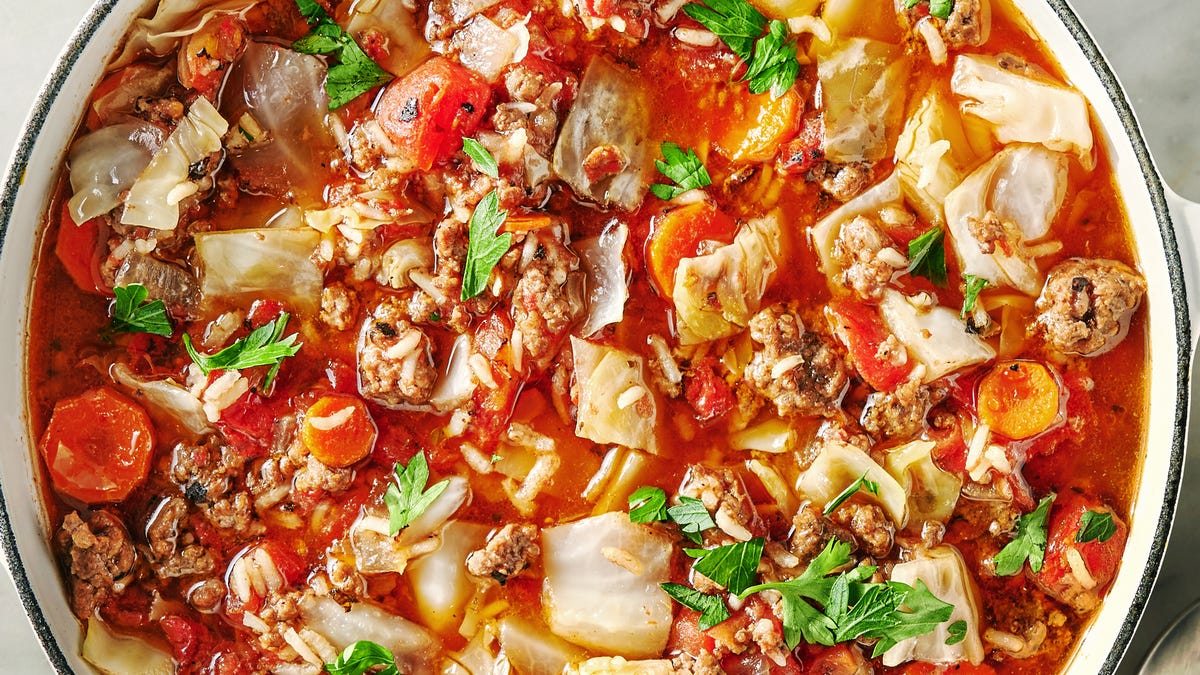
If you love the cozy, sweet tomato and beefy goodness of cabbage rolls but cannot be bothered to separate leaves, blanch, roll, and fuss, this soup is your weeknight best friend. It is everything I want from classic cabbage rolls, but in a big, forgiving pot: savory ground beef, a tangy tomato broth, tender cabbage, and little bites of rice that make it feel like dinner, not just soup.

I am also very particular about two things in cabbage roll soup: rice that stays distinct and cabbage that stays pleasantly tender. Below is exactly how I handle both so you get a soup that tastes like it simmered forever, but still feels fresh and hearty.
Tips for success
Rice that stays distinct: Rice is a tiny sponge, and it will keep drinking broth long after dinner is over. If you plan on leftovers (or you just hate bloated rice), cook it separately and add it to each bowl. If you want the easiest one-pot situation, rinse the rice first, then add it once the broth has simmered and the flavors have had a chance to settle in. Keep the heat at a gentle simmer, not a rolling boil, so the grains cook through without turning the soup starchy.
Cabbage that stays tender, not limp: Cabbage goes from perfect to sad fast if it hangs out in hot broth too long. Add it toward the end, keep the pieces a little larger than you think you should, and simmer only until it is tender with a bit of structure left. You want it spoonable, not shredded into confetti.
One more thing: Do not skip that quick sauté with tomato paste. It is a small step that makes the whole pot taste deeper and more rounded, like the “baked all afternoon” version of cabbage rolls, minus the baking.
Consider this your low-stress, big-flavor dinner. And yes, there is plenty of garlic. Always.
The idea
Why This Recipe Works
- Same flavors as cabbage rolls, simpler method: Browning beef with onion and garlic builds that classic filling taste without any wrapping.
- Tomato broth with balance: Tomato sauce plus diced tomatoes create body and acidity, while a small touch of brown sugar mimics the gentle sweetness you get after cabbage rolls bake.
- Rice stays fluffy and separate: You can cook it in the soup at the right moment or cook it separately for the best leftover texture.
- Cabbage is added late: A shorter simmer keeps it tender but still a little bitey, not mushy.
Shopping
Ingredient Notes
Ground beef: I like 85 to 90 percent lean. Very lean beef can taste a bit flat. Very fatty beef can leave the soup greasy, but you can drain it.
Cabbage: Green cabbage is the classic. Slice it into 1 inch pieces or ribbons. Keep them on the larger side so they hold up in the broth.
Rice: Long grain white rice is the easiest for distinct grains. Jasmine works too. Brown rice takes longer and should be cooked separately unless you want a much longer simmer.
Tomatoes: Use both tomato sauce (for a smooth, cabbage-roll style base) and diced tomatoes (for texture). Fire-roasted diced tomatoes add extra depth if you like a slightly smoky vibe.
Broth: Beef broth gives the most classic flavor. Chicken broth works in a pinch.
Seasoning: Cabbage roll flavor usually has a little warmth. Paprika is great here, and a bay leaf adds background savoriness.
Get set up
Equipment You Will Need
- Large heavy-bottomed pot or Dutch oven (5.5 to 7 quart)
- Wooden spoon or sturdy spatula
- Chef’s knife and cutting board
- Measuring cups and spoons
- Optional: fine-mesh strainer (if you rinse rice)
Technique
Tips for Getting It Right
When to add the rice (so it stays distinct)
You have two good options, depending on your leftover plans:
- Best for leftovers: Cook the rice separately and add it to each bowl. This keeps the rice from soaking up all the broth in the fridge.
- Best for one-pot convenience: Add rinsed long-grain white rice after the soup has simmered a bit and the flavors are established, then cook just until the rice is tender. In this recipe, that means adding rice after a 10 minute simmer and cooking it about 12 to 15 minutes more.
How long to simmer the cabbage (so it does not go mushy)
For cabbage that is tender but still has shape, add it near the end and simmer 10 to 15 minutes. If you like it very soft, you can push closer to 20 minutes, but I would not go much longer.
Bloom your spices
Let the tomato paste and paprika cook for about 1 minute in the beef drippings. That quick step deepens the flavor and makes the soup taste like it simmered all day.
Skim excess fat if needed
If your beef releases a lot of fat, drain most of it after browning. Leaving a little helps carry flavor.
Flexibility
Substitutes That Work
- Ground turkey or chicken: Works well. Add 1 to 2 teaspoons Worcestershire or a splash of soy sauce to boost savory flavor if you have it.
- Cauliflower rice: For a lower carb option, skip the rice and stir in cauliflower rice for the last 5 minutes. The soup will be lighter, but still satisfying.
- Broth: Chicken or vegetable broth is fine. Beef broth tastes most traditional.
- Tomato sauce: If you only have crushed tomatoes, use them, but expect a slightly chunkier texture.
- Worcestershire: Optional but recommended. If you do not have it, a tiny splash of balsamic vinegar can add similar depth.
Make it yours
Variations to Try
- Spicy cabbage roll soup: Add 1/4 to 1/2 teaspoon crushed red pepper flakes with the garlic.
- Extra veggie: Add diced carrots and celery with the onion for a heartier base.
- “Stuffed cabbage” herb vibe: Add 1 teaspoon dried dill or 1 tablespoon chopped fresh dill at the end.
- Creamy twist: Stir in a few tablespoons of sour cream or plain Greek yogurt off heat, just before serving. Keep the heat low so it does not curdle.
On the table
What to Serve It With
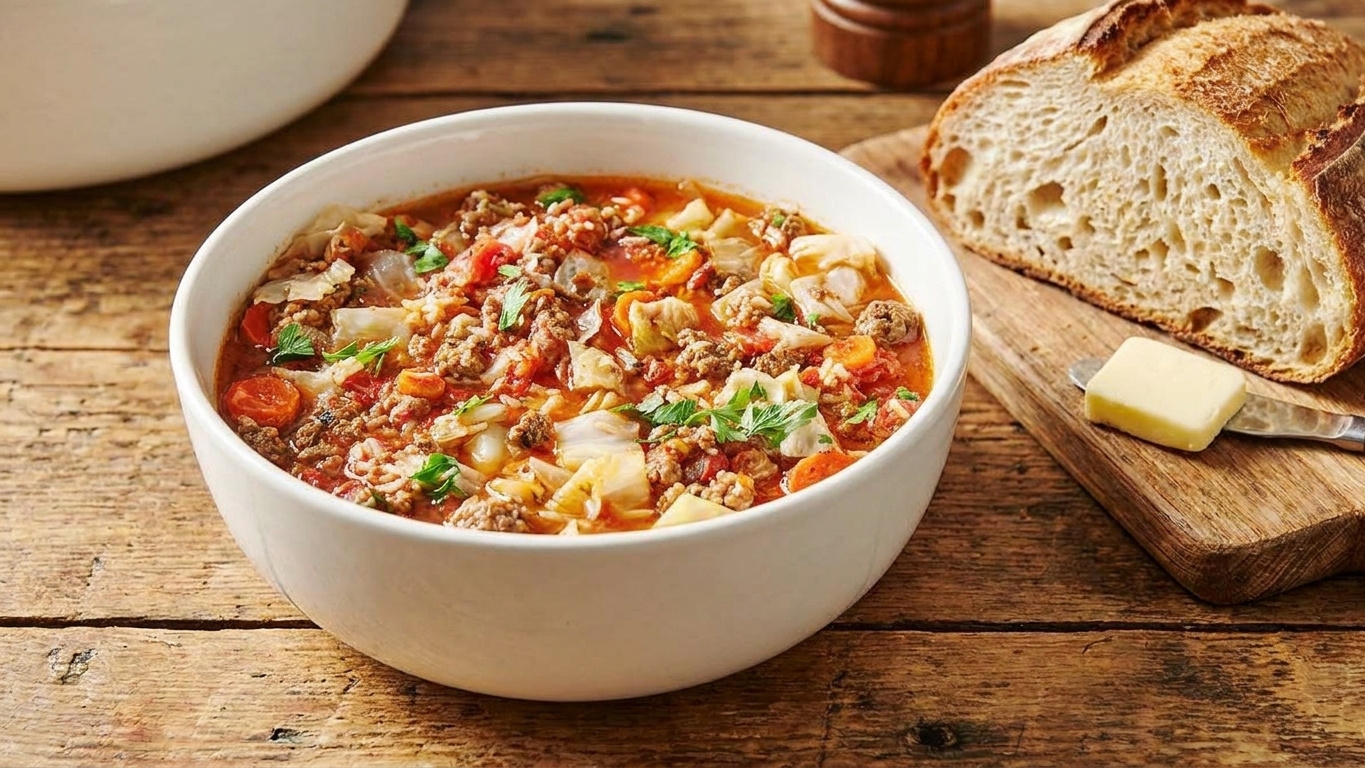
- Crusty bread: Sourdough or a warm baguette is perfect for dunking.
- Garlic toast: Because yes, more garlic.
- Simple salad: A cucumber and dill salad or a basic green salad with a sharp vinaigrette balances the richness.
- Toppings: A dollop of sour cream, chopped parsley, and a grind of black pepper.
Later
Storage, Freezing and Reheating
Refrigerate
Store cooled soup in an airtight container for up to 4 days.
The rice and leftovers
Rice loves to drink broth as it sits. For the best texture:
- If you cooked rice in the soup, expect thicker leftovers. Add broth or water when reheating.
- If you cooked rice separately, store it in its own container and add to bowls as you reheat the soup. This keeps grains distinct.
Freeze
This soup freezes best without rice. Freeze the soup base for up to 3 months. Thaw overnight in the fridge, reheat gently, then add freshly cooked rice when serving.
Reheat
Reheat on the stovetop over medium-low heat until steaming, stirring occasionally. Add a splash of broth if it has thickened.
Watch out
Common Mistakes to Avoid
- Adding cabbage too early: It will overcook and go limp. Add it near the end and simmer just until tender.
- Overcooking the rice: Rice continues to soften as it sits. Cook just until tender, or cook separately for the best texture.
- Not seasoning in layers: Salt the beef as it browns, then taste again at the end. Tomatoes and cabbage both need enough salt to shine.
- Skipping the quick sauté of tomato paste: That 60 seconds makes the soup taste deeper and less raw-tomato.
Questions
Frequently Asked Questions
Can I use leftover cooked rice?
Yes, and it is honestly one of my favorite ways. Add warmed cooked rice to each bowl, then ladle hot soup over it. If you stir cooked rice into the whole pot, it will still taste great, but it will soak up broth as it sits.
Should I rinse the rice first?
If you are cooking the rice in the soup, a quick rinse helps remove surface starch so the grains stay more distinct and the broth stays less cloudy. If you are cooking rice separately, rinsing is optional but still nice for fluffier grains.
How do I keep the cabbage from getting mushy?
Add cabbage near the end and simmer 10 to 15 minutes, just until it is tender but still has a bit of structure. Also, cut it into slightly larger pieces so it holds up.
Can I make this in a slow cooker?
You can, but cabbage and rice are trickier in a slow cooker. For best texture, slow cook the beefy tomato base, then add cabbage in the last 30 to 45 minutes. Cook rice separately and add to bowls when serving.
My soup tastes too acidic. What should I do?
Add 1/2 teaspoon brown sugar at a time, or a small splash of cream, and make sure it is salted enough. Under-salted tomato soup often reads as extra tangy.
The recipe
Unstuffed Cabbage Roll Soup
All the cozy flavors of cabbage rolls in a spoonable soup: savory beef, tomato broth, tender cabbage, and fluffy rice. Includes the exact timing to keep rice grains distinct and cabbage perfectly tender, not mushy.
Ingredients
- 1 tbsp olive oil
- 1 1/2 lb ground beef (85 to 90% lean)
- 1 medium yellow onion, finely diced
- 4 cloves garlic, minced
- 2 tbsp tomato paste
- 1 tsp sweet paprika
- 1 1/2 tsp kosher salt, plus more to taste
- 1/2 tsp black pepper
- 4 cups beef broth
- 1 (15 oz) can diced tomatoes, with juices
- 1 (15 oz) can tomato sauce
- 2 tbsp Worcestershire sauce (optional but recommended)
- 1 tbsp brown sugar
- 1 bay leaf
- 1/2 cup long-grain white rice, rinsed and drained (or 2 cups cooked rice, see notes)
- 5 to 6 cups green cabbage, cored and chopped (about 1 small head)
- 2 tbsp chopped fresh parsley (optional, for serving)
Instructions
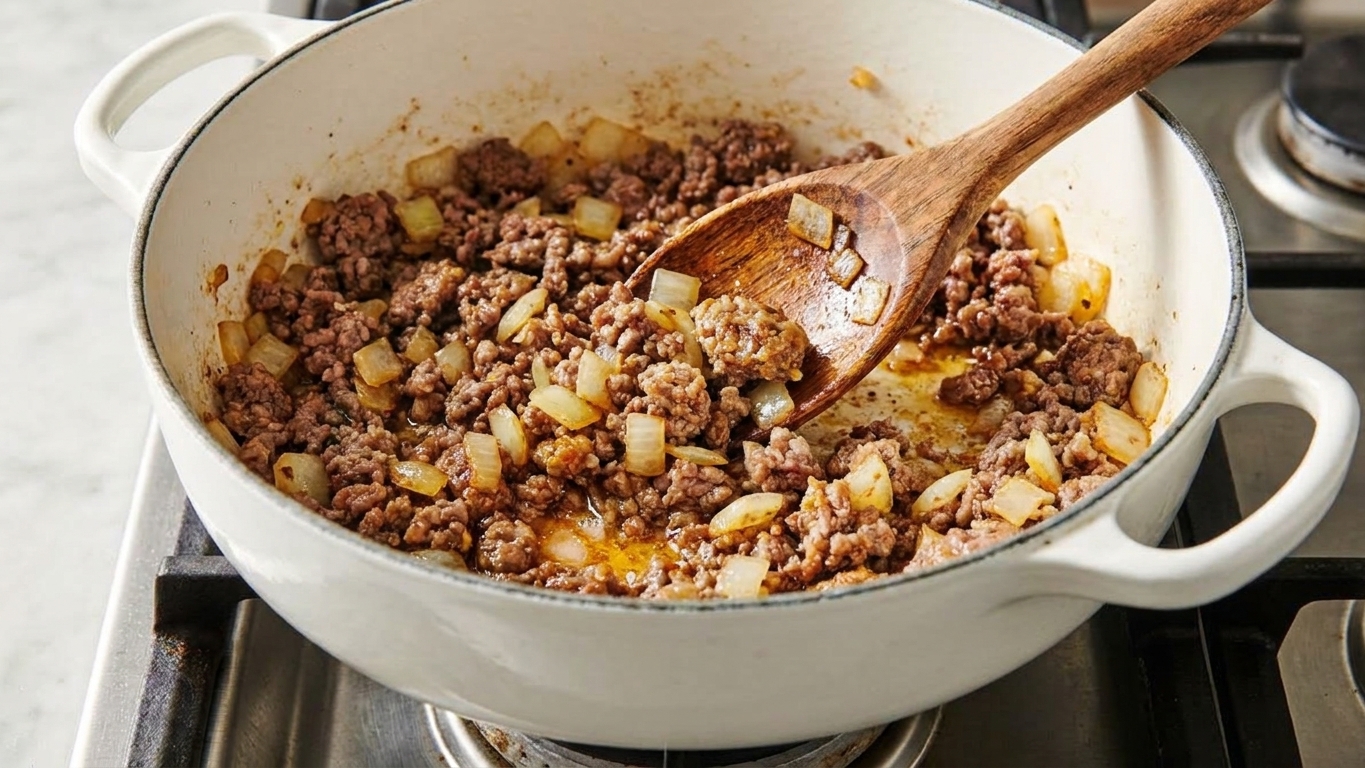
- Brown the beef. In a large pot or Dutch oven, heat olive oil over medium-high heat. Add ground beef and cook, breaking it up, until browned, about 6 to 8 minutes. If there is a lot of fat, carefully drain off most of it.
- Soften the onion. Add diced onion to the pot and cook until softened, about 4 to 5 minutes, stirring and scraping up any browned bits.
- Add garlic and bloom the tomato paste. Stir in garlic and cook 30 seconds. Add tomato paste and paprika and cook, stirring constantly, for 1 minute.
- Build the broth. Stir in salt, pepper, beef broth, diced tomatoes, tomato sauce, Worcestershire sauce (if using), brown sugar, and bay leaf. Bring to a gentle boil.
- Simmer to meld. Reduce heat to maintain a steady simmer and cook for 10 minutes, partially covered, stirring occasionally.
- Add rice at the right time. Stir in the rinsed rice. Keep the soup at a gentle simmer until the rice is tender, about 12 to 15 minutes. Stir once or twice so rice does not stick to the bottom.
- Add cabbage late. Stir in the chopped cabbage. Simmer until the cabbage is tender but still has some bite, about 10 to 15 minutes.
- Finish and serve. Remove bay leaf. Taste and adjust salt and pepper. Ladle into bowls and top with parsley if you like.
Recipe notes
- For the best leftovers: Cook the rice separately and store it separately. To do this, skip adding uncooked rice in Step 6. Simmer the soup base 10 minutes, add cabbage and simmer 10 to 15 minutes, then serve with 1/3 cup cooked rice in each bowl.
- Thicker soup is normal: If rice is cooked in the pot, it will absorb broth as it sits. Loosen with more broth or water when reheating.
- Cabbage texture control: For very tender cabbage, simmer closer to 18 to 20 minutes. For more bite, start checking at 8 to 10 minutes.
Nutrition (per serving, approximate)
- Calories: 420
- Protein: 26 g
- Carbohydrates: 32 g
- Fat: 21 g
- Fiber: 6 g
- Sodium: 980 mg