

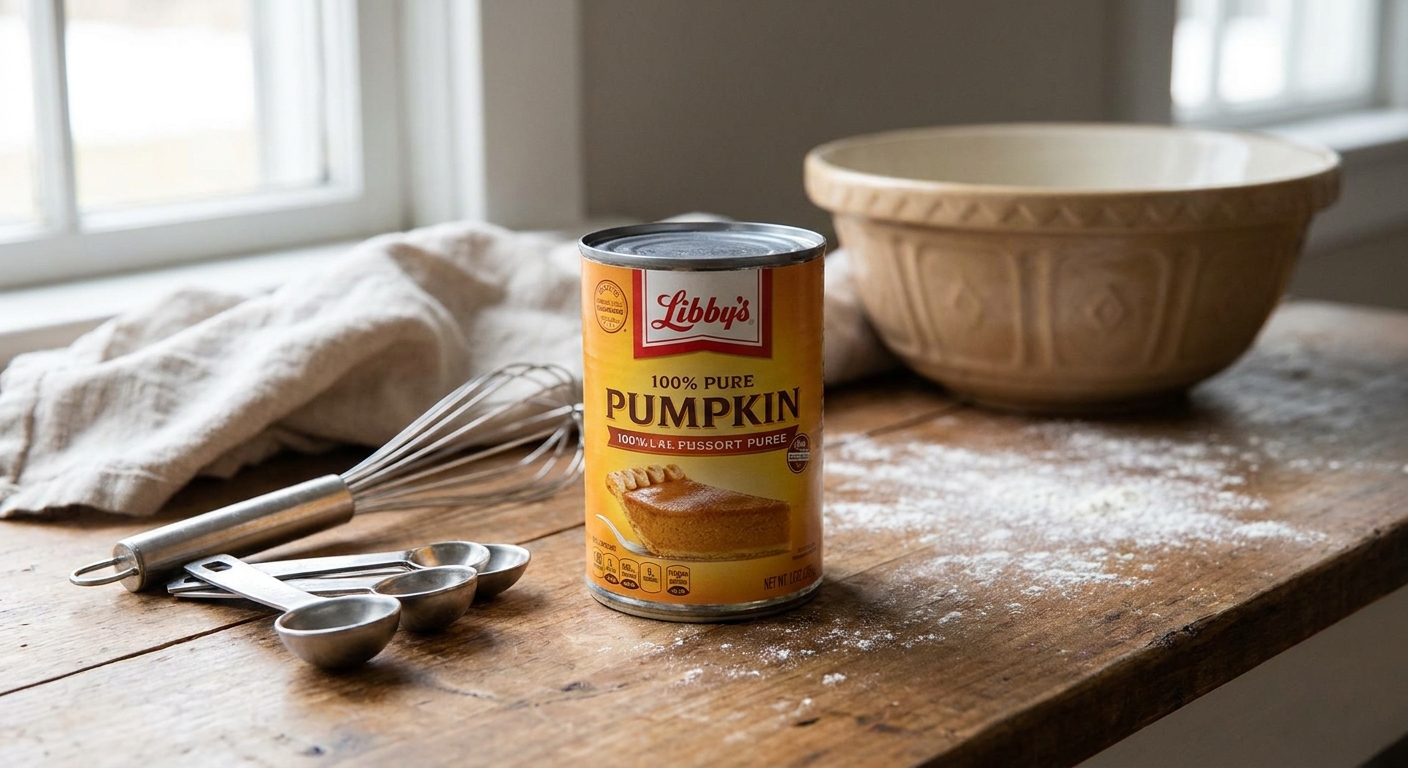
The fastest way to turn pumpkin roll day into a tiny kitchen panic is grabbing the wrong can. I have done it. You get your eggs out, preheat the oven, line the jelly roll pan, and then realize the label says pumpkin pie filling, not 100% pumpkin. They sit next to each other on the shelf, the cans look similar, and the names feel interchangeable. They are not.
A pumpkin roll is a special little project: the cake layer is thin, baked quickly, and then rolled while warm so it stays flexible. Many pumpkin roll recipes are also sponge-style, meaning eggs do a lot of the structural work. Small swings in sugar and moisture can mean the difference between a cake that rolls like a cozy blanket and one that cracks like dry sidewalk.

The short answer
Use pumpkin puree (100% pumpkin) for a pumpkin roll whenever you can. Pumpkin pie filling is sweetened and usually spiced, and it can change the batter’s sweetness, thickness, and how the cake sets and rolls.
If pumpkin pie filling is the only can in the house, you can still make a pumpkin roll. Treat the adjustments below as starting points, then let the batter’s consistency be your guide.
What’s the difference?
Pumpkin puree (100% pumpkin)
- Ingredients: typically just pumpkin (sometimes labeled “pumpkin” or “100% pure pumpkin”).
- Flavor: earthy, squash-forward, not sweet.
- Texture: thick and spoonable, like a dense vegetable mash.
- What it does in a pumpkin roll: gives you predictable moisture and structure so the cake bakes up tender and flexible.
Pumpkin pie filling
- Ingredients: pumpkin plus sugar and usually spices. Depending on the brand, it may also include salt, thickeners, or preservatives.
- Flavor: sweet and already “pumpkin pie” flavored.
- Texture: varies by brand. It is often a bit softer or more gel-like than puree, but some cans are quite similar in thickness to puree.
- What it does in a pumpkin roll: can make your batter sweeter and more delicate, which may increase the risk of sticking or cracking when you roll.
Why pie filling can throw off a pumpkin roll
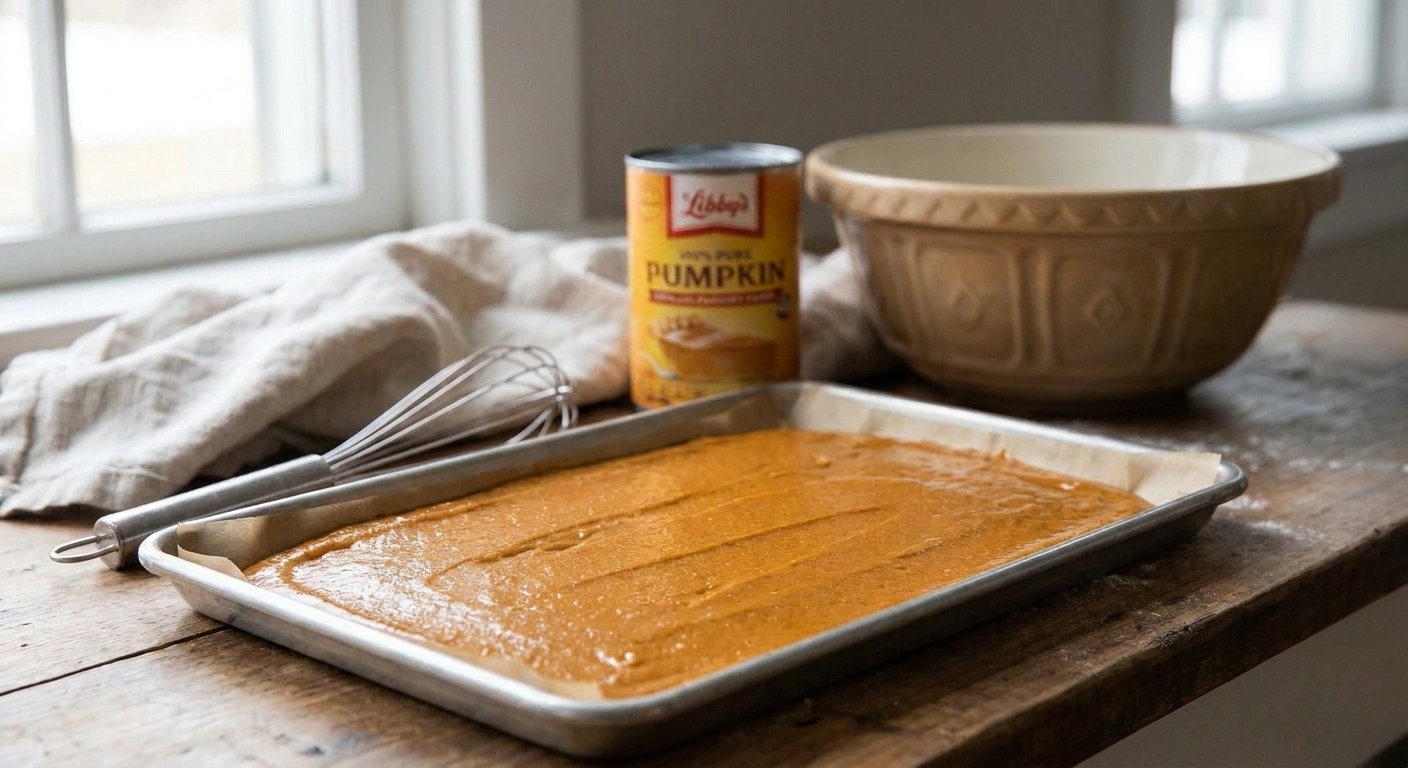
Pumpkin roll batter is not like a thick pumpkin bread batter. It is meant to spread into a thin, even layer in a jelly roll pan and bake into a cake that is springy, not crumbly. Because the layer is so thin, it is less forgiving if the balance shifts.
1) Extra sugar can make the crumb fragile
Pumpkin pie filling brings extra sugar to the party. Sugar does more than sweeten. In cakes, it can:
- Hold onto moisture and tenderize the crumb.
- Delay setting when there is too much, which can leave the cake a bit softer and more fragile when you try to roll it.
- Boost browning, which can make the top look “done” before the center sets the way you expect.
2) Spices are already in there
Most pumpkin roll recipes add cinnamon, ginger, cloves, and sometimes nutmeg. Pie filling often includes some version of that blend. If you also add the full spices from your recipe, the cake can tip from warmly spiced to a little harsh and bitter, especially with cloves.
3) Thickness affects spreading and lift
A classic pumpkin roll batter should spread smoothly to the edges without needing a ton of coaxing. Pie filling can be a different thickness than puree, depending on the brand. Too thick and you will work it harder to spread, which can deflate the batter and cost you a little lift. Too loose and the cake can bake up more delicate, which makes rolling trickier.
How to tell what you bought
- Look for “100% pure pumpkin” or an ingredient list that is only pumpkin. That is puree.
- Look for the words “pie filling” or an ingredient list that includes sugar and spices. That is not puree.
- Do not trust the front photo. Both cans love showing a slice of pie.
If you only have pie filling
You can absolutely salvage pumpkin roll night. You just need to dial back what the can already includes, and keep in mind that brands vary. Use this as a practical starting point, not a hard rule.
Adjustment checklist
- Reduce the sugar in the cake batter. A safe starting point is to cut the recipe’s sugar by about 1/4. If your recipe uses 1 cup sugar, use 3/4 cup. If your pie filling tastes very sweet straight from the can, you may need to reduce a bit more next time.
- Reduce the spices you add. Start by using half the cinnamon and ginger, and use only a tiny pinch of cloves. You can always add more spice next time, but you cannot take it out once baked.
- Skip extra sweeteners your recipe might include (like maple syrup or extra brown sugar), unless it is just a small amount for flavor.
- Check batter consistency before you commit. If it seems noticeably looser than you are used to, add 1 tablespoon flour, fold gently, and reassess. If it is still very loose, add 1 more tablespoon. If it seems thicker, spread it carefully and avoid overmixing.
My keep-it-rolling tip
When you are working with pie filling, do not overbake. A pumpkin roll cake should be set but still flexible. If it gets too dry, it will crack no matter how good your rolling technique is. Start checking at the earliest bake time your recipe gives.
Optional sweetness fix for the filling
If you taste the cake and it is sweeter than you like, you can balance it by using a little less powdered sugar in the cream cheese filling. Do it gradually, since the sugar also helps thicken the filling.
What not to change
- Do not change the pan size. Pumpkin rolls rely on a thin layer. A different pan can throw off thickness and bake time fast.
- Do not skip lining the pan. Use parchment paper so the cake releases cleanly.
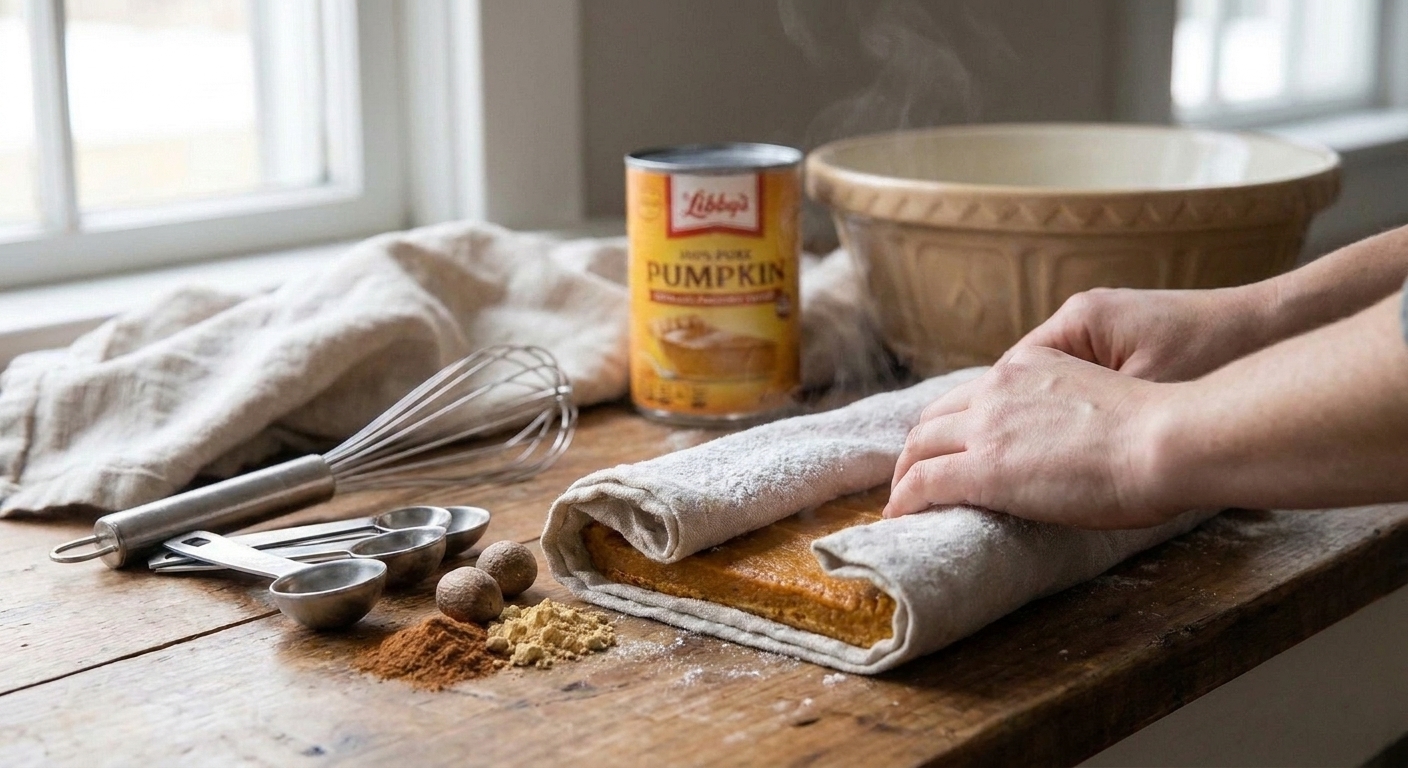
- Do not skip rolling while warm. Roll the cake up in a towel shortly after it comes out of the oven so it learns the shape.
- Do not rush the cooling before filling. Let it cool completely rolled up before you unroll and add filling, or the filling can melt and slide.
Troubleshooting
If it cracks while rolling
- Likely cause: overbaked or rolled too late.
- Fix now: keep rolling anyway, then dust with powdered sugar to hide cracks.
- Next time: shave 1 to 2 minutes off bake time and roll sooner.
If it sticks to the towel
- Likely cause: towel not dusted enough, or cake surface slightly tackier from extra sugar.
- Fix now: peel gently and patch with filling.
- Next time: dust the towel generously with powdered sugar before flipping the cake out.
If the cake feels too soft or fragile
- Likely cause: extra sugar and moisture from pie filling, or the center not quite set yet.
- Fix now: chill the cake rolled in the towel for 20 to 30 minutes before unrolling and filling.
- Next time: reduce sugar a bit more and consider adding 1 tablespoon flour if the batter seems loose.
FAQ
Can I substitute pumpkin pie filling for pumpkin puree 1:1 in a pumpkin roll?
You can substitute it by volume, but it will not behave exactly the same. Since pie filling is already sweetened and spiced (and thickness varies by brand), reduce the added sugar and spices in your recipe and judge the batter consistency before baking.
Will pumpkin pie filling make my pumpkin roll sweeter?
Usually, yes. Pie filling adds sugar, and that can also make the cake a bit more tender and delicate when you roll it.
Is canned pumpkin puree the same as homemade pumpkin puree?
They are similar, but homemade puree can be wetter depending on the pumpkin and how well you drained it. For pumpkin rolls, canned puree is often more consistent. If you use homemade, drain it in a fine mesh sieve or cheesecloth until it is thick like canned.
Does the brand of canned pumpkin matter for pumpkin rolls?
It can. Different brands vary in thickness and moisture. If your batter seems unusually loose, add 1 tablespoon flour, fold gently, and reassess. If it seems very thick, spread carefully and avoid overmixing.
Which can should I buy at the store for a pumpkin roll?
Look for 100% pure pumpkin or pumpkin puree. Save pumpkin pie filling for pumpkin pie, or for the day you want a kitchen challenge.