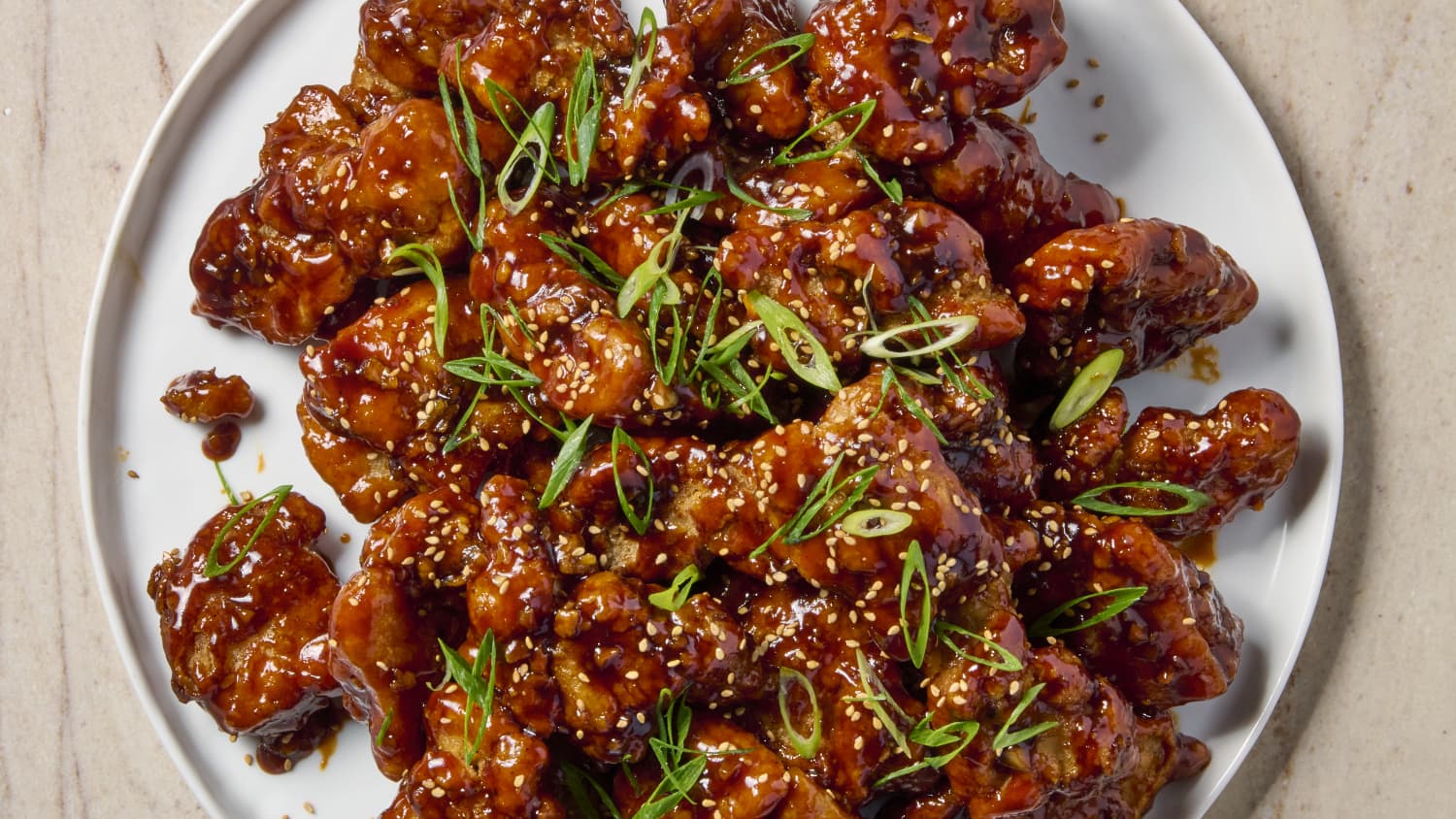
Make restaurant-style crispy Asian chicken at home with a crisp coating and a sticky garlic-ginger sauce that clings to every bite. Weeknight doable, crowd-p...
Recipeva
Korean BBQ Chicken
Sweet, savory, garlicky Korean BBQ chicken you can make at home with easy pantry staples. Includes grill, oven, and stovetop options plus make-ahead tips.

Maya Reynolds
Maya Reynolds is a passionate home cook, recipe developer, and the creative voice behind Recipeva. With over a decade of experience translating complex culinary techniques into approachable weeknight meals, she focuses on creating dishes that bring joy to the dinner table without the stress.
Created September 24, 2026
Updated September 24, 2026
If you love that sticky-sweet, smoky, savory Korean BBQ vibe but want it to be weeknight-friendly, this is your chicken. The marinade is a simple mix of gochujang, soy sauce, garlic (lots), ginger, brown sugar, plus a splash of vinegar and a little sesame oil for that nutty finish. It cooks up glossy and caramelized, with edges that char just enough to taste like you really did something special.
And because real life is busy, I’m giving you three ways to cook it: grill, oven, or stovetop. Same marinade, same big flavor, different paths to dinner.
Serves: about 4
Prep: 10 minutes
Marinate: 30 minutes to 12 hours
Cook: 15 to 25 minutes
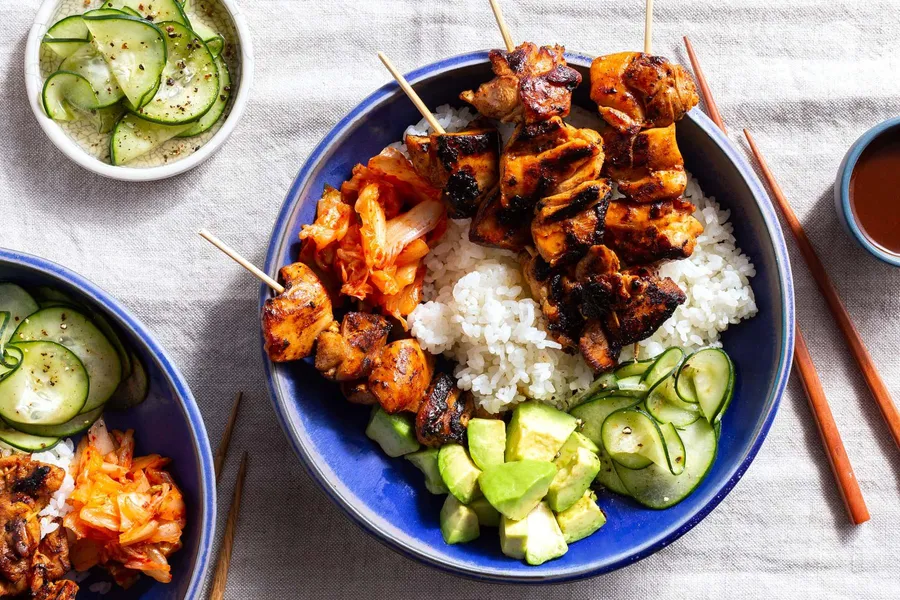
What makes it Korean BBQ style
Korean BBQ flavors usually balance sweet, salty, savory, and a gentle heat. This recipe leans on a few classic building blocks:
- Gochujang : Korean fermented chili paste that brings heat, sweetness, and deep umami.
- Soy sauce: Salty backbone.
- Garlic and ginger: The aromatic duo that makes the kitchen smell like a promise.
- Brown sugar or honey: Helps the chicken caramelize and gives that lacquered finish.
- Sesame oil: A little goes a long way, added to the marinade for aroma.
Many classic Korean BBQ style marinades (especially bulgogi and galbi styles) often use Korean or Asian pear for sweetness and tenderness. I include an optional grated pear or apple add-in below. It’s not required, but it’s a lovely upgrade if you’ve got it.
Ingredients
This is designed for easy supermarket shopping. If you can find gochujang (usually in the Asian aisle), you’re in business.
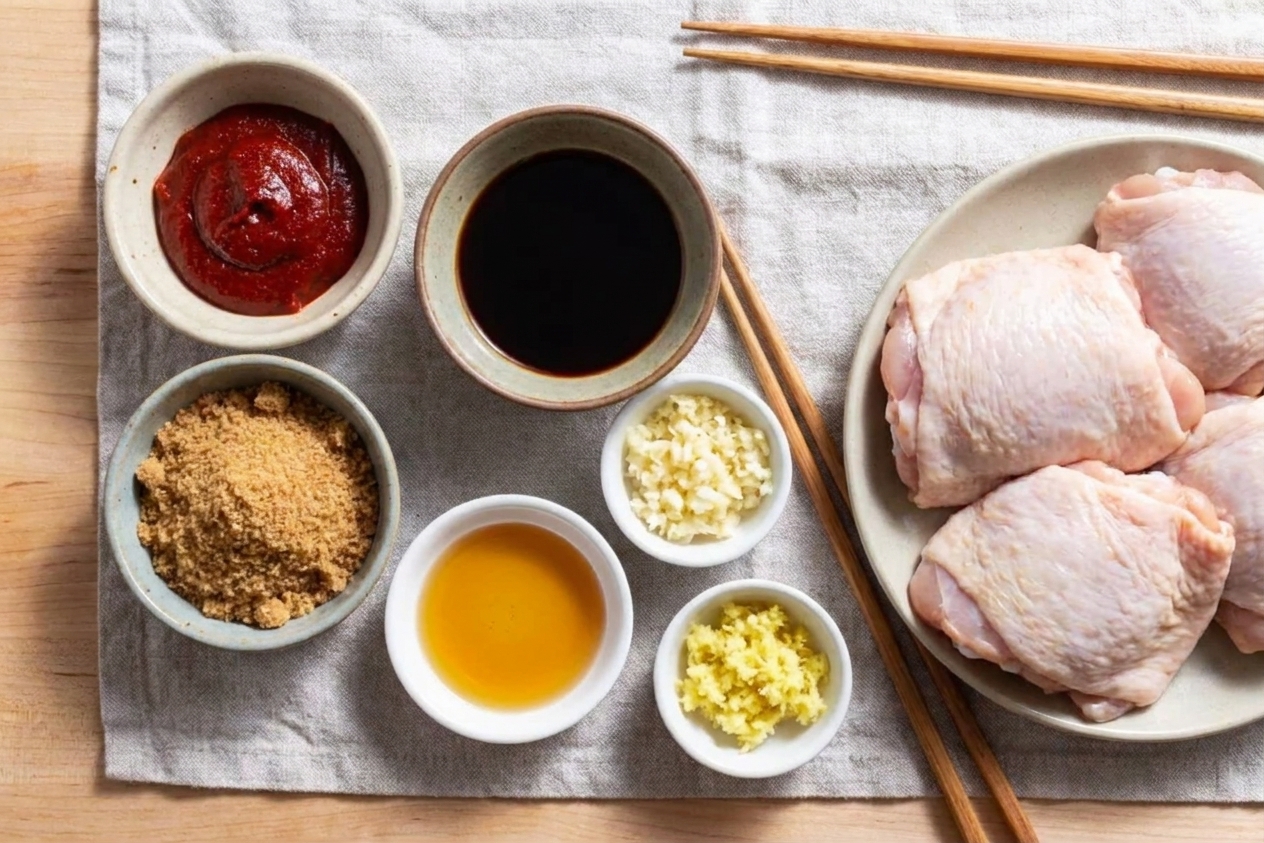
For the chicken
- 2 pounds boneless skinless chicken thighs (or breasts, see notes)
- 2 to 3 green onions, thinly sliced (for serving)
- 1 tablespoon toasted sesame seeds (for serving)
For the Korean BBQ marinade
- 1/4 cup gochujang
- 1/4 cup soy sauce (low-sodium is great)
- 2 tablespoons brown sugar (or honey)
- 2 tablespoons rice vinegar (or apple cider vinegar)
- 1 tablespoon toasted sesame oil
- 4 to 6 cloves garlic, finely minced (yes, really)
- 1 tablespoon freshly grated ginger
- 1 tablespoon neutral oil (like avocado or canola)
- Optional: 1/4 cup grated Korean pear or apple (extra tender and lightly fruity)
- Optional: 1 to 2 teaspoons gochugaru (Korean chili flakes) for more heat
Salt note: Between gochujang and soy sauce, you usually don’t need extra salt. If you want to adjust seasoning, taste a small spoonful of the mixed marinade before adding the chicken. If your soy sauce is very mild, add a pinch.
How to make Korean BBQ chicken
Here’s the big picture: mix marinade, marinate chicken, cook hot enough to caramelize, then rest and slice.
1) Mix the marinade
In a bowl, whisk together gochujang, soy sauce, brown sugar, vinegar, sesame oil, garlic, ginger, neutral oil, and pear or apple (if using).
2) Marinate (keep it cold)
Add chicken to a zip-top bag or shallow dish and pour in the marinade. Turn to coat well. Refrigerate while it marinates.
- Quick option: 30 minutes in the fridge still helps a lot. If you’re truly in a rush, you can do 15 to 30 minutes on the counter only if your kitchen is cool, and keep total room-temp time under 1 hour (including any time before cooking).
- Best: 4 to 12 hours in the fridge for deeper flavor.
- Max: About 24 hours. Longer than that, the texture can get a little soft.
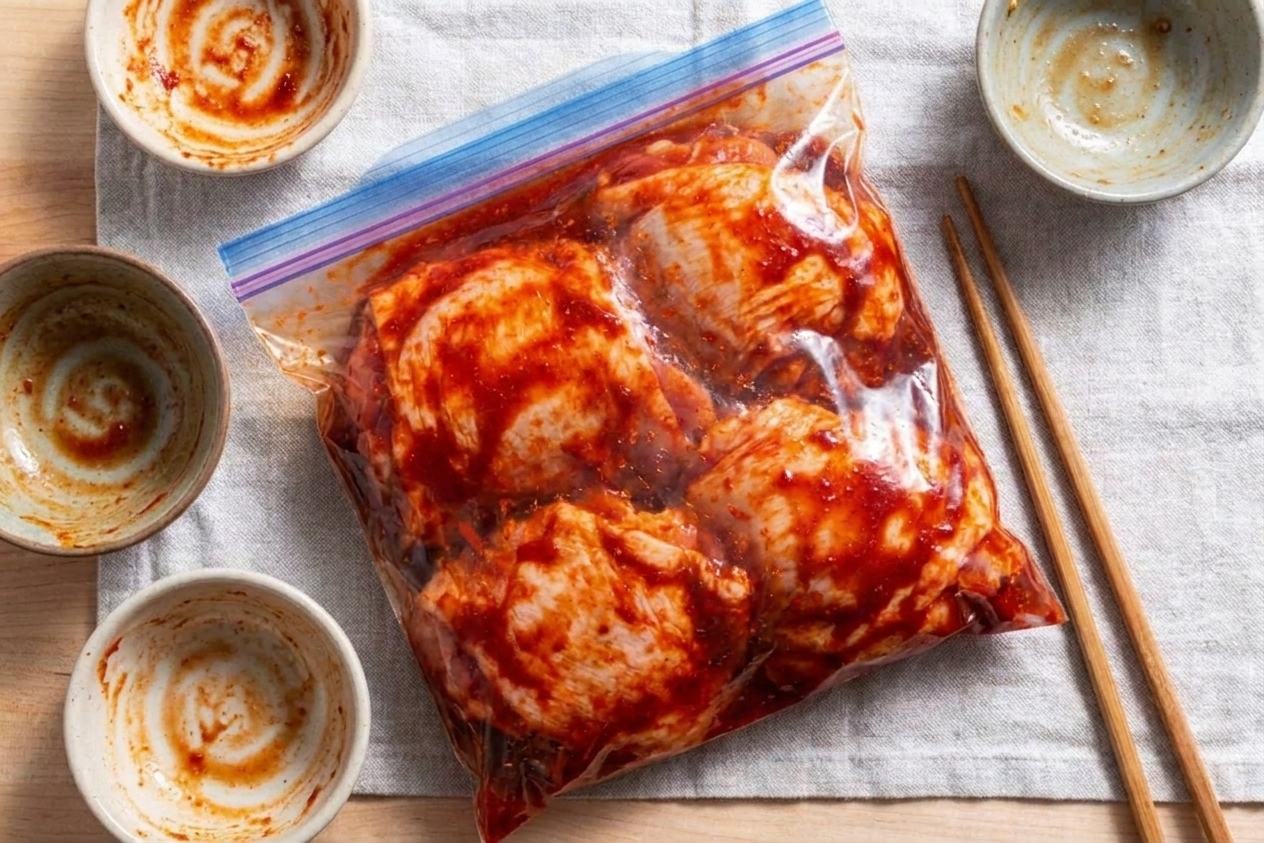
3) Choose your cooking method
All three methods work. Pick the one that fits your night.
Marinade safety note: If you want extra sauce for serving, reserve a few spoonfuls of marinade before it touches the raw chicken. If you forgot, you can simmer the used marinade in a small saucepan until it boils for at least 1 minute before using it as a glaze.
Grill
Great for: big caramelized edges and smoky flavor.
- Preheat a grill to medium-high and oil the grates well.
- Remove chicken from marinade and let excess drip off. Discard used marinade (unless you’re boiling it, see note above).
- Grill thighs about 5 to 7 minutes per side, depending on thickness. Start checking around 4 to 5 minutes per side, and use a thermometer. You want 165°F in the thickest part.
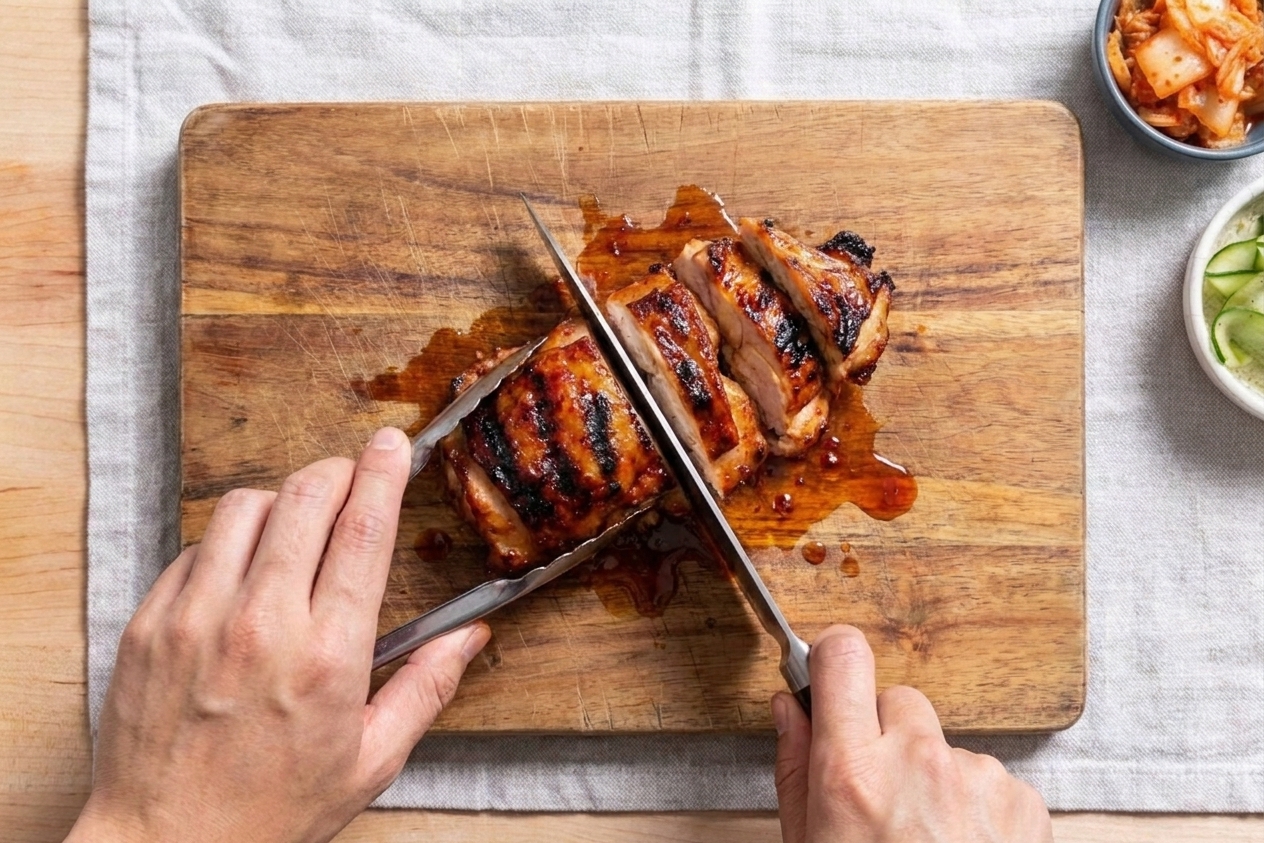
- Rest 5 minutes, then slice.
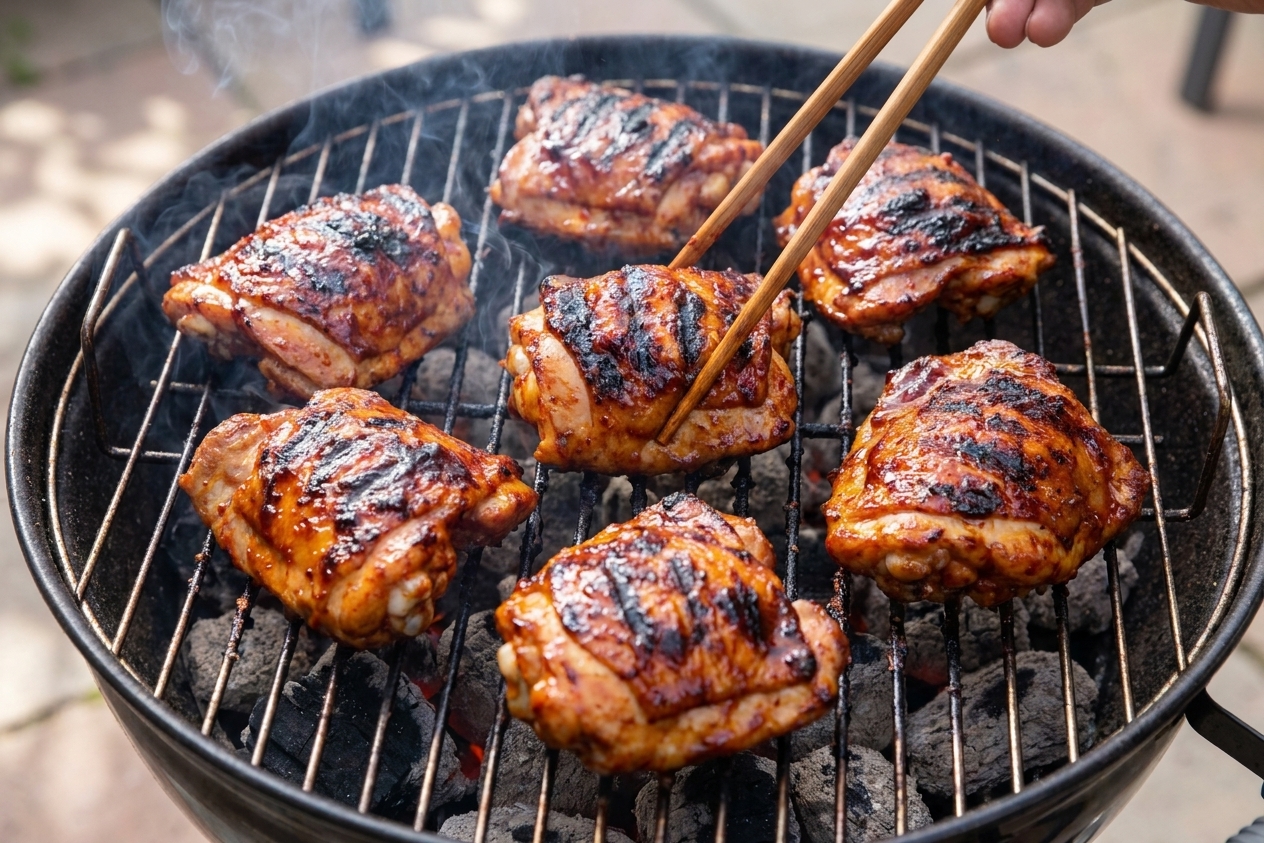
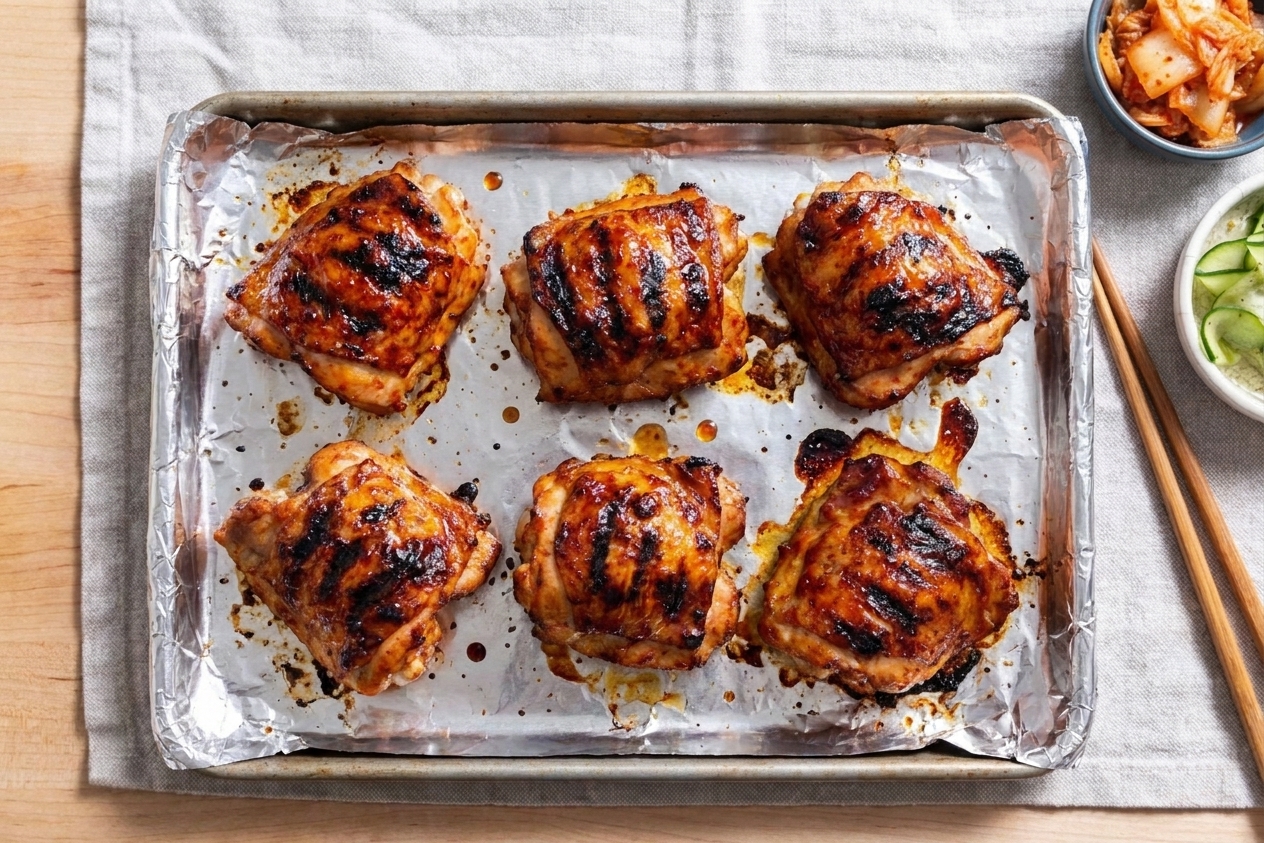
Oven
Great for: reliable results and easy cleanup.
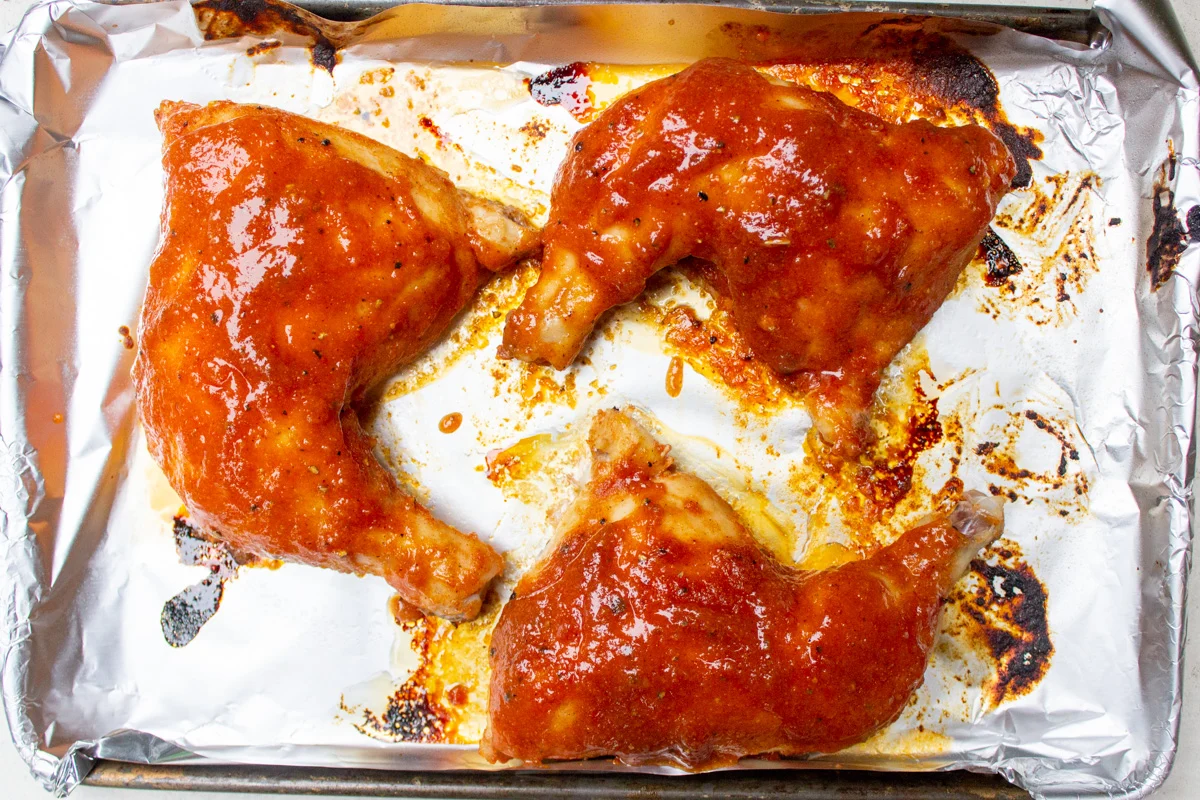
- Preheat oven to 425°F. Line a sheet pan with foil and lightly oil it.
- Arrange chicken in a single layer. Roast 18 to 22 minutes for thighs, flipping once halfway. Start checking around 16 to 18 minutes, especially if the pieces are small.
- For extra caramelization, broil 1 to 3 minutes at the end, watching closely so the sugars don’t burn.
- Rest 5 minutes, then slice.
Stovetop
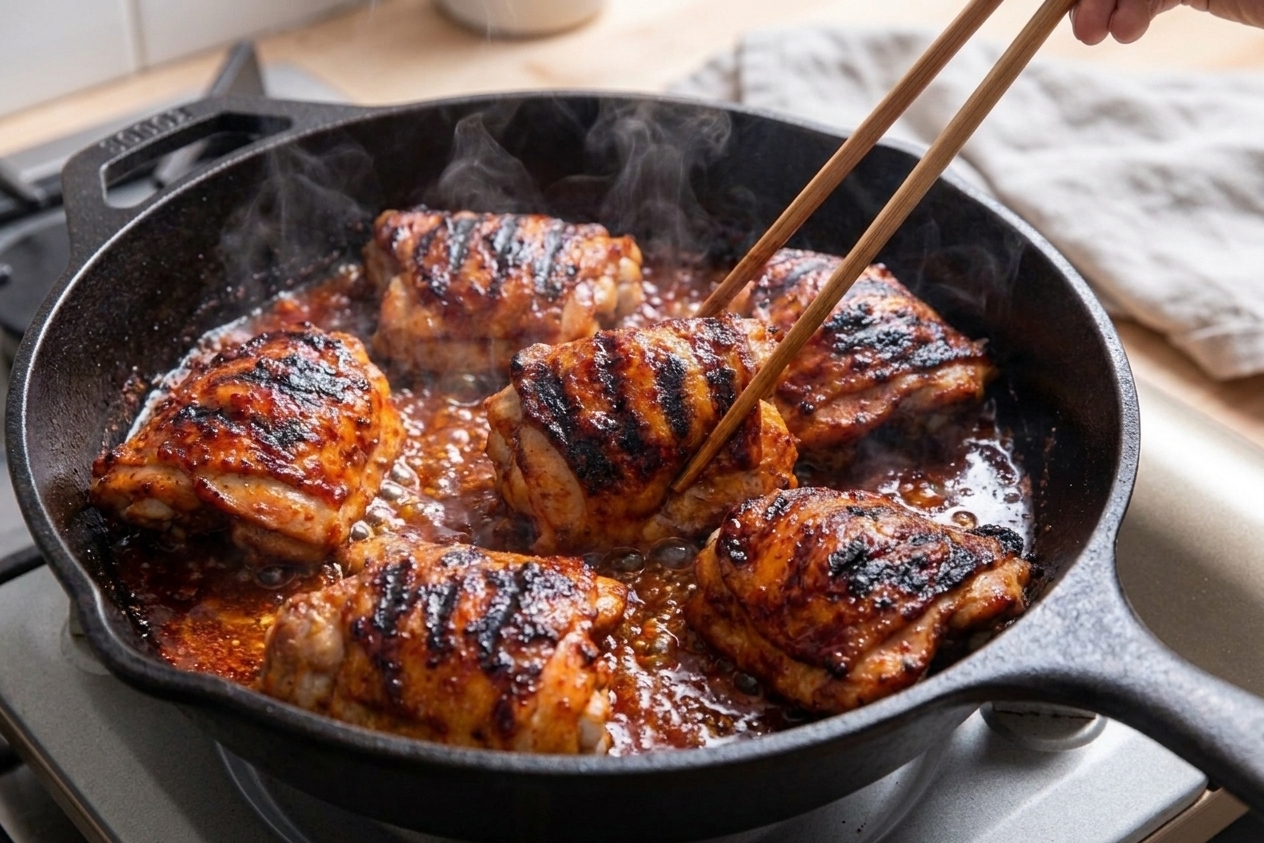
Great for: apartment kitchens and quick dinners.
- Heat a large skillet over medium-high heat and add a small splash of neutral oil.
- Add chicken and cook 3 to 4 minutes on the first side to get color, then flip and reduce heat to medium. Keep cooking about 4 to 6 minutes more, flipping as needed, until the chicken reaches 165°F.
- If the pan starts to darken too fast, add 1 to 2 tablespoons water to loosen the bits and keep the glaze from scorching.
- Rest 5 minutes, then slice.
Tips for glossy caramelization
- Use thighs if you can. They stay juicy and are more forgiving with high-heat cooking.
- Watch the sugar. Brown sugar and gochujang help caramelize, but they can burn. If you see fast darkening, reduce heat slightly.
- Oil your grill grates or pan. The marinade is sticky, so a little oil prevents tearing.
- Use a thermometer. It takes the guesswork out. Pull at 165°F.
- Rest before slicing. Five minutes is enough to keep the juices where they belong.
- Finish with sesame and scallions. That fresh crunch makes the whole dish pop.
What to serve with it
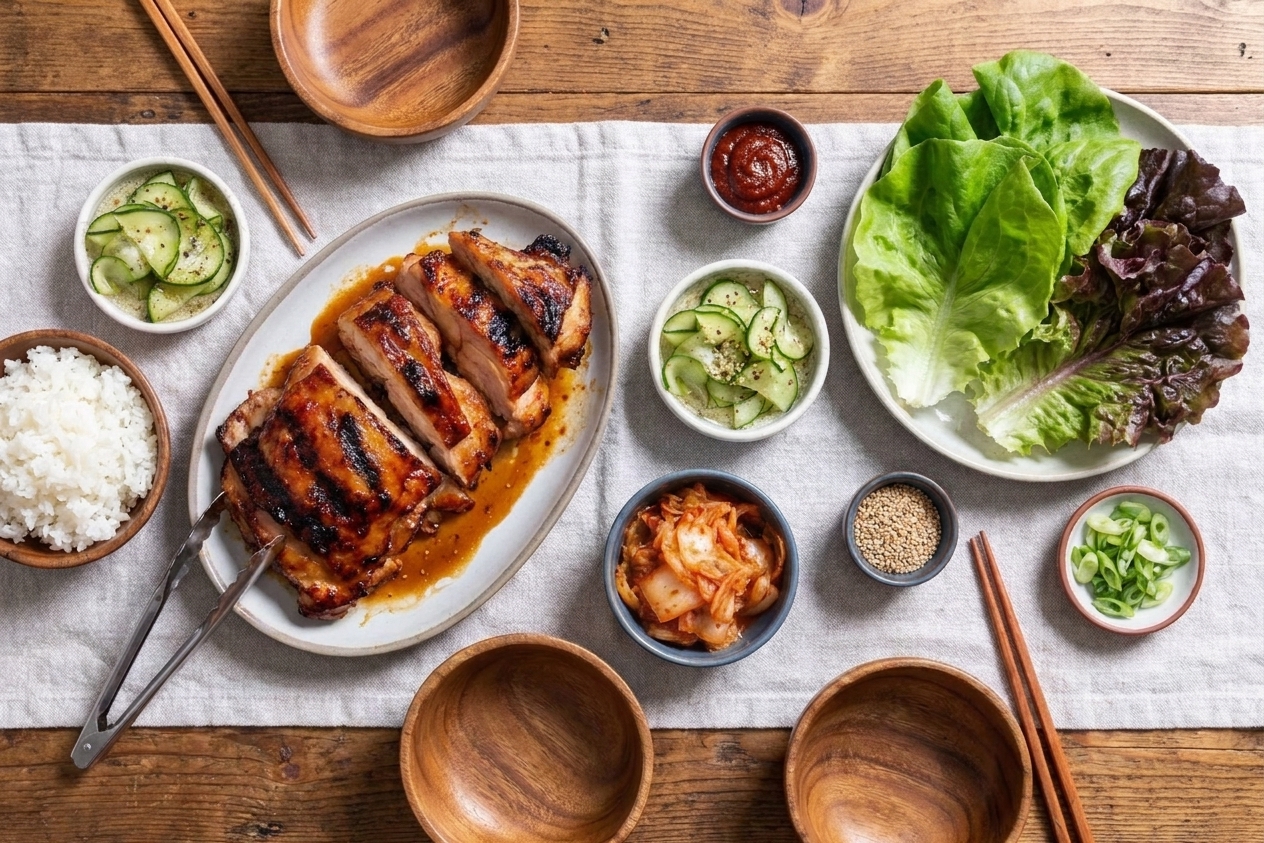
I like to build a dinner that feels like a mini Korean BBQ spread, but with weeknight energy.
Easy sides
- Steamed white rice or short-grain brown rice
- Quick cucumber salad with rice vinegar and sesame
- Kimchi (store-bought is perfect)
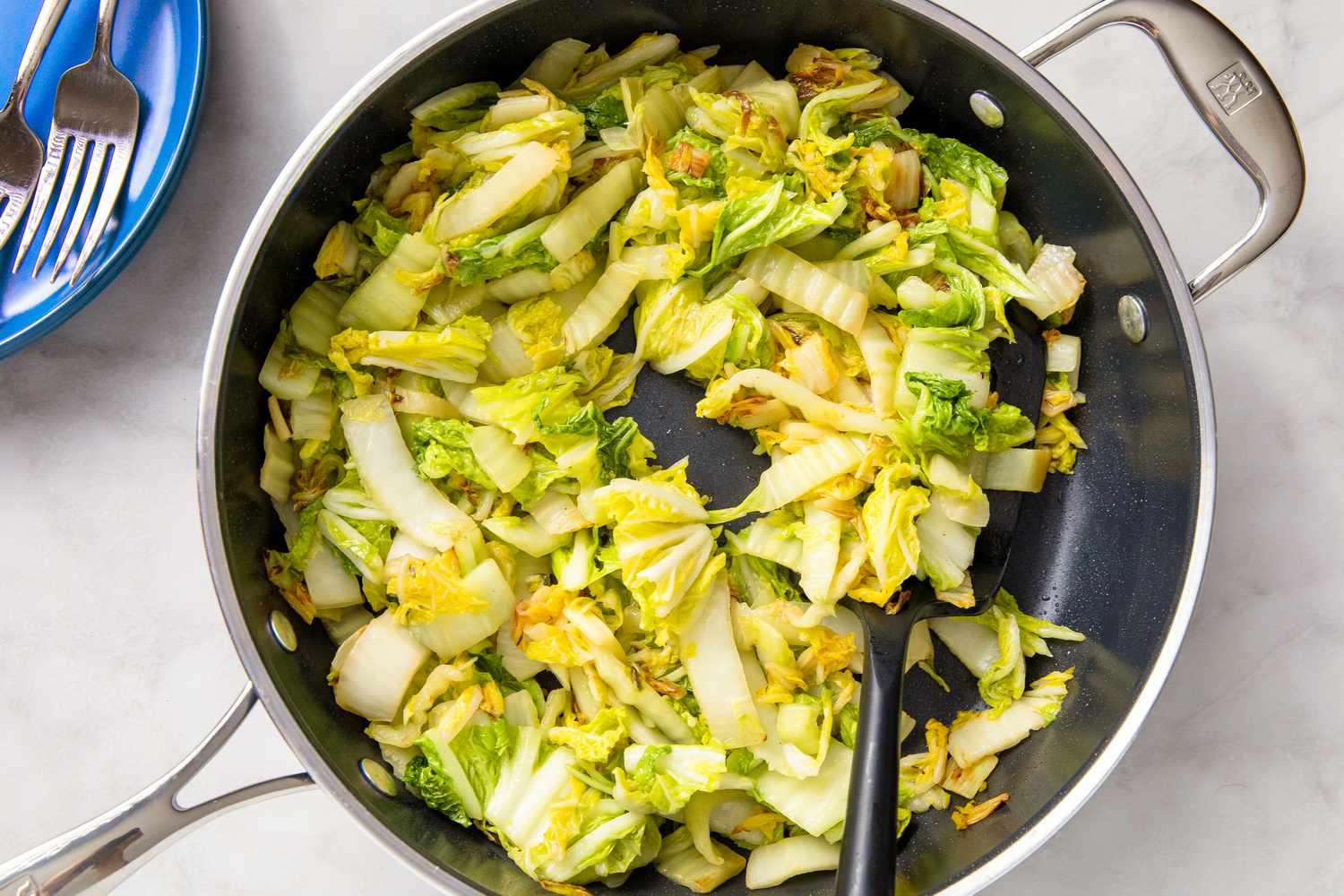
- Shredded cabbage with a drizzle of sesame oil and a pinch of salt
- Roasted broccoli or green beans
Lettuce wrap night
Serve sliced chicken with butter lettuce or romaine, rice, kimchi, and a little extra gochujang on the side. Everyone builds their own. It’s fun and it magically reduces complaints at the table.
Substitutions
Chicken breasts
Yes, you can use them. Pound to an even thickness so they cook evenly and pull them at 165°F. Breasts dry out faster, so keep an eye on them.
Less spicy
- Reduce gochujang to 2 tablespoons and increase soy sauce by 1 tablespoon.
- Add an extra tablespoon of brown sugar or a spoon of honey to keep the sweet-savory balance.
More spicy
- Add gochugaru, or stir in 1 teaspoon of chili crisp at the end.
- Serve with extra gochujang on the side for heat lovers.
No rice vinegar?
Apple cider vinegar works great. In a pinch, use fresh lime juice.
Make-ahead and storage
Make-ahead
Mix the marinade up to 3 days ahead and keep it in a sealed jar in the fridge. You can also marinate the chicken overnight so dinner is basically cook-and-eat.
Storage
- Fridge: Store cooked chicken in an airtight container for up to 4 days.
- Freezer: Freeze cooked chicken up to 2 months. Thaw overnight in the fridge.
Reheating
Reheat gently in a skillet with a splash of water to loosen the glaze, or microwave in short bursts. If you want the edges crisp again, a quick broil works too.
Leftover ideas
- Korean BBQ chicken rice bowls with cucumbers and a fried egg
- Chicken tacos with slaw and sesame-lime dressing
- Chopped chicken added to fried rice
- Loaded salad with shredded cabbage, carrots, and sesame dressing
FAQ
Is this the same as bulgogi?
Bulgogi is typically made with thinly sliced beef and a soy-based, often fruit-sweetened marinade. This chicken is Korean BBQ inspired and uses gochujang for that signature spicy-sweet depth.
Can I bake it without the broiler?
Absolutely. You’ll still get great flavor. The broiler just adds extra caramelization on top, so think of it as optional sparkle.
Do I need a thermometer?
You don’t need one, but it makes cooking chicken so much less stressful. Aim for 165°F in the thickest part.
What if I can’t find gochujang?
Gochujang is worth seeking out, but if you’re stuck, you can mix 2 tablespoons miso paste with 1 tablespoon sriracha or sambal oelek and 1 tablespoon honey. It won’t be a true replacement since gochujang is fermented and thicker, so start there and adjust to taste.
One last reminder
Don’t worry if your first batch isn’t perfectly glossy. Korean BBQ marinades are a little sticky by nature, and every stove and grill runs slightly differently. Keep the heat under control, let the chicken rest, and remember that scallions and sesame seeds can make just about anything look like you meant it.
If you make this Korean BBQ chicken, I hope it turns an ordinary night into a really happy dinner table.