A creamy, tangy lemon curd that leans savory with salt, pepper, and optional herbs. Perfect for chicken, fish, veggies, sandwiches, and grain bowls, with ste...
Recipeva
Festive Salmon (Light and Creamy)
This Festive Salmon is tender, buttery, and finished with a light, creamy lemon-dill sauce. A joyful, holiday-worthy dinner that’s easy enough for a weeknight.

Maya Reynolds
Maya Reynolds is a passionate home cook, recipe developer, and the creative voice behind Recipeva. With over a decade of experience translating complex culinary techniques into approachable weeknight meals, she focuses on creating dishes that bring joy to the dinner table without the stress.
Created September 22, 2026
Updated September 22, 2026
If you want a dinner that feels special without turning your kitchen into a stress zone, this is it. My Festive Salmon is gently pan-seared or oven-finished (your choice), then tucked under a light and creamy lemon-herb sauce that tastes like you worked a lot harder than you did. It’s the kind of meal I love serving when friends pop by, or when it’s just my family and I want Tuesday to feel like a tiny celebration.
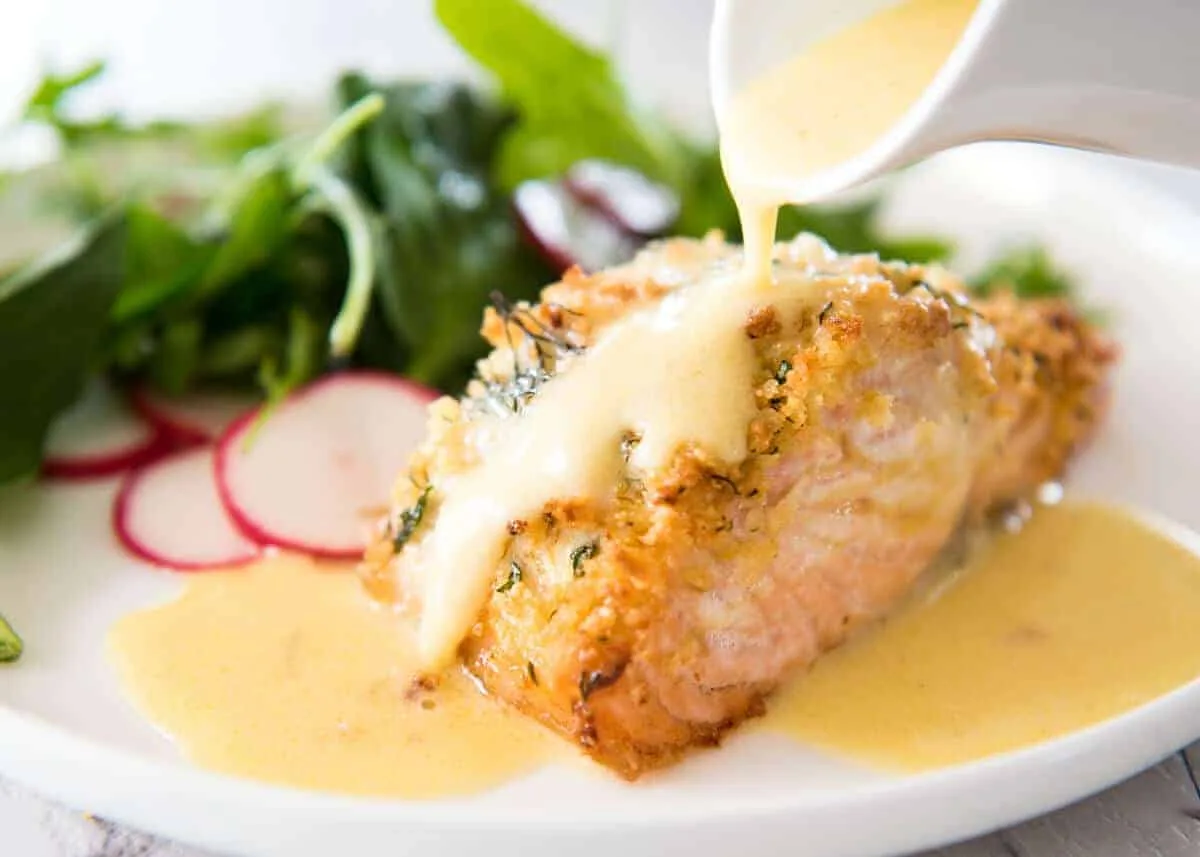
And yes, there’s garlic. There’s always garlic.
Why this salmon feels festive
- Light cream sauce, not heavy: We use a small amount of cream (or half-and-half) plus broth and lemon to keep it bright.
- Big flavor from simple ingredients: Garlic, Dijon, lemon zest, and herbs do the heavy lifting.
- Company-worthy, weeknight-easy: It’s one pan, and the sauce comes together in minutes.
- Flexible: Works with fresh or thawed salmon, and you can swap herbs based on what’s available.
Ingredients
This recipe serves 4 and scales easily. If you are cooking for a crowd, you can sear in batches and keep salmon warm in a low oven.
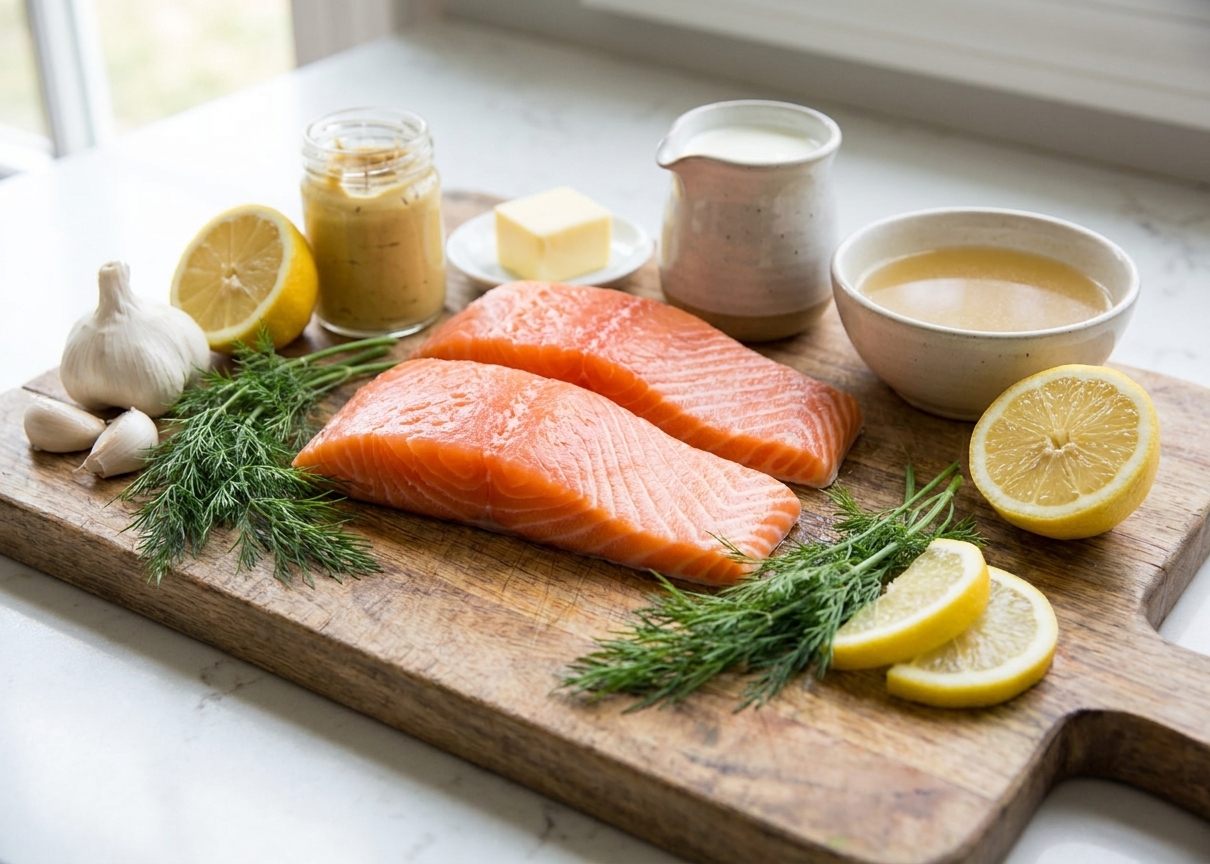
For the salmon
- 4 salmon fillets (about 6 ounces each), skin-on or skinless
- 1 teaspoon kosher salt, plus more to taste
- 1/2 teaspoon black pepper
- 1 tablespoon olive oil
- 1 tablespoon butter
For the light creamy sauce
- 2 teaspoons butter
- 3 to 4 cloves garlic, finely minced (measure with your heart, I will not judge)
- 1/2 cup low-sodium chicken broth or vegetable broth
- 1/2 cup heavy cream or half-and-half
- 1 teaspoon Dijon mustard
- Zest of 1 lemon
- 2 tablespoons lemon juice (about 1/2 lemon), plus more to finish
- 2 tablespoons chopped fresh dill (or parsley, or a mix)
- 1 to 2 teaspoons capers (optional, but lovely for a festive pop)
How to make Festive Salmon
My goal here is tender salmon and a sauce that tastes restaurant-style but behaves like a weeknight recipe.
1) Prep the salmon
Pat the fillets dry with paper towels. Season both sides with salt and pepper.
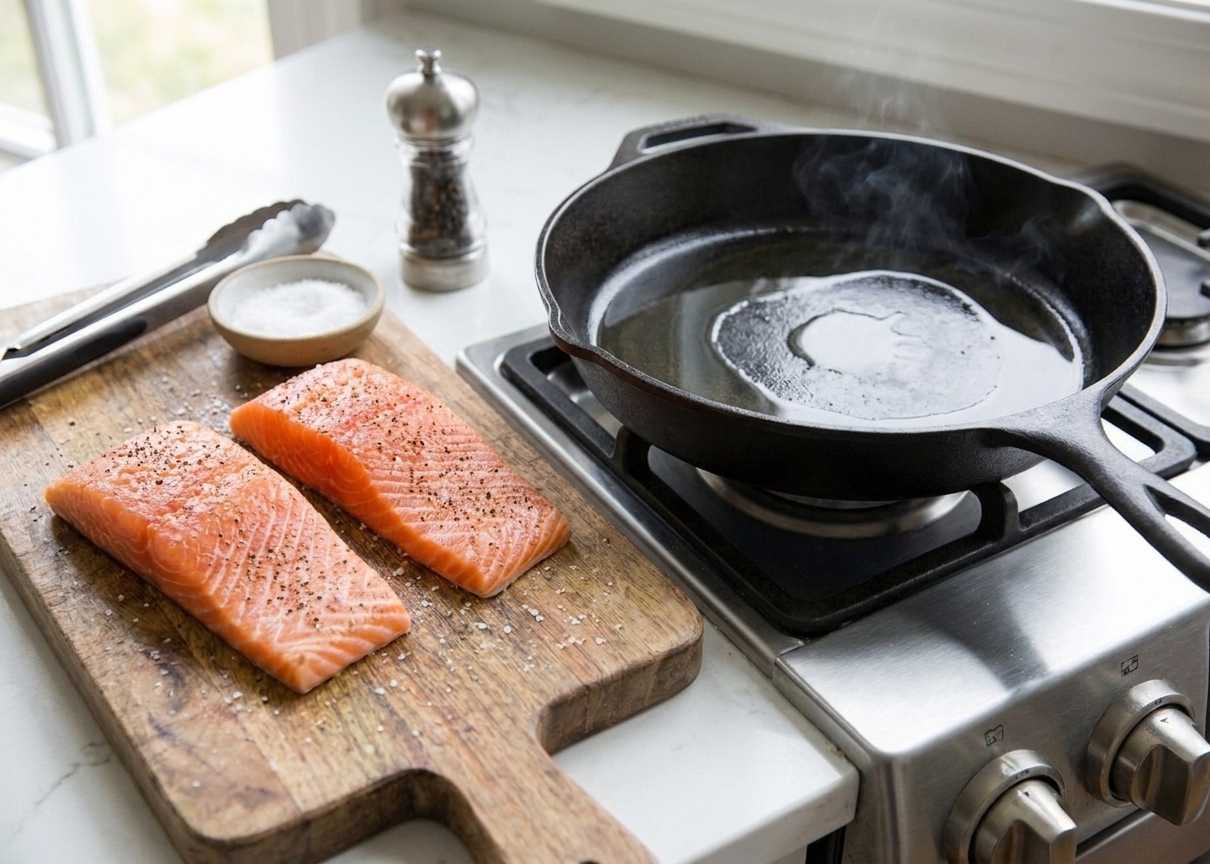
2) Sear (and optionally finish in the oven)
Heat olive oil and 1 tablespoon butter in a large skillet over medium-high heat. When the butter is melted and foamy, add salmon (skin-side down if using skin-on). Sear 3 to 5 minutes, until golden and releases easily.
Flip and cook another 2 to 4 minutes, depending on thickness, until the salmon flakes with gentle pressure and the center is slightly darker and juicier (it will keep cooking as it rests). If your fillets are thick, you can transfer the skillet to a 400°F oven for 4 to 6 minutes after flipping. Quick note: only do this if your skillet is oven-safe (cast iron and most stainless steel are, but check your handle before you commit).
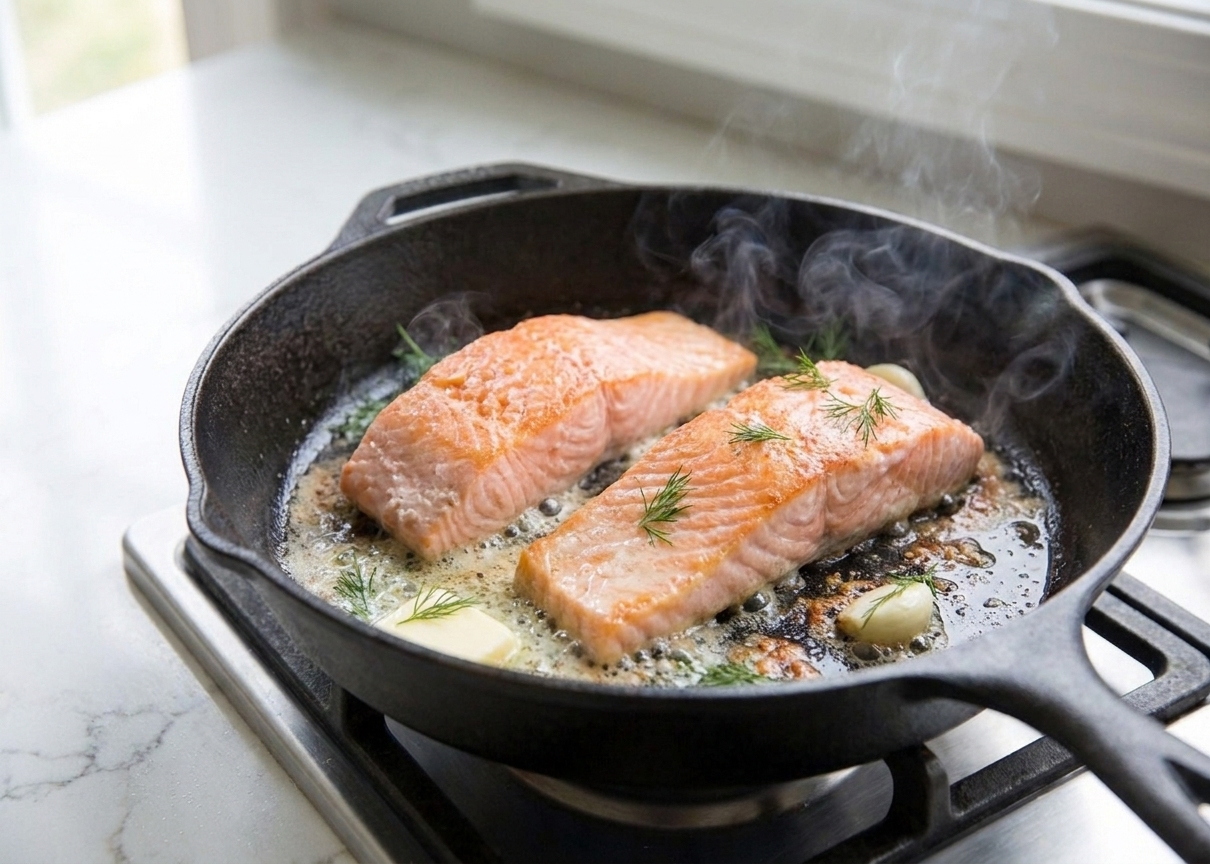
Move salmon to a plate and tent loosely with foil.
3) Build the sauce in the same pan
Lower heat to medium. Add 2 teaspoons butter, then the garlic. Stir 20 to 30 seconds, just until fragrant. Do not let it brown.
Pour in broth and scrape up the browned bits from the pan. Simmer 1 to 2 minutes to reduce slightly.
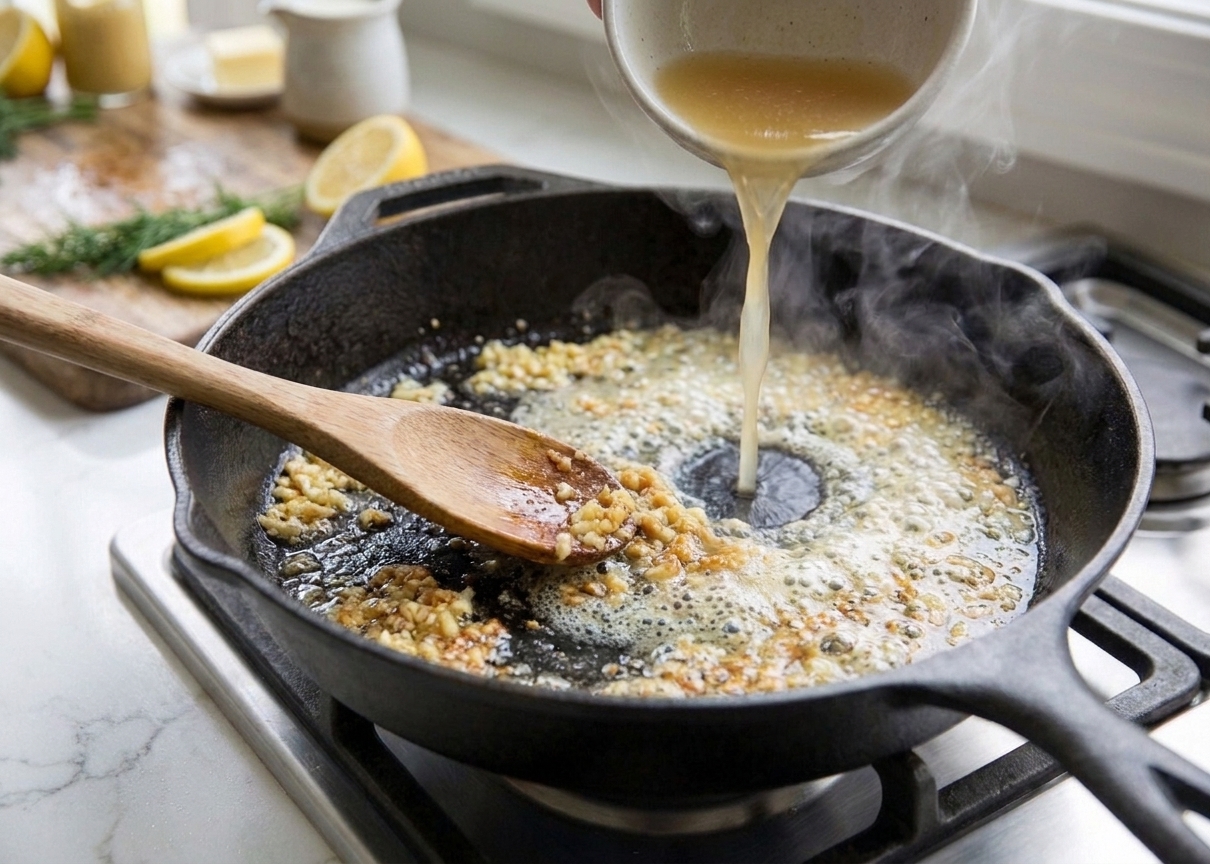
4) Make it creamy and bright
Stir in cream (or half-and-half), Dijon, lemon zest, and lemon juice. Simmer gently 2 to 4 minutes, stirring often, until the sauce thickens slightly and coats the back of a spoon.
If you want it a bit thicker, let it simmer 1 to 3 minutes more. Still want more body? Whisk 1 teaspoon cornstarch with 1 tablespoon cold water, then stir it into the gently simmering sauce for 30 to 60 seconds. Turn off the heat and stir in dill and capers if using. Taste and adjust with a pinch of salt, extra lemon, or black pepper.
5) Finish and serve
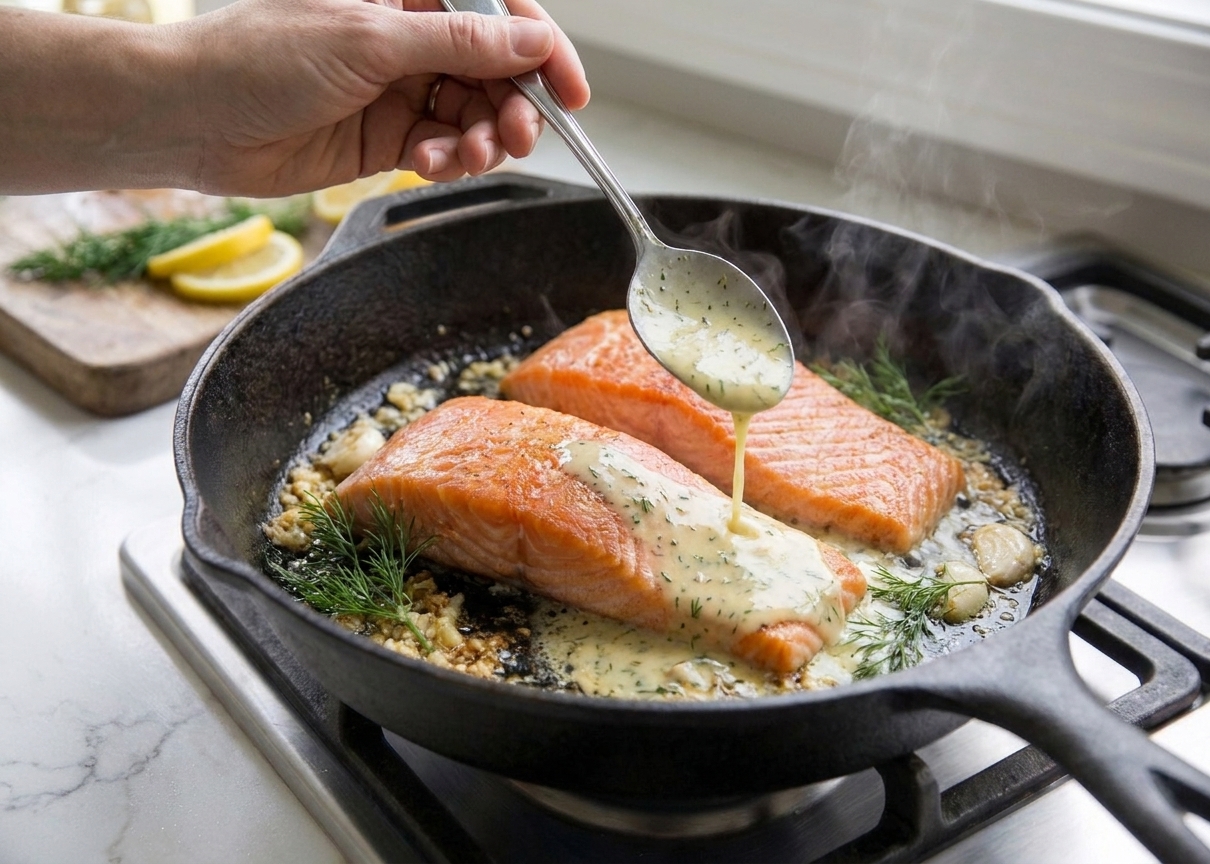
Return salmon to the skillet for 30 to 60 seconds just to warm through, then spoon sauce over the top.
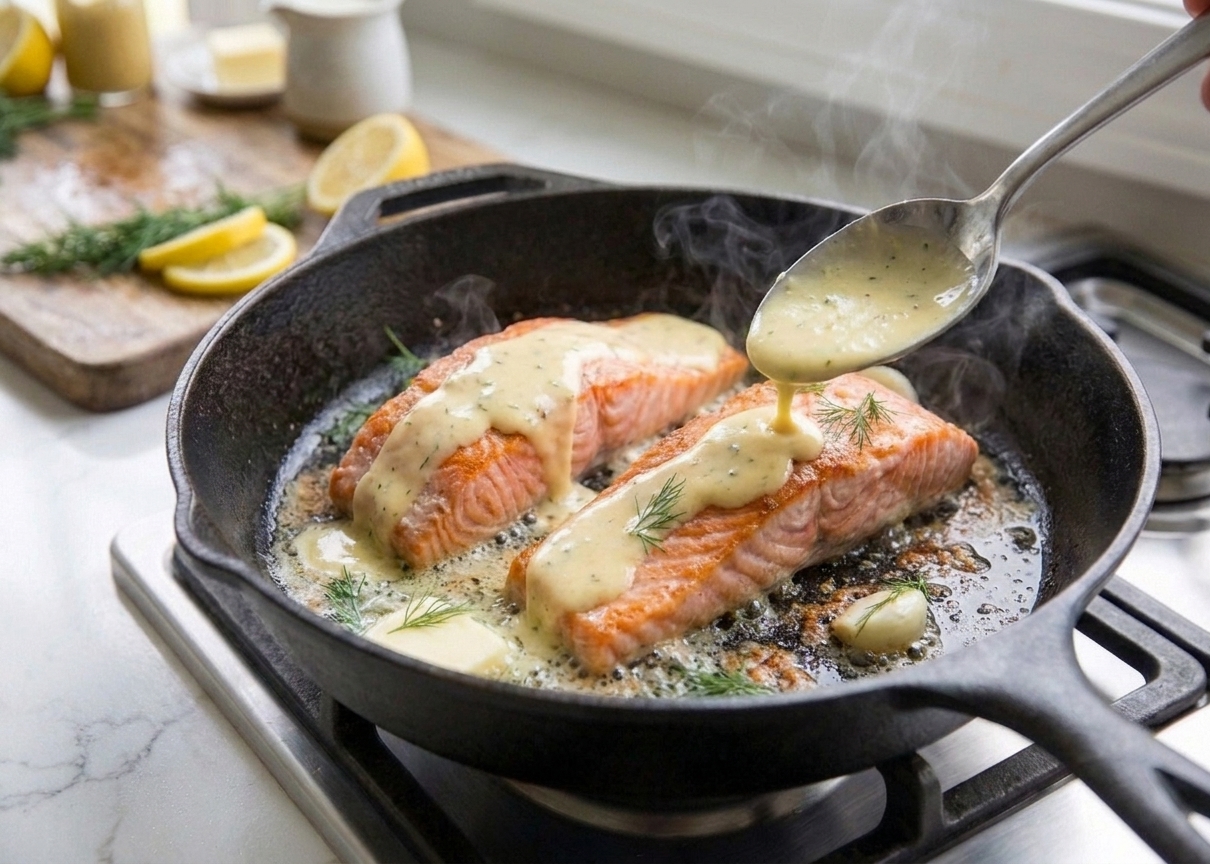
Serve immediately while the sauce is silky.
Tips for tender salmon
- Dry salmon = better sear: Moisture is the enemy of browning, so pat those fillets well. (Frozen-thawed salmon can be especially wet, and that surface moisture is usually the main culprit.)
- Do not overcook: Salmon keeps cooking after it leaves the pan. Pull it when it flakes with gentle pressure and the center still looks a touch darker and juicy.
- Keep the sauce at a gentle simmer: Boiling can make dairy sauces split, especially with acid (hello, lemon).
- Add lemon in stages: Zest adds fragrance, juice adds brightness. If you want extra zing, finish with a final squeeze right before serving.
- Fresh herbs at the end: Dill and parsley taste brightest when stirred in off heat.
Easy variations
Holiday herb version
Use a mix of dill and parsley, plus a tiny pinch of minced rosemary or thyme (a little goes a long way).
White wine sauce
Swap 1/4 cup of the broth for dry white wine. Let it simmer 1 to 2 minutes before adding cream.
Garlicky spinach finish
Add 2 big handfuls of baby spinach to the sauce right before returning salmon to the pan. Stir until just wilted.
Dairy-light option
Use half-and-half, or try evaporated milk for a surprisingly creamy result. Keep the heat low and slow.
What to serve with it
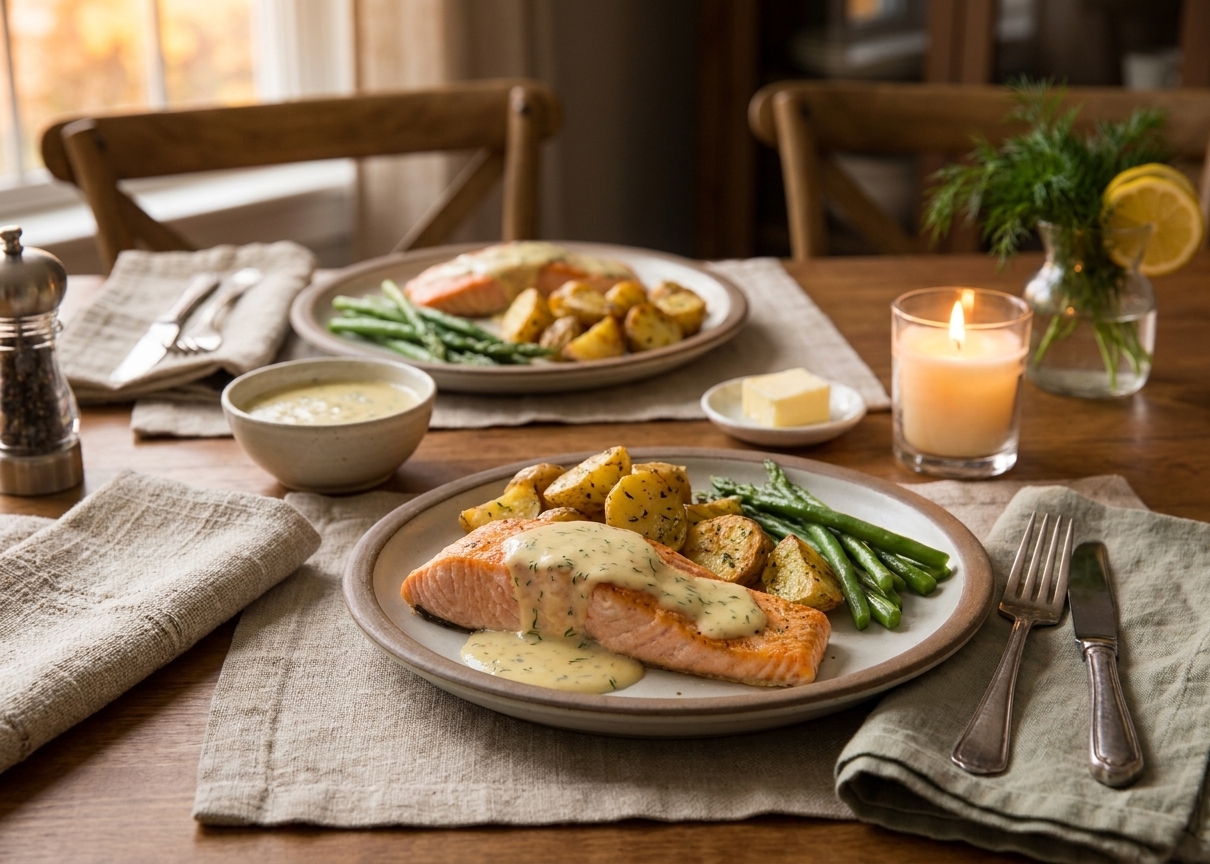
I like sides that catch sauce. This one is made for spooning.
- Roasted baby potatoes or mashed potatoes
- Rice (jasmine, basmati, or wild rice blend)
- Butter noodles with a little lemon zest
- Asparagus, green beans, or broccolini
- A crisp salad with arugula, shaved fennel, or cucumber
Make-ahead and storage
Can I make it ahead?
For best texture, cook salmon right before serving. You can prep the sauce ingredients ahead: mince garlic, chop herbs, zest and juice lemon, and measure liquids.
How to store leftovers
Refrigerate salmon and sauce in an airtight container for up to 2 days.
How to reheat
Warm gently in a skillet over low heat with a splash of broth or water. Avoid the microwave if you can, but if you must, use low power in short bursts.
FAQ
Can I use frozen salmon?
Yes. Thaw overnight in the fridge, then pat dry very well before seasoning. Frozen-thawed salmon often releases more moisture, which can make it harder to get a good sear.
How do I know when salmon is done?
It should flake with gentle pressure and look mostly opaque, with a slightly darker, juicier center. If you use a thermometer, many cooks aim for about 125°F to 130°F in the thickest part for moist, restaurant-style salmon (especially with high-quality fish). For the most conservative food-safety benchmark, some guidance recommends 145°F. Choose the level that fits your comfort, and remember the temperature will rise a bit as it rests.
Why did my sauce turn thin?
It likely needs a few more minutes to simmer and reduce. Simmer gently, stir often, and give it time. If you want a thicker sauce without reducing too far, use the quick cornstarch slurry option in the instructions.
Why did my sauce curdle?
High heat plus acid can do it. Keep the sauce at a low simmer, and be extra gentle if you are using half-and-half.
Printable recipe
Festive Salmon (Light and Creamy)
Time: 25 to 30 minutes
Serves: 4
Ingredients
- 4 salmon fillets (about 6 ounces each)
- 1 teaspoon kosher salt
- 1/2 teaspoon black pepper
- 1 tablespoon olive oil
- 1 tablespoon butter
- 2 teaspoons butter
- 3 to 4 cloves garlic, minced
- 1/2 cup low-sodium broth
- 1/2 cup heavy cream or half-and-half
- 1 teaspoon Dijon mustard
- Zest of 1 lemon
- 2 tablespoons lemon juice, plus more to taste
- 2 tablespoons chopped fresh dill (or parsley)
- 1 to 2 teaspoons capers (optional)
- Optional for a thicker sauce: 1 teaspoon cornstarch + 1 tablespoon cold water
Instructions
- Pat salmon dry and season with salt and pepper.
- Heat olive oil and 1 tablespoon butter in a large oven-safe skillet over medium-high heat. Sear salmon 3 to 5 minutes, then flip and cook 2 to 4 minutes more until it flakes with gentle pressure and the center is still juicy. If thick, you can finish in a 400°F oven for 4 to 6 minutes after flipping (only if your skillet is oven-safe). Transfer salmon to a plate and tent loosely.
- Reduce heat to medium. Add 2 teaspoons butter and garlic. Stir 20 to 30 seconds.
- Add broth and scrape up browned bits. Simmer 1 to 2 minutes.
- Stir in cream, Dijon, lemon zest, and lemon juice. Simmer gently 2 to 4 minutes until the sauce thickens slightly. For a thicker sauce, simmer a few minutes longer or whisk in the cornstarch slurry and simmer 30 to 60 seconds.
- Off heat, stir in herbs and capers. Taste and adjust seasoning.
- Return salmon to warm briefly, spoon sauce over, and serve.
Notes
- For the silkiest sauce, keep heat gentle and avoid boiling once cream is added.
- If you want extra festive, finish with a sprinkle of lemon zest and a few more herbs right before serving.