

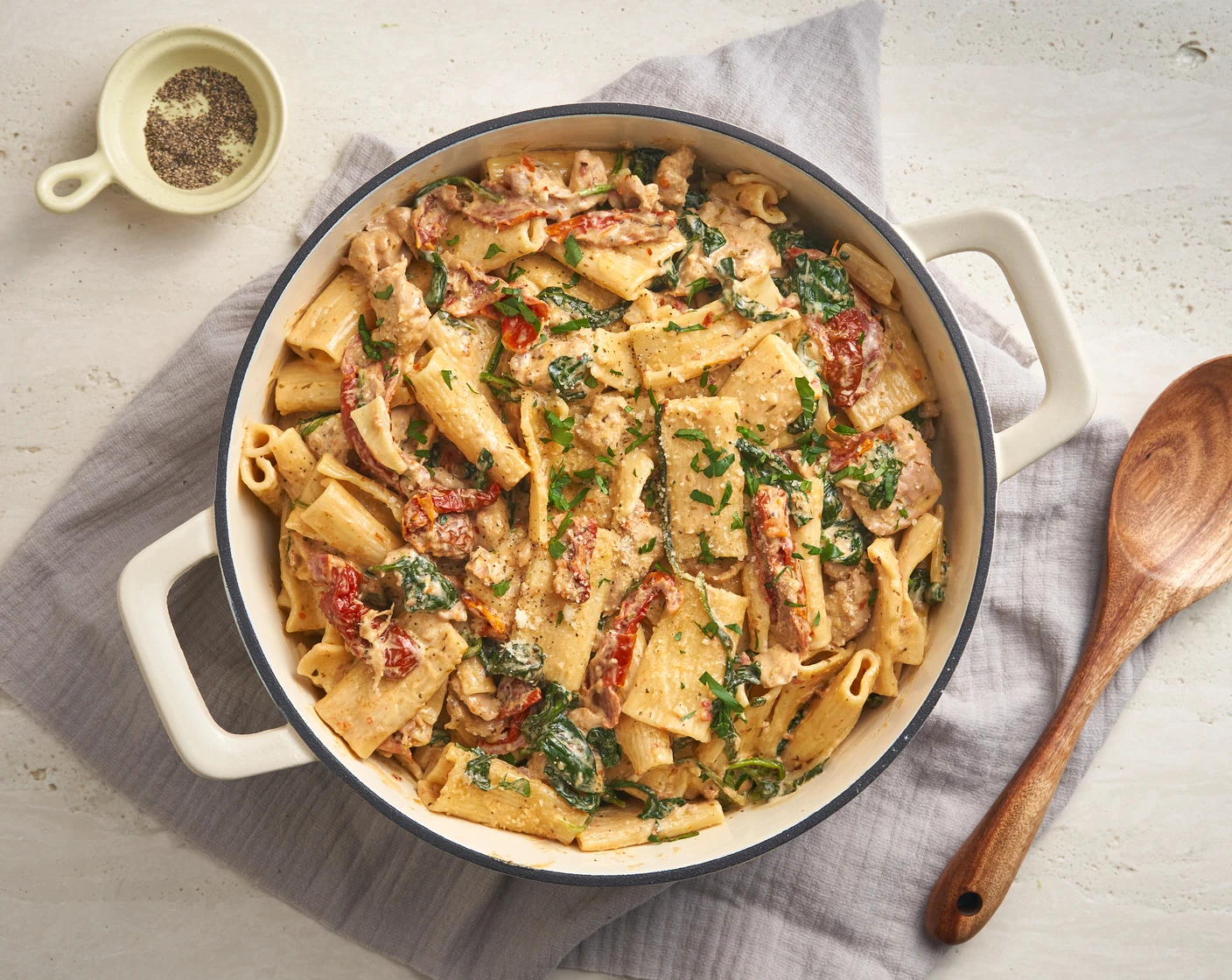
If you love the kind of dinner that makes everyone wander into the kitchen asking, “What smells so good?”, Tuscan chicken pasta is it. Think: juicy chicken, a creamy garlic-Parmesan sauce, tangy sun-dried tomatoes, and fresh spinach wilted in at the end so it stays bright and tender. It tastes like a restaurant splurge, but it’s absolutely weeknight-doable.

The idea
Why This Recipe Works
- Fast comfort food: On the table in about 30 to 40 minutes if you prep as you go. For the closer-to-30-minute version, slice the chicken into cutlets.
- One-skillet sauce: You cook the chicken and build the sauce in the same skillet for maximum flavor.
- Balanced richness: Creamy sauce gets a lift from sun-dried tomatoes and a little lemon.
- Flexible: Swap pasta shapes, use thighs instead of breasts, or add mushrooms.
Shopping
Ingredient Notes
Here’s what you need for a classic, cozy Tuscan chicken pasta. Measurements are written to serve about 4 hungry people.
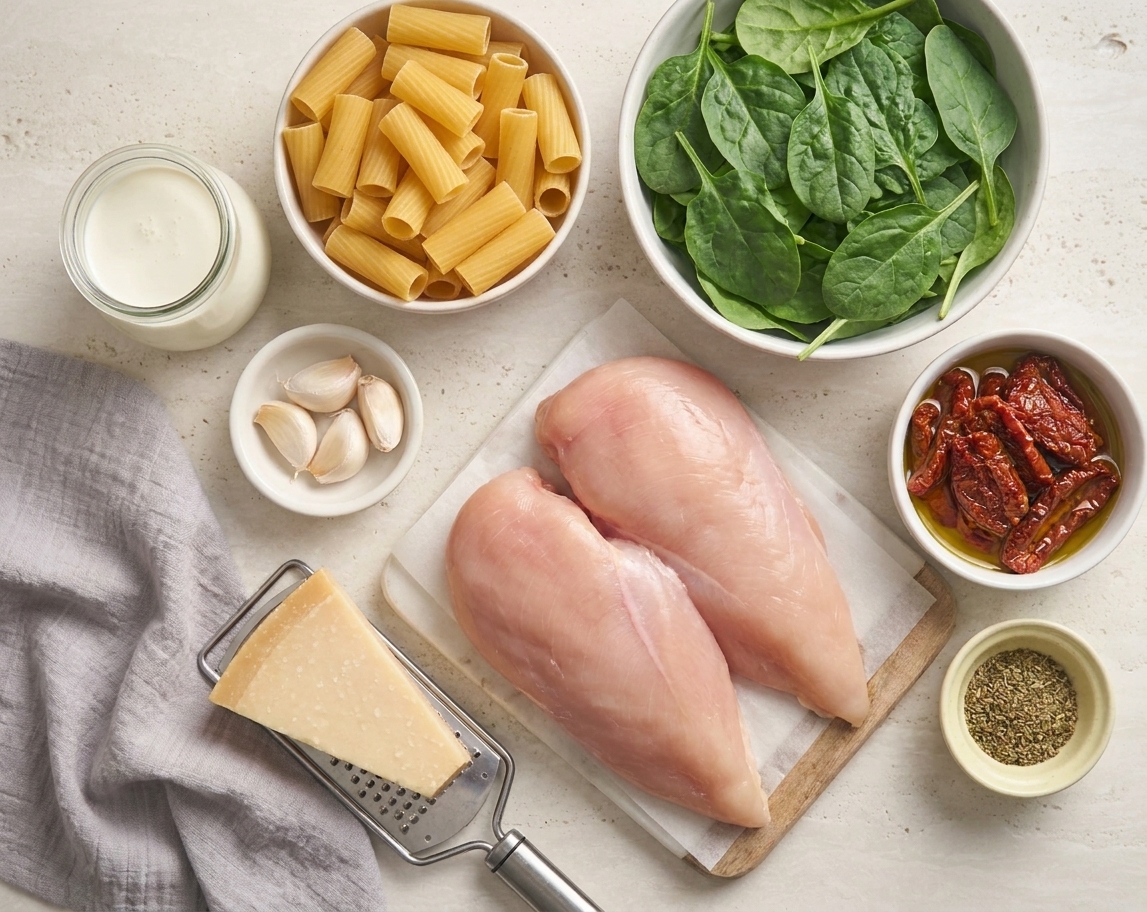
- Chicken: Boneless skinless chicken breasts cook faster and more evenly when sliced into cutlets (or pounded lightly). Thighs also work.
- Parmesan: Finely grated Parmesan melts smoothest; pre-shredded can make the sauce grainy.
- Sun-dried tomatoes: Oil-packed, drained, then sliced or chopped if needed. You can use some of the sun-dried tomato oil in place of part of the olive oil if you like.
- Spinach: Add at the end so it stays tender and green (3 to 4 cups baby spinach, about 3 to 4 ounces).
- Lemon juice: Optional, but adds a brighter finish (1 to 2 teaspoons).
- Salt: Start gently, since Parmesan and broth add salt.
Get set up
Equipment You Will Need
- Large pot (for boiling pasta)
- Large skillet (for cooking chicken and building the sauce)
- Tongs or a large spoon (for tossing pasta)
- Whisk (for smoothing the Parmesan into the sauce)
- Knife and cutting board (for slicing chicken and prepping garlic and tomatoes)
- Instant-read thermometer (helpful for checking chicken reaches 165°F)
Technique
Tips for Getting It Right
- Grate your own Parmesan: Pre-shredded cheese can resist melting and make the sauce grainy.
- Keep the heat gentle once cream is in: A lively boil can cause the sauce to separate.
- Add the cheese gradually: Whisk in a little at a time for the smoothest sauce. If your stove runs hot, pull the skillet off the heat briefly while whisking in the cheese.
- Use pasta water like a secret weapon: Reserve 1 cup. The starch helps the sauce cling and stay smooth.
- Don’t overcook the spinach: Add it at the end so it stays tender and green.
- Thin chicken cooks evenly: Cutlets are the easiest way to keep timing predictable.
Flexibility
Substitutes That Work
- Pasta shape: Use penne, rigatoni, fettuccine, or farfalle.
- Chicken: Swap breasts for thighs.
- Heavy cream: Half-and-half is the best next option; keep the simmer gentle and expect a slightly thinner sauce.
- Sun-dried tomatoes: In a pinch, use roasted red peppers for a milder flavor, or stir a few tablespoons of tomato paste into the broth for a different direction.
- Gluten-free: Use your favorite gluten-free pasta and reserve extra pasta water since gluten-free pasta can absorb differently.
Make it yours
Variations to Try
This recipe is forgiving in the best way. Here are a few swaps to fit the week.
- Add mushrooms: Sauté 8 ounces sliced mushrooms after the chicken, then proceed with the sauce.
- Make it a little lighter: Use half-and-half instead of cream. Keep the simmer gentle and expect a slightly thinner sauce.
- Make it spicy: Add 1/2 teaspoon red pepper flakes in the garlic step.
- Swap the protein: Shrimp works beautifully. Sear quickly and remove, then add back at the end.
- Go gluten-free: Use gluten-free pasta and reserve extra pasta water.
On the table
What to Serve It With
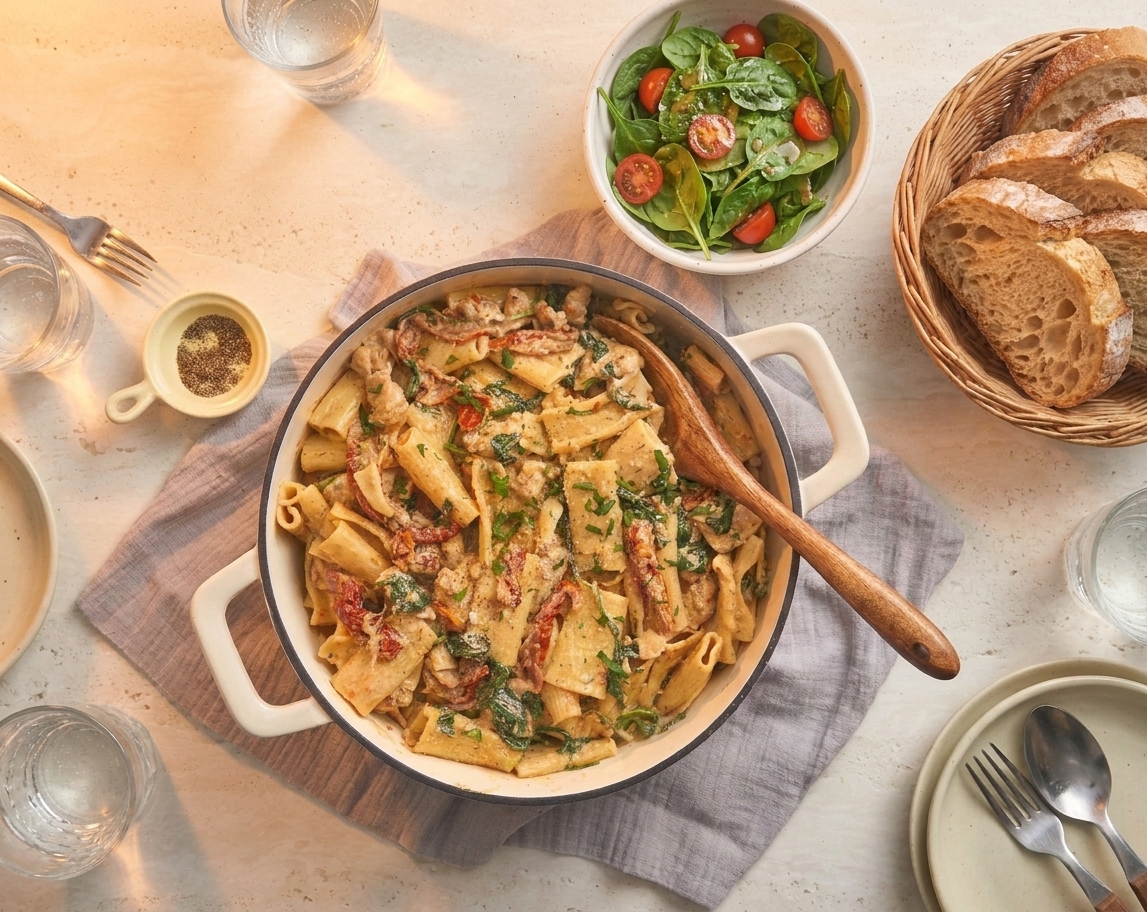
This pasta is rich and cozy, so sides that are crisp, fresh, or garlicky in a different way pair well.
- A simple green salad with lemony vinaigrette
- Roasted broccoli or asparagus
- Garlic bread or warm focaccia
- Cherry tomatoes tossed with olive oil and basil
Later
Storage, Freezing and Reheating
How to store
Cool leftovers and store in an airtight container in the refrigerator for up to 3 days.
How to reheat
Reheat gently in a skillet over medium-low with a splash of water, broth, or cream to loosen the sauce. Microwave works too, just use 50 to 70 percent power and stir halfway through.
Can you freeze it?
Cream sauces can change texture after freezing, so freezing the finished dish isn’t recommended. If you want to prep ahead, cook and freeze the chicken separately, then make the sauce fresh.
Watch out
Common Mistakes to Avoid
- Sauce turns grainy: Usually the heat was too high when the cheese went in, or the Parmesan didn’t melt smoothly (pre-shredded is a common culprit). Lower the heat (or take the pan off the burner) and whisk in finely grated Parmesan a little at a time.
- Sauce separates: A hard boil after adding cream can cause splitting; keep the heat gentle once cream is in.
- Pasta overcooks: Cook pasta just shy of al dente so it can finish in the sauce.
- Chicken cooks unevenly: Slice breasts into cutlets (or pound lightly) so they cook quickly and evenly.
- Spinach goes dull: Add spinach at the end and let it wilt briefly (about 1 minute).
Questions
Frequently Asked Questions
What makes it “Tuscan”?
In American home cooking, “Tuscan” usually means a creamy garlic sauce with sun-dried tomatoes and spinach. It’s inspired by Italian flavors, not a strict regional recipe.
Can I use milk instead of heavy cream?
Milk will be much thinner and is more likely to separate if it’s heated too aggressively or combined with cheese and acid. If you need a swap, half-and-half is the best next option. You can also thicken with a small spoonful of flour whisked into the broth before adding dairy, then keep the heat low.
Why did my sauce turn grainy?
Usually either the heat was too high when the cheese went in, or the Parmesan didn’t melt smoothly (pre-shredded is the most common culprit). Lower the heat (or take the pan off the burner) and whisk in finely grated Parmesan a little at a time.
Do I have to use sun-dried tomatoes?
They add the signature tangy-sweet pop. In a pinch, use roasted red peppers for a milder flavor, or stir in a few tablespoons of tomato paste into the broth for a different but still tasty direction.
The recipe
Tuscan Chicken Pasta
Tuscan Chicken Pasta features juicy chicken and pasta tossed in a creamy garlic-Parmesan sauce with sun-dried tomatoes and spinach. Finish with red pepper flakes and a squeeze of lemon juice if you want a brighter, slightly spicy edge.
Ingredients
- 12 ounces pasta (penne, rigatoni, fettuccine, or farfalle)
- 1 to 1 1/4 pounds boneless skinless chicken breasts (or thighs)
- 1 teaspoon kosher salt, plus more for pasta water
- 1/2 teaspoon black pepper
- 1 teaspoon Italian seasoning
- 2 tablespoons olive oil (use some of the sun-dried tomato oil if you like)
- 4 to 6 cloves garlic, minced
- 1/2 cup sun-dried tomatoes (oil-packed), drained and sliced or chopped if needed
- 1 cup chicken broth
- 1 cup heavy cream
- 3/4 cup finely grated Parmesan, plus more to serve
- 3 to 4 cups baby spinach (about 3 to 4 ounces)
- 1 to 2 teaspoons lemon juice (optional)
- Red pepper flakes, to taste
Instructions
- Bring a large pot of water to a boil and salt it generously. Cook pasta to just shy of al dente. Before draining, reserve 1 cup pasta water, then drain.
- Pat chicken dry. If using breasts, slice horizontally into cutlets (or pound lightly). Season with kosher salt, black pepper, and Italian seasoning.
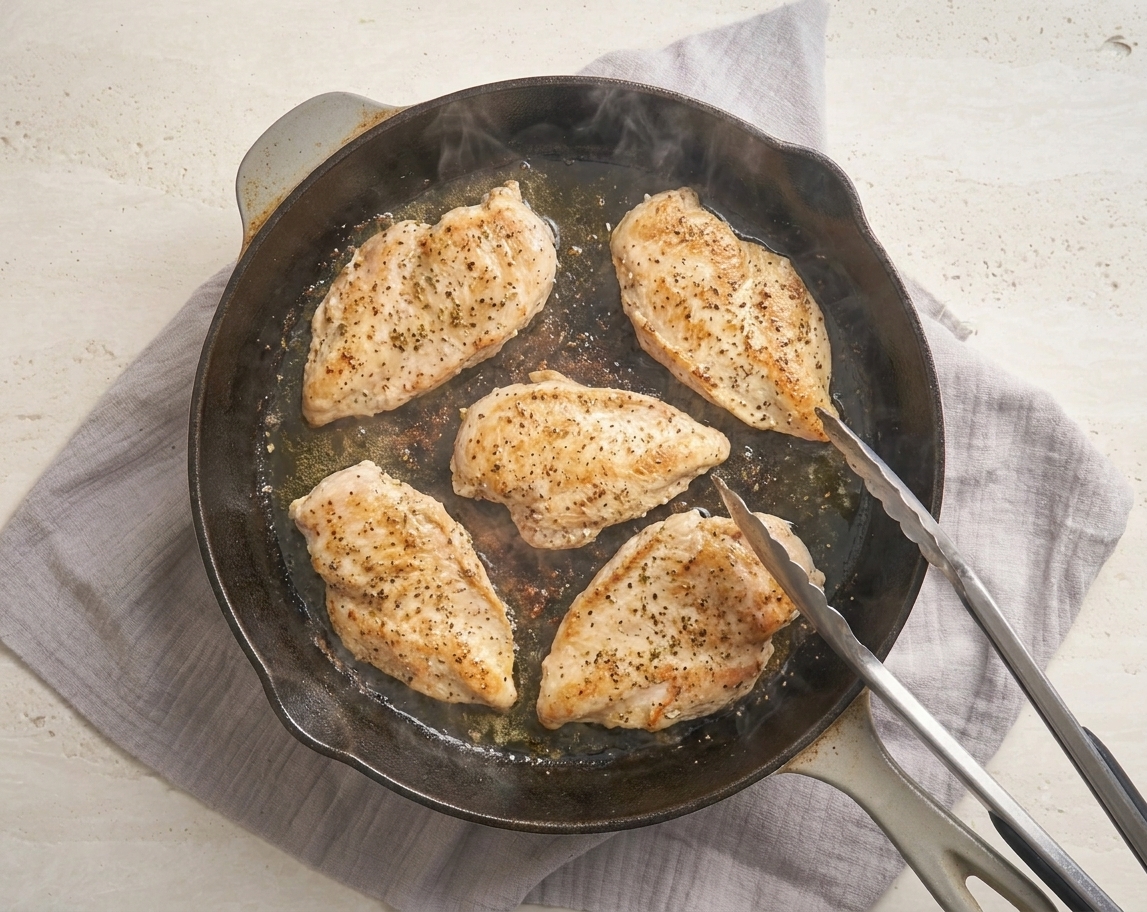
- Heat olive oil in a large skillet over medium-high heat. Cook chicken 3 to 5 minutes per side (depending on thickness) until browned and cooked through (165°F). Transfer to a plate and tent loosely with foil.
- Reduce heat to medium. Add garlic to the same skillet and sauté 30 seconds until fragrant. Stir in sun-dried tomatoes.
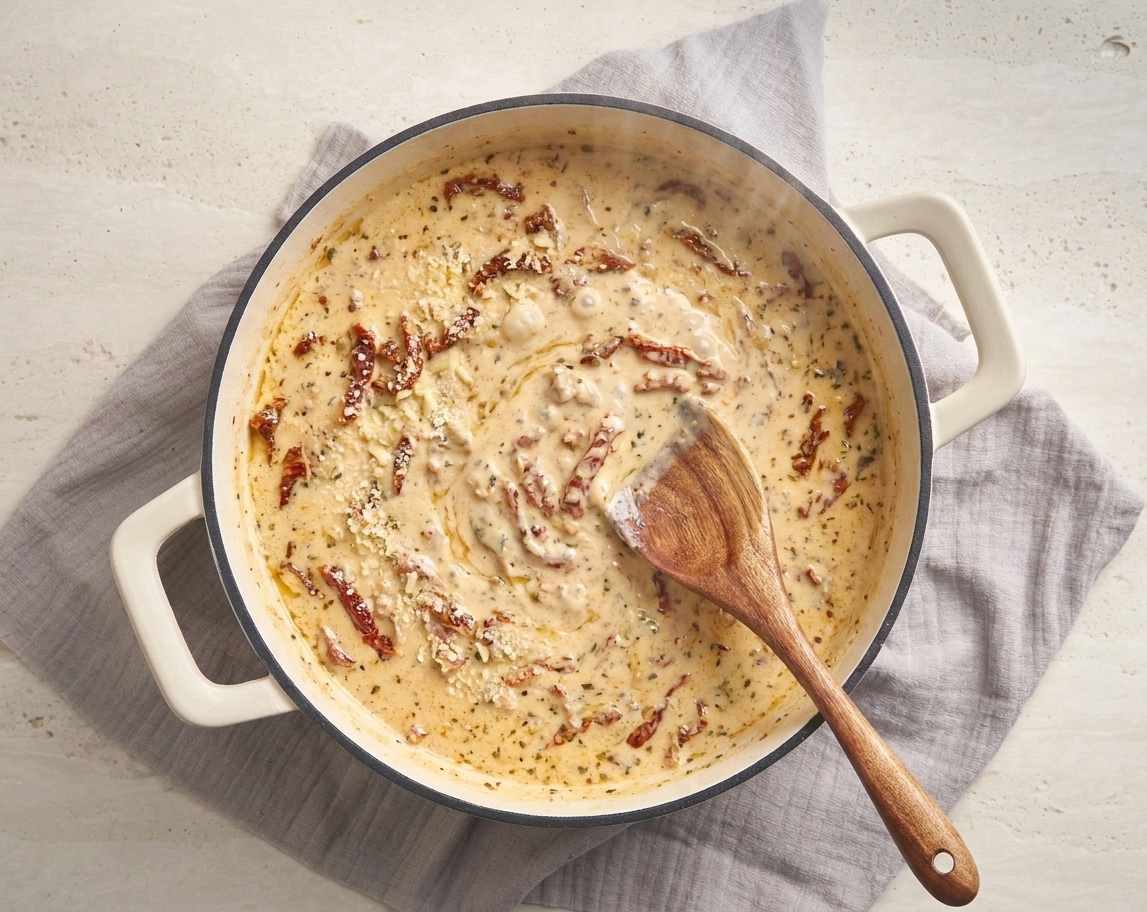
- Pour in chicken broth and scrape up any browned bits. Simmer 2 to 3 minutes to reduce slightly, then stir in the heavy cream.
- When the sauce is steaming (not boiling hard), lower the heat and whisk in Parmesan a handful at a time until smooth. If needed, pull the skillet off the heat briefly while whisking in the cheese.
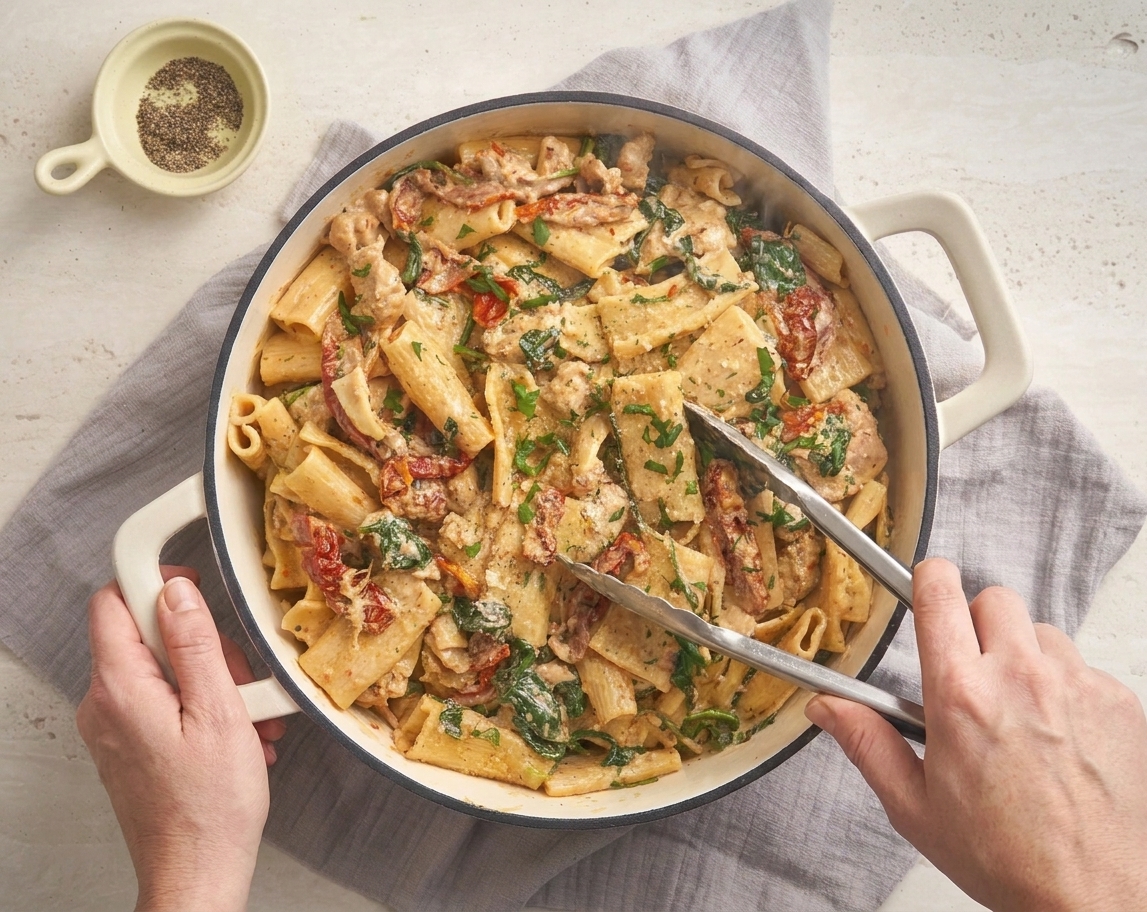
- Stir in spinach and let it wilt, about 1 minute. Add drained pasta and toss to coat, loosening with reserved pasta water a little at a time until silky and glossy.
- Slice the chicken and nestle it back into the pasta. Taste and adjust with salt, pepper, red pepper flakes, and lemon juice (optional). Serve with extra Parmesan.
Recipe notes
Maya’s note: If the sauce looks perfect in the pan but tightens up when you plate, add one more small splash of pasta water and toss again. That little bit of starch is pure magic.
Salt note: Go easy at first since Parmesan and broth add salt.
Nutrition (per serving, approximate)
- Calories: ~820
- Fat: ~33 g
- Carbs: ~78 g
- Protein: ~52 g
- Fiber: ~4 g
- Sugar: ~6 g
- Sodium: ~950 mg
Nutrition values are approximate and will vary by specific ingredients and brands used.