

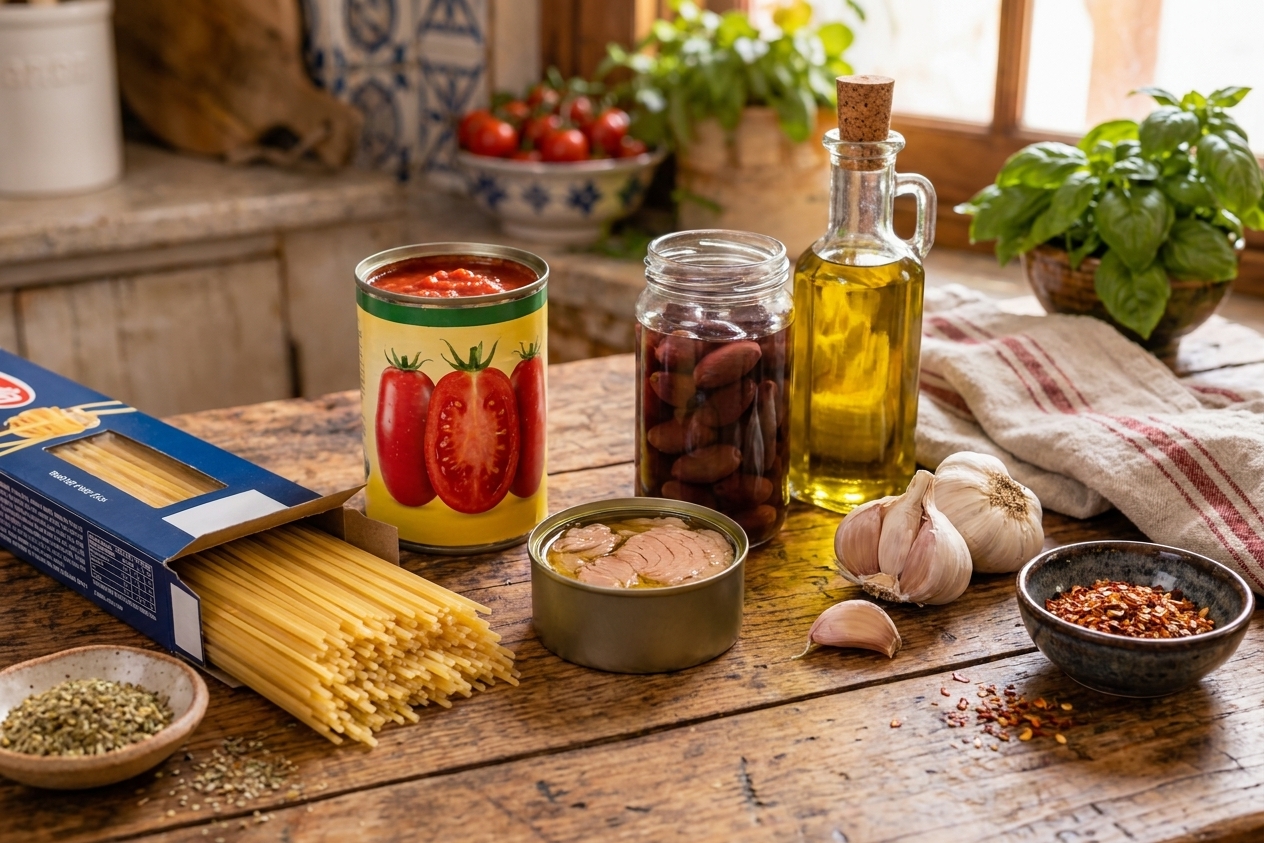
When my week gets loud, I reach for pasta. Not the fussy, grocery-run kind. I mean the pantry pasta kind: one pot of noodles, one skillet (sometimes none), and a sauce that magically appears from whatever is already on the shelf.
Below are seven of my favorite 20-minute pantry pasta dinners. Each one is built around shelf-stable ingredients, with easy notes for using what you have. Keep this page bookmarked for those nights when you want a real dinner without the big plan.
Quick pantry staples to keep around: dried pasta (one long, one short), olive oil, garlic (or garlic powder), canned tomatoes, tuna or beans, olives or capers, breadcrumbs, peanut butter, soy sauce, chili flakes, dried oregano.
20-minute reality check: The sauces are fast. The wildcard is boiling water. To keep the promise, start the water first, use a kettle if you have one, and consider thin spaghetti or small shapes that cook quickly.

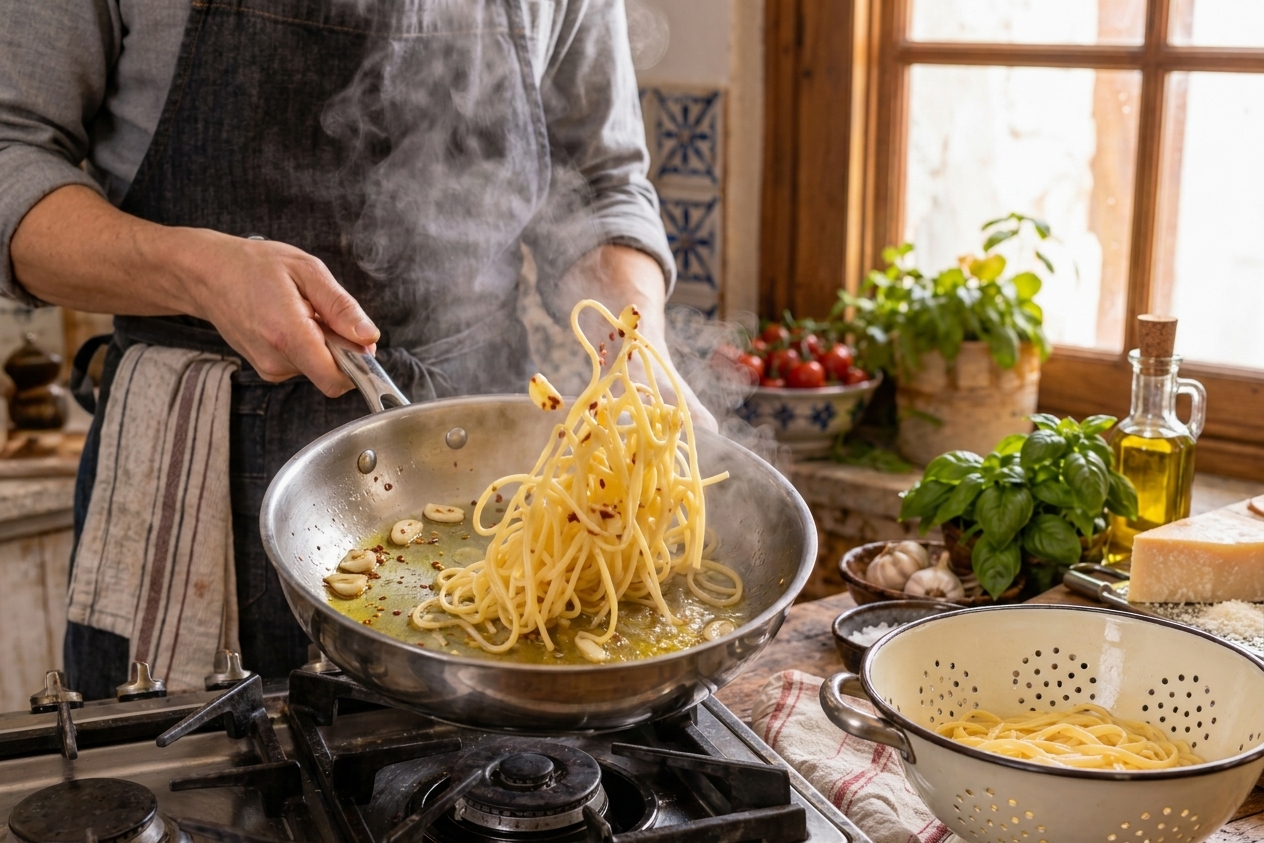
1) Garlicky Olive Oil Pasta
Pantry vibe: olive oil, garlic, chili flakes, pasta. That is it. This is the one I make when I have five minutes of energy and still want something that tastes like I tried.
Serves: 2 to 3
Concise recipe
- Cook: 8 oz spaghetti (or any long pasta) in well-salted water. Reserve 1 cup pasta water.
- Sauce: In a large skillet, warm 1/4 cup olive oil over medium. Add 4 to 6 minced garlic cloves and 1/4 to 1/2 tsp red pepper flakes. Cook 30 to 60 seconds, just until fragrant.
- Toss: Add drained pasta plus 1/2 cup reserved pasta water. Toss hard for 30 seconds. Add more pasta water as needed until glossy.
- Finish: Salt and black pepper to taste. Optional: 1 tsp lemon juice or 1 tbsp capers.
Substitution notes: No chili flakes? Use a pinch of cayenne or black pepper. No long pasta? This works with penne, rotini, even egg noodles.
2) Tomato Butter Pasta
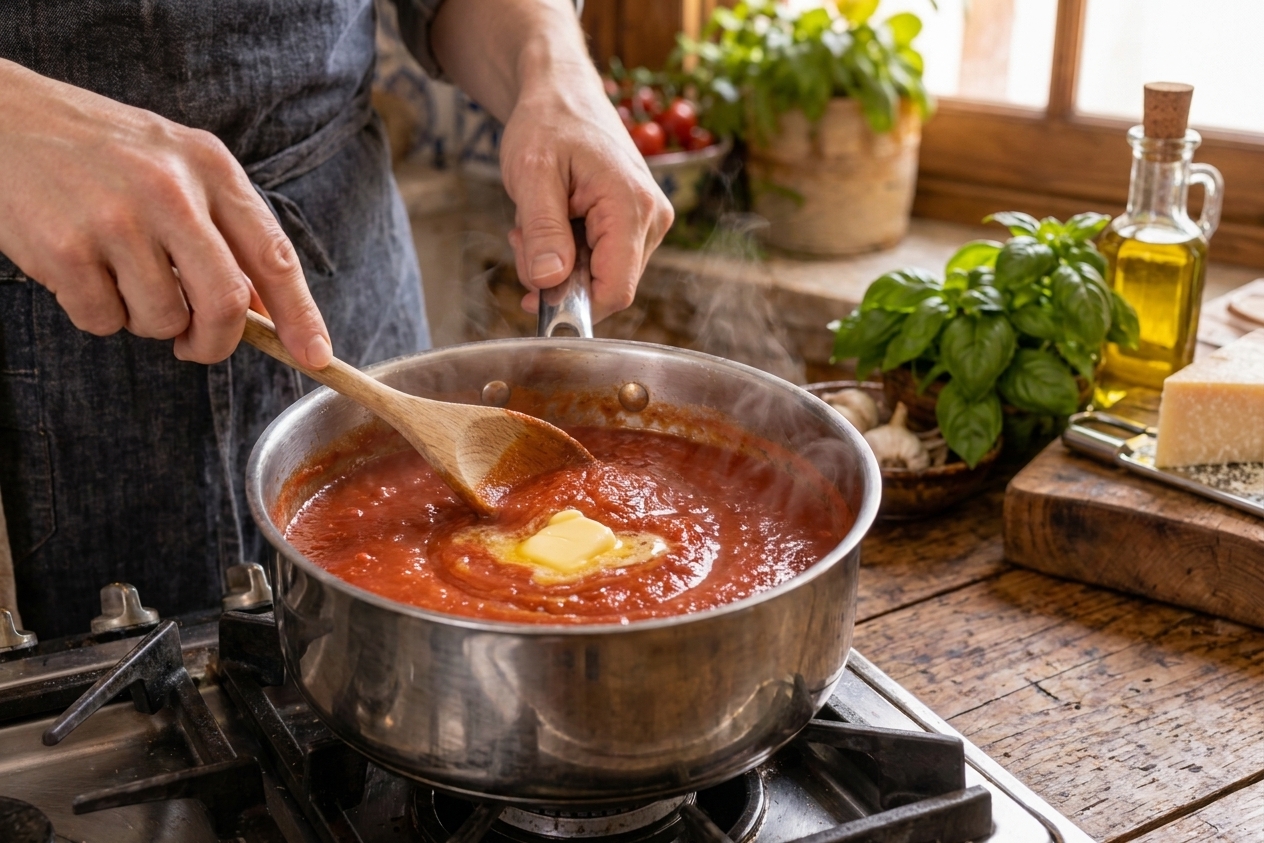
Pantry vibe: canned tomatoes meet butter and garlic, then simmer into something cozy and silky. No cream needed, just a good toss and a splash of starchy water.
Serves: 3 to 4
Concise recipe
- Cook: 12 oz short pasta. Reserve 1 cup pasta water.
- Sauce: In a saucepan or deep skillet, melt 3 tbsp butter with 2 tbsp olive oil. Add 3 minced garlic cloves. Cook 30 seconds.
- Simmer: Add 1 (14 to 15 oz) can crushed tomatoes (or tomato sauce). Simmer 5 to 7 minutes. Season with 1/2 tsp salt and 1/2 tsp dried oregano (optional).
- Toss: Add pasta and 1/2 cup pasta water. Stir and toss until creamy. Add more pasta water for a looser, silkier sauce.
- Finish: Optional: 2 tbsp grated Parmesan or nutritional yeast.
If it is not silky: Add more pasta water and keep tossing. If you used whole tomatoes and want it smoother, crush them well in the pan or blend briefly (stick blender, 10 seconds).
Substitution notes: If you only have whole peeled tomatoes, crush them with a spoon in the pan. Dairy-free? Use olive oil instead of butter and finish with nutritional yeast.
3) Tuna Caper Pasta
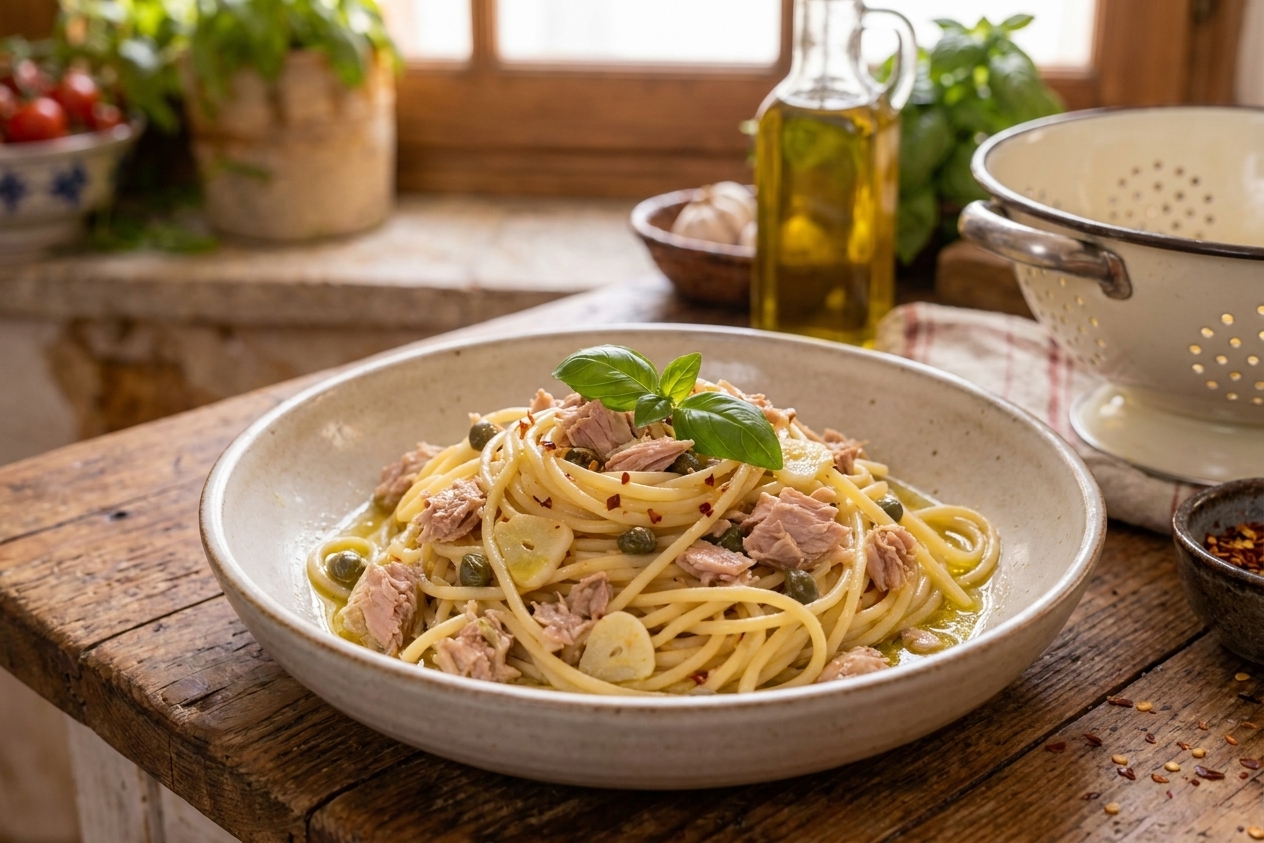
Pantry vibe: canned tuna, briny capers, a little garlic. It tastes like a coastal trattoria, but it is Tuesday.
Serves: 2 to 3
Concise recipe
- Cook: 8 oz pasta. Reserve 1 cup pasta water.
- Build: In a skillet, warm 2 tbsp olive oil. Add 3 minced garlic cloves and 1/4 tsp chili flakes (optional). Cook 30 seconds.
- Add: Stir in 1 can tuna (drained), 2 tbsp capers, and 1/2 cup crushed or diced tomatoes (from a can) or 1/2 cup tomato sauce. Warm 2 minutes. (Or use 2 tbsp tomato paste plus a splash of water.)
- Toss: Add pasta and 1/2 cup pasta water. Toss until saucy.
- Finish: Black pepper and a squeeze of lemon (or 1 tsp vinegar).
Substitution notes: No capers? Use chopped olives or a pinch of extra salt plus lemon. No tomatoes? Skip them and make it more like tuna aglio e olio.
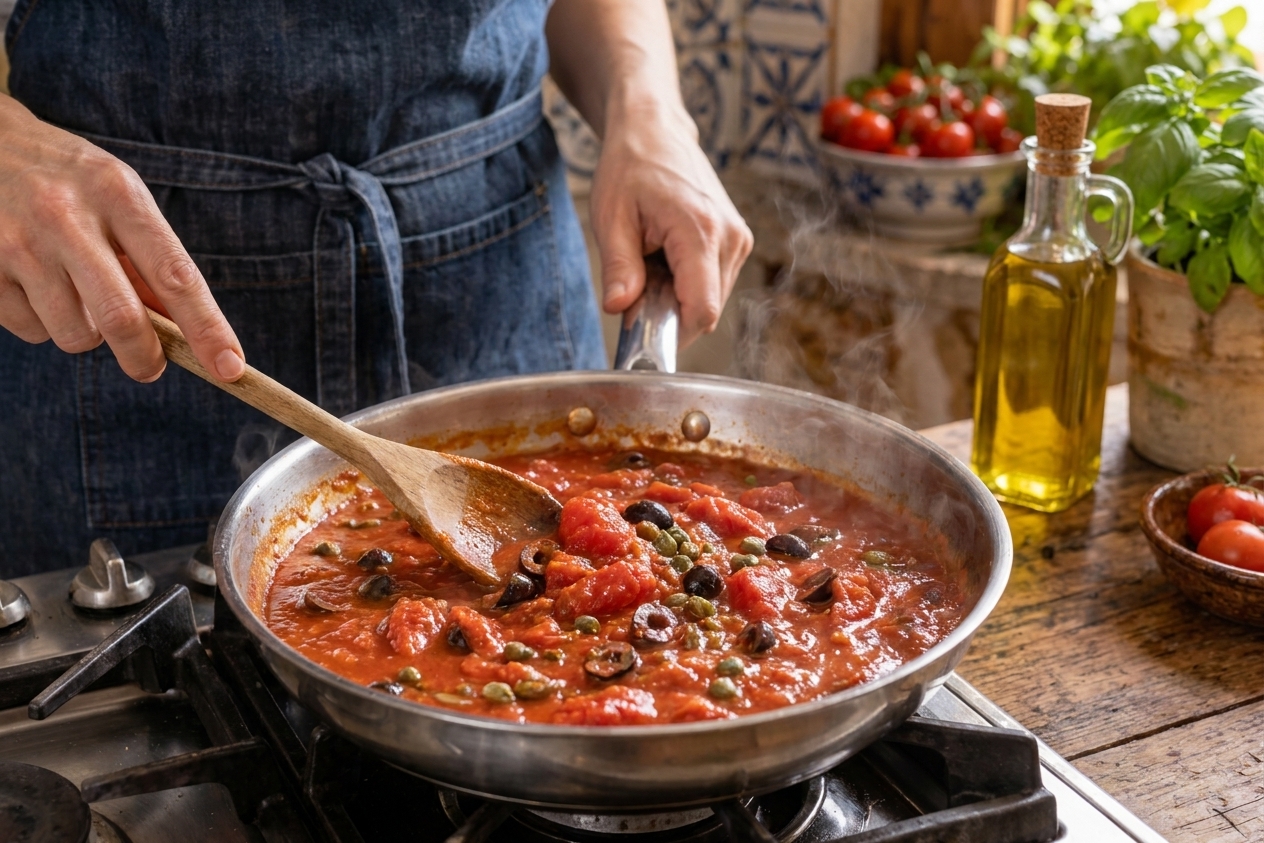
4) Pantry Puttanesca
Pantry vibe: canned tomatoes, olives, capers, anchovies if you have them. This is my go-to for a bold dinner that covers up the fact that the fridge is basically empty.
Serves: 3 to 4
Concise recipe
- Cook: 12 oz pasta. Reserve 1 cup pasta water.
- Sauce base: In a skillet, warm 2 tbsp olive oil. Add 3 to 4 minced garlic cloves and 2 anchovy fillets (optional). Mash and cook 30 seconds.
- Simmer: Add 1 (14 to 15 oz) can crushed tomatoes, 1/3 cup chopped olives, and 1 tbsp capers. Simmer 7 to 8 minutes.
- Toss: Add pasta plus 1/2 cup pasta water. Stir until glossy.
- Finish: Optional: dried parsley or a pinch of oregano.
Substitution notes: No anchovies? Still delicious. Add 1 tsp miso or soy sauce for depth if you like (not traditional, very effective).
5) Lemon Breadcrumb Pasta
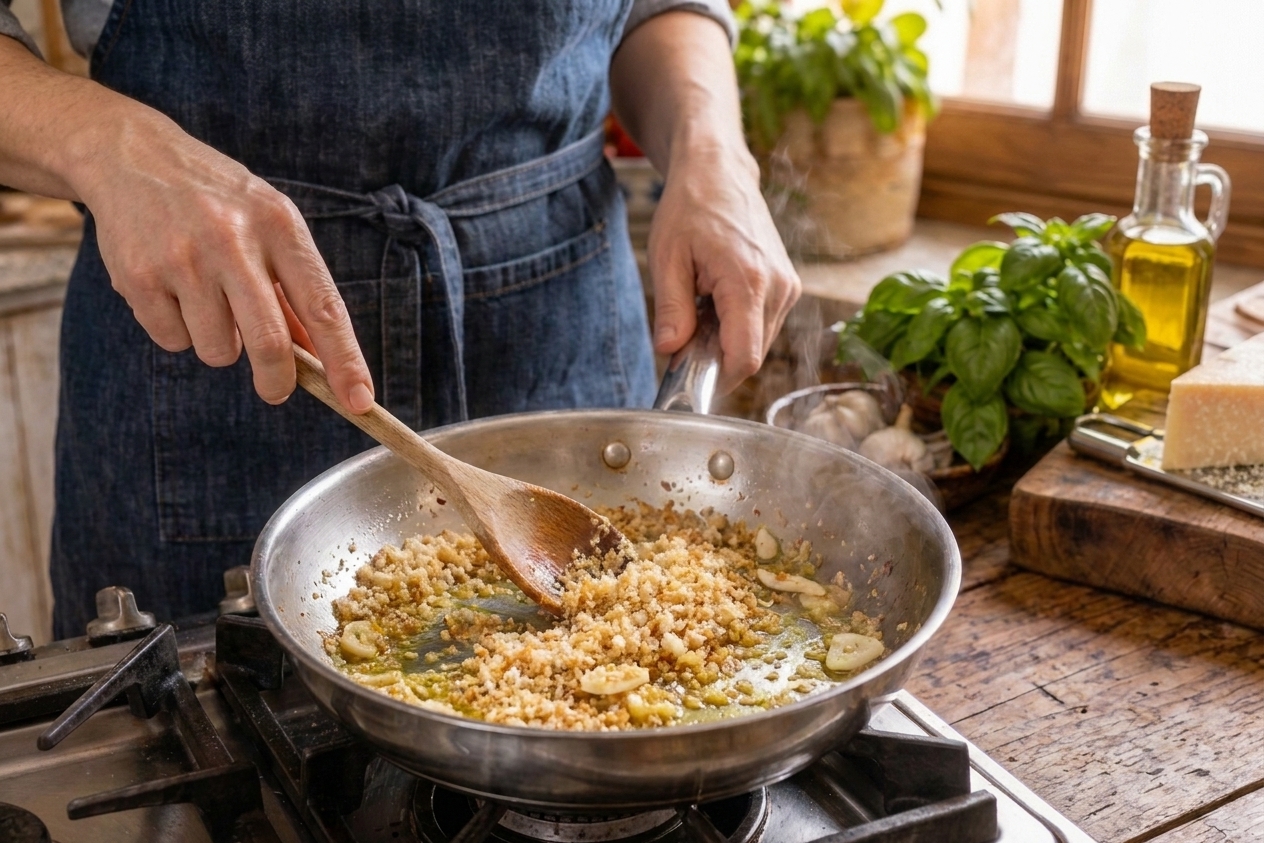
Pantry vibe: dried breadcrumbs, garlic, lemon juice (or vinegar), and a shower of crunchy topping that makes plain pasta feel special.
Serves: 2 to 3
Concise recipe
- Cook: 8 oz pasta. Reserve 1 cup pasta water.
- Toast crumbs: In a dry skillet, toast 1/2 cup breadcrumbs with 2 tbsp olive oil and 2 minced garlic cloves until golden, 2 to 3 minutes. Salt lightly. Transfer to a bowl.
- Sauce: Turn heat to low or off. Add 2 tbsp olive oil to the skillet. Add pasta, 1/2 cup pasta water, and 1 to 2 tbsp lemon juice.
- Finish: Toss well, then top generously with breadcrumbs and black pepper.
Substitution notes: No lemon? Use 1 to 2 tsp vinegar. No breadcrumbs? Crush crackers, toasted nuts, or even cereal flakes (plain) in a pinch.
6) Chickpea Marinara Pasta
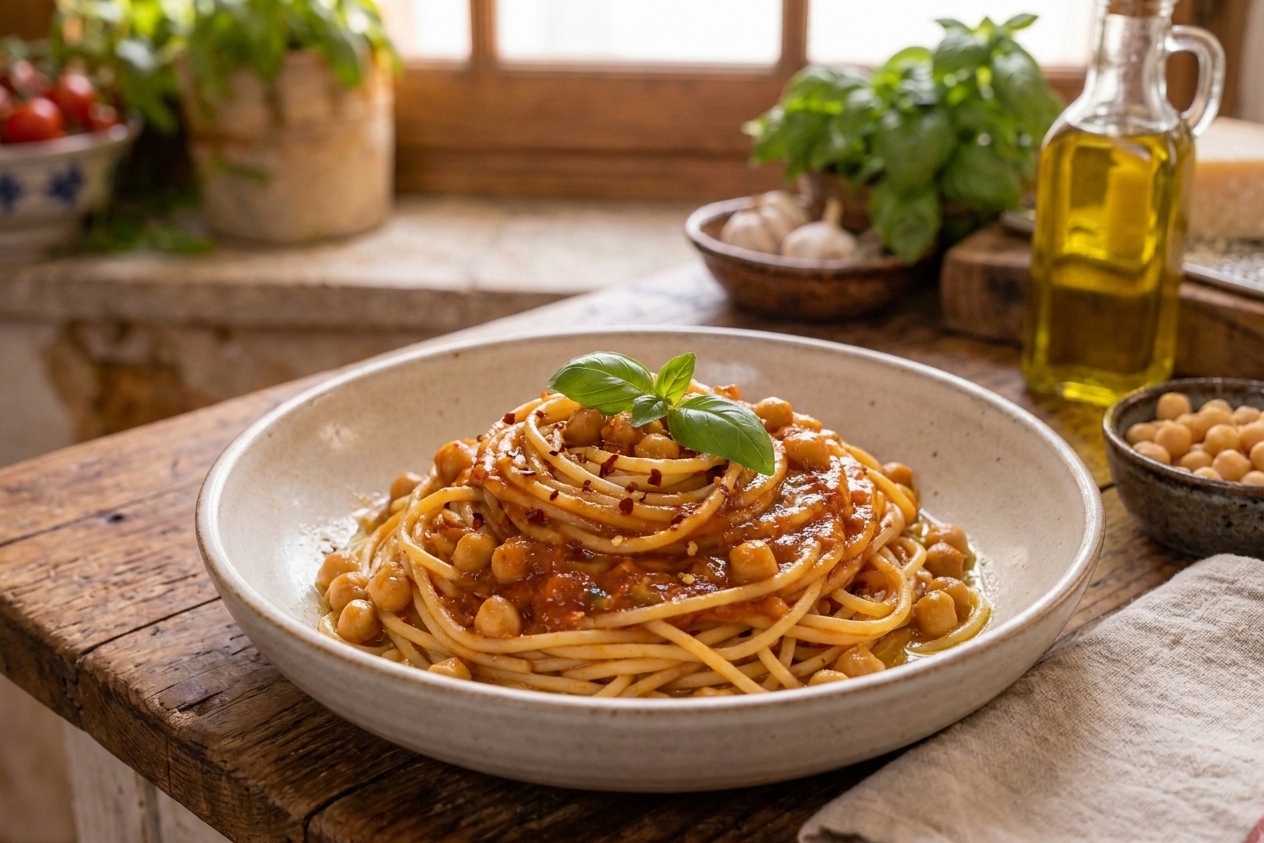
Pantry vibe: a can of chickpeas turns marinara into a hearty, one-bowl meal.
Serves: 3 to 4
Concise recipe
- Cook: 12 oz pasta. Reserve 1 cup pasta water.
- Simmer: In a skillet, warm 2 tbsp olive oil. Add 3 minced garlic cloves. Cook 30 seconds. Add 1 (14 to 15 oz) can crushed tomatoes and 1 (15 oz) can chickpeas (drained). Simmer 8 minutes.
- Season: Salt, pepper, and 1/2 tsp dried Italian seasoning (optional). Add a pinch of sugar if the tomatoes taste sharp.
- Toss: Add pasta plus a splash of pasta water to loosen.
Substitution notes: White beans work great. If you have spinach (fresh or frozen), stir it in at the end for a green boost.
7) Pantry Peanut Noodles
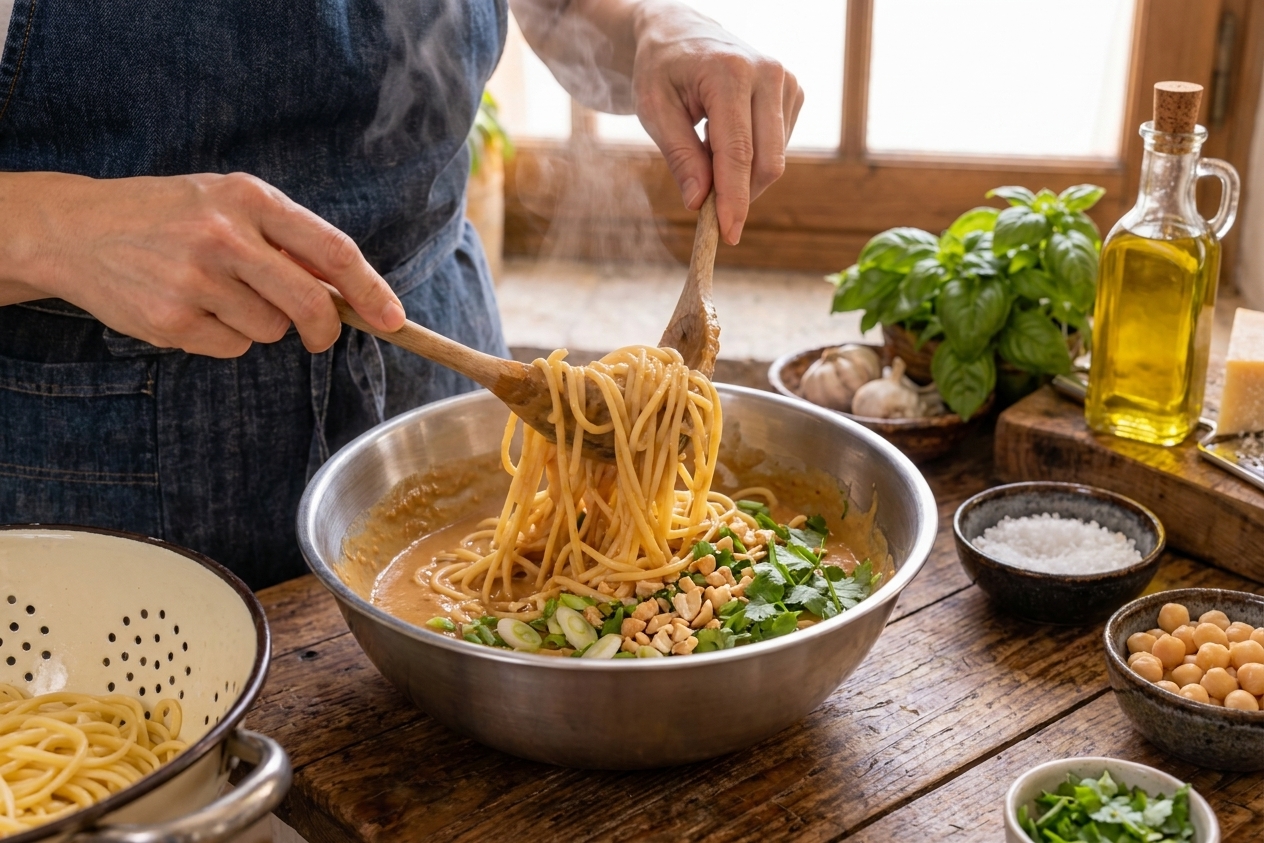
Pantry vibe: peanut butter plus soy sauce makes a fast, clingy sauce for spaghetti, ramen, or rice noodles.
Serves: 2 to 3
Concise recipe
- Cook: 8 oz noodles. Reserve 1/2 cup cooking water.
- Whisk sauce: In a bowl, whisk 1/4 cup peanut butter, 2 tbsp soy sauce, 1 tbsp sugar or honey, 1 tbsp vinegar (rice vinegar or any mild vinegar), and 1 to 2 tsp chili sauce or chili flakes (optional).
- Loosen: Add 1/4 cup hot noodle water to make it creamy and pourable.
- Toss: Toss noodles with sauce. Add more water as needed.
- Finish: Optional: sesame seeds, crushed peanuts, or a drizzle of toasted sesame oil.
Substitution notes: Any nut butter works. No vinegar? Use a squeeze of lemon or a splash of pickle juice for tang.
My 20-Minute Pasta Rhythm
If you want these to truly land in 20 minutes, here is my gentle little routine:
- Start the water first. Put the pot on before you open a single can. If you have a kettle, boil water there and pour it into the pot to speed things up.
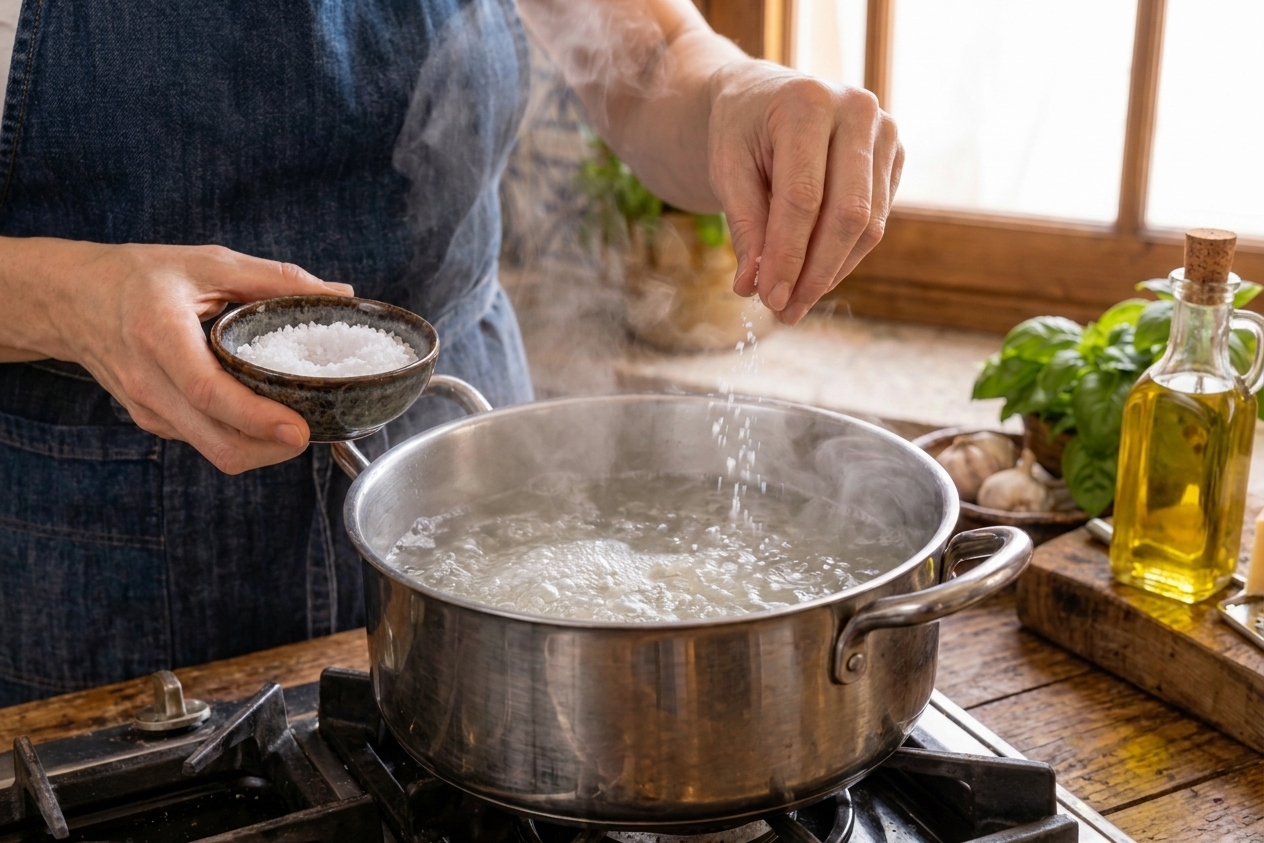
- Salt it like seawater. You want it pleasantly salty, not a salt lick. A solid guideline is about 1 to 2 tablespoons kosher salt per gallon (4 quarts) of water.
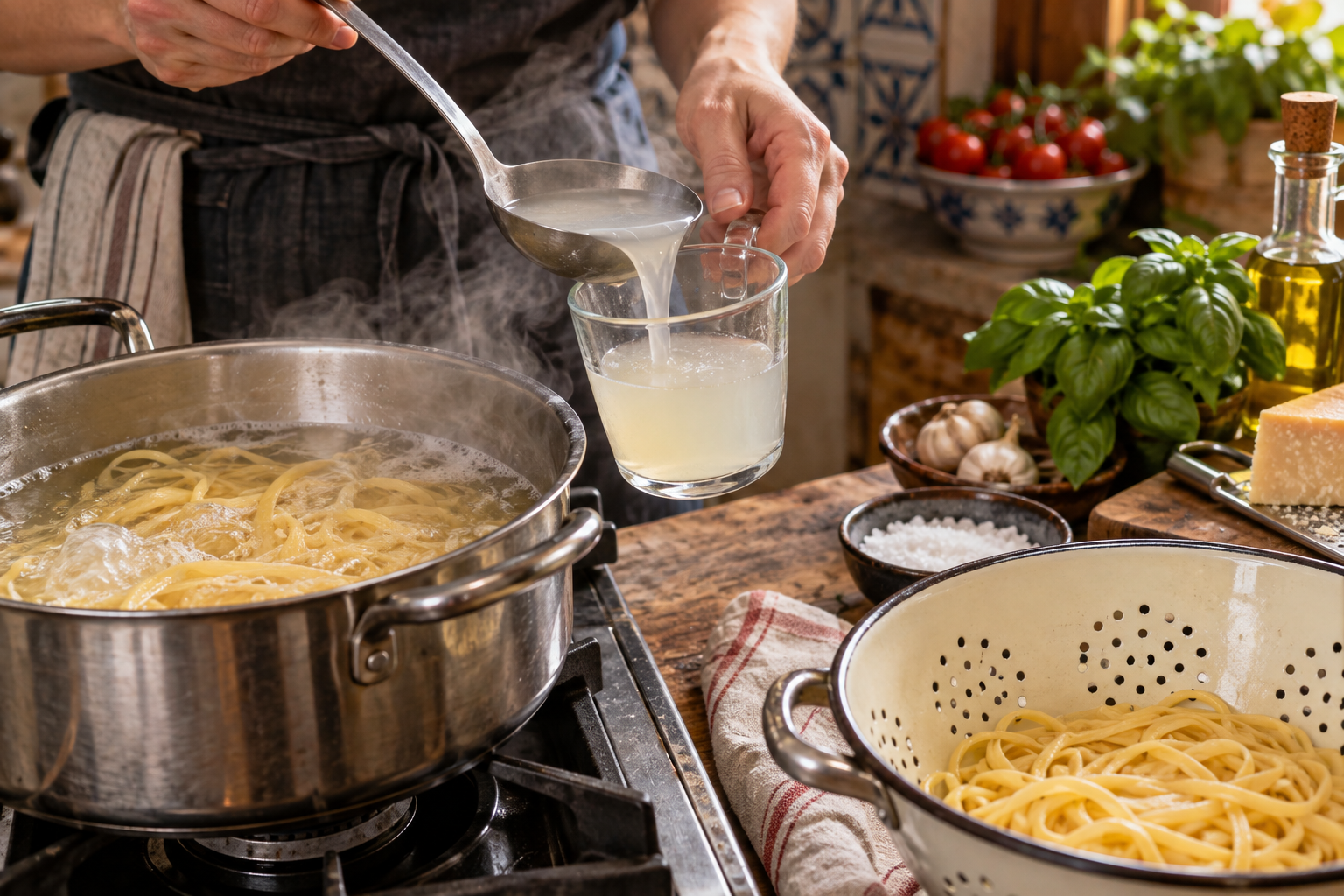
- Reserve pasta water. It is the secret ingredient that makes pantry sauces cling and shine.
- One pan sauces. While the pasta cooks, your sauce should be doing its thing in the skillet.
Allergens and swaps
- Gluten: Use gluten-free pasta in any option. Reserve extra pasta water since some gluten-free pastas release less starch.
- Dairy: In tomato butter pasta, swap butter for olive oil and finish with nutritional yeast.
- Fish: Tuna and anchovies are optional paths to big flavor. For a non-fish version, use chickpeas or white beans and add lemon or capers for punch.
- Peanuts: Swap peanut butter for sunflower seed butter or tahini (add a touch more sweetener to balance).
Storage
- Refrigerate: Store leftovers in an airtight container for up to 3 days.
- Reheat: Warm in a skillet with a splash of water over low heat. For tuna pasta, keep the heat gentle so it stays tender.
- Freezing: Tomato-based pastas freeze okay, but the texture is best fresh. Peanut noodles are best eaten within 1 to 2 days and not frozen.
The idea
Why This Recipe Works
- Pantry-first ingredients: Each dinner leans on shelf-stable staples like dried pasta, canned tomatoes, tuna, beans, olives, peanut butter, and spices.
- Built-in shortcuts: Most sauces come together while the pasta boils, so you are multitasking without feeling like you are juggling.
- Pasta water does the heavy lifting: A splash of starchy water emulsifies olive oil and helps tomato sauces feel richer without needing cream.
- Flexible by design: The recipes are more like reliable formulas, so you can swap what you have and still get a delicious, balanced bowl.
Shopping
Ingredient Notes
- Pasta: Any shape works. Long pasta loves oily sauces. Short shapes grab chunkier sauces like chickpea marinara.
- Olive oil: Use the best you can, but do not overthink it. This is weeknight cooking.
- Garlic: Fresh is best, but jarred minced garlic works. If using garlic powder, start with 1/2 teaspoon and add to taste.
- Canned tomatoes: Crushed tomatoes are the quickest for sauce. Whole peeled are great too, just crush them in the pan.
- Capers and olives: These add instant punch. Rinse capers if you are salt-sensitive.
- Canned tuna: Oil-packed tastes richer, water-packed is leaner. Both work.
- Breadcrumbs: Panko gives bigger crunch, but any dried breadcrumbs will toast beautifully.
- Peanut butter: Creamy blends easiest. Natural peanut butter works, just whisk well.
Get set up
Equipment You Will Need
- Large pot for boiling pasta
- Colander (or tongs for long pasta)
- Large skillet or saucepan
- Wooden spoon or tongs for tossing
- Measuring cups and spoons (helpful, but you can eyeball)
- Microplane or citrus squeezer (optional for lemon)
Technique
Tips for Getting It Right
- Always reserve pasta water before draining. I like to grab a mugful. You can fix almost any too-thick sauce with it.
- Do not burn the garlic. Keep the heat at medium, and as soon as you smell it, move to the next step.
- Toss, do not just stir. A vigorous toss helps the sauce cling and turn glossy.
- Season at the end. Ingredients like tuna, capers, olives, and soy sauce bring salt, so taste before adding more.
- Finish with acid. A squeeze of lemon or a splash of vinegar wakes up pantry flavors fast.
Flexibility
Substitutes That Work
- No Parmesan? Use nutritional yeast, toasted breadcrumbs, or simply extra black pepper and olive oil.
- No canned tomatoes? Use tomato paste plus pasta water, or skip tomatoes and lean into olive oil, garlic, and briny add-ins.
- No capers? Chopped pickles, green olives, or a little extra lemon can mimic that pop.
- No tuna? Try canned salmon, sardines, or chickpeas for a non-fish option.
- Gluten-free pasta: Works in every recipe. Reserve extra pasta water since some gluten-free pastas release less starch.
- Lower sodium: Rinse capers and beans, choose low-sodium tomatoes, and add salt only at the end.
Make it yours
Variations to Try
- Spicy: Add chili flakes to any tomato-based option, or stir a spoonful of chili crisp into the peanut noodles.
- Extra veggie (still pantry-friendly): Add a can of artichoke hearts, roasted red peppers, or a handful of frozen peas to tomato butter pasta or puttanesca.
- Protein boost: Stir in a can of white beans to puttanesca, or add chopped nuts to lemon breadcrumb pasta.
- Creamier without cream: Stir in 2 tablespoons of tahini or a spoonful of ricotta (if you have it) to tomato sauces.
On the table
What to Serve It With
- Quick salad: Toss greens with olive oil, vinegar, salt, and pepper while the pasta cooks.
- Garlic bread, the lazy way: Toast any bread, rub with a cut garlic clove, drizzle with olive oil, and sprinkle with salt.
- Pantry “antipasto”: A small plate of olives, canned artichokes, or roasted peppers makes dinner feel special.
- For kids: Serve tomato butter pasta with extra butter and a little less garlic, then add garlic back to your portion at the table.
Later
Storage, Freezing and Reheating
- Refrigerate: Store leftovers in an airtight container for up to 3 days.
- Reheat: Warm in a skillet with a splash of water. For tuna pasta, keep the heat gentle so it stays tender.
- Freezing: Tomato-based pastas freeze okay, but the texture is best fresh. Peanut noodles are best eaten within 1 to 2 days and not frozen.
- Make-ahead tip: You can mix the peanut sauce up to 5 days ahead and keep it in the fridge. Thin with hot water when ready.
Watch out
Common Mistakes to Avoid
- Skipping pasta water: Without it, sauces can feel oily or dry instead of silky.
- Overcooking pasta: Aim for al dente, especially since it will finish in the sauce for a minute.
- Garlic on high heat: Burnt garlic tastes bitter fast. Medium heat is your friend.
- Over-salting early: Capers, olives, anchovies, tuna, and soy sauce can all pile on salt. Taste at the end.
- Not finishing with acid: A little lemon or vinegar keeps pantry meals from tasting flat.
Questions
Frequently Asked Questions
Can I really make these in 20 minutes?
Yes, as long as you start the pasta water first and build the sauce while the pasta cooks. The sauces take 5 to 10 minutes. If your stove is slow to boil, use a kettle or choose quick-cooking pasta shapes.
What is the best pasta shape for pantry sauces?
For oily sauces (like garlic and olive oil), long noodles are great. For chunky sauces (chickpeas, olives), short shapes like penne, rotini, or shells catch more bits.
How do I keep pantry pasta from tasting bland?
Salt the pasta water until pleasantly salty, use garlic generously, and finish with something bright like lemon juice or vinegar. Also, do not underestimate black pepper.
Do I have to use a skillet?
Not always. Peanut noodles can be mixed in a bowl. The others are easiest in a skillet so you can toss the pasta with sauce and pasta water until glossy.
What pantry items should I stock for quick pasta dinners?
Dried pasta, olive oil, garlic, canned tomatoes, tuna or beans, olives or capers, breadcrumbs, peanut butter, soy sauce, and a few seasonings (chili flakes, oregano, black pepper) will get you very far.
The recipe
7 Pantry Pasta Dinners in 20 Minutes
A fast, flexible roundup of 7 pantry pasta dinners you can make in about 20 minutes, using shelf-stable staples like olive oil, canned tomatoes, tuna, beans, olives, capers, breadcrumbs, and peanut butter. Pick a variation, cook the pasta, and toss with an easy pantry sauce plus a splash of pasta water for a glossy, satisfying bowl.
Ingredients
Choose one variation
- Base for all: 8 to 12 oz dried pasta + salt for the water
1) Garlicky Olive Oil Pasta
- 1/4 cup olive oil
- 4 to 6 cloves garlic, minced
- 1/4 to 1/2 tsp red pepper flakes (optional)
- Black pepper
- Optional: lemon juice or capers
2) Tomato Butter Pasta
- 3 tbsp butter (or more olive oil)
- 2 tbsp olive oil
- 3 cloves garlic, minced
- 1 (14 to 15 oz) can crushed tomatoes (or tomato sauce)
- Optional: dried oregano, Parmesan or nutritional yeast
3) Tuna Caper Pasta
- 2 tbsp olive oil
- 3 cloves garlic, minced
- 1 can tuna, drained
- 2 tbsp capers
- 1/2 cup crushed or diced tomatoes (from a can) or tomato sauce, or 2 tbsp tomato paste
- Optional: lemon juice or vinegar
4) Pantry Puttanesca
- 2 tbsp olive oil
- 3 to 4 cloves garlic, minced
- 2 anchovy fillets (optional)
- 1 (14 to 15 oz) can crushed tomatoes
- 1/3 cup olives, chopped
- 1 tbsp capers
5) Lemon Breadcrumb Pasta
- 1/2 cup breadcrumbs
- 4 tbsp olive oil, divided
- 2 cloves garlic, minced
- 1 to 2 tbsp lemon juice or 1 to 2 tsp vinegar
- Black pepper
6) Chickpea Marinara Pasta
- 2 tbsp olive oil
- 3 cloves garlic, minced
- 1 (14 to 15 oz) can crushed tomatoes
- 1 (15 oz) can chickpeas, drained
- Optional: dried Italian seasoning
7) Pantry Peanut Noodles
- 1/4 cup peanut butter (or sunflower seed butter)
- 2 tbsp soy sauce
- 1 tbsp sugar or honey
- 1 tbsp vinegar (or lemon)
- Optional: chili sauce or chili flakes
- Optional: sesame oil, sesame seeds, crushed peanuts
Instructions
- Boil pasta. Bring a large pot of water to a boil (a kettle helps speed this up). Salt the water until pleasantly salty. Cook 8 to 12 oz pasta until al dente. Reserve at least 1 cup pasta water (1/2 cup is fine for peanut noodles), then drain.
- Make your chosen pantry sauce. Follow one variation below while the pasta cooks:
- Garlicky Olive Oil: Warm olive oil in a skillet over medium. Add garlic and chili flakes for 30 to 60 seconds. Toss with pasta and 1/2 cup pasta water until glossy.
- Tomato Butter: Melt butter with olive oil, add garlic 30 seconds, then crushed tomatoes. Simmer 5 to 7 minutes. Toss with pasta and pasta water until creamy. Add more pasta water if needed.
- Tuna Caper: Warm olive oil, cook garlic briefly, add tuna, capers, and crushed or diced tomatoes (or tomato sauce) or tomato paste. Warm 2 minutes. Toss with pasta and pasta water.
- Puttanesca: Warm olive oil, cook garlic and anchovy (if using), then add tomatoes, olives, capers. Simmer 7 to 8 minutes. Toss with pasta and pasta water.
- Lemon Breadcrumb: Toast breadcrumbs with olive oil and garlic until golden, then turn heat to low or off and toss pasta with olive oil, pasta water, and lemon or vinegar. Top with breadcrumbs.
- Chickpea Marinara: Warm olive oil, cook garlic, add tomatoes and chickpeas, simmer 8 minutes. Toss with pasta and pasta water.
- Peanut Noodles: Whisk peanut butter, soy sauce, sugar, vinegar, and chili. Thin with hot noodle water, then toss with noodles.
- Taste and finish. Adjust salt and pepper. Add a little extra pasta water if the sauce tightens up. Serve hot.
Recipe notes
- Pick your portion: 8 oz pasta serves 2 to 3, and 12 oz serves 3 to 4 depending on appetites and add-ins.
- Pasta water tip: If you forget to reserve pasta water, use hot tap water plus an extra drizzle of olive oil. It is not identical, but it helps.
- Garlic level: The garlic amounts are flexible. I regularly use the higher end, because I believe in joy.
Nutrition (per serving, approximate)
Nutrition varies by variation and portion size.
- Calories: 350 to 650
- Protein: 10 to 30 g
- Carbohydrates: 45 to 85 g
- Fat: 10 to 30 g
- Fiber: 3 to 12 g
- Sodium: varies widely (higher with olives, capers, soy sauce)