

Mix up a zesty, glowing-looking “potion” drink with orange, lime, honey, and sparkling water. Includes color variations, make-ahead tips, and a party pit...
Recipeva
Earthy Green Juice
A mellow, earthy green juice that actually tastes good. Made with cucumber, spinach, celery, lemon, ginger, and optional beet for depth. Juicer and blender methods included.

Maya Reynolds
Maya Reynolds is a passionate home cook, recipe developer, and the creative voice behind Recipeva. With over a decade of experience translating complex culinary techniques into approachable weeknight meals, she focuses on creating dishes that bring joy to the dinner table without the stress.
Created September 22, 2026
Updated September 22, 2026
If you love the idea of green juice but not the feeling of chewing through a lawn, this one’s for you. I call it my Earthy Green Juice because it leans into that cozy, grounded flavor you get from celery and greens, then brightens everything up with lemon and ginger. It’s refreshing, savory in the best way, and surprisingly mellow.
Also, this is a no-stress recipe. If you’ve got a juicer, great. If you don’t, I’ll walk you through a blender method that still gives you a lovely, sippable juice.
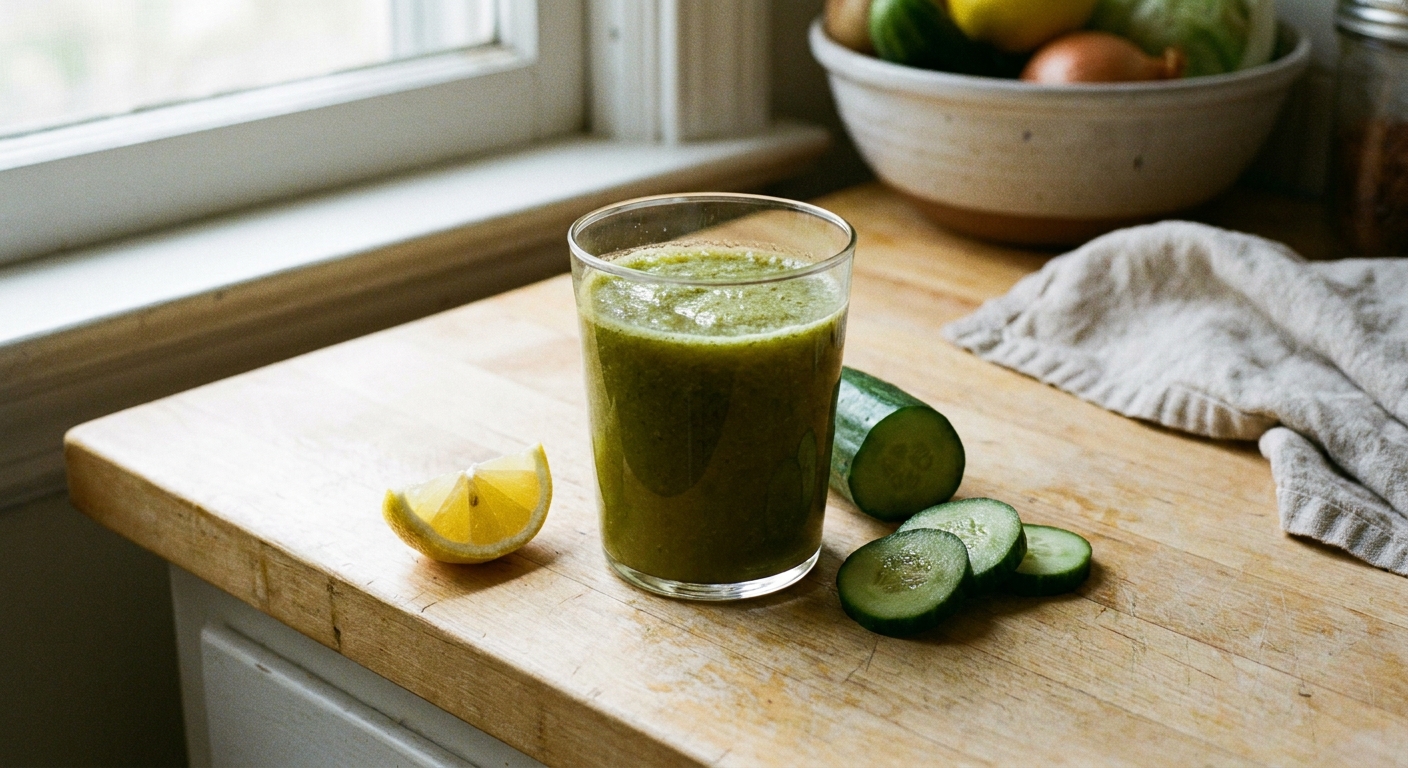
What makes it taste earthy
Earthy can mean bitter or muddy if the flavors aren’t balanced. Here, we keep it pleasant and drinkable by layering a few simple elements:
- Celery and spinach bring that classic green base without overwhelming bitterness.
- Cucumber adds clean, watery freshness that makes the whole juice feel lighter.
- Lemon keeps the flavor lively and helps the greens taste brighter.
- Ginger gives a little warmth and bite, which makes the juice feel more satisfying.
- Optional beet adds a deeper earthy note and a gorgeous hue, without turning this into beet juice.
Ingredients
This recipe makes about 18 ounces total (roughly 2 servings at about 9 ounces each). Your yield can vary a bit depending on the size of your produce and whether you use a juicer or blender.
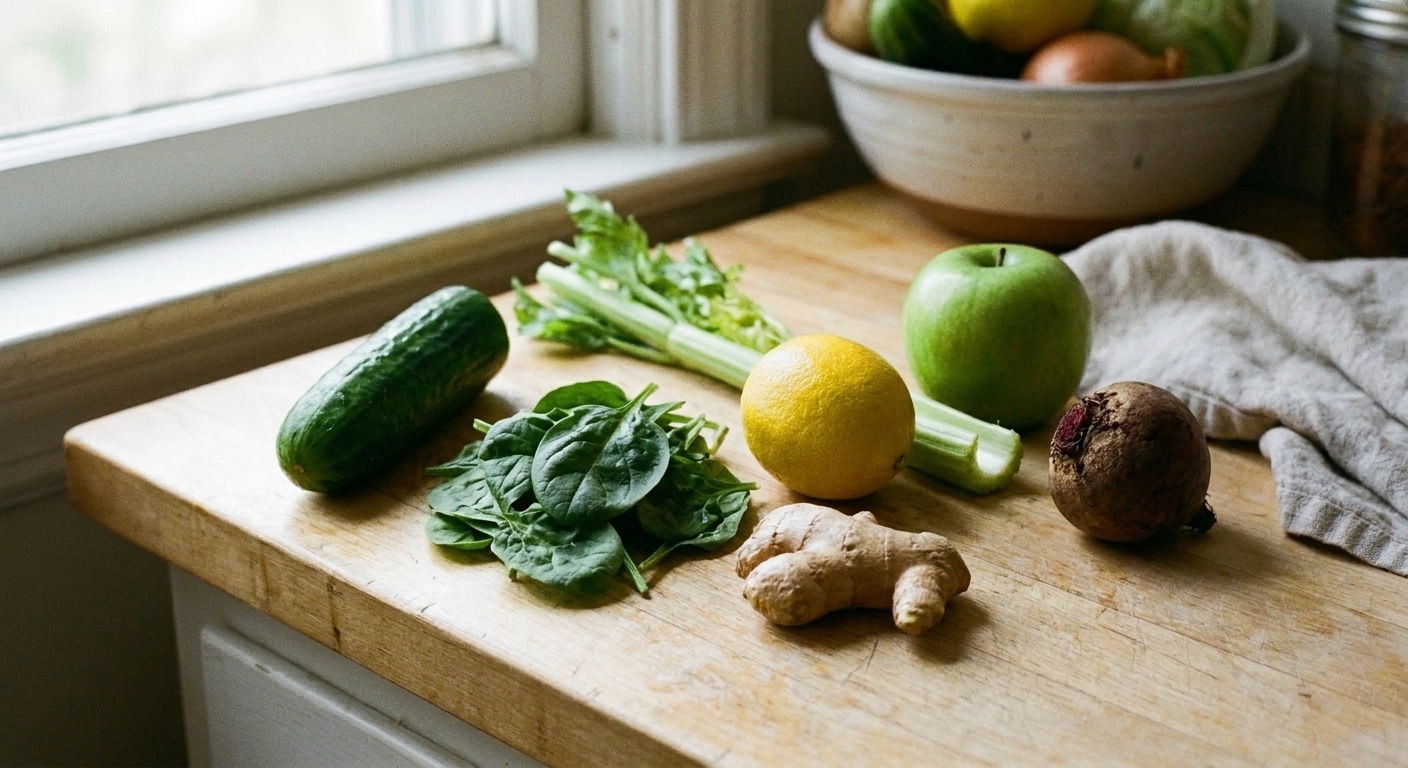
- 1 large cucumber (or 2 small), ends trimmed
- 3 to 4 celery stalks
- 2 packed cups baby spinach (or tender kale, ribs removed)
- 1 green apple, cored (optional but highly recommended for balance)
- 1 lemon, peeled
- 1 inch piece fresh ginger, peeled
- 1 small beet, scrubbed and trimmed (optional, for extra earthiness)
- Pinch of salt (optional, but it makes the flavor pop)
- Cold water (blender method only, as needed)
My garlic note: I love garlic in basically everything, but I don’t recommend it in this juice unless you’re specifically making a savory juice to pair with a meal. Ginger gives you that zing without lingering “garlic breath” energy.
How to make it (juicer)
If you’ve got a juicer, this is wonderfully fast. The only real trick is alternating watery produce with leafy greens so the greens don’t get stuck.
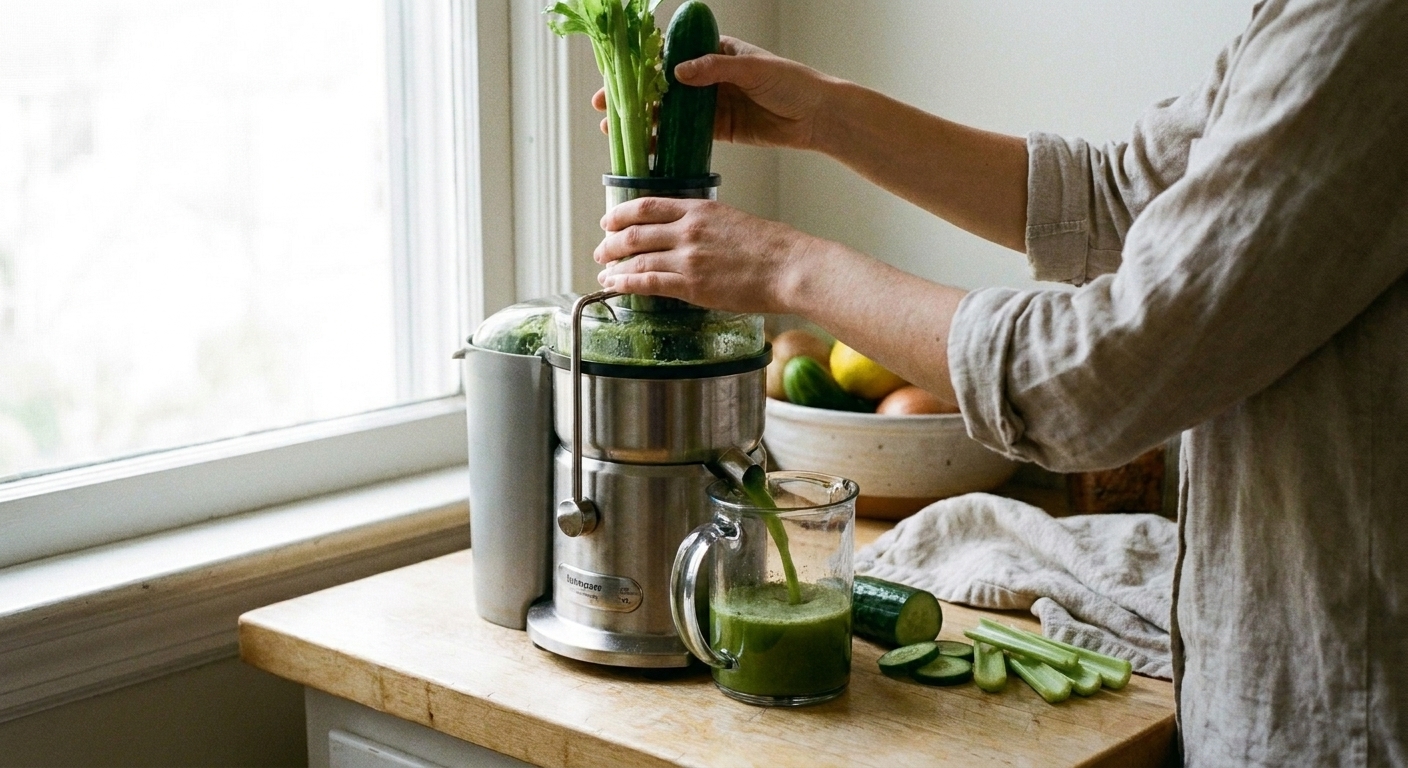
- Prep produce. Rinse everything well. Cut cucumber and apple as needed to fit your juicer chute. Peel the lemon and ginger. Trim beet and cut into chunks if using.
- Juice in a smart order. Start with cucumber or celery, then add spinach, then apple, then lemon and ginger. If you’re using beet, juice it near the end, followed by more cucumber or celery to rinse the flavors through.
- Juicer tip (for leafy greens). If your machine struggles, bunch or roll the spinach into a tight little “bundle” and feed it between pieces of cucumber or celery. It grabs better and wastes less.
- Taste and adjust. Add a pinch of salt if you want a rounder, more “finished” flavor.
- Serve cold. Pour over ice, or chill for 15 to 30 minutes.
How to make it (blender)
No juicer? No problem. You’ll blend, then strain if you want. If you don’t strain, you’ll keep more fiber and it’ll drink more like a smoothie-leaning juice. If you do strain, it’ll be closer to classic, pulp-free juice.
- Prep produce. Same as above. Chop everything into blender-friendly pieces.
- Blend. Add cucumber, celery, spinach, apple (if using), lemon, ginger, and beet (if using). Add 3/4 cup cold water to start. Blend on high until very smooth, 45 to 75 seconds.
- Strain (optional). For a more juice-like texture, pour through a fine-mesh strainer, cheesecloth, or a nut milk bag into a bowl. Press or squeeze to extract liquid.
- Finish and chill. Taste, add a pinch of salt if desired, and serve over ice.
Texture tip: If you’re skipping straining, start with less water and add more gradually until it sips the way you like.
Quick cleanup tip: Rinse your blender and strainer right away. Dried green pulp is a whole different hobby.
Flavor tweaks
I develop recipes so you can actually use what’s in your fridge. Here are my favorite swaps and add-ins.
- More mellow: Add another half cucumber, or a handful of romaine.
- More zing: Add extra ginger or a splash of apple cider vinegar (start with 1 teaspoon).
- More sweet: Add half a pear, more green apple, or a few pineapple chunks.
- More earthy: Use the beet, or add a small piece of raw turmeric (peeled).
- More herby: Add a handful of parsley or cilantro for a fresh, garden-y finish.
Avoid bitter green juice
If you’ve ever made green juice and regretted it immediately, it’s usually one of these issues:
- Too much tough kale: If using kale, remove the ribs and use a smaller amount at first.
- Not enough acid: Lemon isn’t optional for balance, in my opinion. If your lemon is small or not very juicy, use two.
- No sweet or watery counterweight: Cucumber and apple are the secret to “green juice that tastes friendly.”
- Old greens: Limp spinach can taste stronger and more pronounced. Fresh greens make a big difference.
Make-ahead and storage
Fresh juice tastes best right away, but life is busy and I get it.
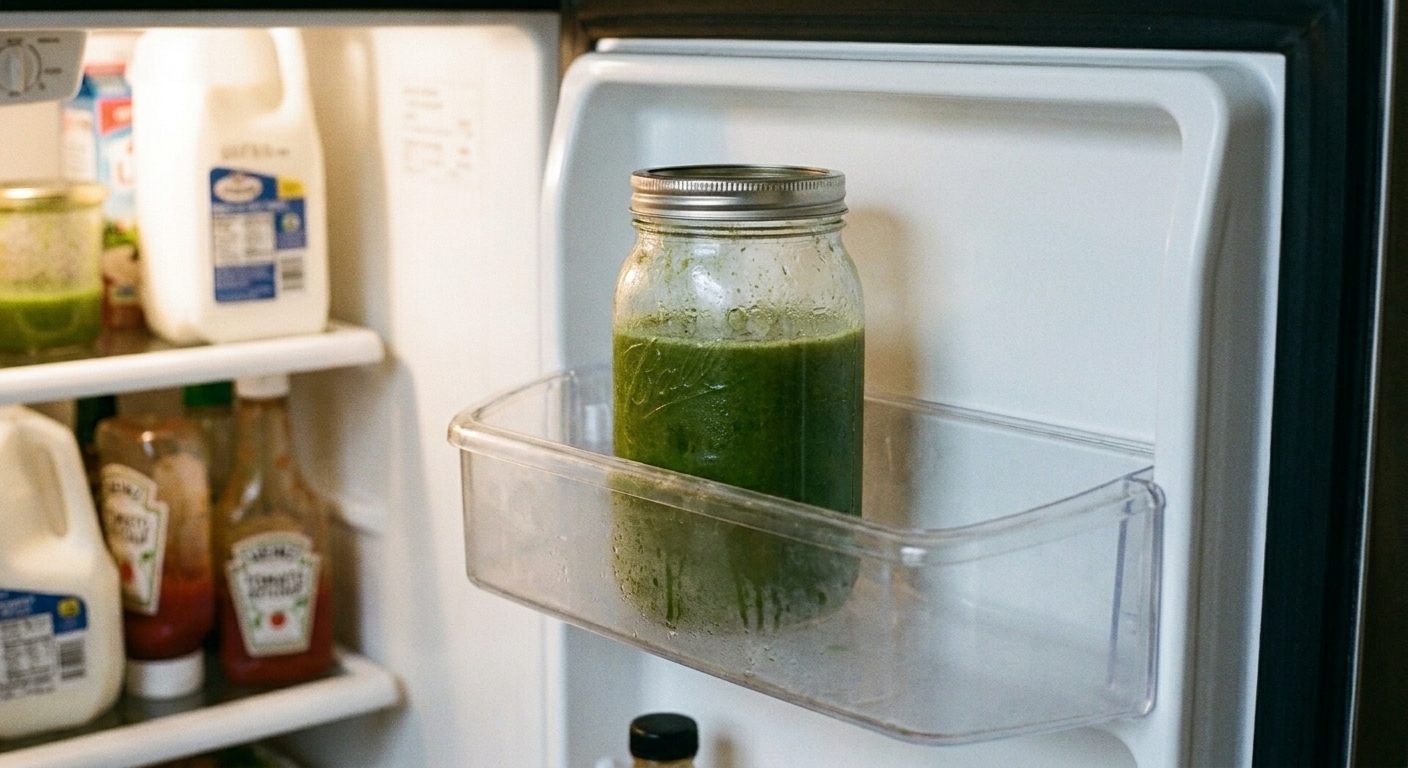
- Store: Pour into a tightly sealed glass jar, fill it as close to the top as possible to limit air exposure.
- Keep it cold: Store at 40°F / 4°C or colder.
- Fridge life: Aim for 24 hours for best flavor. It may last up to 48 hours, but it’ll taste duller and depends on how clean your equipment was and how cold your fridge runs.
- When in doubt, toss it: If it smells off, tastes fizzy, or you see unexpected bubbling, discard it.
- Shake before drinking: Natural separation is normal.
- Prep ahead: Wash and chop everything the night before, then store in containers or zip bags so morning blending or juicing is quick.
Serving ideas
I love this juice:
- As a mid-morning reset with a handful of nuts
- With a simple breakfast like eggs and toast
- Alongside soup and a sandwich when you want something fresh on the side
- Over ice with sparkling water for a lighter, spritz-style sip

Earthy Green Juice FAQ
Do I have to peel the cucumber?
Nope. If it’s waxed or you’re sensitive to bitterness, peel it. Otherwise, leave the peel on for convenience.
Can I use kale instead of spinach?
Yes. Use tender kale and remove the ribs. Start with 1 packed cup, then adjust after tasting.
Is a green apple necessary?
Not required, but it makes the flavor noticeably more balanced and less “green-forward.” If you skip it, consider adding extra cucumber and a bit more lemon.
What if I want it less acidic?
Use half a lemon first, then add more to taste. You can also add more cucumber to mellow it out.
Can I freeze it?
You can, but the flavor gets flatter and separation is stronger after thawing. If you do freeze, use a freezer-safe jar with headspace and thaw overnight in the fridge, then shake well.
Will the beet stain?
Yep, it can. If you’re using beet, wear an apron you like and rinse your cutting board and hands quickly.
You’ve got this
If you’re new to homemade juice, keep it simple the first time. Make it once exactly as written, then tweak. And if it tastes a little too earthy on your first sip, add more lemon or half an apple. Green juice is very forgiving, and you’re allowed to adjust until it makes you happy.