

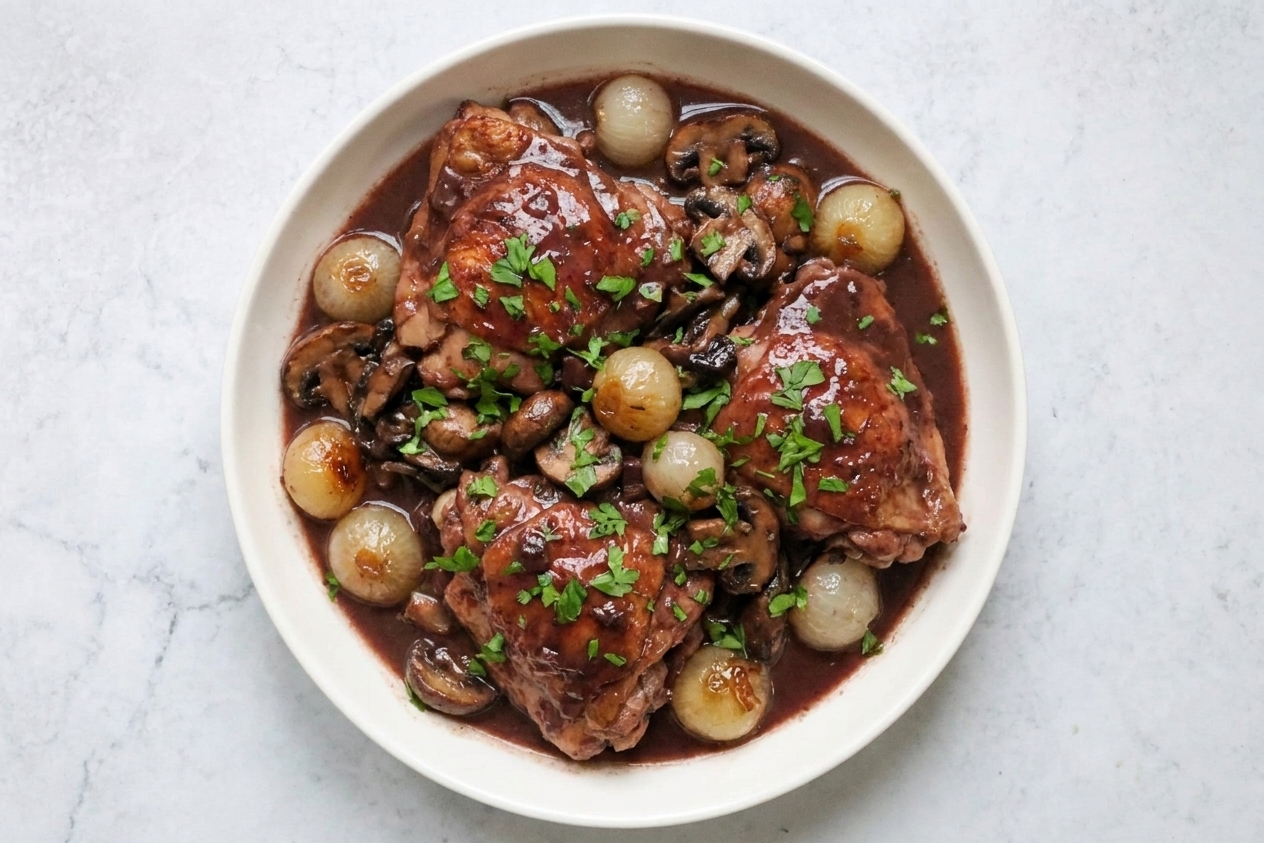
The first time I made coq au vin, I was convinced it was the kind of dish you only order in a candlelit bistro and never attempt on a regular Tuesday. Then I actually cooked it at home and realized the “fancy” reputation is mostly just a reward for doing a few simple things well: brown the chicken, let the wine reduce, and finish the sauce gently so it stays glossy and smooth.
This version is everything I crave when the Pacific Northwest turns gray and cozy. It’s a chicken braise in red wine with bacon, mushrooms, and pearl onions, plus a sauce that’s rich but not heavy. It is not beef bourguignon in disguise. And while there are plenty of modern spins out there, what I’m making here is the classic red wine backbone with aromatics, aiming for a silky, spoonable sauce that tastes like you’ve been cooking all day.

We’ll build flavor in layers, deglaze with wine, reduce for concentration, and then keep the heat gentle at the end so the sauce stays velvety. If you can brown chicken and stir a pot, you can absolutely make this.
The idea
Why This Recipe Works
- Hard browning first: Searing the chicken and browning the mushrooms creates deep savory flavor that red wine loves to hang onto.
- Two-step wine strategy: We use wine to deglaze and then reduce it before the braise really gets going, so the sauce tastes round and concentrated instead of thin and boozy.
- Bacon does double duty: It seasons the whole pot, adds smokiness, and provides fat for sautéing without turning the dish into a “bacon stew.”
- Gentle thickening for silkiness: A small amount of flour on the chicken gives body, then we finish with cold butter off heat for a glossy, restaurant-style sauce.
- Classic garnish, not a mashup: Pearl onions and mushrooms are cooked in a way that keeps them distinct and pretty, so this stays true to coq au vin and does not wander into bourguignon territory.
Shopping
Ingredient Notes
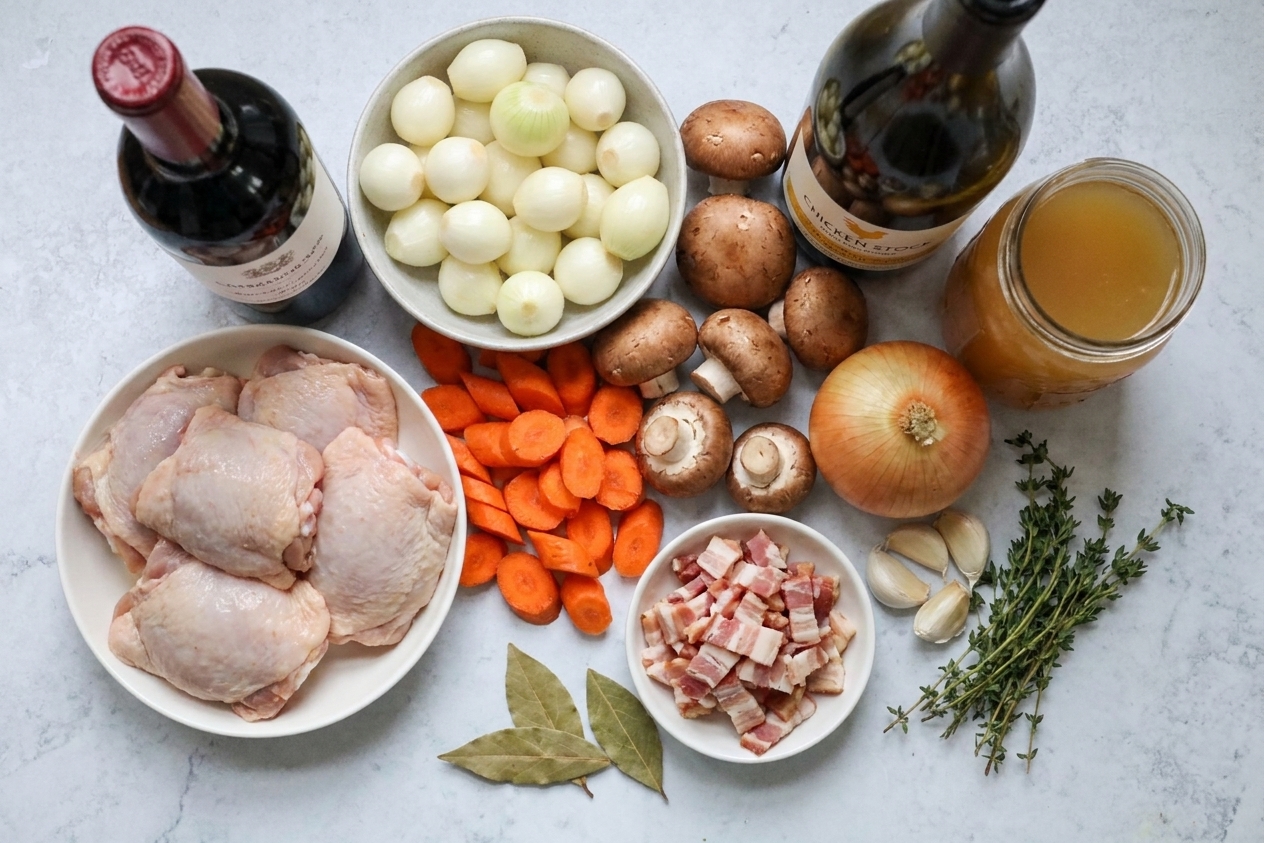
Chicken
I love bone-in, skin-on chicken thighs for braising because they stay juicy and bring richness without needing extra cream. Drumsticks work too. You can use a whole cut-up chicken, but be aware the breast pieces cook faster and can dry out.
Red wine
Pick a dry red you’d actually drink. Pinot Noir is classic and lovely, but Merlot or a lighter Cabernet also work. Avoid sweet wines. You do not need “cooking wine.”
Bacon or lardons
Thick-cut bacon is easy to find and totally acceptable. If you can find lardons, even better. Either way, aim for good browning so the fat is flavorful.
Pearl onions
Frozen pearl onions are my weeknight hero. They hold their shape and save you from peeling tiny onions. If you want to use fresh, blanch and peel them first.
Mushrooms
Brown or cremini mushrooms give a deeper flavor than white button mushrooms, but either works. The key is to brown them well and not steam them.
Stock
Use low-sodium chicken stock so you can control salt. Wine and bacon already bring plenty of seasoning.
Get set up
Equipment You Will Need
- Large Dutch oven (5 to 7 quarts) with a lid
- Tongs for turning chicken
- Wooden spoon for scraping up browned bits
- Sheet pan or large plate for holding browned chicken
- Instant-read thermometer (helpful for doneness, optional)
- Small saucepan (optional, for separately glazing onions if you want them extra pretty)
Technique
Tips for Getting It Right
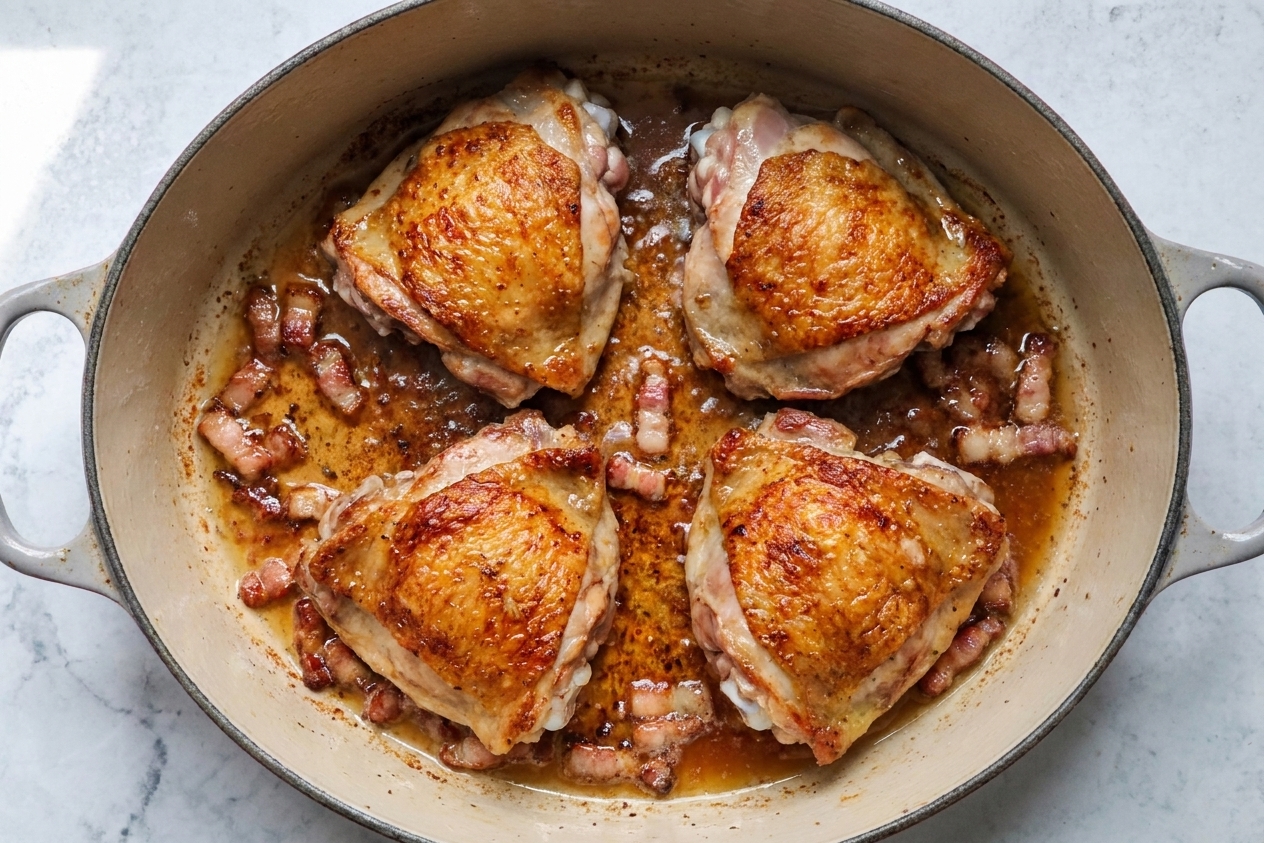
Pat the chicken dry, then salt early if you can
Dry chicken browns faster. If you have 30 minutes, salt the chicken and let it sit uncovered in the fridge. If you do not, just salt right before cooking and keep moving.
Do not rush the wine reduction
After deglazing, let the wine simmer until it smells like wine sauce, not hot wine. You’re looking for a little viscosity and a calmer aroma.
Brown the mushrooms in a single layer
If the pot is crowded, mushrooms steam and turn pale. Brown them in batches if needed. It is worth the extra 3 minutes.
Keep the sauce silky at the end
When the chicken is tender, remove it, then simmer the sauce to your thickness. Finish off heat with cold butter and stir until glossy. Boiling after adding butter can make the sauce look a bit broken.
Skim fat only if you want to
This dish is meant to be lush. If you prefer a lighter sauce, skim the surface with a spoon before finishing.
Flexibility
Substitutes That Work
- No pearl onions: Use 1 large yellow onion cut into wedges, or 2 to 3 shallots halved. You lose the classic look, but the flavor is great.
- No bacon: Pancetta works. If skipping pork entirely, add 2 tablespoons olive oil plus 1 teaspoon smoked paprika for a hint of smokiness (different, but still delicious).
- No brandy or Cognac: Simply omit. The dish will still taste wonderful.
- Gluten-free: Skip the flour dredge. Reduce the sauce a little longer at the end, or thicken with a cornstarch slurry (1 tablespoon cornstarch mixed with 1 tablespoon cold water), stirred into simmering sauce until glossy.
- Alcohol-free option: Coq au vin is fundamentally a wine-braised dish, so the flavor will change. If you need a no-wine braise, use extra stock plus 2 tablespoons balsamic vinegar and 1 tablespoon pomegranate molasses for depth. Expect a different dish, but still a cozy chicken braise.
Make it yours
Variations to Try
- Extra garlicky (my favorite): Add 2 more cloves garlic, smashed, during the braise.
- Herb swap: Use rosemary sparingly (1 small sprig) plus thyme for a more piney profile.
- Make it a little brighter: Add 1 teaspoon red wine vinegar at the end if the sauce tastes flat.
- More vegetables: Add 2 cups roughly chopped carrots and 1 cup chopped celery with the onions for a heartier pot.
On the table
What to Serve It With
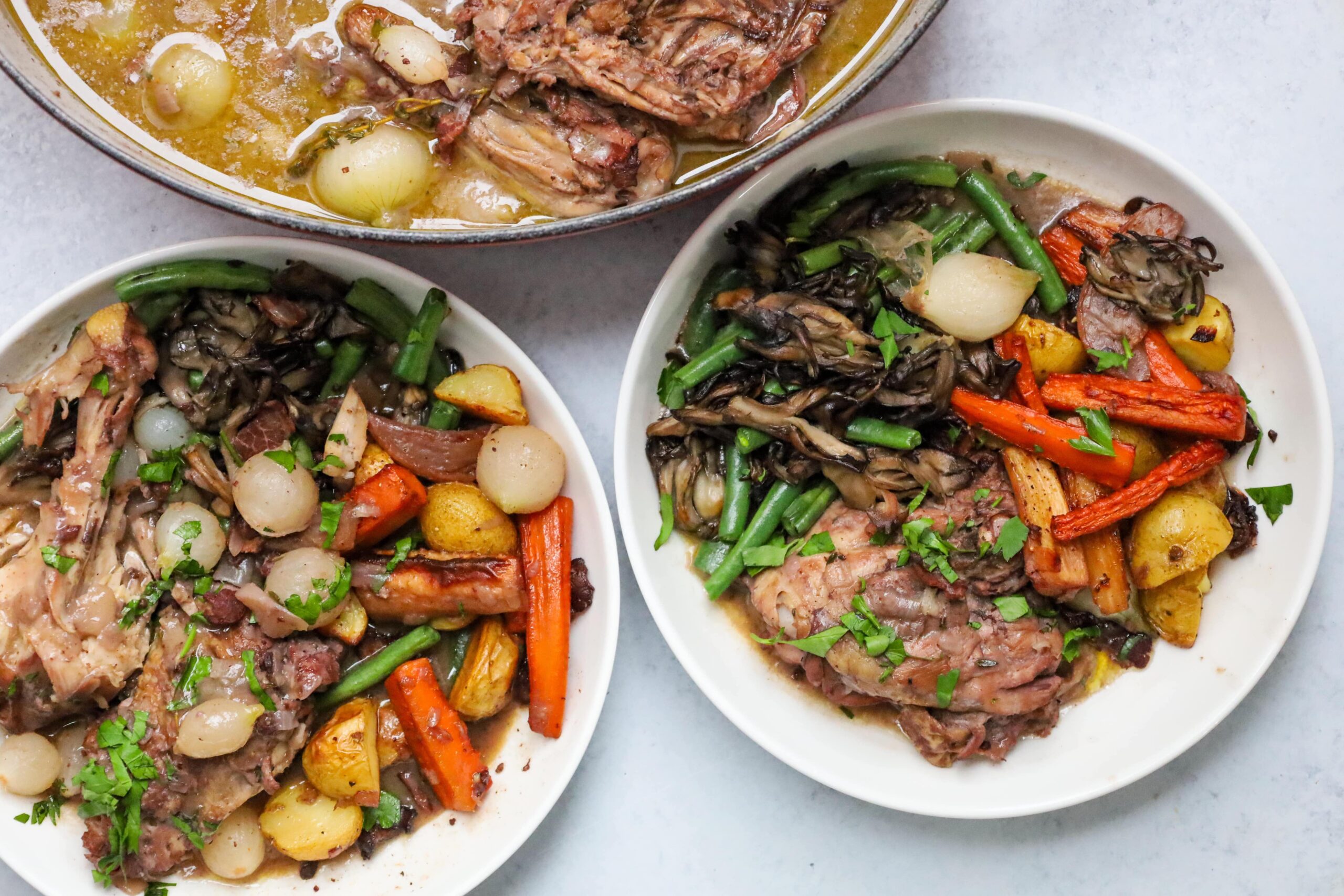
- Mashed potatoes: My top pick for soaking up that sauce.
- Buttered egg noodles: Classic, kid-friendly, and fast.
- Crusty bread: If you do one thing, do this.
- Roasted green beans or a simple salad: Something crisp and fresh on the side balances the richness.
- Polenta: Creamy polenta turns this into the coziest bowl dinner.
Later
Storage, Freezing and Reheating
- Refrigerate: Cool, then store in an airtight container for up to 4 days. The flavor gets even better on day 2.
- Freeze: Freeze up to 3 months. Thaw overnight in the fridge. The sauce may look slightly separated after freezing, but it smooths out when reheated gently.
- Reheat: Warm over low heat, covered, until the chicken is hot through. If the sauce is too thick, loosen with a splash of stock or water.
Watch out
Common Mistakes to Avoid
- Skipping browning: This is where the dish earns its depth. Pale chicken equals a pale sauce.
- Using sweet wine: It can make the sauce cloying. Stick to dry red.
- Boiling hard the whole time: A braise should be a gentle simmer. Aggressive boiling can toughen meat and reduce too quickly.
- Crowding the pot: Crowding causes steaming, especially with mushrooms. Work in batches when needed.
- Adding butter while the sauce is boiling: For a silky finish, turn off the heat first, then whisk in cold butter.
Questions
Frequently Asked Questions
Does coq au vin have to be made with a rooster?
No. Historically, the dish was a way to tenderize an older bird, but today it’s commonly made with chicken. Bone-in dark meat gives the most classic braised texture.
What red wine is best for coq au vin?
A dry, medium-bodied red is ideal. Pinot Noir is a classic choice, but any dry red you enjoy drinking works. Avoid anything sweet or heavily oaked if you can.
Can I make coq au vin ahead?
Yes, and it’s even better the next day. Make it, cool, refrigerate overnight, then reheat gently and finish with a small knob of butter to refresh the gloss.
How do I know the chicken is done?
The easiest sign is tenderness: a fork should slide in easily and the meat should feel relaxed, not springy. If you use a thermometer, aim for at least 175°F in thighs for the best texture.
Why is my sauce bitter or too sharp?
It usually needs either more reduction before braising or a touch of balance at the end. Simmer uncovered to concentrate, then consider a small pinch of sugar or a tiny splash of vinegar for balance.
Is this the same as beef bourguignon?
They’re in the same family of wine braises, but coq au vin is built around chicken and traditionally features bacon, mushrooms, and pearl onions with a lighter, silkier sauce.
The recipe
Coq au Vin
Tender chicken thighs braised in red wine with bacon, mushrooms, and pearl onions, finished with a glossy, silky sauce that tastes like a cozy French night in.
Ingredients
- 6 bone-in, skin-on chicken thighs (about 2 1/2 to 3 pounds)
- 1 1/2 teaspoons kosher salt, plus more to taste
- 1/2 teaspoon black pepper, plus more to taste
- 4 ounces thick-cut bacon, cut into 1/2-inch pieces
- 2 tablespoons all-purpose flour
- 1 tablespoon olive oil (only if needed)
- 1 medium yellow onion, diced
- 2 medium carrots, diced
- 4 cloves garlic, minced
- 2 tablespoons tomato paste
- 2 cups dry red wine
- 1 1/2 cups low-sodium chicken stock
- 2 teaspoons fresh thyme leaves (or 1 teaspoon dried thyme)
- 1 bay leaf
- 8 ounces cremini mushrooms, halved or quartered
- 1 1/2 cups frozen pearl onions, thawed
- 1 tablespoon unsalted butter (for sautéing vegetables if needed)
- 2 tablespoons cold unsalted butter, cubed (for finishing sauce)
- 2 tablespoons chopped fresh parsley (optional, for serving)
Instructions
- Season the chicken. Pat chicken thighs very dry with paper towels. Season all over with salt and pepper.
- Render the bacon. In a large Dutch oven over medium heat, cook bacon until the fat is rendered and the bacon is browned, 6 to 8 minutes. Use a slotted spoon to transfer bacon to a plate, leaving the fat in the pot.
- Brown the chicken. Increase heat to medium-high. Place chicken skin-side down in the pot in a single layer (work in batches if needed). Sear until deeply golden, 5 to 7 minutes. Flip and brown the second side 3 to 4 minutes. Transfer chicken to a plate. If the pot looks dry at any point, add a splash of olive oil.
- Add flour to build body. Sprinkle flour into the pot and stir constantly for 30 to 60 seconds to cook off the raw flour smell. (If the pot seems very dry, add 1 tablespoon butter first.)
- Sauté aromatics. Add diced onion and carrots. Cook, scraping up browned bits, until the onion softens, 4 to 6 minutes. Stir in garlic and cook 30 seconds.
- Toast tomato paste. Stir in tomato paste and cook 1 minute, letting it darken slightly.
- Deglaze and reduce the wine. Pour in red wine, scraping the bottom well. Bring to a simmer and cook until reduced by about one-third, 6 to 10 minutes. It should smell mellow and look slightly more syrupy than straight wine.
- Add stock and herbs. Stir in chicken stock, thyme, and bay leaf. Return the bacon to the pot.
- Braise the chicken. Nestle chicken thighs into the liquid, skin-side up. Bring to a gentle simmer, then cover and reduce heat to low. Braise 35 minutes.
- Brown the mushrooms. While the chicken braises, brown mushrooms: If there is room in the pot, you can do this during the last 10 minutes by pushing chicken to one side and browning mushrooms in the exposed area. Otherwise, brown mushrooms in a skillet with a little bacon fat or butter over medium-high heat until golden, 6 to 8 minutes. Set aside.
- Add pearl onions and mushrooms. After 35 minutes of braising, add pearl onions and browned mushrooms to the pot, tucking them into the sauce around the chicken. Cover and braise until the chicken is very tender, 15 to 20 minutes more.
- Reduce the sauce. Transfer chicken to a clean plate and cover loosely to keep warm. Remove bay leaf. Bring sauce to a steady simmer uncovered and reduce to your desired thickness, 5 to 10 minutes. Taste and adjust salt and pepper.
- Finish for a silky, glossy sauce. Turn off heat. Whisk in cold butter cubes until melted and the sauce looks shiny and smooth.
- Serve. Return chicken to the pot briefly to warm through, or plate chicken and spoon sauce with mushrooms and onions over the top. Finish with parsley if using.
Recipe notes
- Wine note: Use a dry red you enjoy drinking. If it tastes harsh in the glass, it can taste harsh in the pot.
- Texture note: For the most classic look, keep the chicken skin above the liquid during braising so it stays more intact (it will soften, but won’t completely melt away).
- Silky finish tip: If your sauce seems slightly broken, take it off heat, let it sit 2 minutes, then whisk gently. Avoid boiling after adding the finishing butter.