

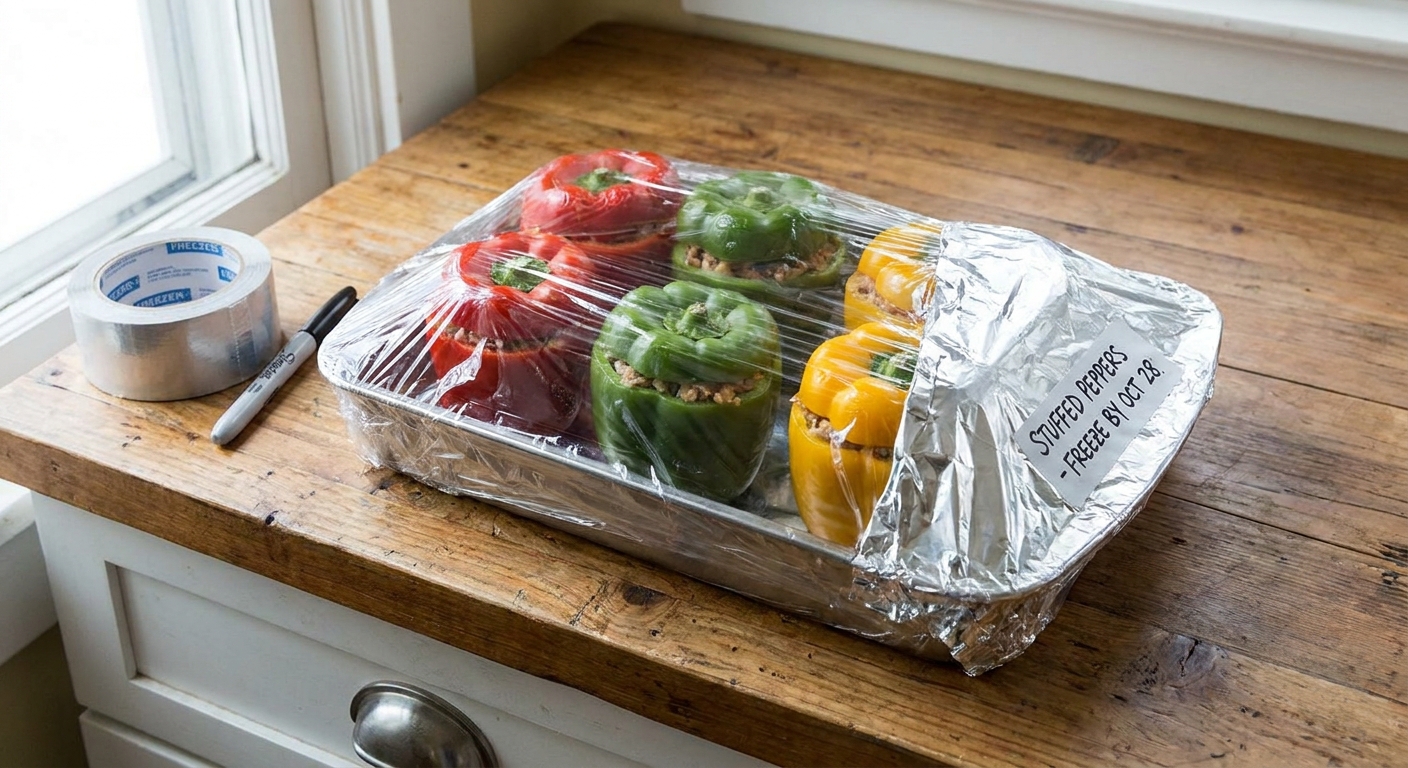
If there is one dinner I love making on a Sunday and quietly patting myself on the back about all week, it is stuffed bell peppers. They are cozy, flexible, and feel a little special even when you are using regular supermarket ingredients. The best part is that yes, you can absolutely freeze stuffed bell peppers, both before baking and after baking.
The trick is knowing what changes in the freezer (hello, softer pepper walls and rice that can swing from perfect to mushy) and using a couple of simple steps to keep the filling from turning watery when you reheat.

Quick answer
Yes, stuffed bell peppers freeze well. You can freeze them:
- Unbaked (raw): Best for the most fresh tasting result when you bake later, though peppers will still soften a bit after freezing.
- Baked (fully cooked): Best for fast weeknight reheating and single portions.
Either way, aim to freeze them quickly, wrap them airtight, and reheat in a way that lets excess moisture evaporate. And for food safety, reheat until the center of the filling reaches 165°F.
What changes after freezing
The pepper walls
Bell peppers have a high water content. Freezing forms ice crystals that puncture the cell walls, so after thawing and reheating the peppers will be softer and a bit more delicate. They will still taste great, just expect less of that fresh pepper bite.
Tip: If you really love firmer peppers, freezing them unbaked and baking from frozen or partially thawed can help them hold their shape a little better than peppers that were baked, frozen, then reheated.
The rice (and other grains)
Rice is where texture can go either way.
- Cooked rice: Freezes fine, but it can soften a touch on reheating, especially if the filling is saucy.
- Undercooked rice: If your filling uses slightly undercooked rice (common in some recipes that finish cooking in the oven), freezing can interrupt that finish cooking stage. When you bake later, the rice can turn out uneven unless you add enough moisture and time.
My weeknight-friendly rule: For freezer peppers, I prefer a filling made with fully cooked rice or another fully cooked grain. It reheats more predictably.
The filling moisture
Watery filling usually comes from a combination of:
- Peppers releasing liquid as they thaw and cook
- A filling that is already quite wet (extra tomato sauce, watery veggies)
- Reheating covered the whole time, which traps steam
The solution is simple: freeze with smart wrapping, thaw with drainage when needed, and reheat with a little uncovered time so steam can escape.
How to freeze stuffed bell peppers (unbaked)
This is my go-to when I know I will want that fresh-baked vibe later.
Step-by-step
- Cool the filling quickly. If your filling is cooked (like browned meat, sautéed onion, cooked rice), let it cool briefly, then refrigerate until it is no longer warm. This keeps it from steaming inside the pepper and is a safer move than letting it sit out too long.
- Prep the peppers. Slice off the tops, remove seeds and membranes, and pat the inside dry with a paper towel.
- What to do with the tops. You can discard them, chop them into the filling, or set the little lids back on top after filling. If you like the look, freeze the lids alongside the peppers.
- Fill the peppers. Pack the filling firmly, but do not mash it into paste.
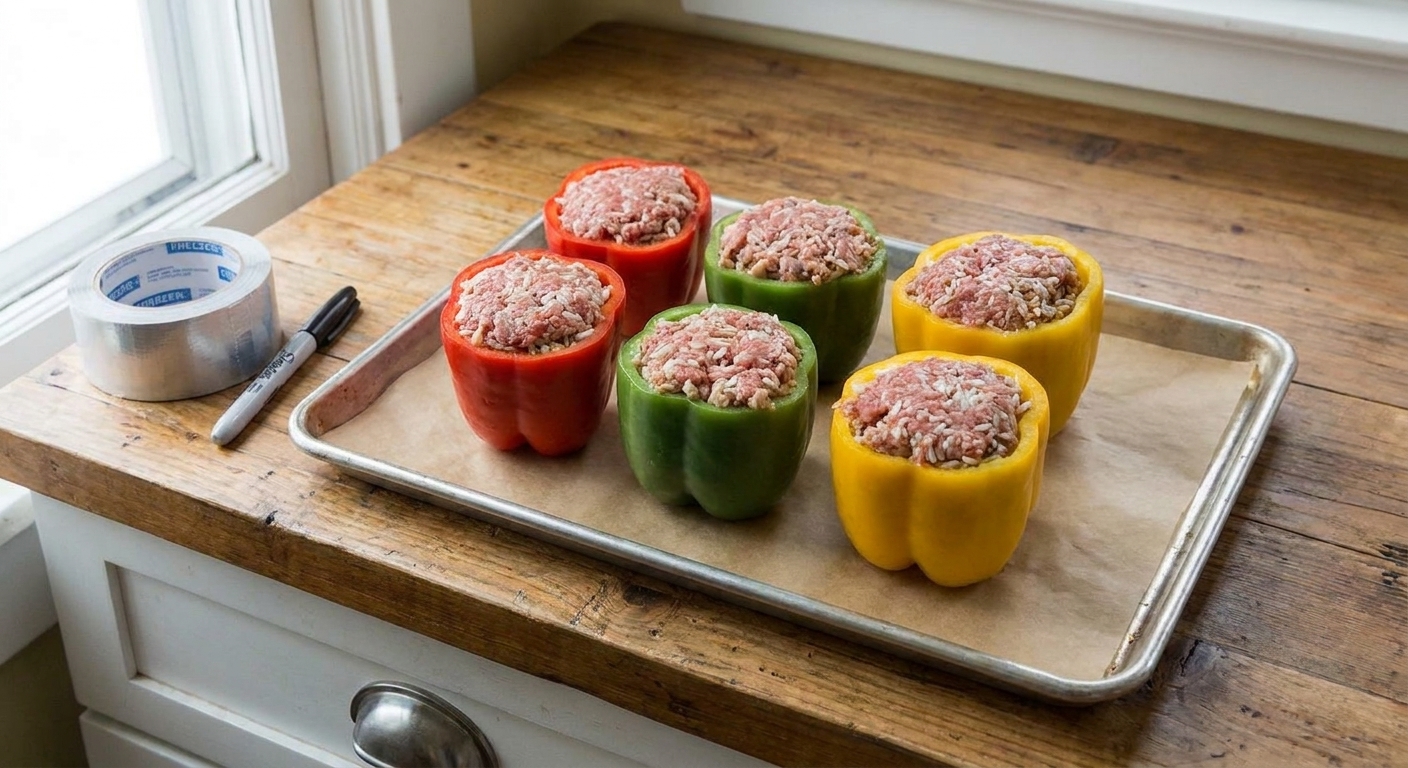
- Keep them from tipping. Stand peppers upright on a parchment-lined sheet pan. If they wobble, nestle each one into a crumpled foil ring or use a muffin tin for stability.
- Flash freeze. Freeze until firm, about 2 to 4 hours.
- Wrap airtight. Wrap each pepper tightly in plastic wrap, then place in a freezer bag or airtight container. Foil is great for shape, but it is not reliably airtight on its own, so I like foil plus a freezer bag if I am using it.
- Label and date. Add the date and the filling type (beef and rice, turkey and quinoa, veggie and lentil). Future you will be grateful.
How to freeze stuffed bell peppers (baked)
If you want a true grab-and-reheat dinner, freeze them after baking.
Step-by-step
- Cool completely. Warm peppers create condensation, which becomes ice, which becomes sogginess later. Cool, then refrigerate until cold before wrapping if you have time.
- Decide on sauce strategy. If your recipe uses lots of sauce, consider freezing peppers with less sauce, then adding fresh sauce during reheating. Sauce can also make wraps wet, so keeping it lighter helps packaging stay tidy.
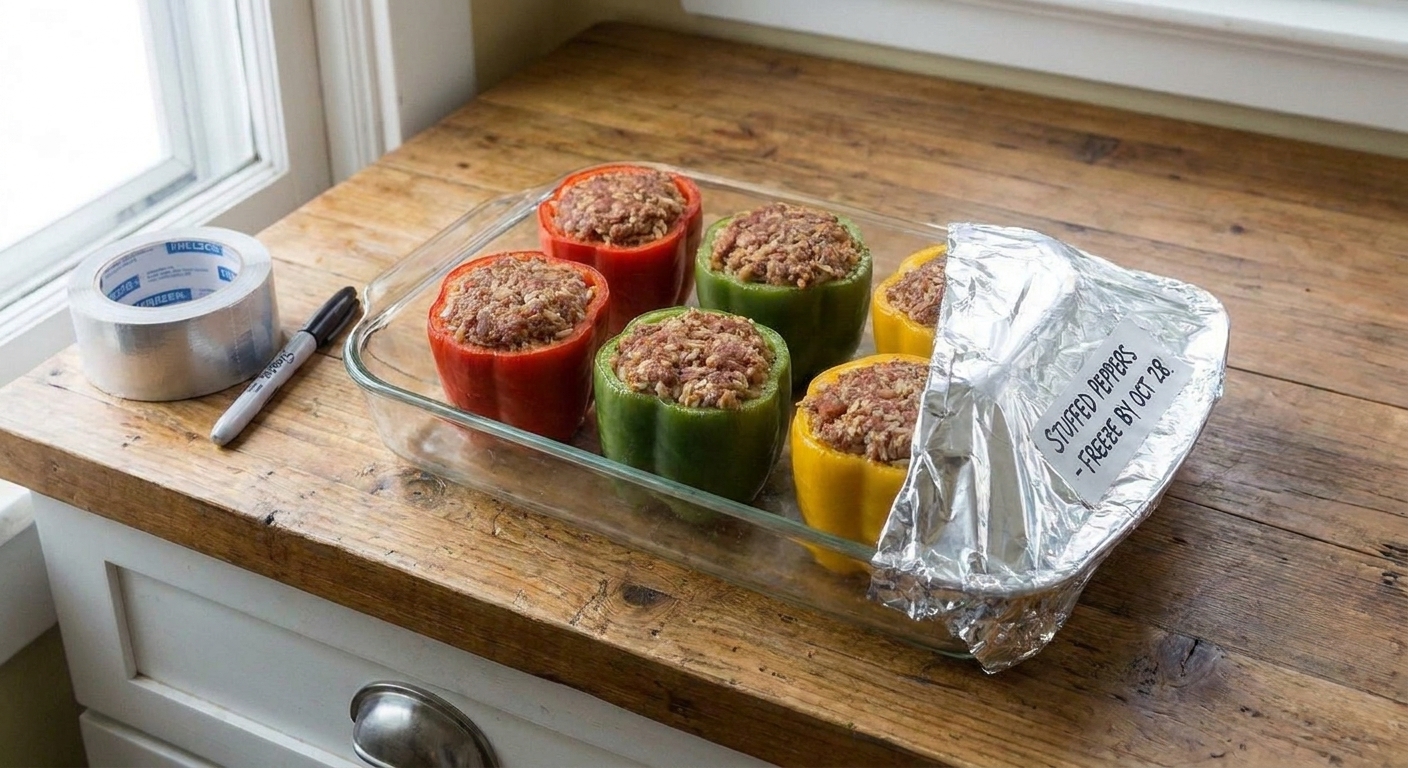
- Wrap well. Wrap individual peppers in plastic wrap (or foil for structure), then store in a freezer bag or airtight container for the best freezer-burn protection.
- Label and date. Include the date and what is inside.
How long do they keep in the freezer?
For best quality, use frozen stuffed bell peppers within 3 months. If they stay frozen at 0°F, they remain safe, but quality declines over time and the peppers get softer and freezer flavor can creep in.
- Unbaked stuffed peppers: best within 2 to 3 months
- Baked stuffed peppers: best within 2 to 3 months
Best ways to thaw
Overnight in the fridge (best texture)
Place frozen peppers in a dish (they can leak a little as they thaw). Thaw 12 to 24 hours.
Anti-watery trick: Once thawed, tip the pepper slightly and drain off any collected liquid before baking or reheating.
From frozen (best convenience)
You can bake or reheat stuffed peppers from frozen. It takes longer, but it avoids a long thaw and can actually help reduce sogginess because you can cook uncovered part of the time.
Microwave thaw (fast, but softer)
Use the defrost setting in short bursts. This is fine in a pinch, but it softens the pepper walls the most and can make the filling weep.
How to reheat without watery filling
If you only take one thing from this article, take this: steam is the enemy of good reheated stuffed peppers. You want heat, yes, but you also want moisture to escape.
Because pepper size, filling density, and starting temperature vary a lot, use the times below as ranges and aim for an internal temperature of 165°F in the center of the filling.
Oven reheating (best overall)
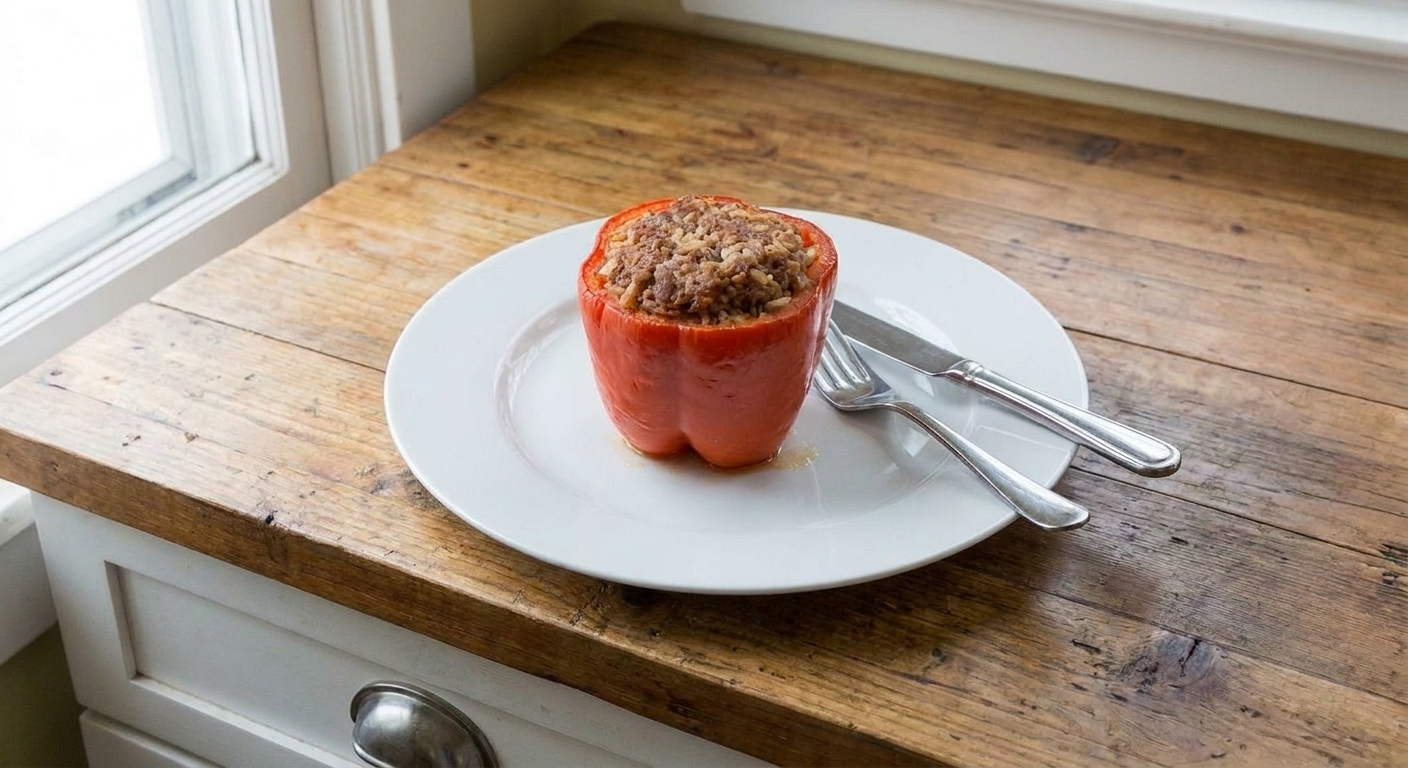
- For baked, thawed peppers: Place in a baking dish with a few spoonfuls of sauce in the bottom (optional). Cover loosely with foil for the first part, then uncover to finish. Heat at 350°F until hot throughout, usually 20 to 35 minutes.
- For baked, frozen peppers: Cover loosely and bake at 350°F until hot, usually 45 to 70 minutes. Uncover for the last 10 to 15 minutes to drive off extra moisture.
My tip: If your filling tends to get watery, set the peppers on a small rack inside the baking dish so they are not sitting in any liquid that releases.
Oven baking unbaked frozen peppers
Arrange in a baking dish. Add a small splash of water or sauce to the bottom of the pan (not over the tops). Cover loosely with foil for the first half so the peppers soften, then uncover to finish so the filling can dry slightly and brown. Bake at 375°F until the filling reaches 165°F and the peppers are tender, often 60 to 80 minutes.
Air fryer or toaster oven reheating
These are great for one or two peppers when you want a drier top.
- Thawed, baked peppers: Heat at 325°F to 350°F until hot, often 10 to 18 minutes. If the top is browning too fast, tent loosely with foil.
- Frozen, baked peppers: Start at 325°F and heat until the center hits 165°F, often 20 to 35 minutes depending on size. Finish 2 to 3 minutes uncovered for a better top.
Microwave reheating (fastest)
Microwave works best for one pepper at a time.
- Place pepper in a microwave-safe bowl.
- Cover with a vented lid or a paper towel.
- Heat in 60 to 90 second bursts until hot.
To avoid watery filling: Finish with 2 to 4 minutes in a toaster oven or under the broiler to evaporate moisture and bring back some texture on top.
Freezer-friendly tips that really help
- Cool everything before wrapping. Warm peppers create condensation, which becomes ice crystals. Cool promptly, then refrigerate until cold if you can.
- Use cooked rice. It reheats more evenly and is less likely to be crunchy or uneven after freezing.
- Watch high-moisture add-ins. Mushrooms, zucchini, spinach, and cauliflower rice can release a lot of water. Sauté them until dry before mixing in.
- Go easy on sauce inside the filling. Save some sauce to add fresh when reheating.
- Wrap tight. Air is what causes freezer burn and off flavors.
- Uncover at the end. That last uncovered stretch in the oven is your best defense against sogginess.
FAQ
Are stuffed bell peppers better to freeze cooked or uncooked?
It depends on your goal. Freeze them cooked if you want the quickest reheating for busy nights. Freeze them uncooked if you want a more fresh-baked result and often slightly better pepper structure. Both work well as long as you wrap airtight and reheat with some uncovered time.
Will the peppers get mushy after freezing?
They will get softer, yes. Bell peppers have a lot of water, and freezing breaks down their structure. You can minimize mushiness by flash freezing, wrapping well, and reheating in the oven rather than doing the whole reheat in the microwave.
Does rice get mushy when you freeze stuffed peppers?
Rice can soften a bit after freezing and reheating, especially if the filling is saucy. Using fully cooked rice and avoiding an overly wet filling helps keep the texture pleasant.
Can I freeze stuffed peppers with cheese on top?
Yes. Cheese freezes well. If you want the best texture, consider adding a fresh sprinkle of cheese near the end of reheating for a better melt and browning.
How do I keep reheated stuffed peppers from being watery?
Cool before freezing, drain any liquid after thawing, and reheat in the oven with a period of uncovered cooking at the end so steam can escape. Also avoid watery vegetables unless they are cooked down first.
What temperature should I reheat stuffed peppers to?
For food safety, reheat until the center of the filling reaches 165°F.