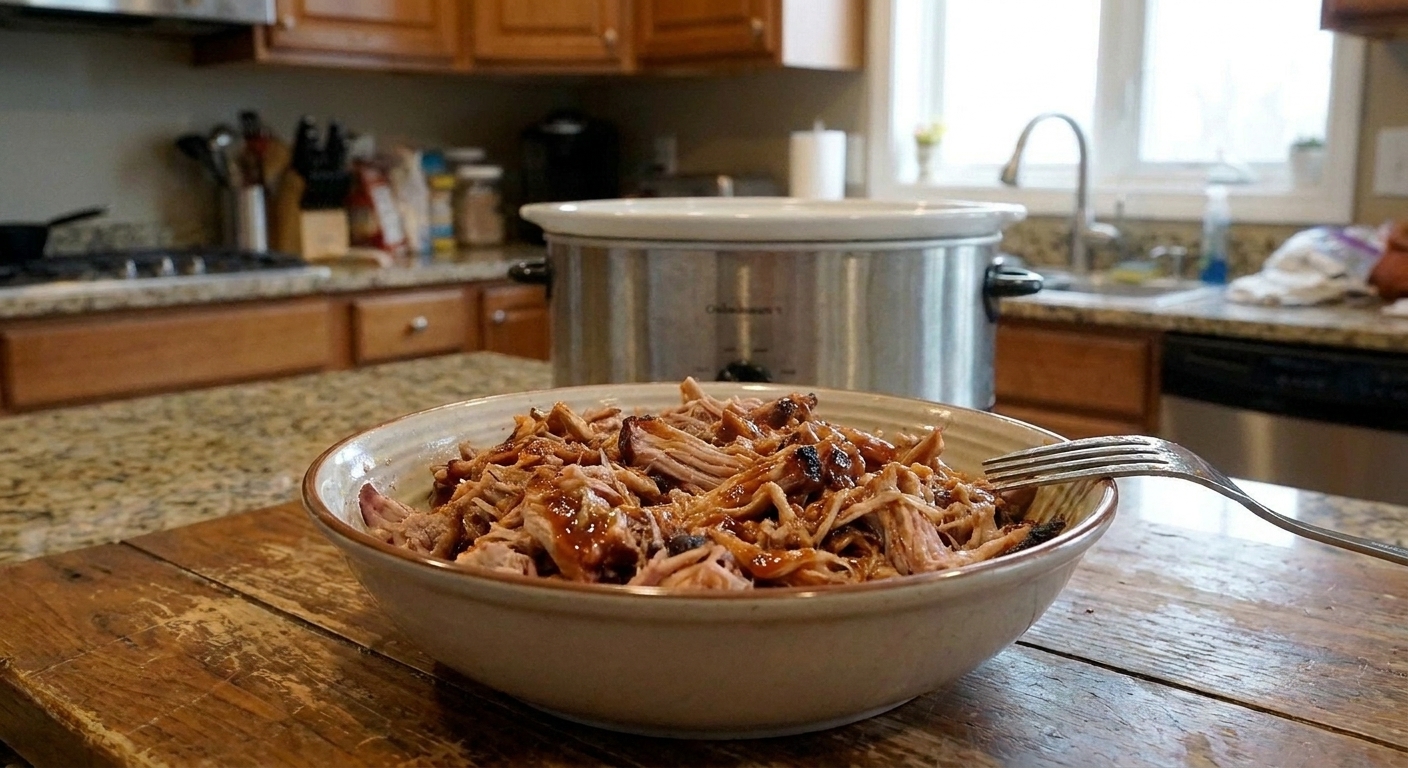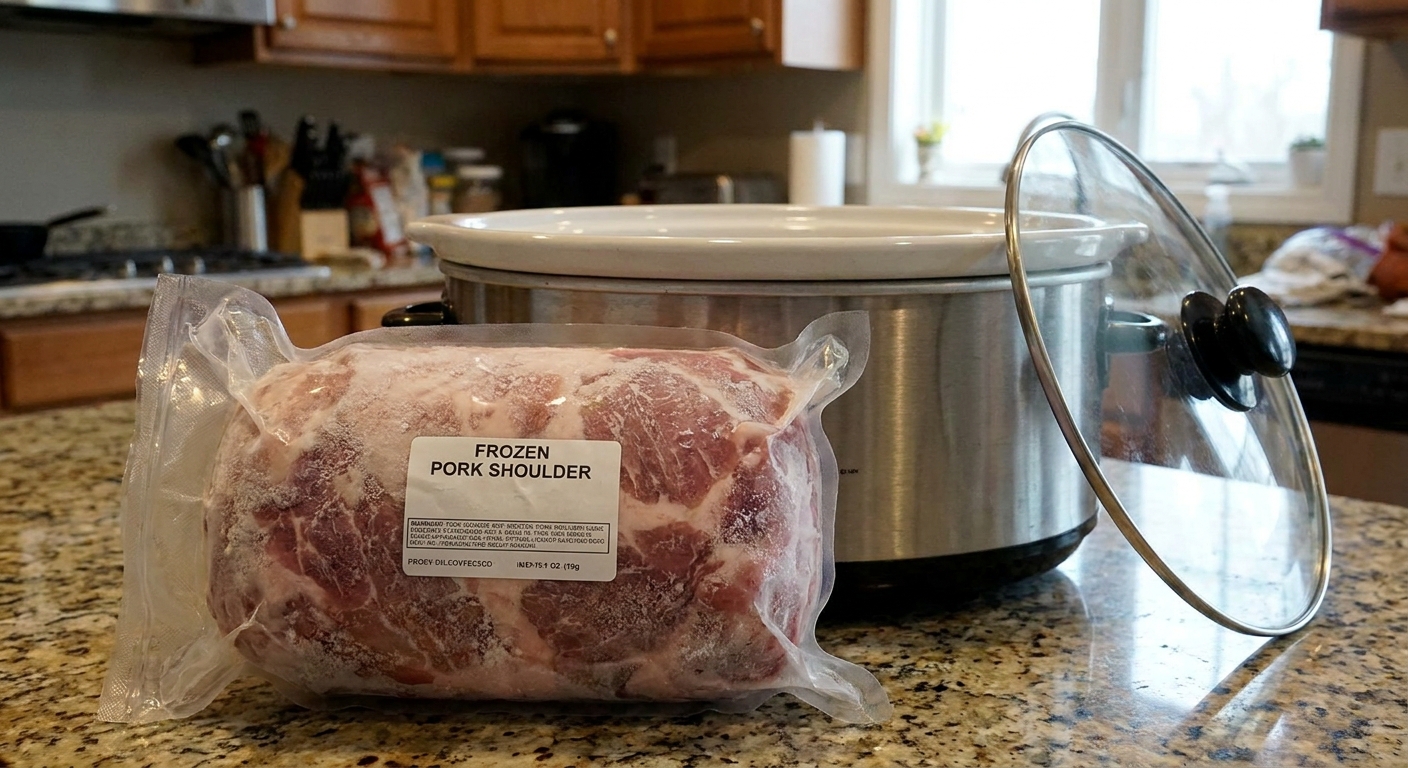
I get it. It’s 3 p.m., you meant to pull that pork shoulder out of the freezer last night, and now you’re staring at a rock-solid roast thinking, Surely the slow cooker can handle this, right? I love my slow cooker, but this is one of those times it is almost too gentle for its own good.
If you’re starting with raw, frozen pork shoulder (Boston butt), the safest answer is: do not put it straight into the slow cooker. The reason is not doneness. It’s that the meat can sit in the food safety danger zone too long before it ever gets hot enough.

Why it’s risky
Slow cookers heat gradually. That is exactly what makes them wonderful for turning tough cuts into tender pulled pork. But with a frozen roast, that slow warm up can become a safety problem.
The danger zone
Raw meat is safest when it moves through the 40°F to 140°F range quickly. That temperature band is often called the danger zone because bacteria can multiply rapidly there.
With a frozen pork shoulder, the center starts below 32°F. In a slow cooker, the outside may warm up and linger in that danger zone while the middle is still icy. You can end up with a long window where parts of the roast are not getting hot fast enough, even if you plan to cook it for 8 to 10 hours total.
Why HIGH does not fix it
I know the temptation: just flip the slow cooker to HIGH and call it good. The problem is that even on HIGH, a big frozen roast can still take too long to heat through. Slow cookers are designed for steady heat, not for quickly pushing the center of a dense, frozen cut past 40°F to 140°F.
Why slow cookers are different than ovens
In an oven, the air temperature around the food is high, and heat transfer is more aggressive. A slow cooker is designed to be steady and moist, not fast. When you add a frozen, dense piece of meat, the crock and any liquid can also cool down initially, which slows everything even more.
Quality issues
Even setting safety aside, starting from frozen often gives you pulled pork that is less satisfying:
- More liquid, less flavor: Frozen meat releases moisture as it thaws, which can dilute your sauce and seasonings.
- Uneven cooking: The outside can overcook while the center is just catching up.
- Seasonings do not stick: Rubs and salt cannot really do their job on an icy surface.
What to do instead
First, do not panic. You have a few safe options depending on your timeline.
Option 1: Fridge thaw
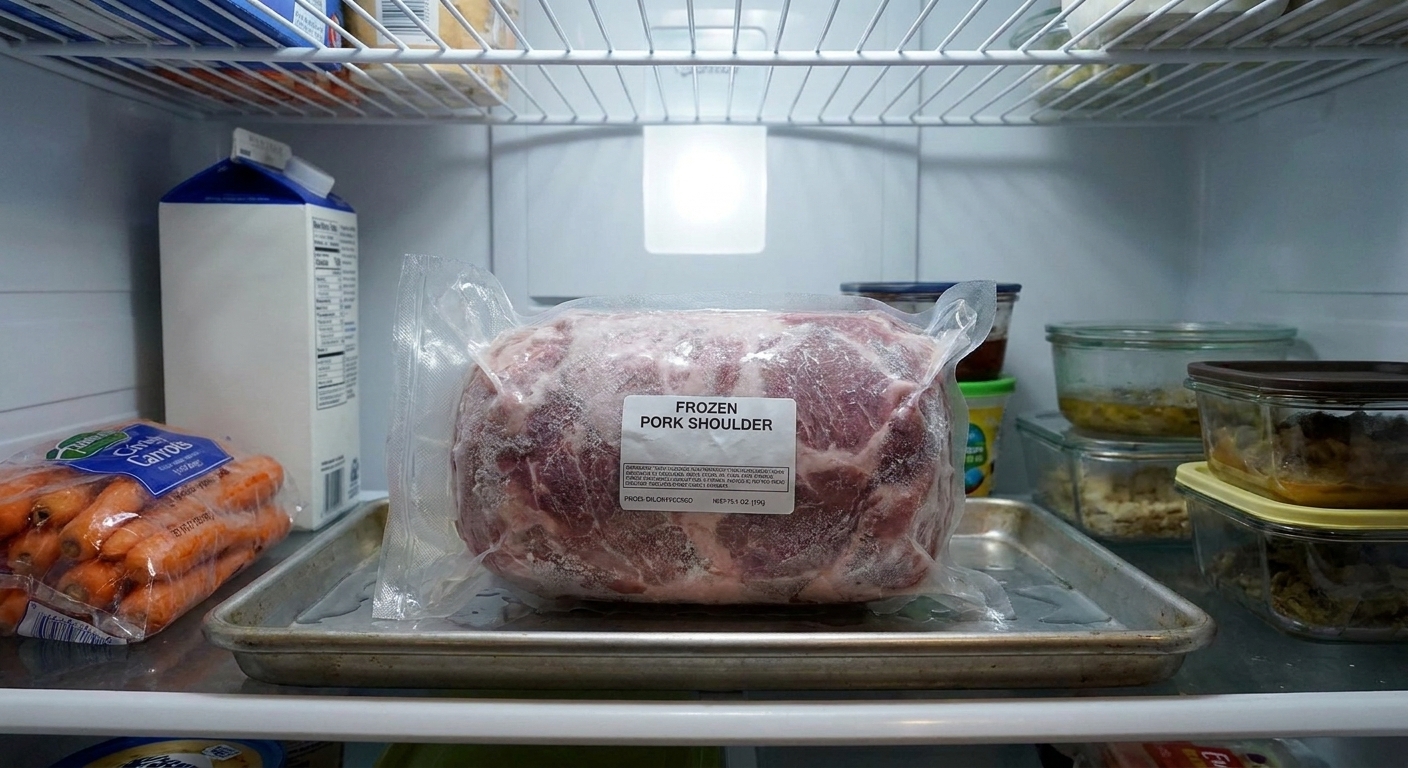
This is the hands-off, safest method. Put the frozen pork shoulder (still in its packaging) on a rimmed tray or in a pan on the bottom shelf of your fridge so it cannot drip onto anything.
- Timing: Plan on about 24 hours per 4 to 5 pounds, but it can vary based on thickness, packaging, freezer temp, and how cold your fridge runs. An 8 to 10 pound shoulder often takes 2 to 3 days.
- Once thawed: Cook within 1 to 2 days for best quality.
Option 2: Cold water thaw
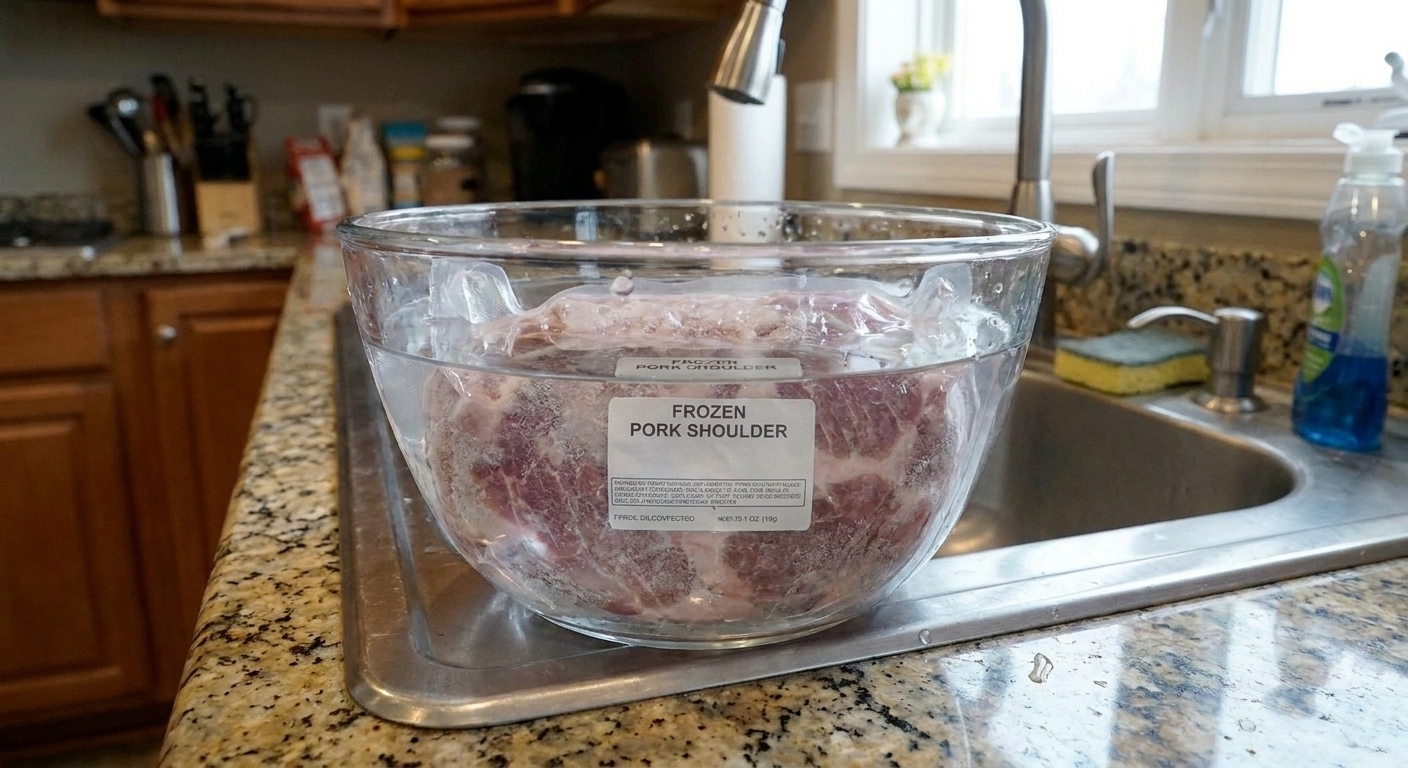
If dinner is happening tomorrow or even tonight, cold water thawing can save you. It is safe as long as you keep the water cold and change it regularly.
- Keep the pork in a leak-proof bag.
- Submerge in a large bowl or clean sink of cold water.
- Change the water every 30 minutes to keep it cold.
- Timing: Roughly 30 minutes per pound.
- Important: Cook right after thawing this way. In other words, do not thaw it in cold water and then plan to hold it in the fridge all day “until later.”
Option 3: Cut into pieces (once you can)
If the roast is thawed enough that you can safely get a knife through it, you can cut it into a few large chunks. Smaller pieces heat faster and season more evenly. This is not something to force with a rock-solid roast, but it can be a great compromise once the outer layer has softened in the fridge or during a cold water thaw.
Option 4: Use the oven or pressure cooker
If your slow cooker plan is shot, you can still get pulled pork on the table safely.
- Oven: You can roast pork shoulder from frozen, but it takes significantly longer. Seasoning will not adhere well until the surface thaws, so you may need to season partway through. For safety, cook pork to at least 145°F (then rest), but for pulled pork texture you will typically cook it much higher (see below).
- Electric pressure cooker: Many people have success cooking pork shoulder from frozen under pressure because it heats quickly and pushes the meat through the danger zone faster. It is not the same texture as an all-day slow cook, but it can be excellent and weeknight-friendly.
If your heart is set on the slow cooker texture, thaw first, then slow cook.
How to thaw safely
Here are the methods I recommend, plus what to avoid.
Safe methods
- Refrigerator thaw: Best for safety and quality. Minimal effort.
- Cold water thaw: Best when you need speed. Cook immediately after.
Methods to avoid
- On the counter: The outside can sit in the danger zone for hours while the center stays frozen.
- In hot water: Warms the surface too fast and increases risk.
- In the slow cooker: This is the exact scenario we are trying to avoid.
Once it’s thawed
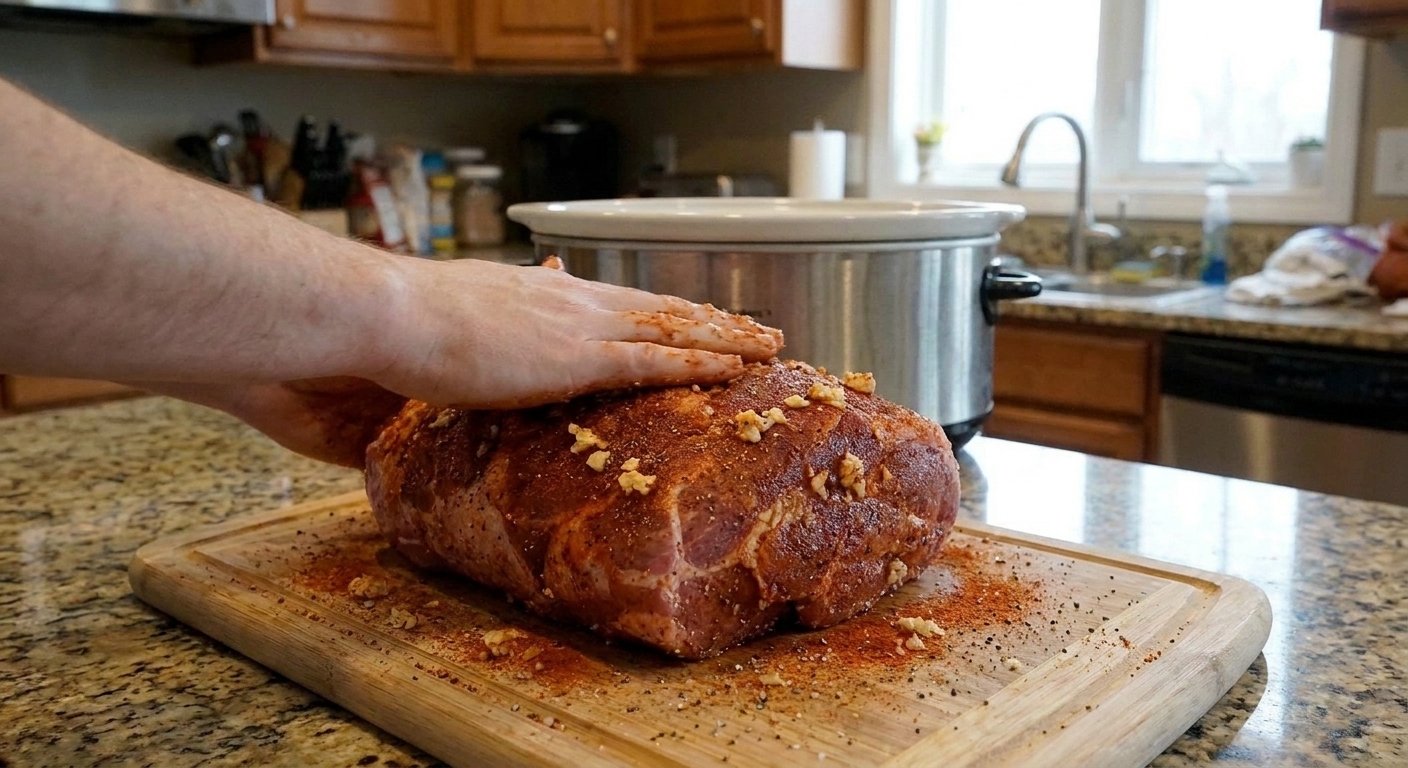
When your pork shoulder is fully thawed (or close enough that you can separate pieces and season properly), your slow cooker is back in its comfort zone.
Pulled pork pointers
- Season generously: Pork shoulder is thick. It needs more salt than you think, plus all the garlic your heart desires.
- Do not drown it: You only need a little liquid in the slow cooker. Pork shoulder releases plenty as it cooks.
- Cook low and slow: LOW gives you tender, shreddable meat and better texture.
- Use a thermometer: For safety, whole pork should reach at least 145°F and rest. For pulled pork texture, you typically want it hot enough that the collagen breaks down, which is why many cooks aim for the high 190s to around 205°F for easy shredding.
Quick FAQ
Can I cook it longer to make frozen pork shoulder safe in a slow cooker?
No. The issue is not total cook time. It is the time the meat spends warming up through 40°F to 140°F. Cooking longer does not undo that risk.
What if my pork is only partially frozen?
If you can season it well and it is mostly thawed, you are in a better spot, but food safety is still about how fast it heats up. When in doubt, finish thawing in the fridge or use a faster safe thaw method before starting a low cook.
Can I make it safe by covering it in sauce?
Sauce does not fix the core problem. A frozen roast can still warm too slowly in a slow cooker, even surrounded by liquid.
Is this different for reheating cooked pulled pork?
Yes. This article is specifically about starting raw pork from frozen. Reheating cooked pulled pork is a different situation. For reheating, you are aiming to heat it quickly and evenly to a safe serving temperature.
The bottom line
For raw pulled pork, a slow cooker is amazing, but it is not the right tool for going from frozen to safe quickly. If your pork shoulder is frozen, thaw it safely in the fridge (best) or in cold water (fast), then slow cook as usual. Your future self will get both the cozy, shreddable texture you want and the peace of mind you deserve.