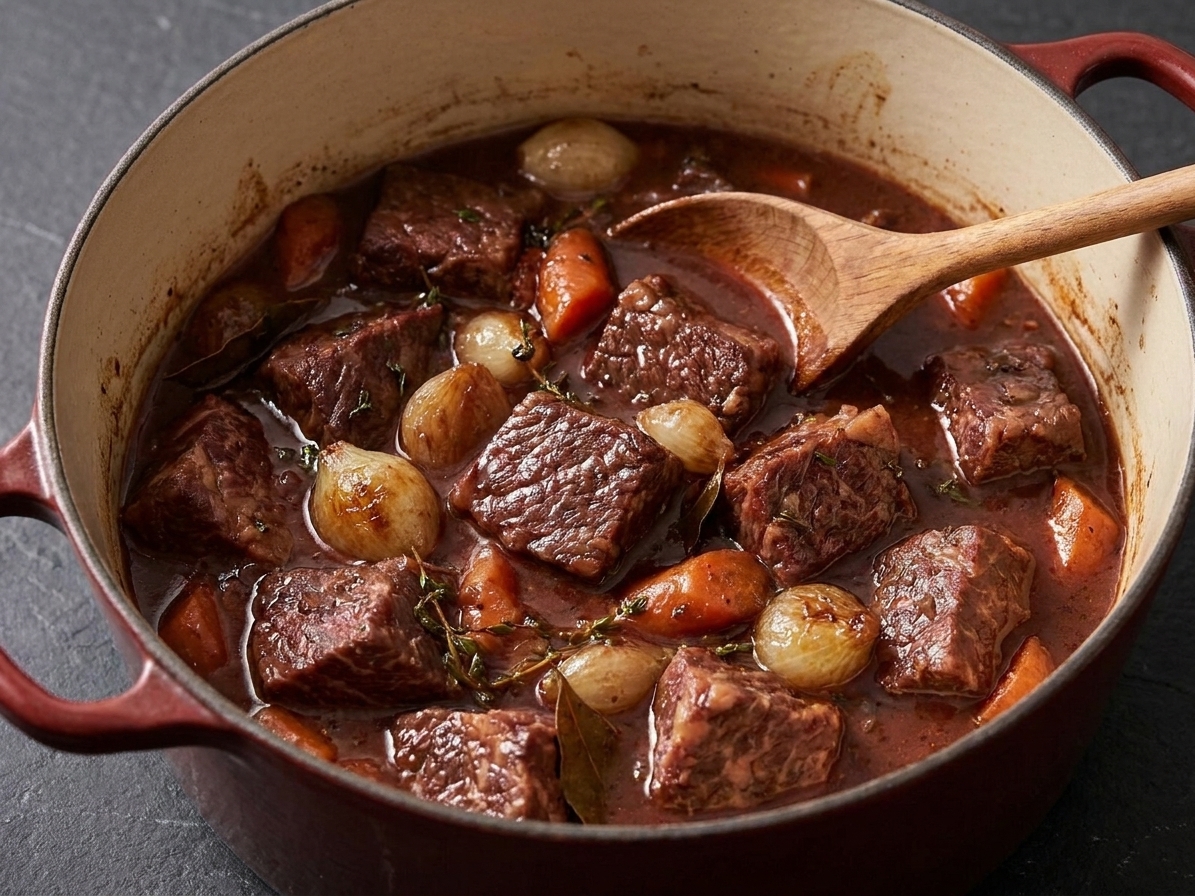

I grew up in a very Pacific Northwest kind of kitchen, meaning there was always a pot on the stove, a loaf of bread on the counter, and someone saying, “Add more garlic.” Beef bourguignon feels like that kind of cooking to me. Not fussy, just patient. And the truth is, the biggest decision you make happens before you turn on the oven: the beef cut.
This is not about the braise method. It is about what to put in your cart so your bourguignon turns out spoon-tender, glossy, and deeply beefy, not dry and stringy floating in a wine-braised sauce that tastes amazing but cannot save tough meat.

The quick answer
If you want my simplest, most reliable shopping advice:
- Best overall: Beef chuck roast (well-marbled, easy to find, forgiving)
- Most luxurious result: Beef cheek (meltingly tender, sauce-loving, needs time)
- Best for a special occasion: Boneless short rib (rich and silky, pricier, can feel heavier)
- What I skip: Pre-cut “stew meat” (often too lean and mixed cuts)
What the meat needs to do
Bourguignon is a wine-braised stew that usually finishes with the liquid reduced into a velvety sauce. That means the beef has to do three jobs at once:
- Stay juicy through a long cook, even as the sauce reduces and concentrates.
- Turn tender without turning to mush, so you get plush chunks, not shredded beef.
- Bring body to the sauce as collagen melts, thickening and glossing the liquid naturally.
The best cuts for bourguignon have three things: connective tissue (collagen), some marbling (intramuscular fat), and a grain that breaks down nicely when cubed and braised.
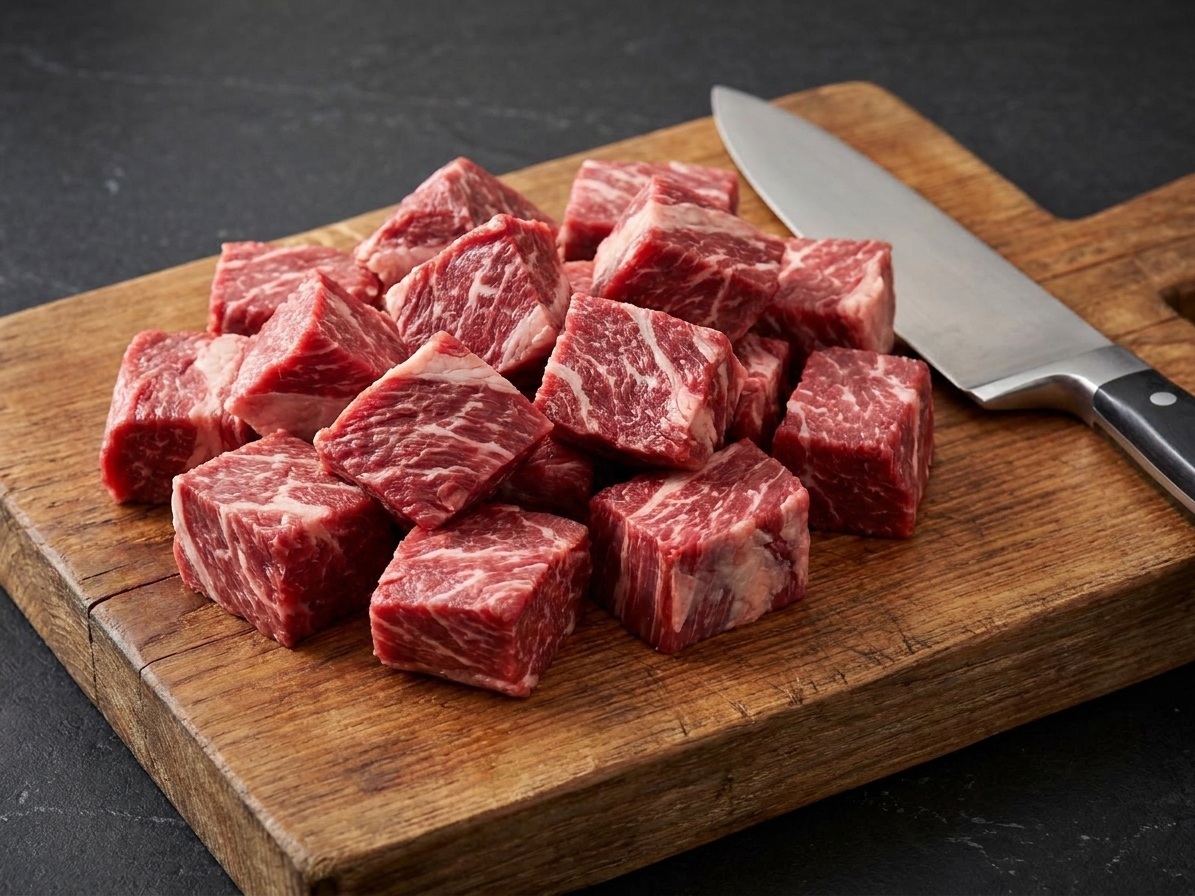
One practical detail that matters more than people think: aim for cubes around 1.5 to 2 inches. Smaller pieces tend to overcook and tighten before the stew is ready. Bigger pieces stay plush and forgiving.
Chuck roast
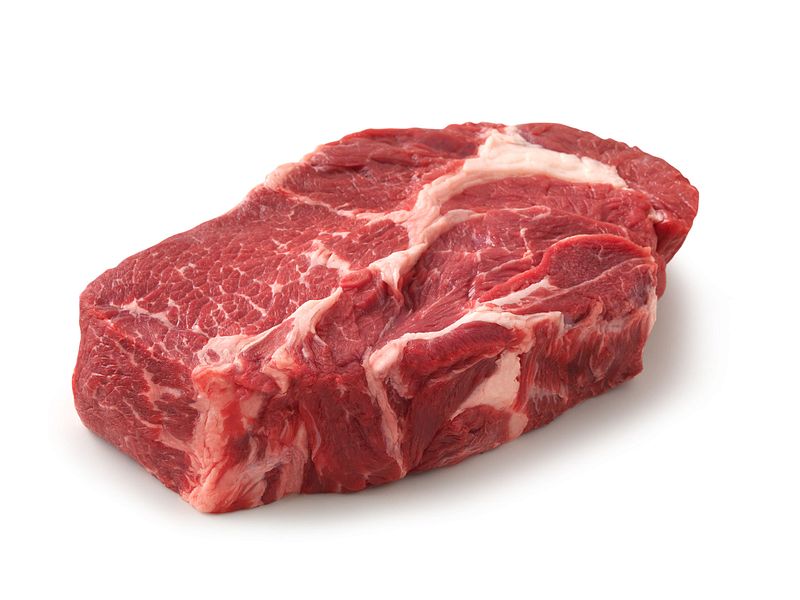
Chuck is the workhorse cut for beef bourguignon, and I mean that as a compliment. It comes from the shoulder, so it is naturally full of connective tissue and usually has enough marbling to stay juicy. When it braises, collagen converts to gelatin and the meat becomes tender and flavorful.
How it behaves in a reduced wine sauce
Chuck takes reduction well because it brings both fat and gelatin to the sauce. As the wine-braised liquid concentrates, chuck is less likely to turn chalky or dry at the edges.
What to look for at the store
- Buy: a whole chuck roast and cut it yourself. You control the size, and you avoid odd, tiny pieces that overcook.
- Look for: visible thin white streaks of marbling running through the meat.
- Avoid: very lean chuck that looks like a single solid red muscle with little marbling.
- Trim: thick exterior fat and any tough silverskin. If you see a thick seam of connective tissue running through a roast, you can either trim some of it out or cut the roast so the seam is not running through every cube.
Time expectations
In most home-kitchen bourguignons, chuck is often tender in about 2.5 to 3.5 hours of gentle braising, depending on cube size and your oven temperature. You are looking for this cue: a fork should slide in with little resistance.
Beef cheek
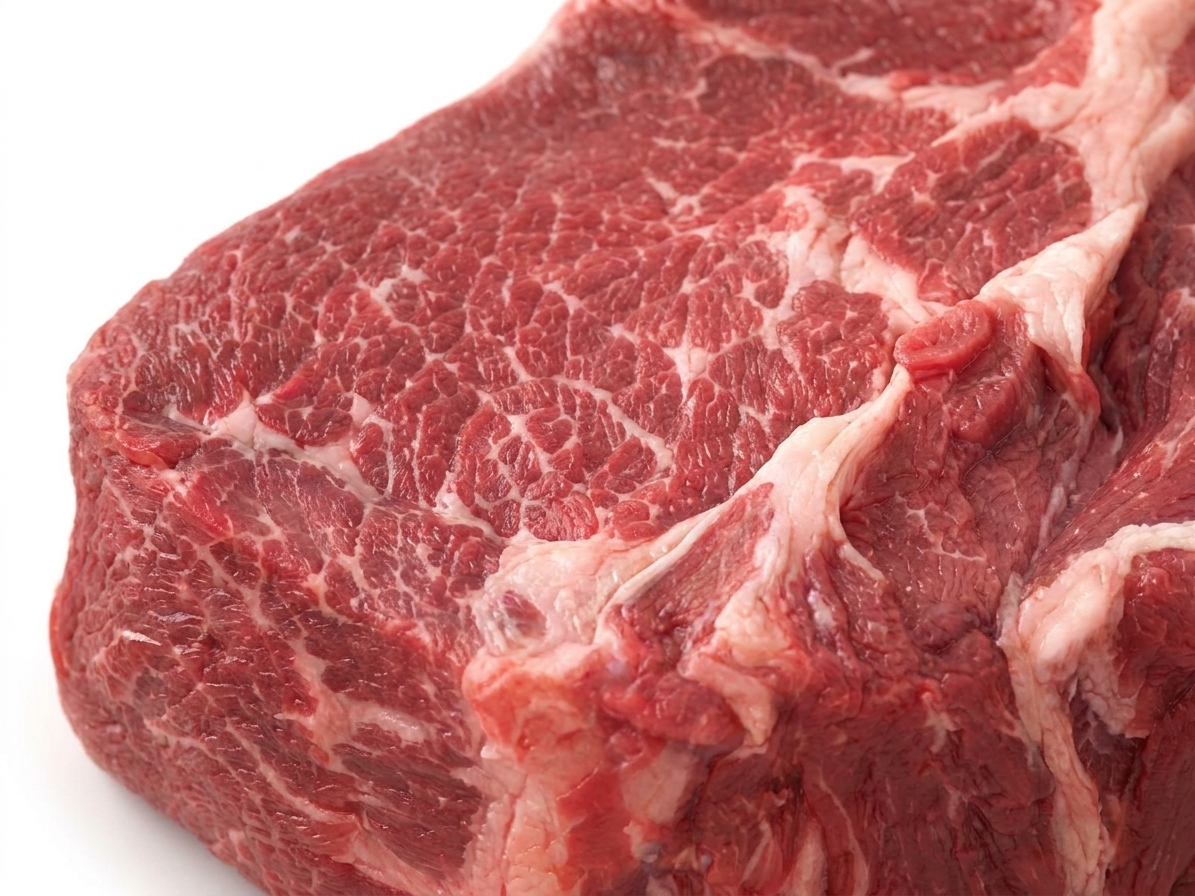
Beef cheek is one of my favorite braising cuts because it is loaded with collagen. When cooked low and slow, cheeks become ridiculously tender and give the sauce a natural, almost glossy thickness.
How it behaves in a reduced wine sauce
Cheek is a dream in bourguignon-style sauce because gelatin loves a reduction. The sauce clings. The mouthfeel gets luxurious. If you have ever wondered why some bourguignons feel like they have an invisible finishing touch, it can be collagen-rich meat (or a stock that is heavy in gelatin) doing quiet work in the background.
What to know before you buy
- Trim expectations: cheeks often come with membranes and pockets of fat that need trimming. Not hard, just a little fiddly.
- Availability: you are more likely to find beef cheek at a butcher shop or well-stocked meat counter than in standard supermarket packs.
- Flavor: deep and beefy, with a slightly richer character than chuck.
Time expectations
Plan on 3 to 4+ hours depending on how big the pieces are and how gentle your simmer is. It is not difficult, it just asks for time. Same doneness cue applies: when the fork slides in easily, you are there.
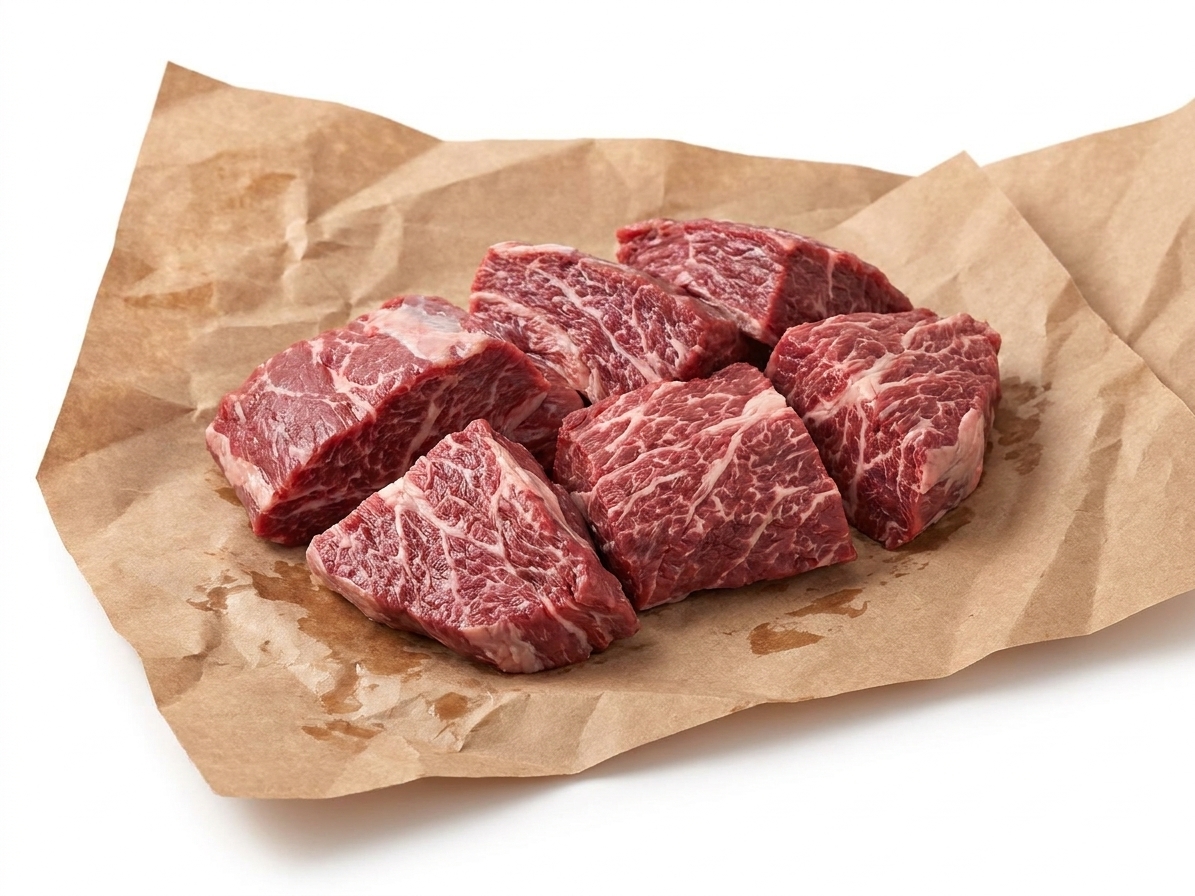
Short rib
Short rib is all about fat plus connective tissue. In a stew, it brings a luxurious richness and a very tender bite. If you want to be extra precise, you will typically see it as chuck short ribs or plate short ribs, depending on where on the animal it came from. Either can work here, but the fattier it is, the richer the final bowl will feel.
Bone-in or boneless
For bourguignon, I prefer boneless short rib because you want neat chunks that eat like stew, not a plated rib. Bone-in is delicious, but it changes the portioning and the eating experience. The bones get in the way of easy spooning, and the pieces tend to be larger and less uniform.
How it behaves in a reduced wine sauce
Short rib stands up beautifully to reduction, but it can make the overall dish feel heavier because of the higher fat content. That is wonderful for a dinner party, less ideal if you want a lighter bowl.
Time expectations
Short rib is often tender around 3 to 4 hours, but it is less predictable than chuck because fat content and thickness vary a lot. Cook to texture, not the clock. When it yields easily to a fork, you are done.
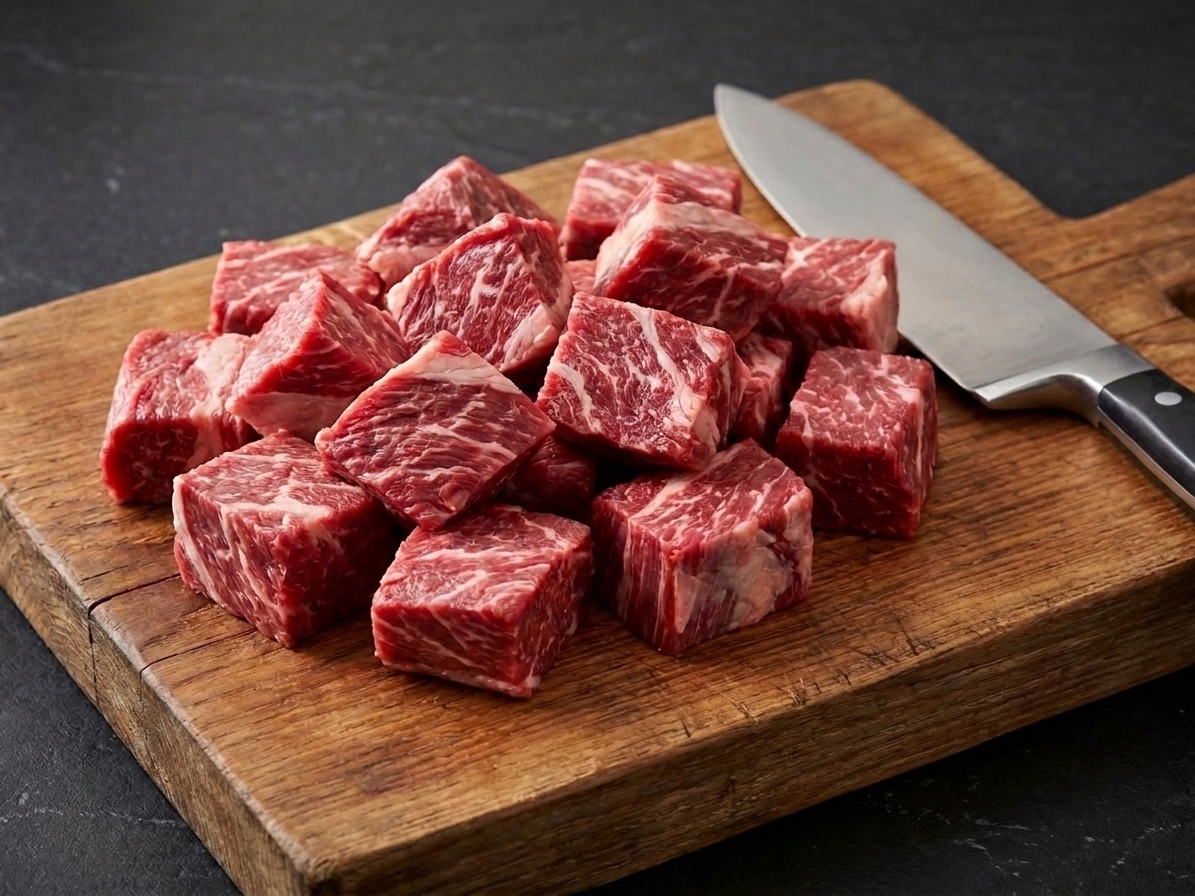
Why “stew meat” disappoints
Those pre-packaged trays labeled stew meat are convenient, but they are a gamble. They are often a mix of cuts, frequently lean, and cut into small, uneven chunks.
What goes wrong in a reduced wine sauce
- Lean meat dries out as the sauce reduces. Reduction concentrates salt and acidity. That can make already-lean meat taste even drier and firmer.
- Not enough collagen to save the texture. Without connective tissue breaking down into gelatin, you miss that soft, saucy tenderness bourguignon is known for.
- Uneven pieces overcook. Tiny cubes hit “done” early and then keep cooking while you wait for the larger pieces to tenderize.
If you only have stew meat available, look for pieces with some marbling and choose the largest chunks in the package. But if your goal is a truly cozy, French-bistro-style result, buying a roast and cubing it is the move.
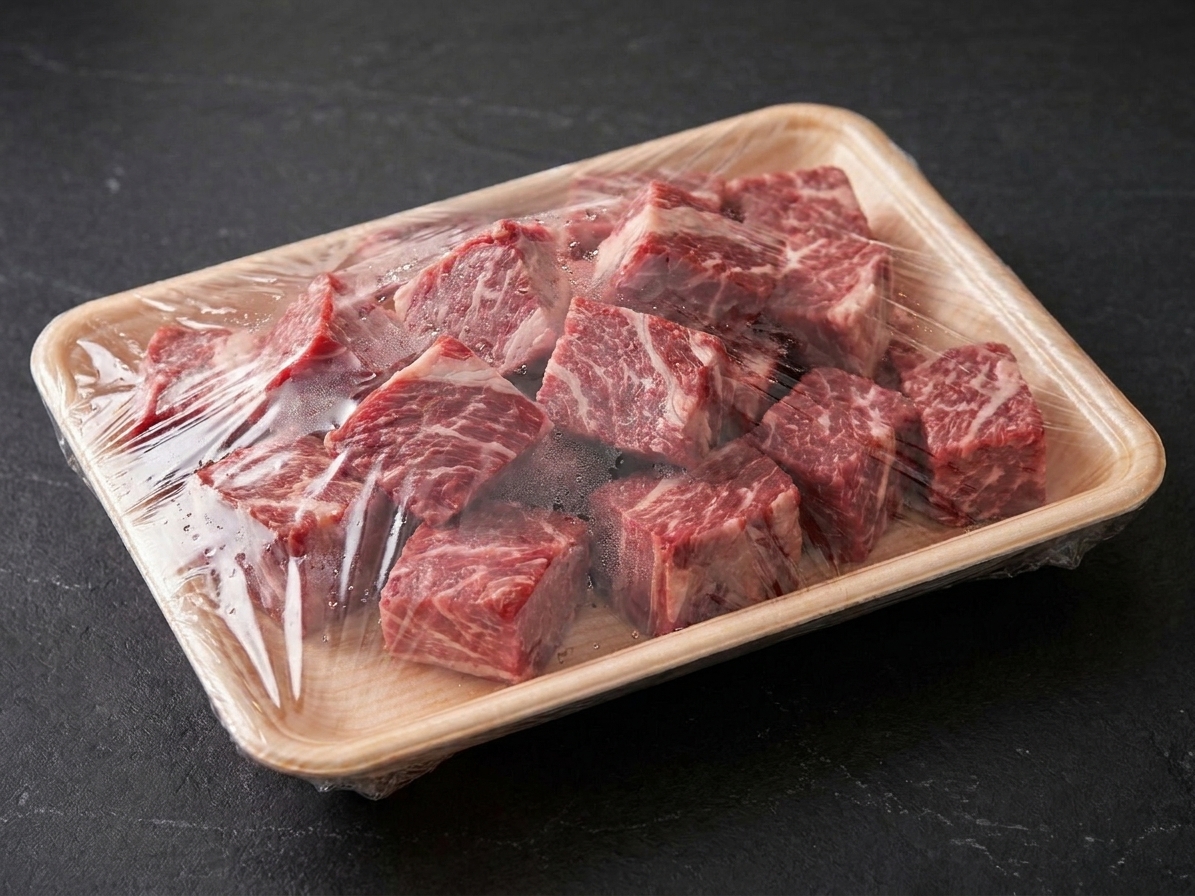
What to ask the butcher
If you are buying from a butcher or a full-service meat counter, you can keep it simple. Here are phrases I have used (and taught friends to use) that get you exactly what you need:
- “Can I get 2 to 3 pounds of chuck roast with good marbling for bourguignon?”
- “Do you have boneless short rib that I can cut into stew-size pieces?”
- “Do you sell beef cheek? If so, is it already trimmed or should I plan to trim it at home?”
And if the counter person offers “stew meat,” it is totally fine to say: “I would rather do chuck roast. Thank you.”
Buying guide
| Priority | Best cut to buy | Why |
|---|---|---|
| Most classic, most forgiving | Chuck roast | Great balance of marbling and collagen, widely available |
| Silkiest texture and glossy sauce | Beef cheek | Very collagen-rich, turns meltingly tender with time, harder to find |
| Special occasion richness | Boneless short rib | Deep flavor and tenderness, higher fat for a luxurious feel |
| Lowest effort at the store | Chuck roast | Easy to find and easy to portion at home |
| Most budget-friendly (usually) | Chuck roast | Often cheaper than cheek and short rib, especially boneless |
FAQ
Is chuck roast the same as chuck steak?
They come from the same general area, but for bourguignon I prefer chuck roast because it is thicker and usually better suited to long braising in larger cubes. Chuck steak can work, but it is easier to overcook if it is cut thin.
Can I use brisket for beef bourguignon?
You can, but brisket tends to slice and shred differently than chuck when cubed and braised. It can be delicious, just not as reliably “stew-chunky.” If brisket is what you have, cut it into larger pieces and plan on a longer, gentler cook.
What about round roast or sirloin?
These are typically leaner cuts. They can turn firm and dry in a long braise, especially in a sauce that reduces and concentrates. If you love the idea of bourguignon, choose a cut with more connective tissue and marbling.
Any other good options if I cannot find cheek or short rib?
If you see beef shank (often sold cross-cut) or a well-marbled blade roast, both can make an excellent bourguignon-style stew. Shank is especially gelatin-rich, but it can be a little more work because of bones and connective tissue.
How much beef should I buy per person?
A good rule is 6 to 8 ounces raw beef per adult if you are serving it with potatoes, noodles, or bread. If it is the only main element (no big sides), aim closer to 8 ounces.
Do I need to trim fat before cooking?
Trim thick external fat caps and any very tough silverskin, especially on cheek. Leave the fine marbling inside the meat. That is where tenderness and flavor come from.
My personal pick
Most of the time, I buy chuck roast. It is the sweet spot for flavor, texture, price, and availability. When I want that “how is this so silky?” kind of bourguignon, I reach for beef cheek and clear my afternoon. And if I am cooking for company and feeling a little fancy, I splurge on boneless short rib.
Whatever you choose, remember: bourguignon is not a speed test. Pick a cut that wants to be braised, and it will reward you.