

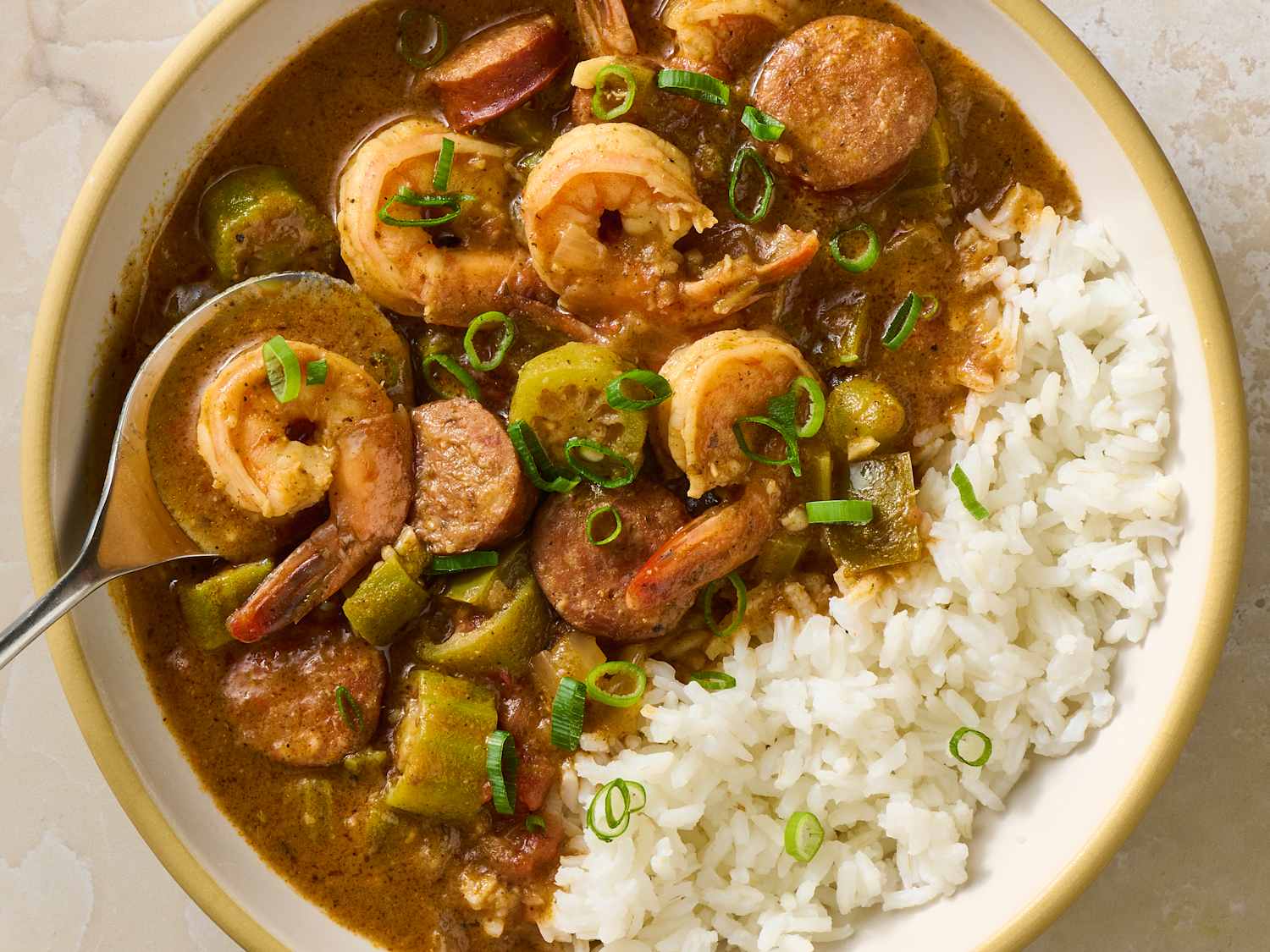
Shrimp gumbo is one of those dishes that feels like a warm hug in a bowl. It's rich and savory, a little smoky, gently spicy, and loaded with that classic Louisiana backbone: a dark roux plus the holy trinity of onion, bell pepper, and celery.
If gumbo has ever intimidated you, I get it. The roux can feel like a big deal. But I promise, once you make it once, you'll realize it's mostly patience and stirring. I'll walk you through every step, and you'll end up with a pot of shrimp gumbo that tastes like you cooked all day, even if you didn't.

The idea
Why This Recipe Works
Gumbo is all about layers. Instead of relying on cream or a quick thickener, it builds depth from:
- A roux: flour cooked in fat until it turns a deep brown, adding nutty flavor and thickening power.
- The holy trinity: onion, green bell pepper, and celery, plus plenty of garlic.
- Seasoning and smoked notes: Cajun or Creole seasoning, a little paprika, bay leaf, and often andouille sausage (optional, but very welcome).
- Seafood timing: shrimp goes in at the end so it stays plump and tender.
This version leans weeknight-friendly, but it still respects the classics. No shortcuts that leave you with bland soup. We're going for real gumbo vibes.
Shopping
Ingredient Notes
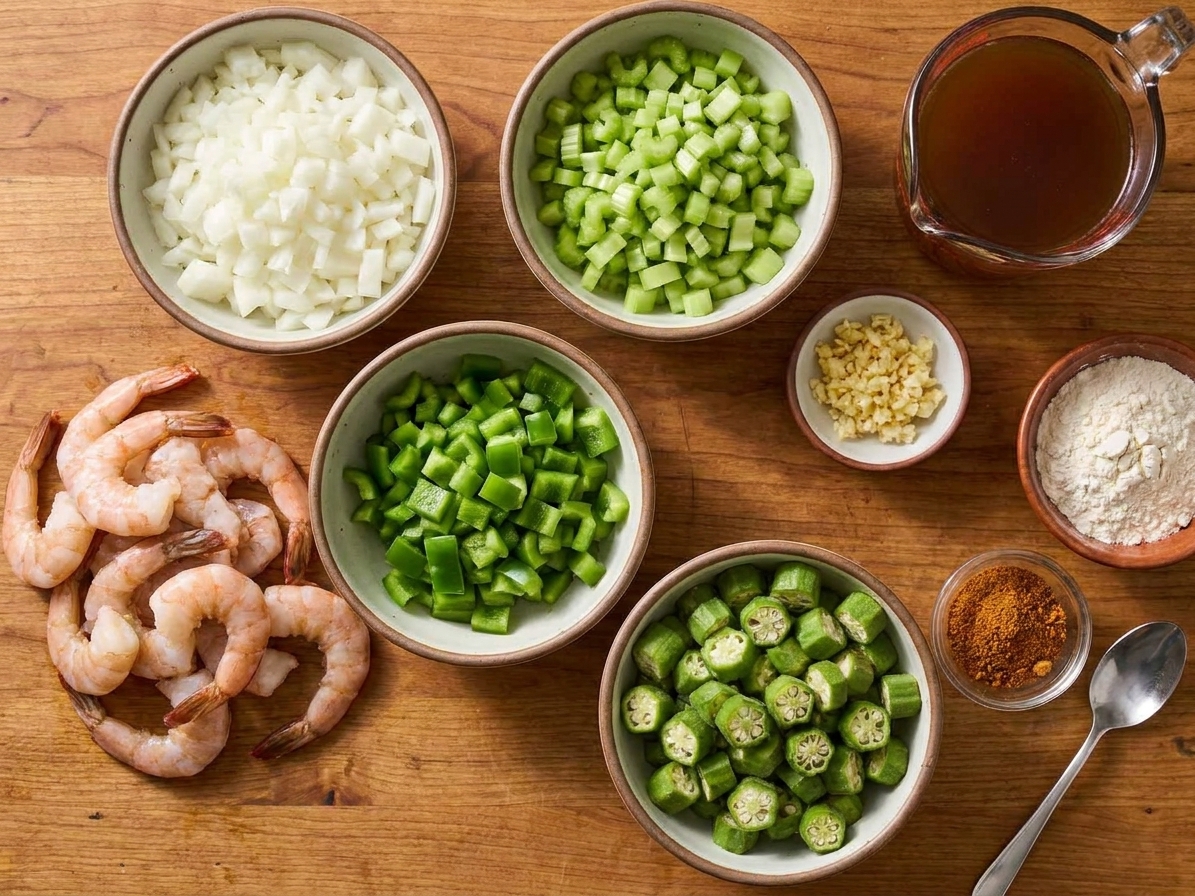
Stock: Seafood stock is great here, but chicken stock works. You can also simmer shrimp shells in water for 15 to 20 minutes for a quick homemade stock.
Okra: Fresh or frozen both work. Okra helps thicken and adds that classic gumbo personality.
Andouille sausage: Optional but delicious; it adds smoky depth.
Tomato paste: Optional, and it helps round out flavor.
Cajun vs. Creole seasoning: Creole blends often include more herbs; Cajun blends can lean more peppery. Use what you like, then adjust salt and heat at the end.
Get set up
Equipment You Will Need
- Heavy-bottomed pot or Dutch oven (for making a steady, dark roux and simmering the gumbo)
- Whisk (to smooth out the roux)
- Wooden spoon (for frequent stirring)
- Knife and cutting board (for the trinity and garlic)
- Measuring cups and spoons
Technique
Tips for Getting It Right
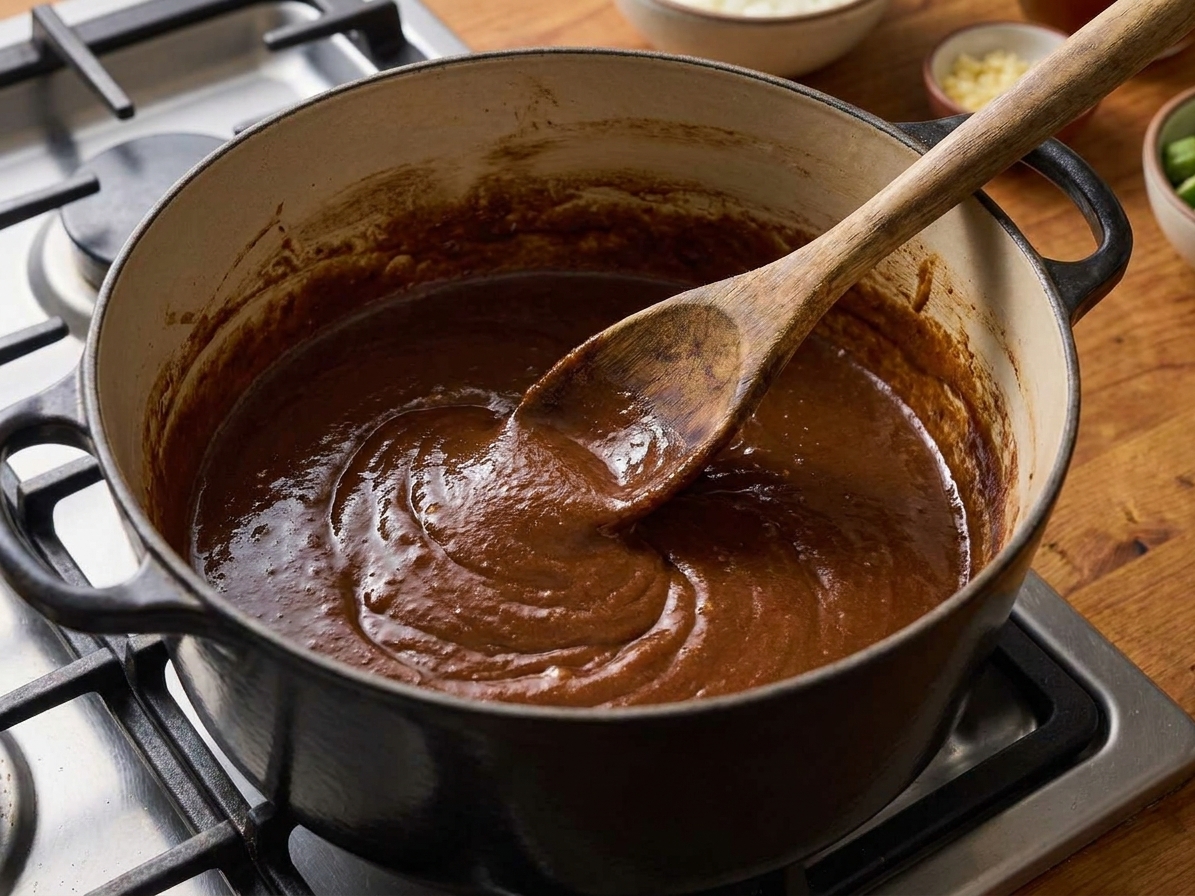
Use the right heat for roux
Medium is your friend. High heat can take you from perfect to burnt fast. If you're nervous, go medium-low and take your time.
Prep everything before you start
Once the roux is ready, things move quickly. Have your trinity chopped, garlic minced, and stock measured so you're not scrambling.
Keep shrimp tender
Shrimp overcooks easily. Add it only at the end, and turn off the heat as soon as it's pink. It'll keep cooking a little from residual heat.
Okra slime is fixable
The long simmer helps a lot. You can also saute okra in a separate skillet for a few minutes before adding it to reduce slickness.
File powder: when to use it
File powder (ground sassafras) is traditional in some gumbos, but it should be added after cooking, off heat. If you want to use it, stir in 1/2 teaspoon at a time at the end until you like the thickness and flavor.
Flexibility
Substitutes That Work
- No seafood stock? Use chicken stock. You can also simmer shrimp shells in water for 15 to 20 minutes for a quick homemade stock.
- No okra? Use file powder at the end, or simply skip it for a thinner but still tasty gumbo.
- Prefer no sausage? Leave it out. Add a pinch of smoked paprika and a dash of Worcestershire for a similar smoky backbone.
Make it yours
Variations to Try
Adjust the heat
As written, this shrimp gumbo is medium, meaning flavorful with a gentle heat.
- Milder: use less Cajun seasoning, skip hot sauce until serving, and choose a less spicy sausage.
- Hotter: add cayenne (a pinch at a time), use a spicier andouille, and finish with extra hot sauce.
Add other seafood
You can add lump crab near the end so it stays intact. Scallops cook quickly like shrimp, so add them in the final minutes.
On the table
What to Serve It With
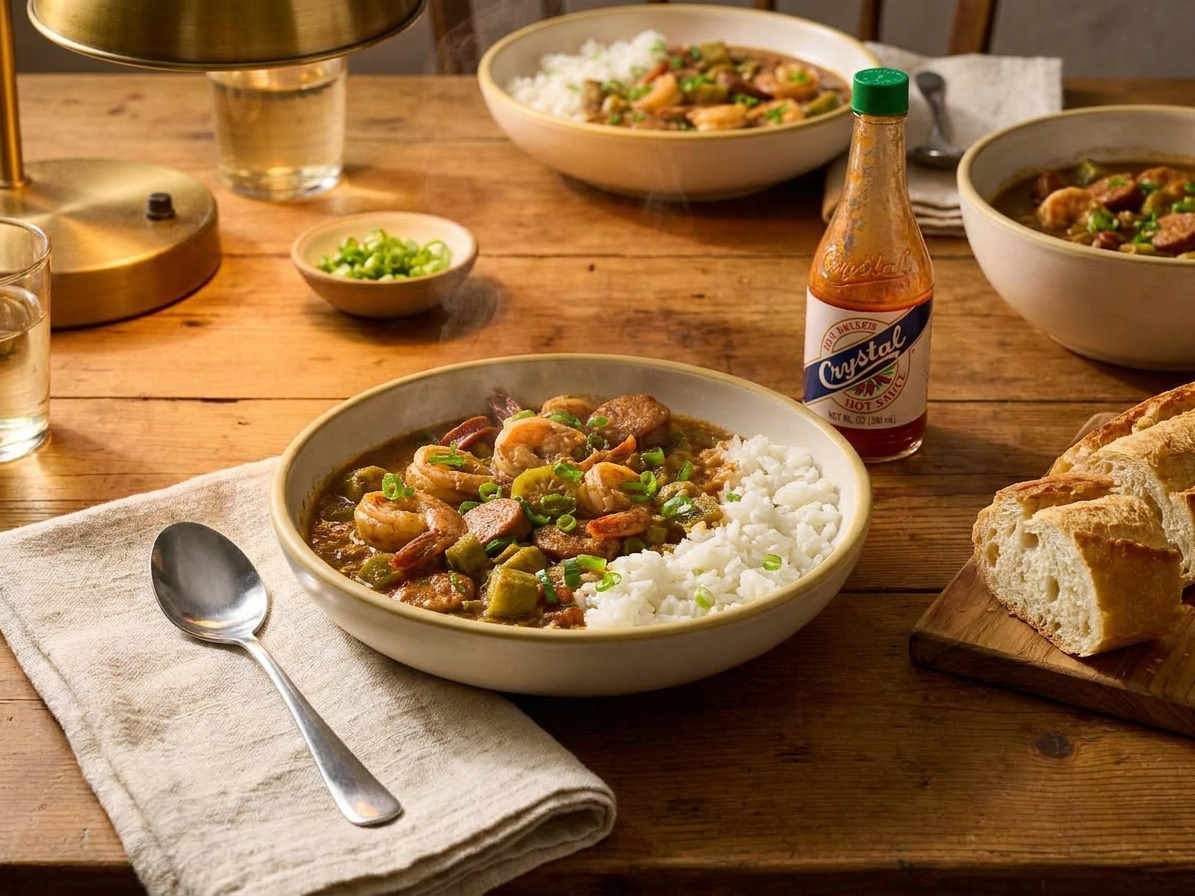
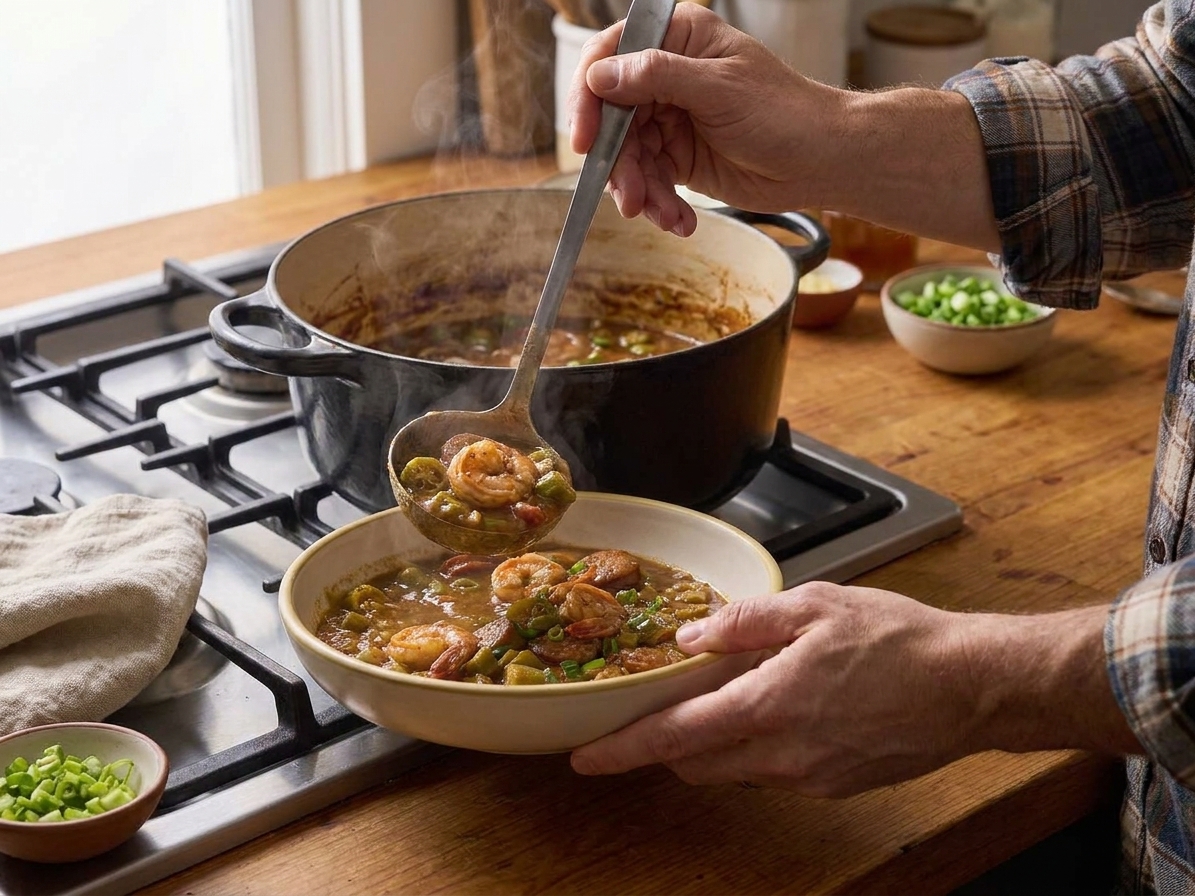
Spoon rice into bowls, ladle gumbo over the top, and finish with green onions and parsley. I also love a little extra hot sauce at the table.
- Rice (classic and perfect)
- Crusty bread for dunking
- Simple green salad with a tangy vinaigrette
- Cornbread if you want cozy-on-cozy
Later
Storage, Freezing and Reheating
Gumbo is one of those magical dishes that tastes even better the next day.
Make ahead
- You can make the gumbo base (everything except shrimp) up to 2 days ahead.
- Reheat to a simmer, then add shrimp right before serving.
Store
- Refrigerate in an airtight container for up to 3 days.
- Store rice separately if possible so it doesn't get overly soft.
Reheat
- Warm gently on the stove over medium-low heat until steaming.
- If shrimp is already in the gumbo, reheat just until hot to avoid overcooking.
Freeze
I recommend freezing the base without shrimp for best texture. Freeze up to 3 months. Thaw overnight in the fridge, simmer, then add shrimp at the end.
Watch out
Common Mistakes to Avoid
- Burning the roux: If you see black specks or it smells burnt, it's best to start over. A good roux smells nutty and toasty, and should turn the color of milk chocolate to dark peanut butter.
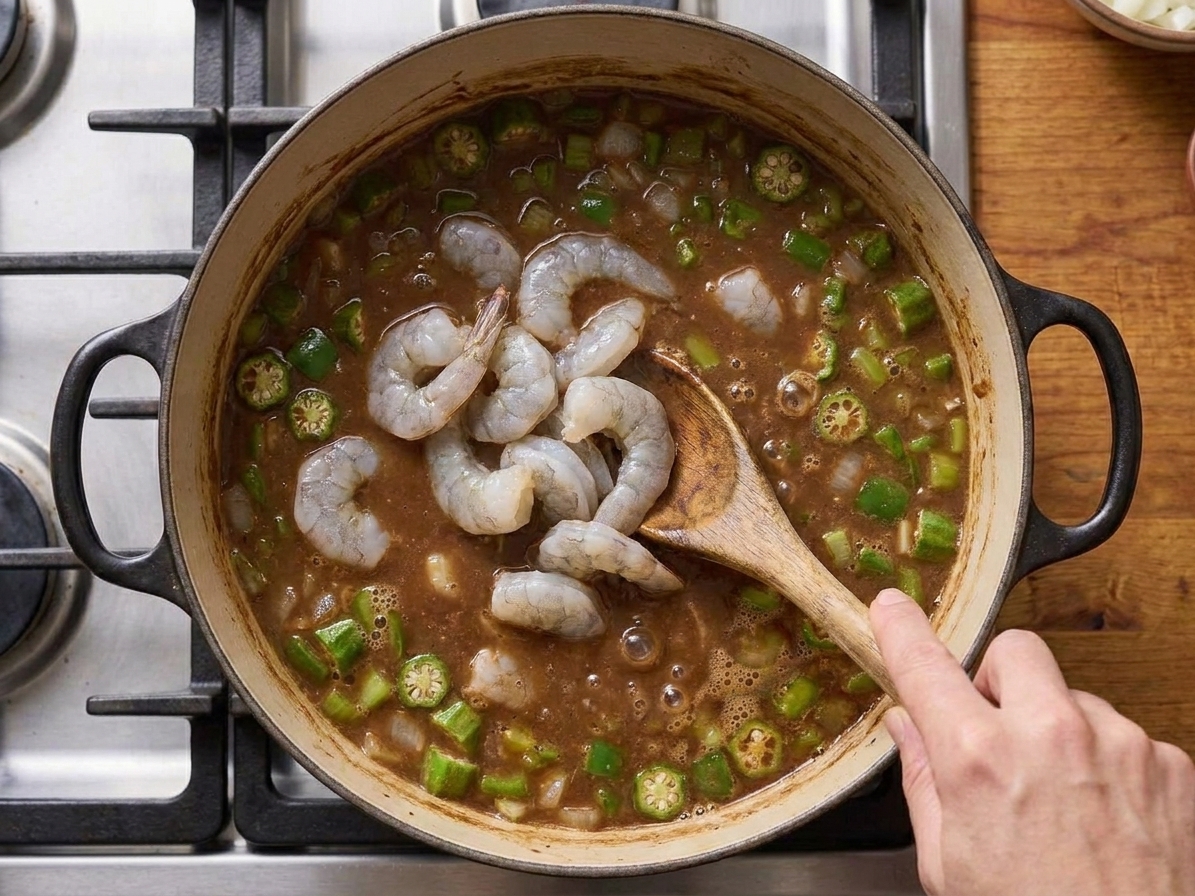
- Adding shrimp too early: Shrimp overcooks easily. Add it only at the end and turn off the heat as soon as it's pink.
- Rushing the simmer: If your gumbo tastes separate or thin, it may need a longer simmer to thicken slightly and taste more unified.
- Adding file powder during cooking: File powder should be stirred in off heat at the end, 1/2 teaspoon at a time.
Questions
Frequently Asked Questions
Can I use pre-cooked shrimp?
You can, but it's easy to overcook and turn rubbery. If pre-cooked shrimp is what you've got, stir it in after you turn off the heat and let it warm through for 1 to 2 minutes.
Why is my gumbo not thick?
Two common reasons: the roux wasn't cooked long enough (it needs time to develop) or the gumbo needs a longer simmer to reduce slightly. Okra or a small amount of file powder at the end can also help.
Do I need okra?
No. It adds flavor and helps thicken, but you can skip it or use file powder at the end instead.
What is the difference between Cajun and Creole seasoning?
They're similar, but Creole blends often include more herbs. Cajun blends can lean a bit more peppery. Use what you like, then adjust salt and heat at the end.
Can I add crab or other seafood?
Absolutely. Add lump crab near the end so it stays intact. Scallops cook quickly like shrimp, so add them in the final minutes.
The recipe
Shrimp Gumbo
This shrimp gumbo delivers classic Louisiana-style flavor with a dark roux, the holy trinity, optional andouille for smoky depth, and shrimp stirred in at the end so it stays plump and tender. Plan on about 60 to 75 minutes total, with most of the time as hands-off simmering once the base is built.
Ingredients
- Neutral oil (vegetable, canola, or avocado), 1/2 cup
- All-purpose flour, 1/2 cup
- Yellow onion, 1 large, diced
- Green bell pepper, 1 large, diced
- Celery, 2 to 3 ribs, diced
- Garlic, 4 to 6 cloves, minced
- Andouille sausage (optional), 8 ounces, sliced into half-moons
- Okra (fresh or frozen), 1 to 2 cups
- Tomato paste (optional), 1 tablespoon
- Seafood stock or chicken stock, 6 cups
- Bay leaves, 2
- Cajun or Creole seasoning, 1 to 2 teaspoons, plus more to taste
- Smoked paprika, 1/2 teaspoon
- Worcestershire sauce, 1 to 2 teaspoons
- Hot sauce, to taste
- Raw shrimp (peeled and deveined), 1 to 1 1/2 pounds
- Kosher salt and black pepper, to taste
- Green onions and parsley, for serving
- Cooked white rice, for serving
Instructions
- In a heavy-bottomed pot or Dutch oven, heat 1/2 cup oil over medium heat. Sprinkle in 1/2 cup flour and whisk until smooth.
- Cook, stirring almost constantly, until the roux turns the color of milk chocolate to dark peanut butter, 15 to 25 minutes. If you see black specks or it smells burnt, start over.
- Add the onion, bell pepper, and celery to the dark roux. Stir well and cook 5 to 7 minutes, until the vegetables soften.
- Add the garlic and cook 30 to 60 seconds, just until fragrant.
- If using, add the sliced andouille sausage and cook 3 to 4 minutes to render a bit of fat and deepen flavor.
- Stir in tomato paste (if using) for 30 seconds. Slowly pour in the stock while stirring to keep the mixture smooth.
- Add bay leaves, Cajun or Creole seasoning, smoked paprika, Worcestershire, and a few dashes of hot sauce.
- Bring to a gentle simmer, then reduce heat to low. Simmer uncovered for 30 to 45 minutes, stirring occasionally, until slightly thickened and more unified in flavor.
- Add okra during the last 15 to 20 minutes of simmering.
- Season shrimp lightly with salt and pepper. Add shrimp to the simmering gumbo and cook just until pink and curled, 2 to 4 minutes. Turn off the heat.
- Taste and adjust seasoning with salt, pepper, Cajun or Creole seasoning, and hot sauce.
- Spoon rice into bowls, ladle gumbo over the top, and finish with green onions and parsley.
Recipe notes
- Roux color target: Milk chocolate to dark peanut butter. A good roux smells nutty and toasty; if it smells burnt or has black specks, start over.
- File powder option: Add off heat at the end, stirring in 1/2 teaspoon at a time until you like the thickness and flavor.
- Using pre-cooked shrimp: Stir it in after turning off the heat and let it warm through for 1 to 2 minutes.
- Make-ahead: Make the base (everything except shrimp) up to 2 days ahead, then reheat to a simmer and add shrimp right before serving.
The first time I made gumbo solo, I stood at the stove stirring that roux like it was a final exam. Put on a playlist, keep the heat steady, and know that you're building flavor patiently.
Nutrition (per serving, approximate)
- Calories: ~430
- Fat: ~20 g
- Carbs: ~30 g
- Protein: ~30 g
- Fiber: ~3 g
- Sugar: ~5 g
- Sodium: ~1050 mg
Nutrition values are approximate and will vary based on exact ingredients, stock, sausage (if used), and serving size (including rice).