

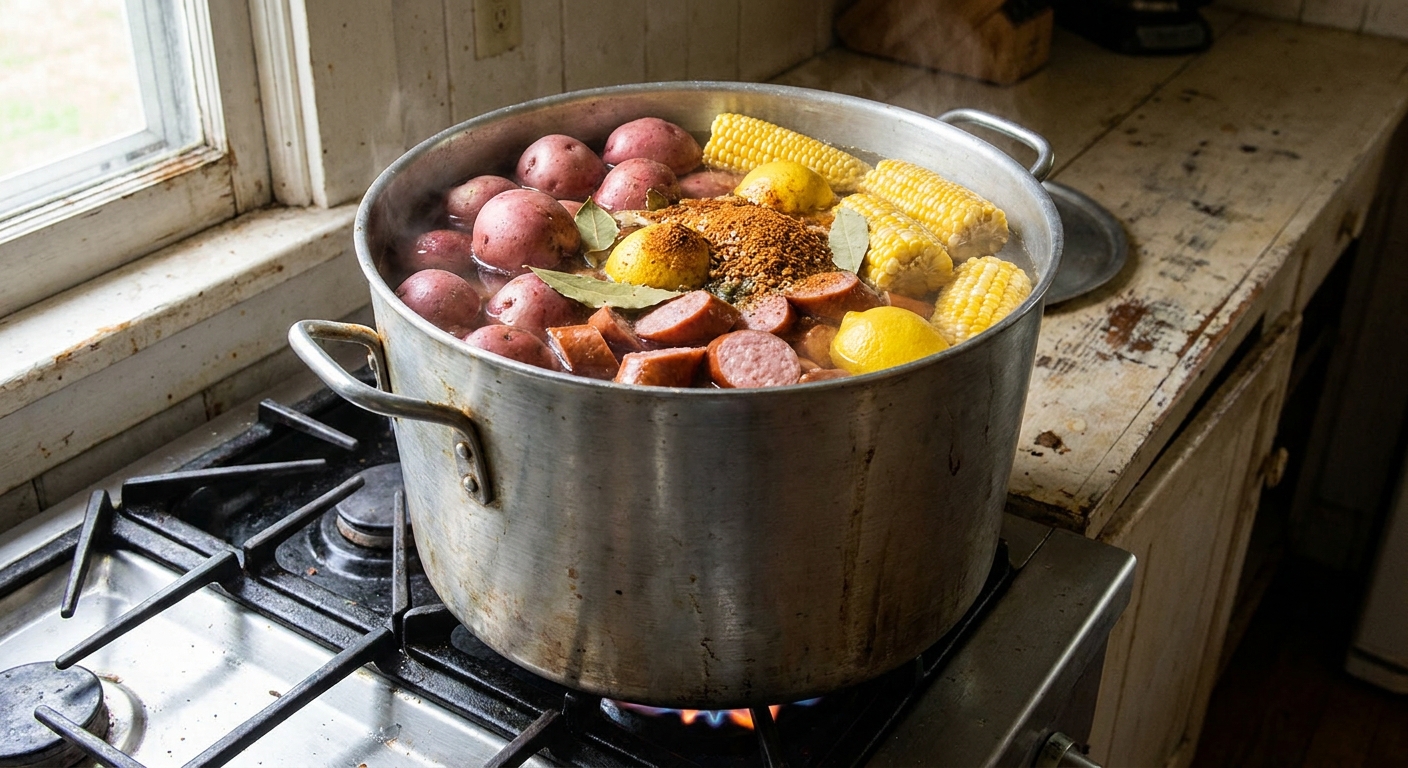
I grew up in a loud, food-centric Pacific Northwest family where “dinner” could turn into a full-on event, and a shrimp boil fits that vibe perfectly. The only catch is shrimp are the divas of the pot: they cook fast, they overcook faster, and if you toss them in too early you end up with a chewy payoff for all your effort. The good news is the timing is simple once you know the order.

The short answer
Add shrimp in the last 2 to 4 minutes of cooking, depending on their size, whether they are shell-on or peeled, and how hard the pot is boiling. Pull the pot off heat as soon as the shrimp turn opaque and curl into a C-shape. Shrimp should be the final ingredient to hit the water.
Assumptions: These times work best when the pot is at an active simmer or gentle boil and your shrimp are thawed. If shrimp are icy-cold or frozen, expect the cook time to run longer and use visual doneness cues, not the clock.
If your shrimp boil includes potatoes, sausage, and corn, those items need a head start so everything finishes together.
One-pot order and timing
Timing varies a bit based on potato size, shrimp size, and how hard your pot is boiling. But this sequence is the reliable, weeknight-friendly roadmap I use.
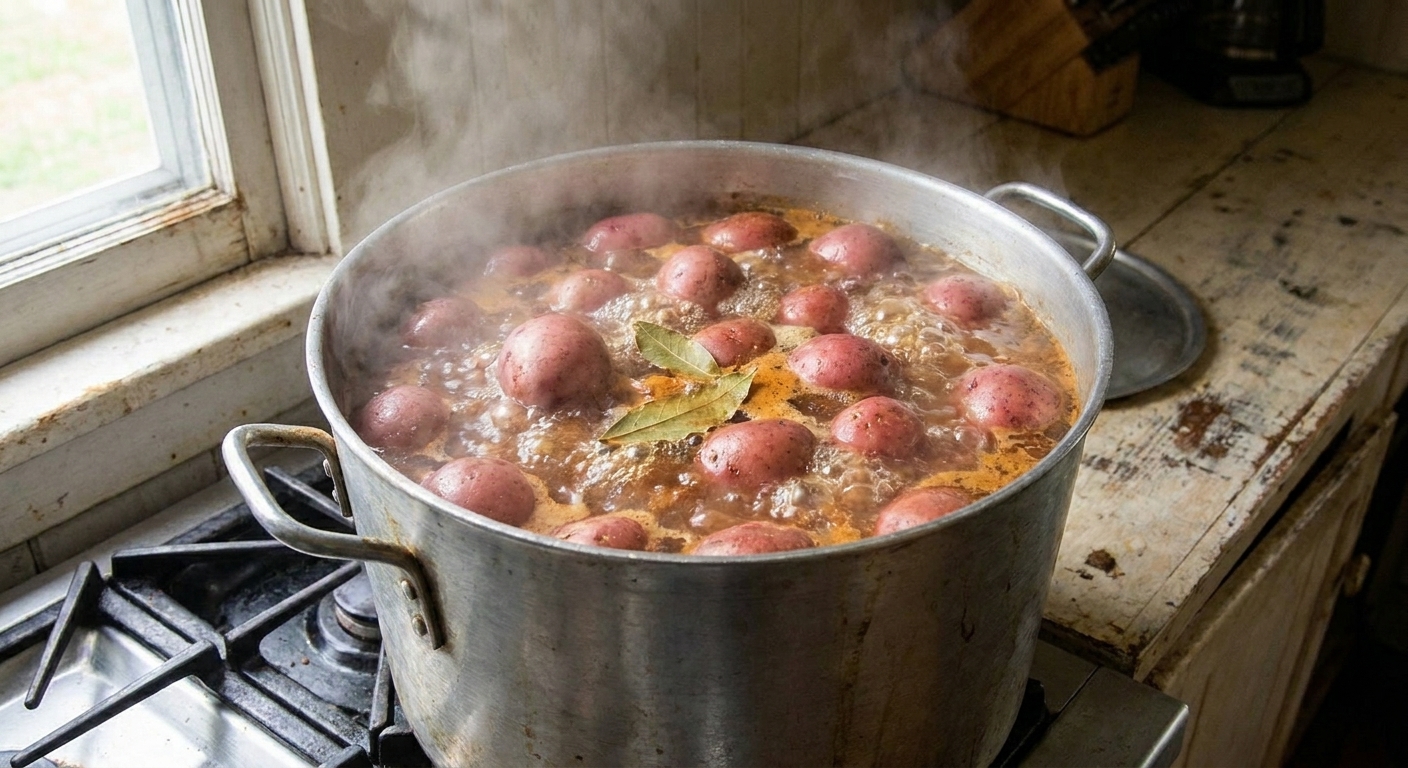
1) Potatoes first
Cook time at this step: about 12 to 18 minutes at a steady boil (up to 20 if potatoes are larger or the pot is more of a simmer) until they are nearly tender.
- Baby red or gold potatoes (whole): typically 12 to 18 minutes.
- Medium potatoes cut in halves or quarters: typically 10 to 14 minutes.
What you are aiming for: a fork goes in with some resistance, like 80 to 90 percent done. They will finish while the rest cooks.
2) Sausage next
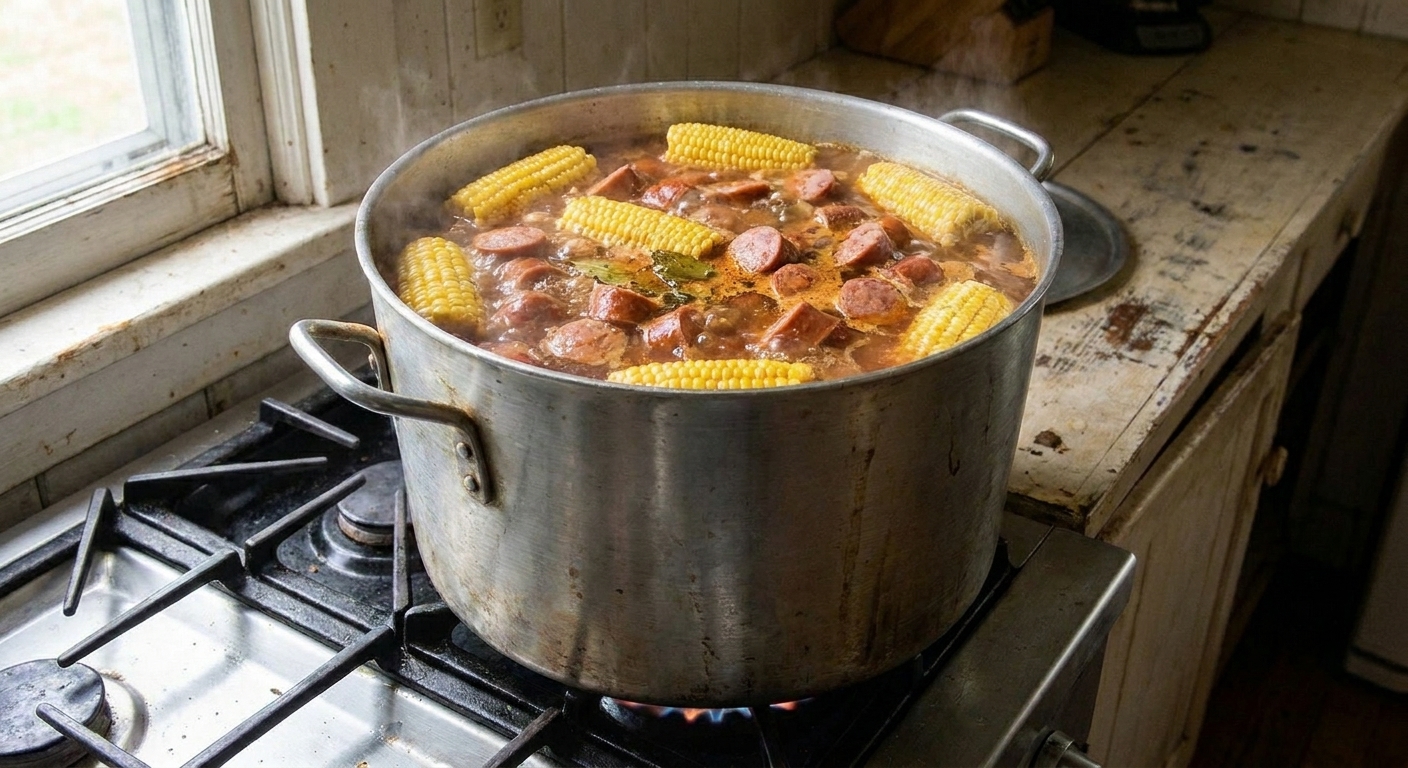
Cook time at this step: 5 to 7 minutes after the potatoes have a head start.
Most smoked sausage is already cooked, so you are heating it through and letting it flavor the water. If you slice it into thick coins, it heats quickly and seasons everything around it.
3) Corn after sausage
Cook time at this step: 5 to 7 minutes for corn pieces (2 to 3 inch segments). If you are cooking full ears, plan on the longer end.
Tip: If your corn is very fresh and sweet, 5 minutes is often plenty. Frozen corn pieces can take closer to 7 minutes.
4) Shrimp last
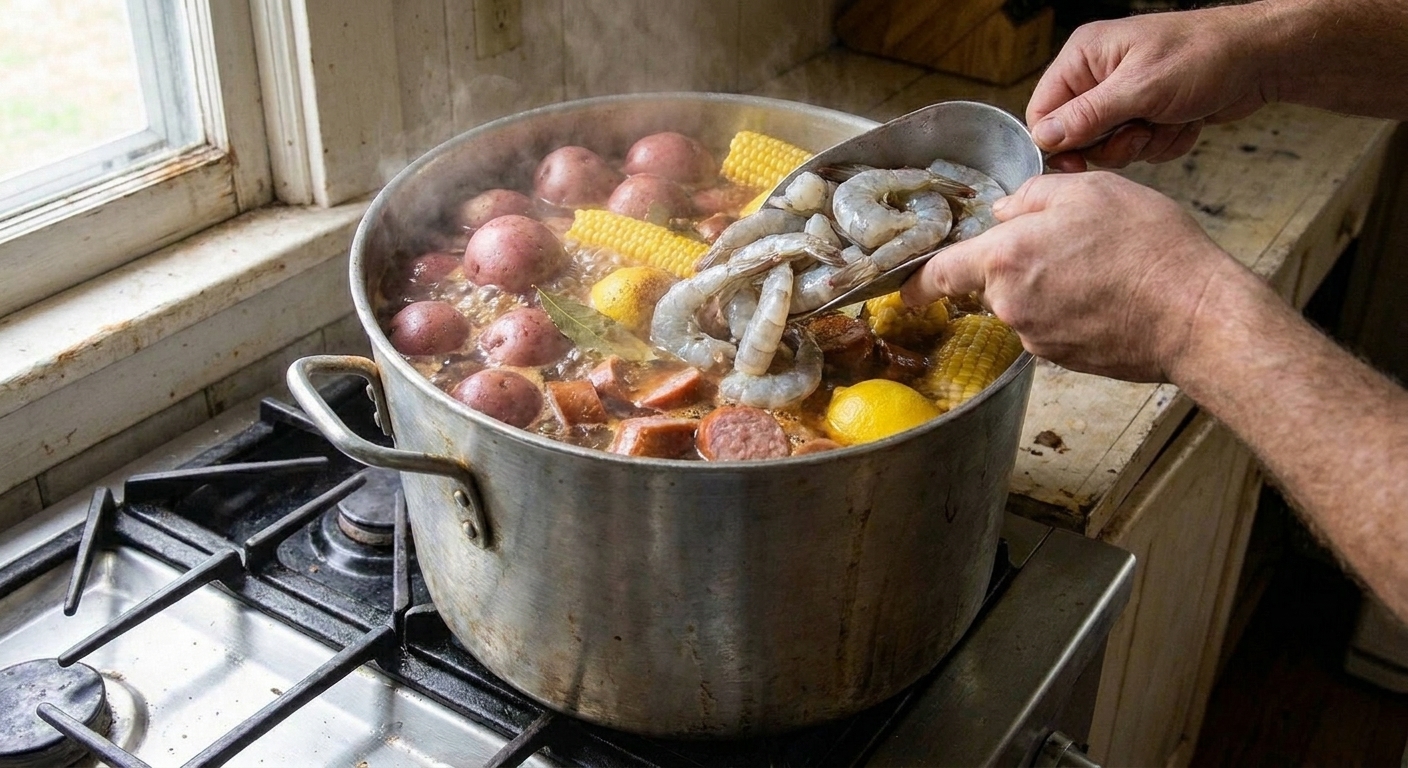
Cook time at this step: 2 to 5 minutes, just until opaque and C-shaped. Start checking early.
These count-per-pound labels match what you will usually see at the store:
- Small (51 to 60 count): 2 to 3 minutes
- Medium (41 to 50 count): 2 to 3 minutes
- Large (31 to 40 count): 3 to 4 minutes
- Extra-large (21 to 30 count): 3 to 4 minutes
- Jumbo (16 to 20 count): 4 to 5 minutes, watch closely
Shell-on shrimp are a little more forgiving and may take closer to the longer end. Peeled shrimp can overcook quickly, so I start checking around 2 minutes.
Once shrimp go in, the clock matters. Keep the pot at a gentle boil, stir once or twice so they cook evenly, and start checking early.
How to tell shrimp are done
Shrimp doneness is all about color, shape, and texture. Pull them as soon as these cues show up.
Look for opaque, not gray
Raw shrimp are gray and slightly translucent. Done shrimp turn opaque in the thickest part. Many shrimp also turn pink or coral on the outside, but the exact shade can vary by species, so opacity matters most.
Watch the curl
- Perfectly cooked: shrimp form a gentle C-shape.
- Overcooked: shrimp tighten into a firm O-shape and feel bouncy.
Check one shrimp the smart way
Scoop out one of the largest shrimp, let it cool for a moment, then cut it in half through the thickest part. If it is opaque throughout and juicy, you are done. If it is still translucent in the center, give the pot another 30 to 60 seconds.
Maya’s no-rubbery rule: The second the shrimp are opaque, turn off the heat. Shrimp keep cooking in hot water, especially in a big pot.
My favorite timing trick
If you tend to get distracted (potlucks and family gatherings will do that), this method is extra forgiving:
- Boil potatoes until almost tender.
- Add sausage, then corn.
- Bring the pot back to a steady boil.
- Add shrimp, stir, and cook 2 minutes.
- Turn off the heat, cover, and let sit 2 minutes.
This gentle finish keeps shrimp tender, especially if you are using larger shrimp.
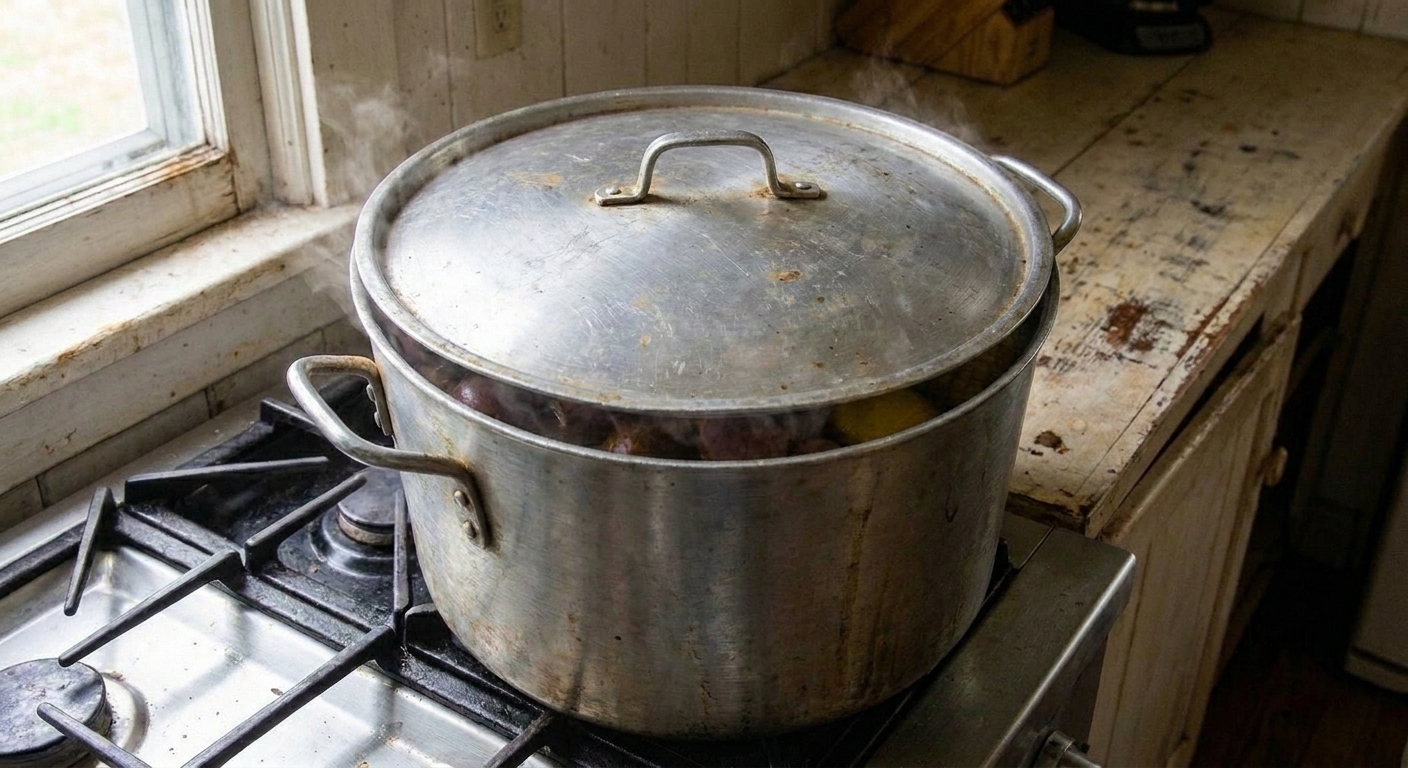
Common timing problems
My potatoes are still hard when the shrimp are done
- Cut potatoes smaller next time, or start them 5 to 10 minutes earlier.
- Keep shrimp tender: scoop shrimp out with a spider strainer and set aside while potatoes finish.
My corn is mushy
- Add corn later. Corn needs less time than potatoes.
- If using very fresh summer corn, 4 to 5 minutes can be enough.
My shrimp turned out rubbery
- Shrimp were in too long, or the pot stayed boiling after they were done.
- As soon as shrimp are opaque, turn off heat and drain promptly, or scoop shrimp out first.
The boil stopped boiling when I added shrimp
That is normal if your shrimp are cold and you added a lot at once. Cover the pot for 30 to 60 seconds to help it return to a simmer quickly, then start timing once you see bubbling again.
Quick timeline
If you want one simple cheat sequence, this is it (assumes a steady boil):
- Potatoes: 12 to 18 minutes
- Sausage: add, cook 5 to 7 minutes
- Corn: add, cook 5 to 7 minutes
- Shrimp: add, cook 2 to 5 minutes
Your finish line is not the timer, it is the shrimp: opaque, tender, and C-shaped.
If you like a traditional “soak” in seasoned liquid for extra flavor, do it off heat and keep it short. Think 5 to 10 minutes, then drain.
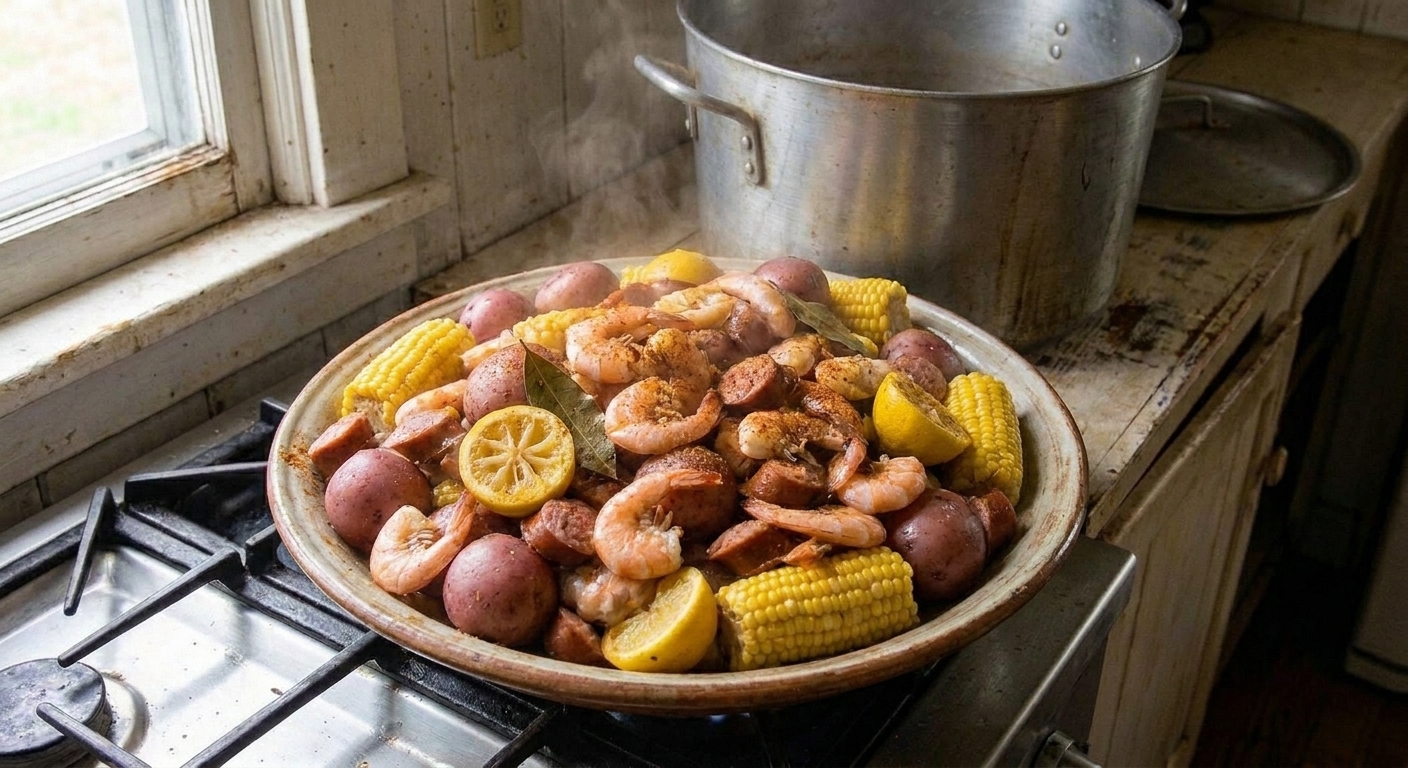
FAQ
Do I add shrimp with the shell on or peeled?
Either works, but shell-on shrimp are more forgiving and stay juicier in a boil. Peeled shrimp cook even faster, so start checking at the 2-minute mark.
Should I boil shrimp from frozen?
You can, but you will get more even results if you thaw first (overnight in the fridge). For a faster thaw, put shrimp in a sealed bag and submerge in a bowl of cold water, changing the water once or twice. If cooking from frozen, expect closer to the longer end of the time range and watch for opacity.
Can I leave shrimp in the pot while I drain everything?
Try not to. Drain promptly or scoop shrimp out first. Sitting in hot water is the fastest way to go from tender to rubbery.
How long can shrimp sit in the seasoning after cooking?
If you like a soak for extra flavor, keep it short and controlled: 5 to 10 minutes off heat is usually plenty. For longer soaks, the shrimp texture can start to tighten.