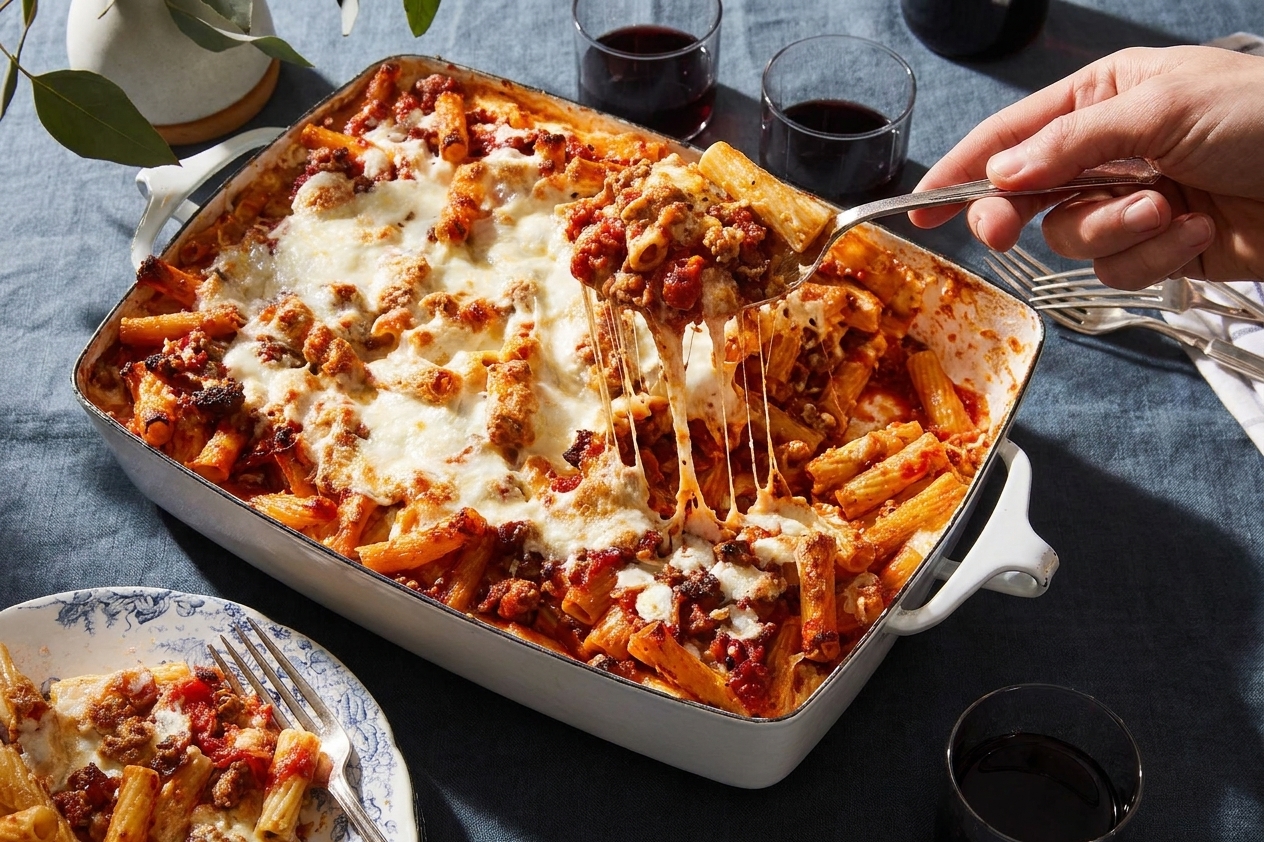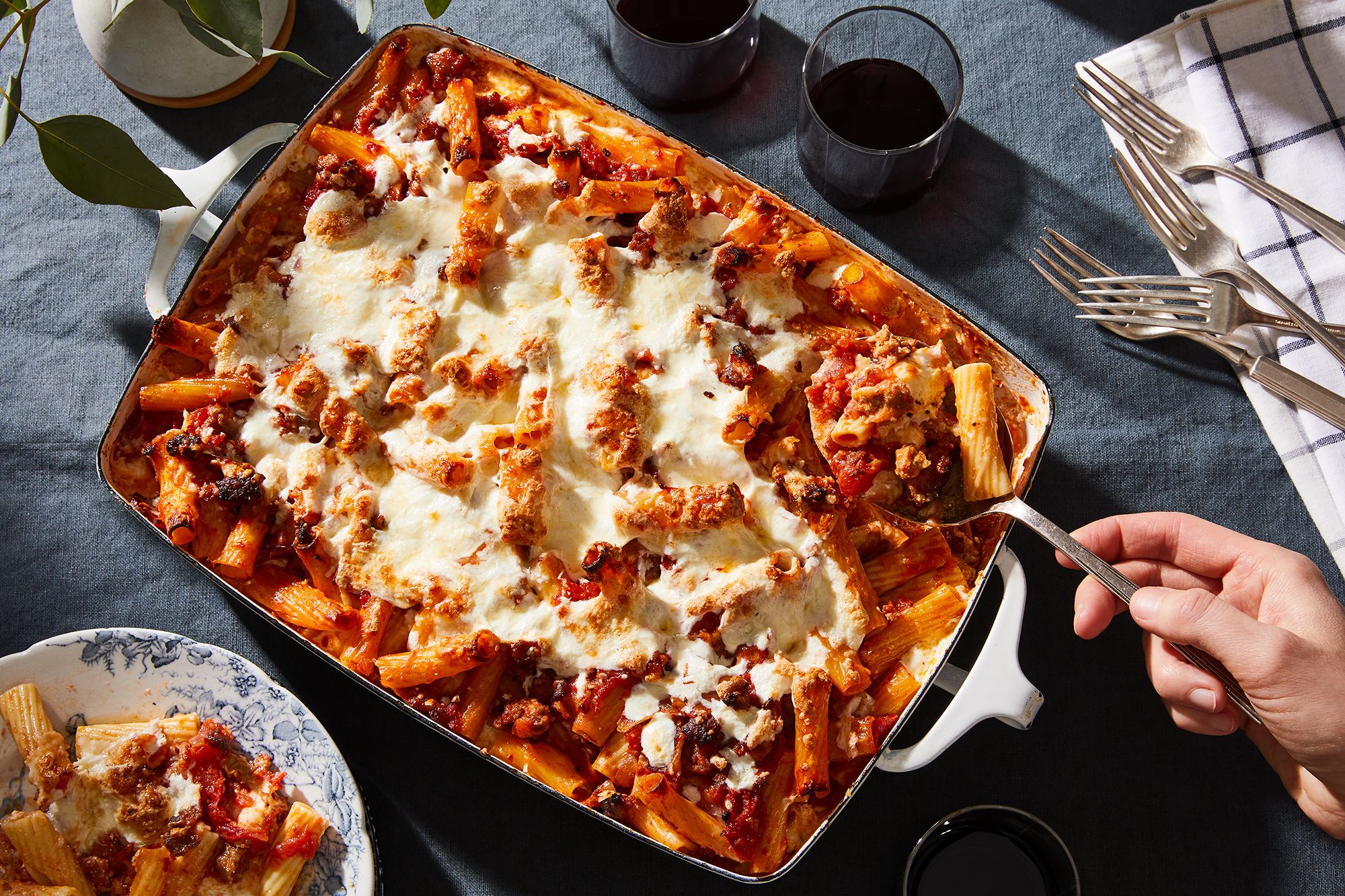
I have stood in the dairy aisle with a cart full of ziti ingredients and that one stubborn question: Do I grab ricotta, or can I use cottage cheese? Both can get you to a cozy, bubbly baked ziti with meat. But they behave very differently once they hit hot pasta and sauce.
Let’s talk moisture, curds, salt, and the simple little tricks that keep your ziti from turning into a watery casserole. I’ll also tell you exactly which tub I’d buy if you asked me while I was reaching for “too much garlic.”

The quick answer
If you want the most classic baked ziti texture, buy whole milk ricotta. It gives you that creamy, slightly fluffy layer that bakes up tender and rich without a lot of fuss.
If you already love cottage cheese or you are trying to boost protein or save a few dollars, cottage cheese absolutely works, especially if you take one step to manage the extra liquid. The biggest difference in the final pan is usually moisture and curd texture, not flavor.
- Buy ricotta if you want smooth, classic, low-stress results.
- Buy cottage cheese if you do not mind a slightly tangier flavor and you will drain it (and blend it if you want a smoother layer).
How they bake
Moisture
Ricotta is moist, but it is a thicker, more stable kind of moist. Good whole milk ricotta holds together when baked, so you get creamy pockets rather than puddles.
Cottage cheese often contains more free liquid (whey). In a baked pasta dish, that extra whey can seep out and pool at the bottom, especially if your sauce is on the thinner side or your pasta is cooked too soft before baking.
One more simple fix that helps either cheese: let baked ziti rest 10 to 15 minutes before serving. The pasta and cheese reabsorb some liquid, and the slices hold together better.
Curds
Ricotta is fine-grained and smooth. It reads as creamy filling.
Cottage cheese is curd-based, so you may notice little lumps. Some people love that. If your household is picky about texture, blending cottage cheese for 10 to 15 seconds turns it into something much closer to ricotta.
Salt
Salt is where things can taste “off” fast. Ricotta can be lightly salted or fairly neutral depending on brand. Cottage cheese is often saltier, but it varies a lot, and low-sodium cottage cheese is easy to find in many stores.
Always taste your cheese mixture before you add extra salt, especially if your marinara and sausage are already doing a lot of seasoning.
How to stop cottage cheese from getting watery
If you only take one tip from this article, take this one: drain the cottage cheese. It is the difference between saucy-ziti bliss and a watery bottom layer.
Option 1: Drain it (my go-to)
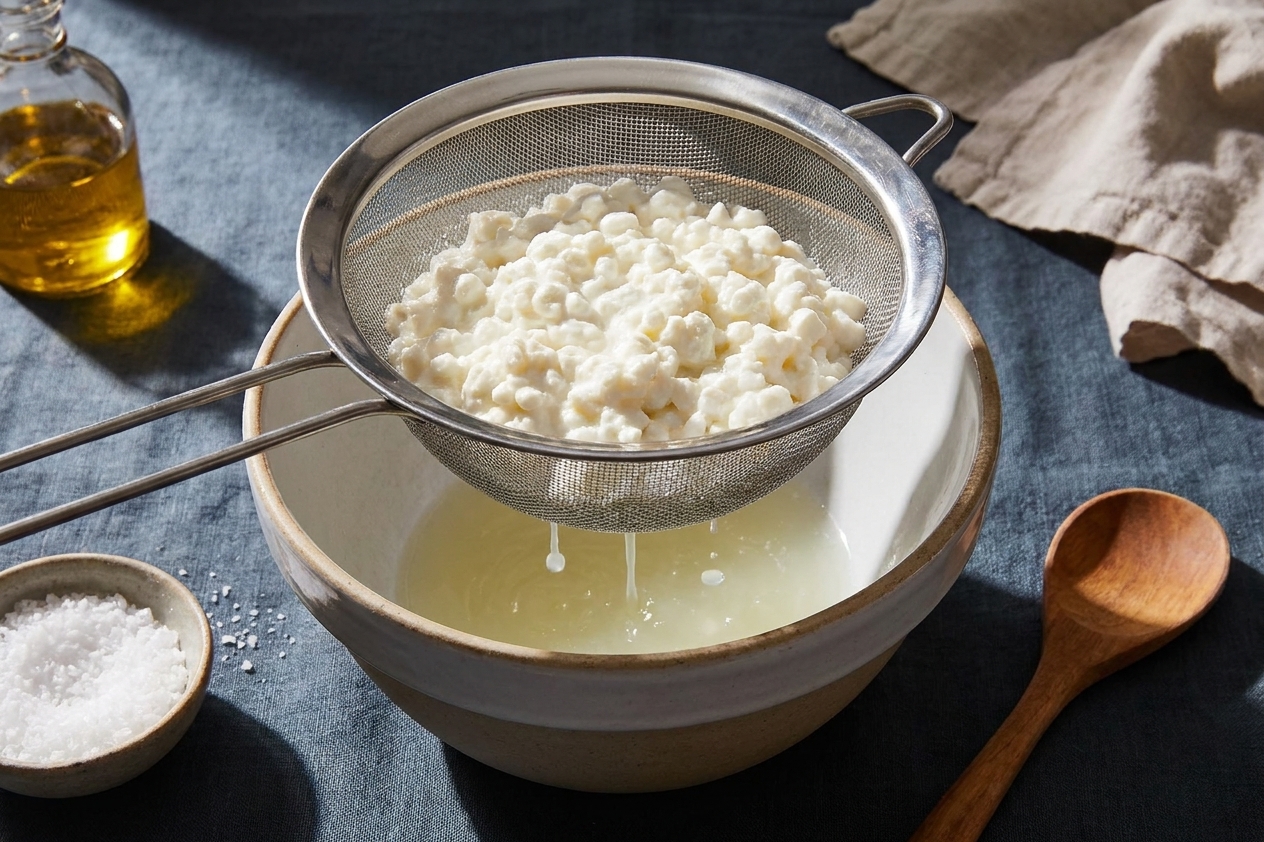
- Spoon cottage cheese into a fine-mesh strainer set over a bowl.
- Let it drain while you brown meat and simmer sauce, usually 10 to 20 minutes.
- You are good when whey is no longer actively dripping. For extra insurance, gently press with the back of a spoon once or twice.
If your cottage cheese looks very wet, you can also line the strainer with cheesecloth or clean paper towels. You do not need to squeeze it bone-dry, just remove the obvious whey.
And yes, you may end up with a little less volume after draining. That is normal. For a thicker layer, start with a slightly heaping 16-ounce tub, or just call it good and lean on mozzarella and Parmesan to fill things out.
Option 2: Blend it (best for texture)
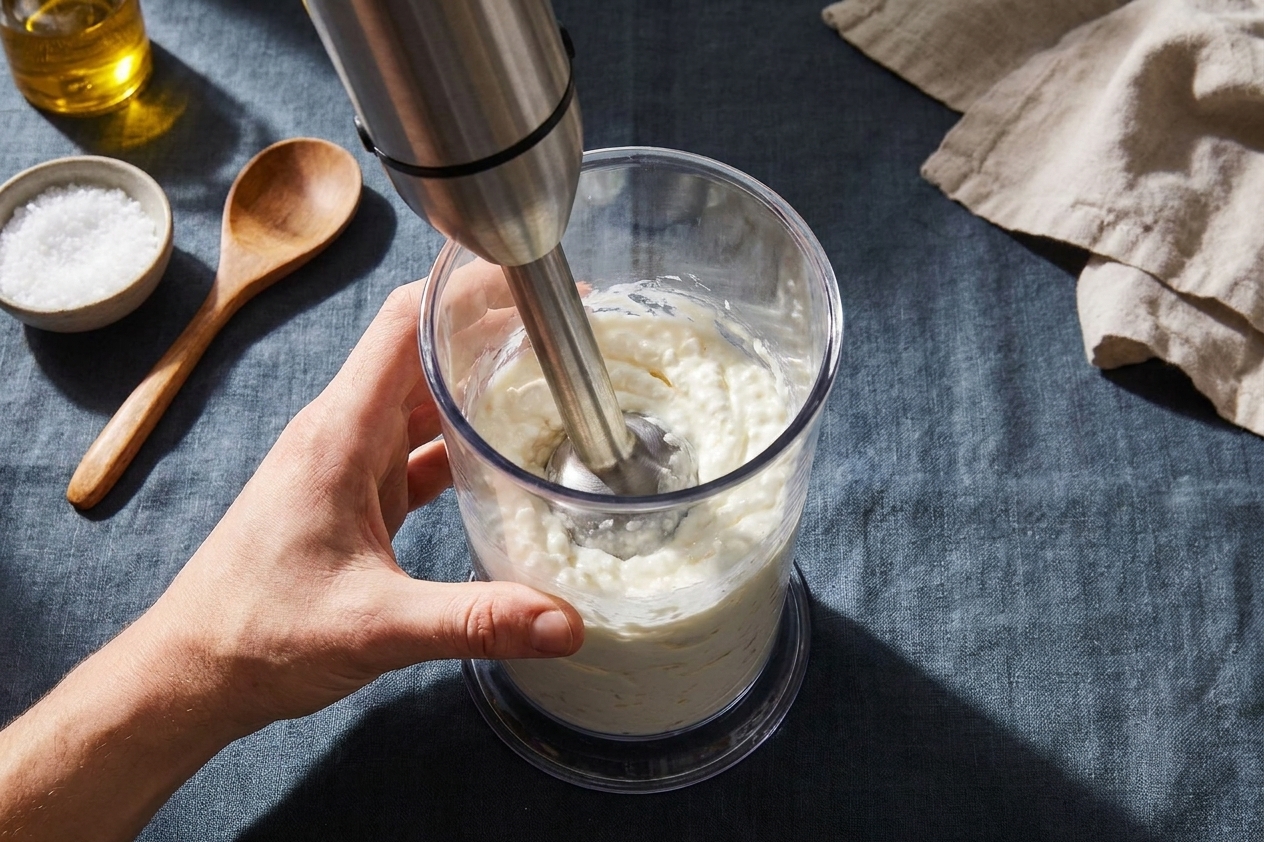
After draining (or even instead of draining if it is fairly thick), blend cottage cheese until smooth. A stick blender in a tall jar works great.
- Blend 10 to 20 seconds for a ricotta-like texture.
- Do not over-blend into a thin liquid. Short bursts are perfect.
Option 3: Thicken it (if your sauce is thin)
Even drained cottage cheese can loosen as it bakes. To keep the cheese layer creamy and stable, add a binder. Pick one:
- 1 egg per 15 to 16 ounces cottage cheese, mixed in well
- 2 to 4 tablespoons grated Parmesan to absorb moisture and add flavor
- 1 to 2 tablespoons mozzarella for extra richness and structure
Egg is the most effective for sliceable structure. Parmesan is my favorite “quiet fix” because it also boosts flavor.
What to buy
Ricotta checklist
- Whole milk ricotta for the richest, least grainy result
- Avoid “fat-free” if you can. It tends to bake up a little dry and chalky.
- If your ricotta looks wet in the container, you can drain it briefly, just like cottage cheese.
Cottage cheese checklist
- Small curd if you do not want noticeable lumps
- 4% milkfat (or at least 2%) for a creamier bite and less chance of watery separation
- Low-sodium is a good choice if your sauce and meat are already salty
- Look for a container that does not have a big layer of liquid sitting on top
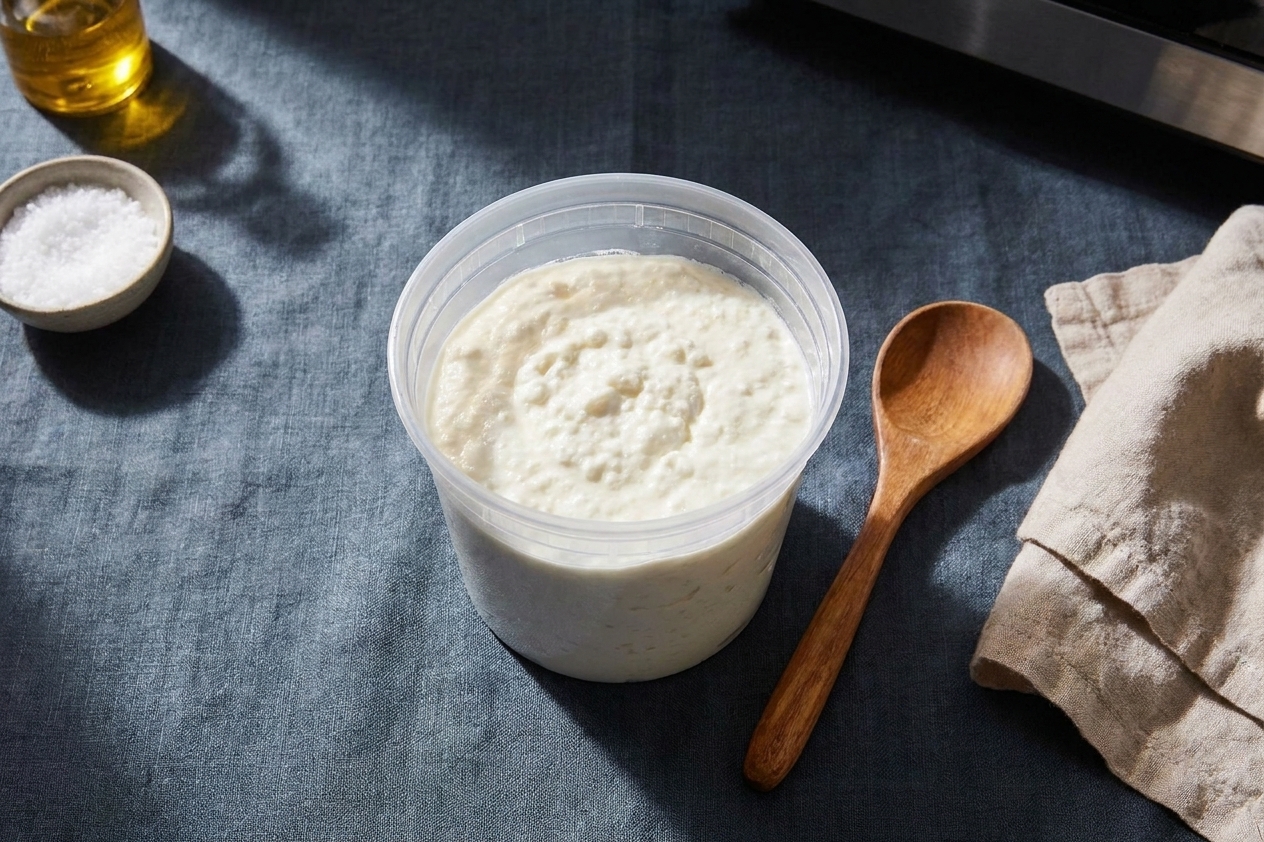
My personal pick for baked ziti with meat: whole milk ricotta when I want the classic red-sauce comfort. Cottage cheese is my “Tuesday night, use what I have” option, and I drain it every time.
If you already bought one
If you already have ricotta
- Too wet? Drain 10 to 20 minutes, until it stops actively dripping.
- Too bland? Mix in Parmesan, a pinch of salt, and black pepper.
- Want it creamier? Stir in a spoonful or two of heavy cream or whole milk, or a drizzle of olive oil.
- Want more flavor? Add minced garlic, chopped parsley or basil, and a pinch of Italian seasoning.
If you already have cottage cheese
- Watery? Drain 10 to 20 minutes, then stir in Parmesan.
- Curds bug you? Blend until smooth.
- Too salty? Skip added salt in the cheese layer and consider low-sodium marinara. Balance with extra herbs and more mozzarella, or mix in a scoop of unsalted ricotta if you have it.
- Tastes a little tangy? That is normal. A pinch of sugar in the sauce (just a pinch) or extra Parmesan on top can round it out.
Best cheese mix
If you want a baked ziti that is creamy, stretchy, and holds together, aim for three jobs:
- Creamy layer: ricotta or cottage cheese (prepared correctly)
- Stretch and pull: mozzarella
- Salty depth: Parmesan (or Pecorino)
For a standard 9 x 13-inch pan, a very reliable approach is:
- 15 to 16 ounces ricotta or cottage cheese
- 2 to 3 cups shredded mozzarella (some inside, most on top)
- 1/2 to 1 cup grated Parmesan
When using cottage cheese, I like to add an egg plus Parmesan to keep the filling cohesive and not soupy.
Troubleshooting
“My ziti is watery at the bottom.”
- Drain cottage cheese, or drain ricotta if it looks wet.
- Simmer your meat sauce a few extra minutes to reduce.
- Undercook pasta by 2 minutes so it absorbs more as it bakes.
- Let the casserole rest 10 to 15 minutes before cutting.
“The cheese layer looks curdled.”
- Use whole milk dairy when possible.
- Cover for the first 20 to 30 minutes, then uncover to brown.
- Do not mix extremely hot sauce directly into the cheese layer. Let it cool a couple minutes first.
“It tastes bland.”
- Add salt and pepper to the cheese mixture, but taste first if using cottage cheese.
- Parmesan and garlic fix a lot of problems very quickly.
- Finish with chopped basil or parsley after baking for brightness.
“It’s too salty.”
- Go easy on salt in the cheese layer, especially with cottage cheese.
- Use a less salty marinara and choose unseasoned ground meat when you can (season it yourself).
- Dilute the pan by adding an extra can of no-salt-added tomatoes or more cooked pasta, then top with unsalted mozzarella.
- Serve with a simple green salad with a bright, lemony dressing. That fresh contrast helps.
FAQ
Can I substitute cottage cheese for ricotta 1:1 in baked ziti?
Yes, you can swap it 1:1 by volume or by tub size. The key is to drain cottage cheese first, and consider blending it if you want a smoother ricotta-like layer.
Should I use large curd or small curd cottage cheese?
Small curd disappears more into the pasta bake and feels closer to ricotta. Large curd is fine if you like a more textured bite.
Do I need an egg in ricotta or cottage cheese for baked ziti?
You do not strictly need it, but an egg helps the cheese layer set so slices hold together better. It is especially useful with cottage cheese because it can release more moisture.
Will cottage cheese change the flavor of baked ziti with meat?
A little. Cottage cheese is often tangier and can be saltier than ricotta, but it varies by brand. Most people still find it delicious in a hearty meat sauce bake, especially with plenty of mozzarella and Parmesan.
Can I mix ricotta and cottage cheese together?
Absolutely. It is a nice compromise: ricotta brings classic creaminess, cottage cheese brings protein and a slightly lighter texture. If your cottage cheese is wet, drain it before mixing.
My final call
If you want the classic baked ziti with meat you grew up loving, grab whole milk ricotta. If you have cottage cheese, use it proudly, just drain it (and blend it if you want) so your pasta stays saucy, not watery.
And if you are the kind of cook who likes a safety net, here’s mine: when I use cottage cheese, I stir in Parmesan and an egg. That combo has saved more than one busy-weeknight ziti at my house.