

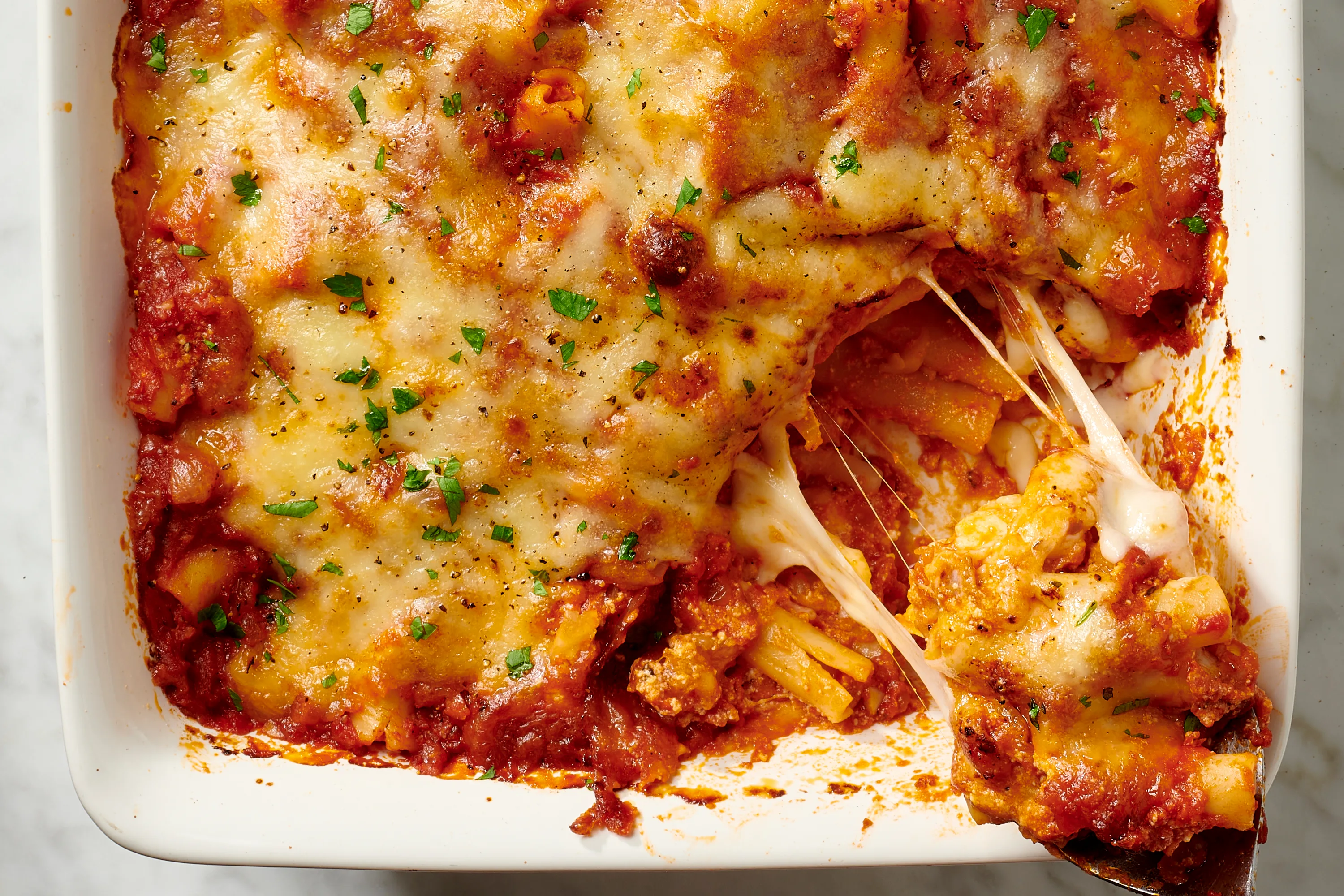
If you’ve ever stood in the pasta aisle thinking, Do I want baked ziti… or do I want lasagna? you are in excellent company. In my house, both are comfort-food royalty. They’re cozy, cheesy, and make the kitchen smell like you’ve been cooking all day, even when you absolutely have not.
But they are not interchangeable. The pasta shape changes everything, the ricotta shows up differently, the top cheese behaves differently, and one of them is definitely easier when you’re feeding a crowd. Let’s break it down so you can pick the right bake for your night.

At a glance
Both dishes are baked pasta casseroles with sauce, cheese, and usually meat. The main difference is structure.
- Baked ziti is a toss-and-layer casserole: short pasta mixed with sauce and meat, then baked under a blanket of cheese.
- Lasagna is a built-and-layered casserole: wide noodles stacked with meat sauce and ricotta mixture in distinct layers.
Pasta shape: tubes vs. sheets
Baked ziti
Ziti is a smooth tube pasta. Those little tunnels catch sauce and tiny bits of meat, which makes every scoop feel saucy and satisfying. You can also use penne (ridged) or rigatoni (bigger tubes) and the spirit is the same.
Lasagna
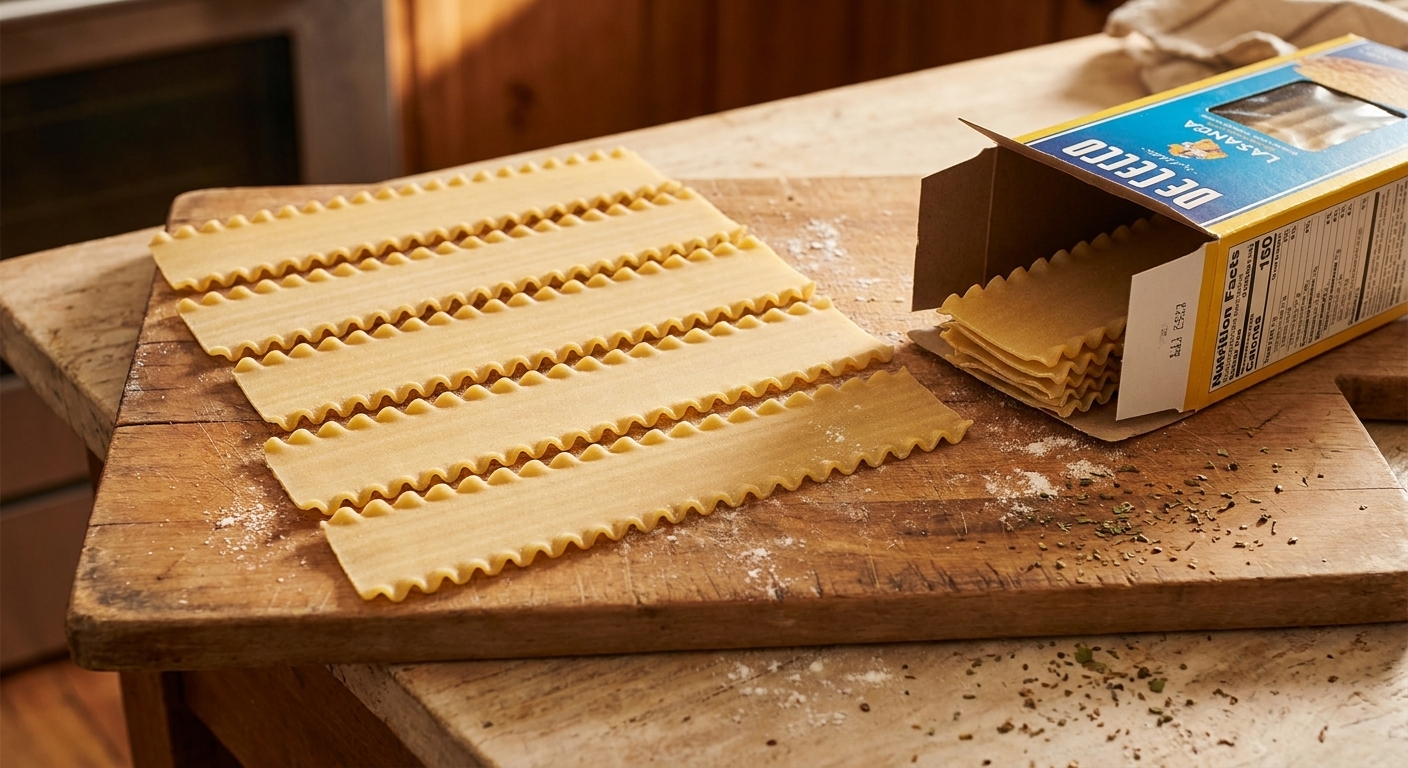
Lasagna noodles are flat sheets designed for layering. They create clean, distinct strata: noodle, filling, sauce, repeat. This is what gives lasagna that sliceable, “stacked” look.
How it affects eating: Ziti eats like a cozy, scoopable casserole. Lasagna eats like a composed slice with clear layers.
How ricotta is layered (and why it matters)
Baked ziti: mixed in or dotted in
Most baked ziti with meat recipes handle ricotta in one of two easy ways:
- Mixed: ricotta stirred into part of the pasta and sauce so it melts into creamy pockets throughout.
- Dolloped: spoonfuls of ricotta scattered between layers so you get occasional creamy bites.
Either approach is forgiving. If you’re a “measure with your heart” cook, ziti won’t judge you.
Lasagna: a true layer
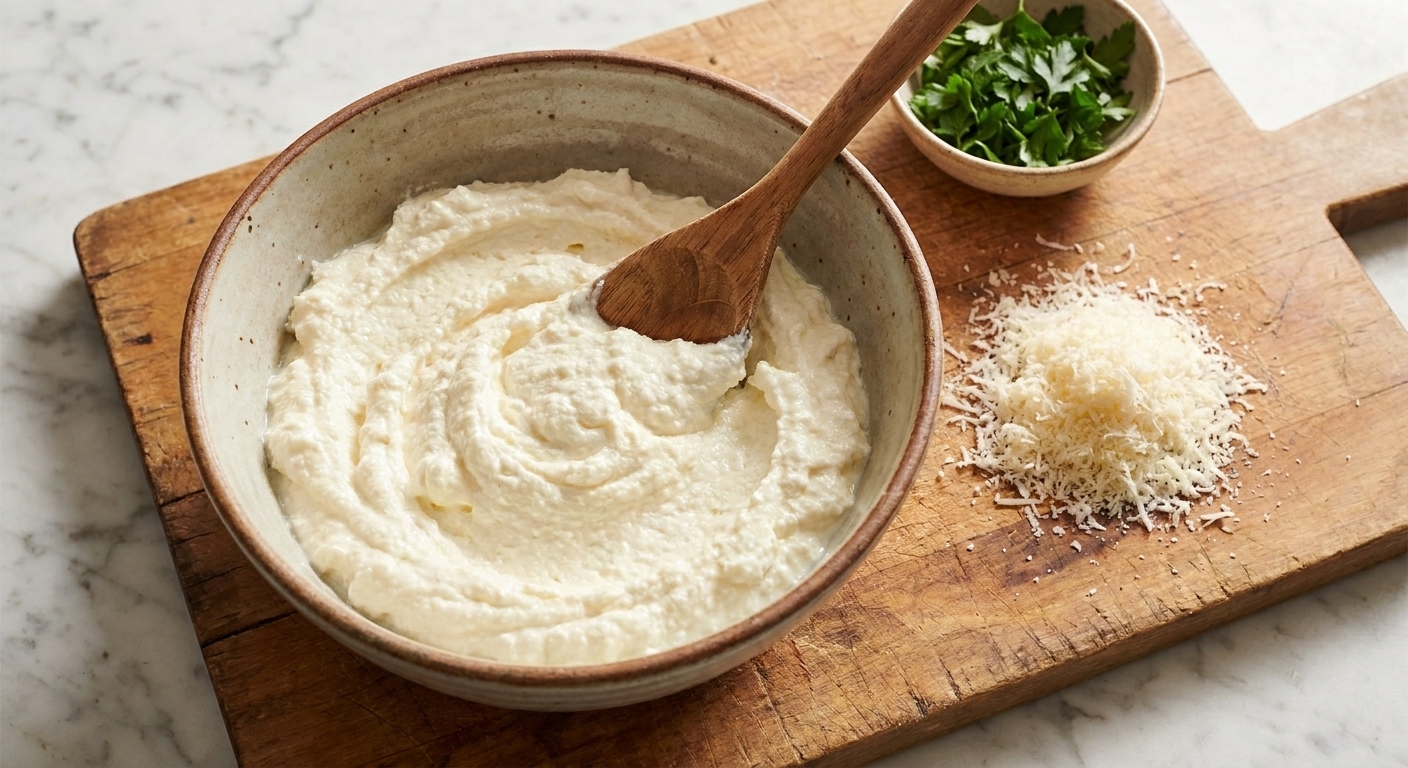
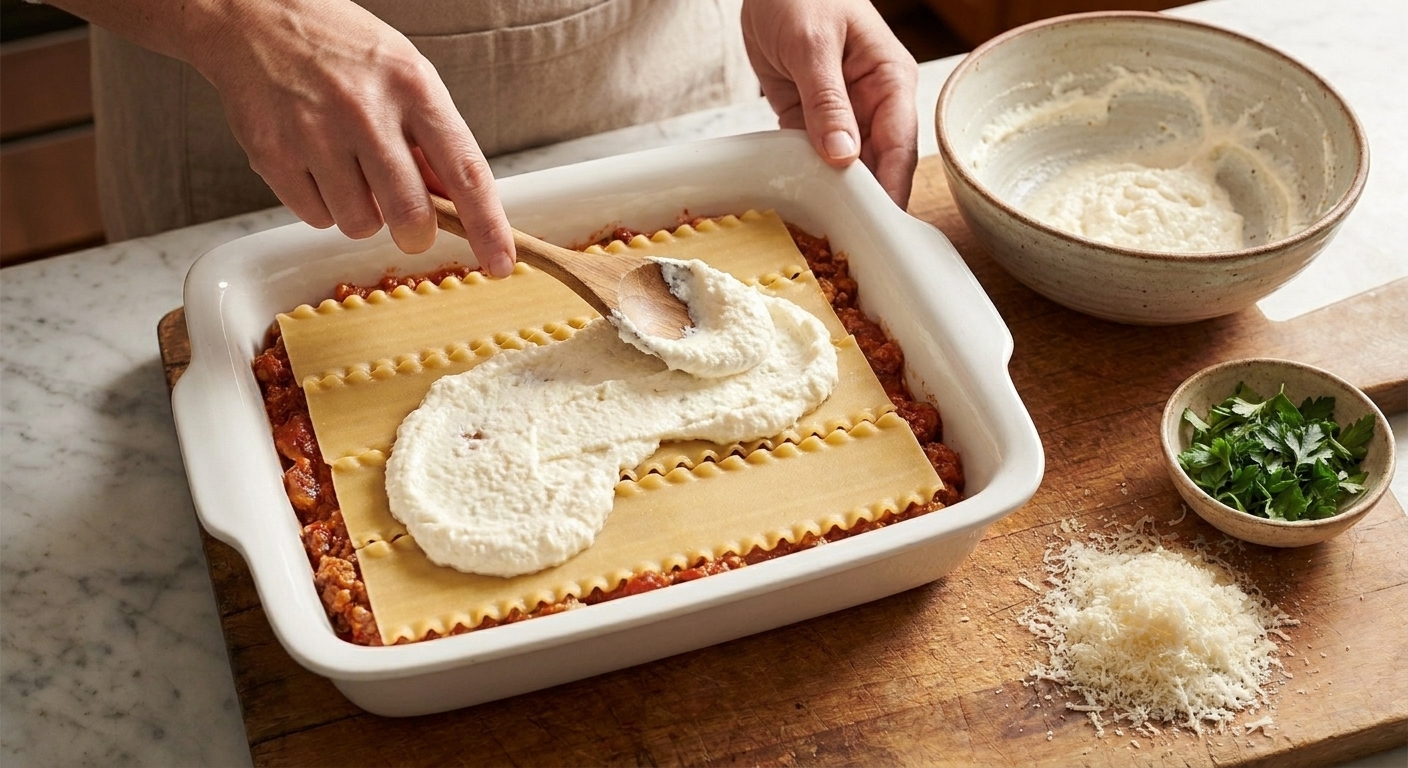
In meat lasagna, ricotta is usually a dedicated layer, often mixed with egg, Parmesan, and herbs. It’s spread across noodles in an even sheet, which helps lasagna hold its shape when sliced.
Bottom line: Lasagna’s ricotta is structured and even. Ziti’s ricotta is more casual and patchy in the best way.
The cheese on top: full coverage vs. golden blanket
Baked ziti: thick, bubbly cheese layer
Baked ziti is famous for its top layer: mozzarella (and often a little Parmesan) spread across the whole casserole. Because the surface is a little uneven, you get those irresistible browned peaks and gooey valleys.
Lasagna: cheese in layers, plus a top finish
Lasagna usually has mozzarella in the layers and then more on top. The top is often smoother than ziti because it sits on a flat noodle layer, so it browns more evenly.
If you live for crispy cheese edges: ziti tends to deliver more of them, especially around the perimeter.
Bake time (and what actually takes the longest)
In both dishes, the oven time is only part of the story. The real time sink is assembly.
Baked ziti time reality
- Active time: cook pasta, brown meat, stir sauce, assemble in a dish.
- Bake time: typically around 20 to 30 minutes covered, then a short uncovered time to brown the cheese.
Ziti is quick to get into the oven because you’re mostly combining ingredients, not building a perfect structure.
Lasagna time reality
- Active time: cook meat sauce, mix ricotta filling, possibly boil noodles (unless using no-boil), then carefully layer.
- Bake time: often 45 minutes to over an hour, plus an essential rest time so it slices cleanly.
That rest matters: Lasagna needs time to set after baking. Ziti is much more forgiving if you scoop it hot.
Effort level: which one is easier on a weeknight?
I love lasagna deeply, but I make baked ziti more often, for one simple reason: ziti is low-drama.
Why baked ziti feels easier
- It’s hard to mess up the layering.
- You do not need perfect noodle alignment.
- It reheats beautifully even if it’s been stirred and scooped.
- You can adapt it easily: more garlic, more sauce, extra veggies, a different cheese blend.
Why lasagna can feel like a project
- Layering takes attention and space.
- More bowls happen (sauce pot, ricotta bowl, noodle situation).
- It wants a resting period before cutting.
My practical take: Make lasagna when you want the experience and presentation. Make baked ziti when you want comfort with less assembly.
Portioning for a crowd: scoopable vs. sliceable
Lasagna portions: neat squares
Lasagna wins for tidy servings. Once it rests, you can cut clean squares that look great on a plate. If you’re serving a seated dinner and want everyone to get a similar portion, lasagna is very satisfying.
Baked ziti portions: fast and flexible
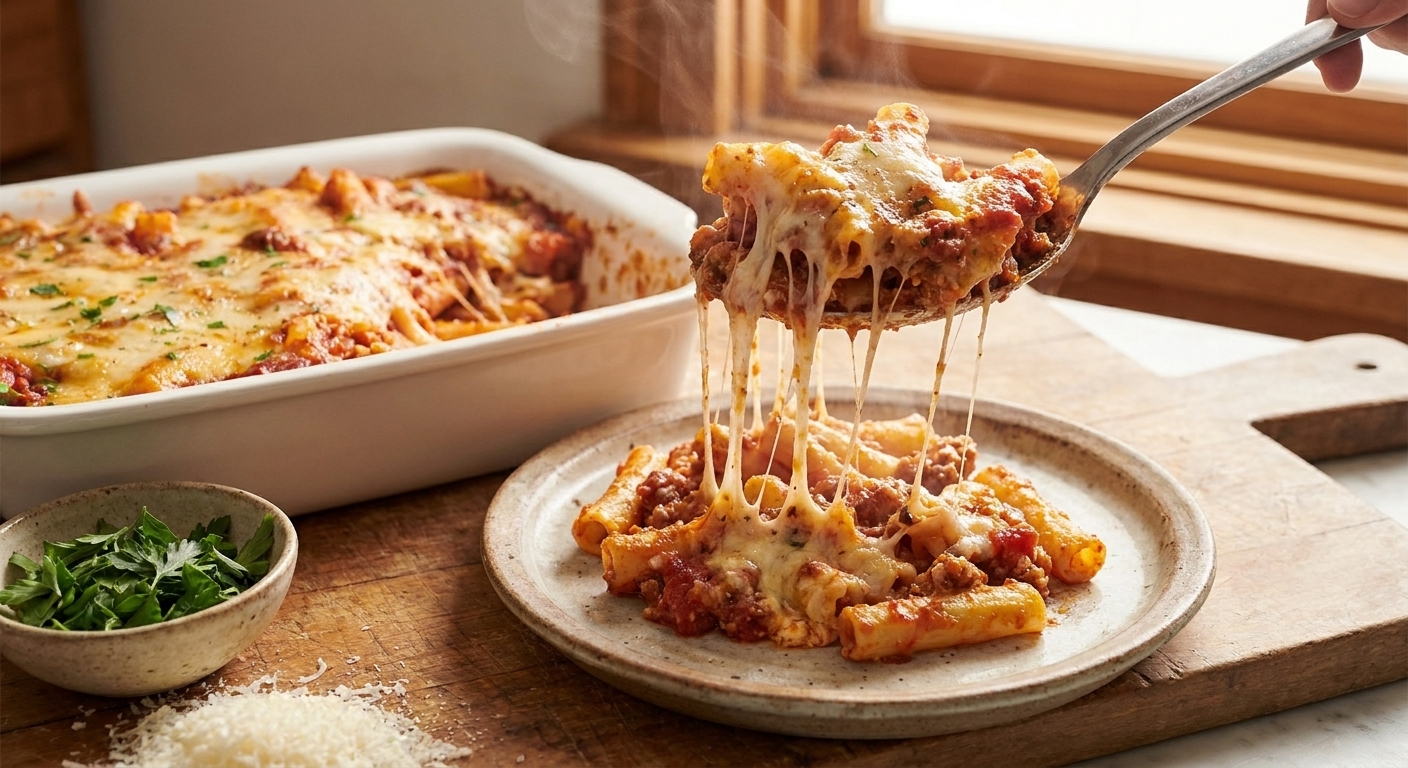
Ziti wins for speed. You can scoop it with a big spoon, and it’s easy to adjust portion sizes on the fly. Hungry teenagers? Big scoop. Lighter eaters? Smaller scoop. No math required.
For a buffet or potluck: baked ziti is usually the least stressful. It holds up well, stays creamy, and nobody cares if the first serving is a little messy.
So which should you make?
If you want a quick decision, here’s how I’d choose in real life.
Make baked ziti with meat if…
- You want maximum comfort for minimum effort.
- You’re feeding a crowd and want easy serving.
- You want something that reheats well for lunches.
- You’re using what you’ve got and need flexibility.
Make meat lasagna if…
- You want a showstopper with clean slices.
- You enjoy the process of layering and building.
- You’re planning ahead and can give it rest time.
- You want that classic “lasagna night” vibe.
FAQ
Is baked ziti basically lazy lasagna?
I think of baked ziti as lasagna’s relaxed cousin, not its lesser version. It’s a different style of comfort food. Ziti is meant to be scoopable and rustic, and when it’s done right, it’s every bit as satisfying.
Which one is better to make ahead?
Both work, but they behave differently. Lasagna is fantastic made ahead because it sets up and slices even better after resting and chilling. Baked ziti is also great made ahead, especially if you add a little extra sauce so it stays juicy when reheated.
Which one freezes better?
Both freeze well. Lasagna keeps its layered structure after thawing and reheating, which is a big plus. Baked ziti freezes beautifully too, but it reheats more like a casserole, so you’ll want to cover while reheating to prevent the top from drying out.
Do I have to use ricotta in either one?
Nope. If ricotta isn’t your favorite, cottage cheese is a common swap (especially in lasagna), and some people use a béchamel-style white sauce instead for a different vibe. For baked ziti, you can even skip the ricotta and go heavier on mozzarella and Parmesan, just keep it saucy.
Which one is less messy to serve?
Lasagna, as long as you let it rest. If you cut it too soon, it will slide around. Baked ziti is messier by design, but it’s an easy, cheerful mess.