

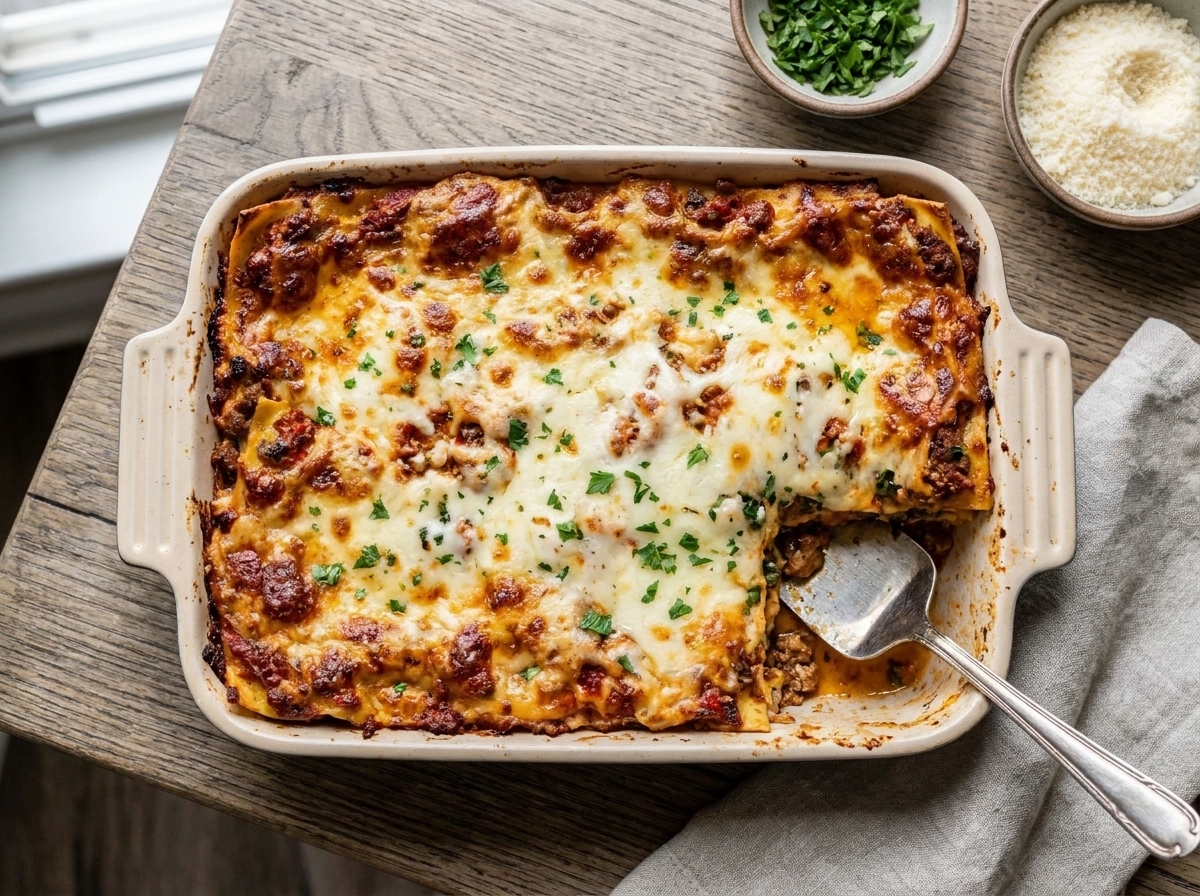
When my family wants a dinner that feels like a warm hug, I make a classic meat lasagna. Not a tossed pasta bake, not a skillet situation, and definitely not just spaghetti sauce poured over noodles. This is the real deal: a rich, simmered meat sauce, creamy ricotta, and layers of pasta that bake into something you can slice into proud, sturdy squares.
Lasagna can look like a “project,” but I promise it is mostly just three main layers: meat sauce, ricotta mixture, and noodles. Once you get those lined up, the cheese on top is the easy, happy part.
I will walk you through whether you should boil the noodles (you have options), the exact assembly order that keeps everything from sliding around, and a reliable way to know the center is hot enough to serve, including a temperature target if you have a thermometer. Bonus, I will also tell you the small step that makes the difference between a landslide and clean slices: letting it rest before you cut.

The idea
Why This Recipe Works
- A real lasagna style meat sauce: We build flavor by browning the meat, sautéing onion and garlic, then simmering with tomatoes and herbs until thick. That thicker texture matters for neat layers and clean slices.
- Ricotta mixture adds creaminess without turning soupy: Egg helps set the ricotta layer so it stays creamy but sliceable, not runny.
- Layering order prevents slipping: A thin swipe of sauce on the bottom and a sauce finish on top keeps noodles from drying out and helps everything hold together.
- Resting time is part of the recipe: Letting the lasagna sit before slicing allows the layers to settle and the cheese to set. You still get gooey cheese, just not a landslide.
Shopping
Ingredient Notes
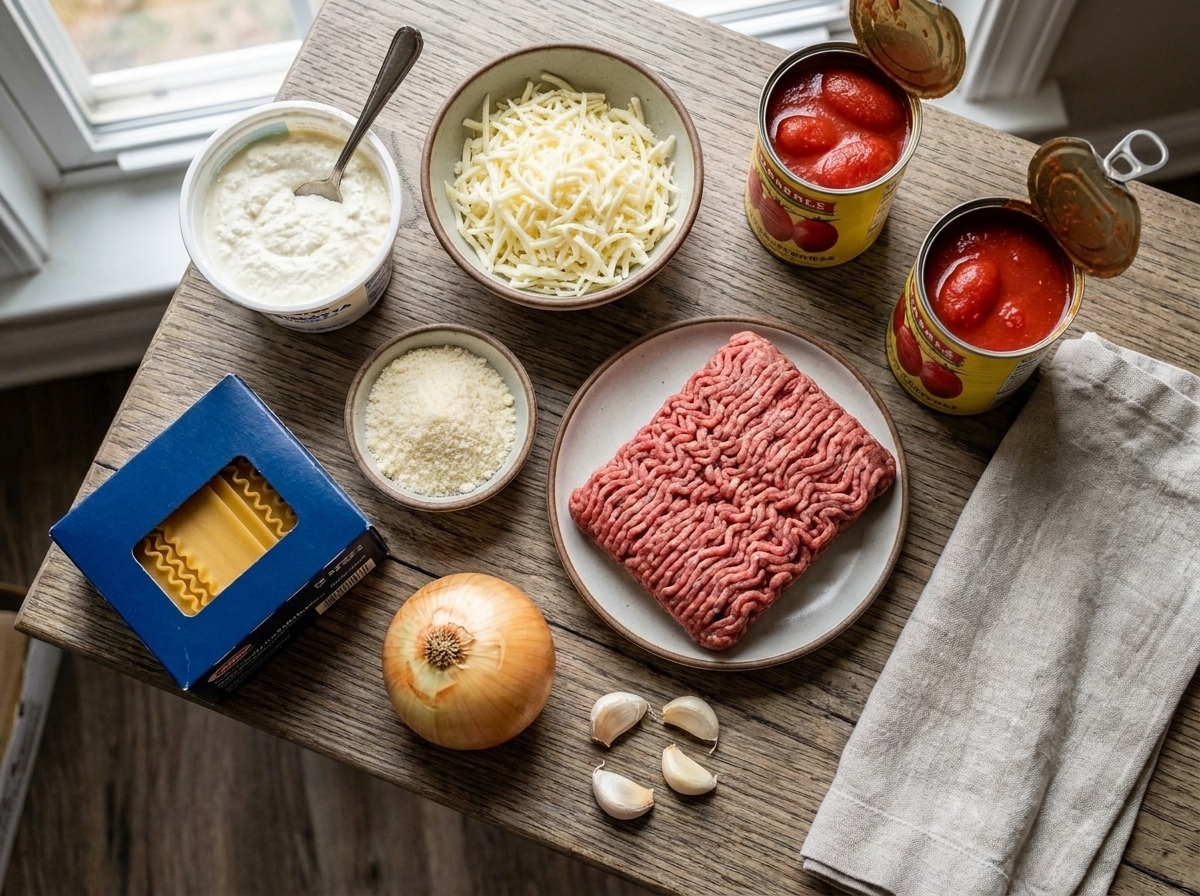
- Meat: I love a blend of ground beef and Italian sausage for depth. If you only have beef, it still works. Use 85 to 90 percent lean so you get flavor without a greasy pan.
- Tomatoes: Crushed tomatoes make a thick, spoonable sauce that spreads easily in layers. If you only have whole canned tomatoes, crush them by hand or with a potato masher.
- Ricotta: Whole milk ricotta gives the creamiest layer. If your ricotta looks watery, spoon it into a fine mesh strainer for 10 minutes while you make the sauce.
- Mozzarella: Pre shredded is convenient and totally fine for weeknights. If you want extra melt, shred a block of low moisture mozzarella.
- Noodles: You can use traditional boil noodles or no boil. Both work. The key is adjusting moisture and coverage, which I cover in the tips.
- Herbs: Dried Italian seasoning keeps it simple, and fresh basil at the end is optional but lovely.
Get set up
Equipment You Will Need
- 9 x 13 inch baking dish
- Large skillet or Dutch oven
- Large pot for boiling noodles (if using traditional)
- Mixing bowl
- Wooden spoon or spatula
- Instant read thermometer (optional but very helpful)
- Foil
Technique
Tips for Getting It Right
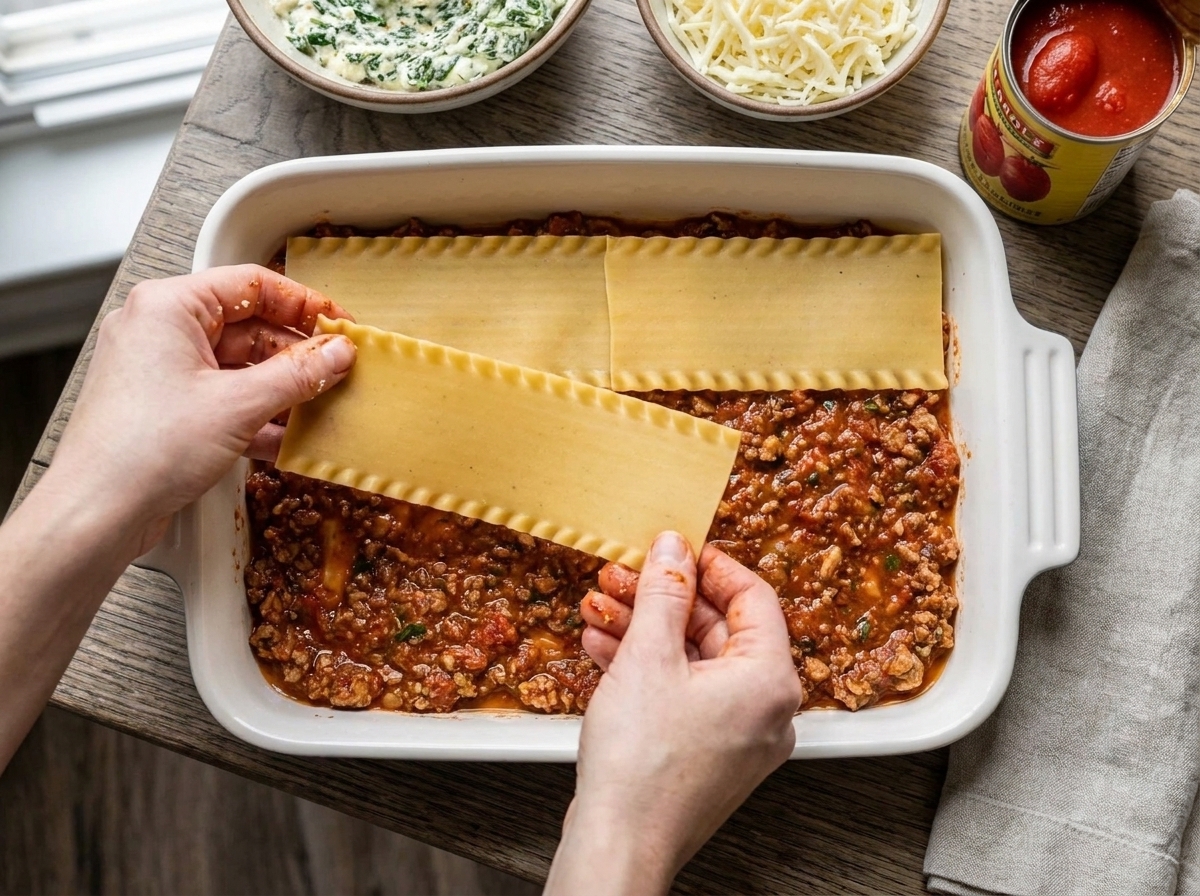
Do I need to boil the noodles?
- Traditional noodles: Yes, boil until just barely al dente, usually 1 to 2 minutes less than the package says. They finish cooking in the oven.
- No boil noodles: No boiling needed, but they require enough moisture. Make sure every sheet is fully covered with sauce, especially the corners. I also add a little water to the sauce so the noodles soften properly.
The easiest assembly order
Think of lasagna as repeating sets. I do: sauce, noodles, ricotta, mozzarella, sauce, then repeat. Finish with noodles, sauce, then mozzarella and Parmesan. Starting with sauce prevents sticking and drying.
How to tell the center is hot
- Best method: Use an instant read thermometer inserted into the center. Aim for 165°F.
- No thermometer: Insert a thin knife into the center for 5 seconds, then carefully touch the blade. It should feel very hot. Also look for steady bubbling around the center area, not just the edges.
For a lasagna that slices clean
- Rest 20 to 30 minutes after baking before cutting.
- Use a sharp knife and wipe it between slices.
Flexibility
Substitutes That Work
- Ground turkey or chicken: Swap for the beef and sausage. Add an extra tablespoon of olive oil while browning to keep the sauce rich.
- Cottage cheese instead of ricotta: Use the same amount. For a smoother layer, blitz it briefly in a blender or food processor.
- Gluten free noodles: Use your favorite brand. Cook just to al dente, then assemble and bake as written.
- Marinara shortcut: If you use jarred sauce, choose a thick one and still brown the meat with onion and garlic first. Then simmer the sauce with the meat for at least 10 minutes so it becomes a true meat sauce layer, not a thin topping.
Make it yours
Variations to Try
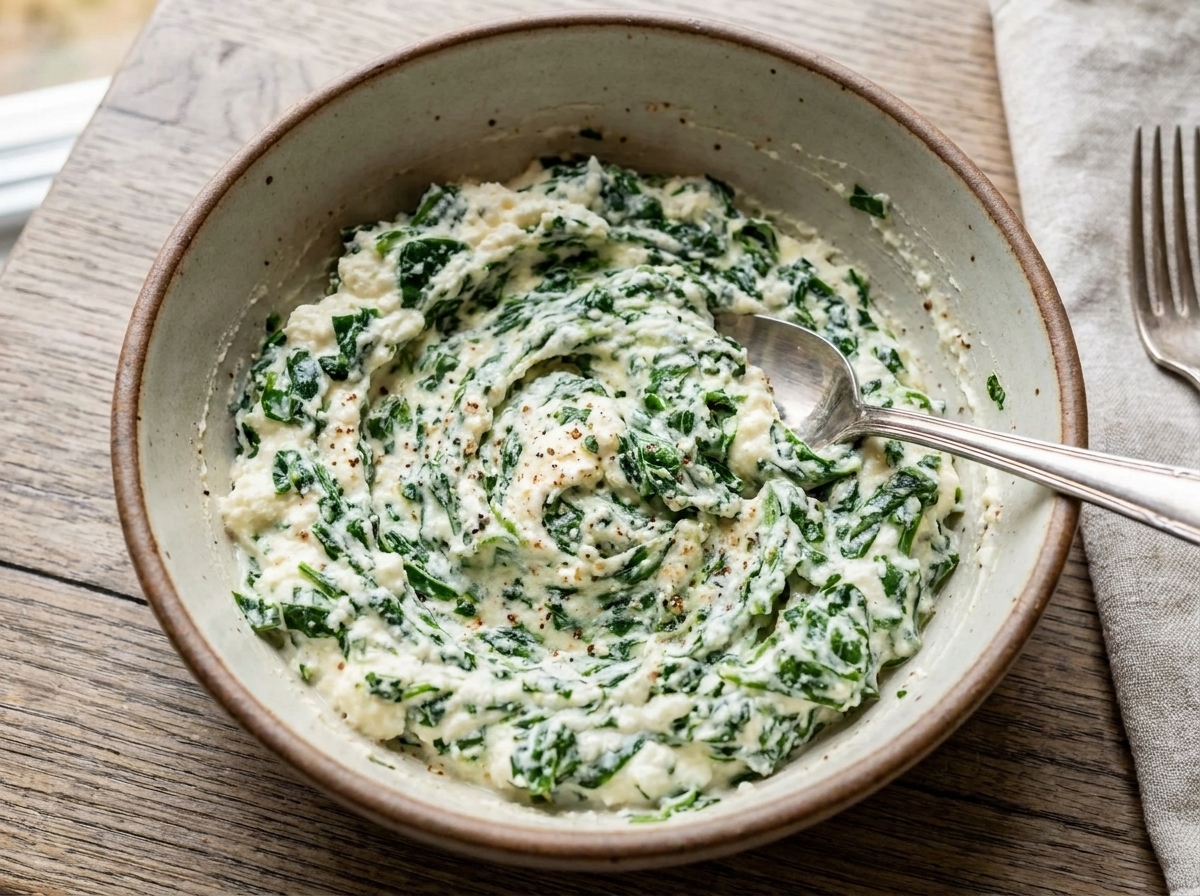
- Spinach ricotta: Stir 10 ounces thawed frozen spinach, squeezed very dry, into the ricotta mixture.
- Extra veggie: Sauté 8 ounces sliced mushrooms with the onions until browned, then proceed with the sauce.
- Spicy: Use hot Italian sausage and add a pinch of red pepper flakes to the sauce.
- Extra cheesy: Add 1 to 2 cups shredded mozzarella between layers, but keep a sauce layer above it so it stays melty instead of drying out.
On the table
What to Serve It With
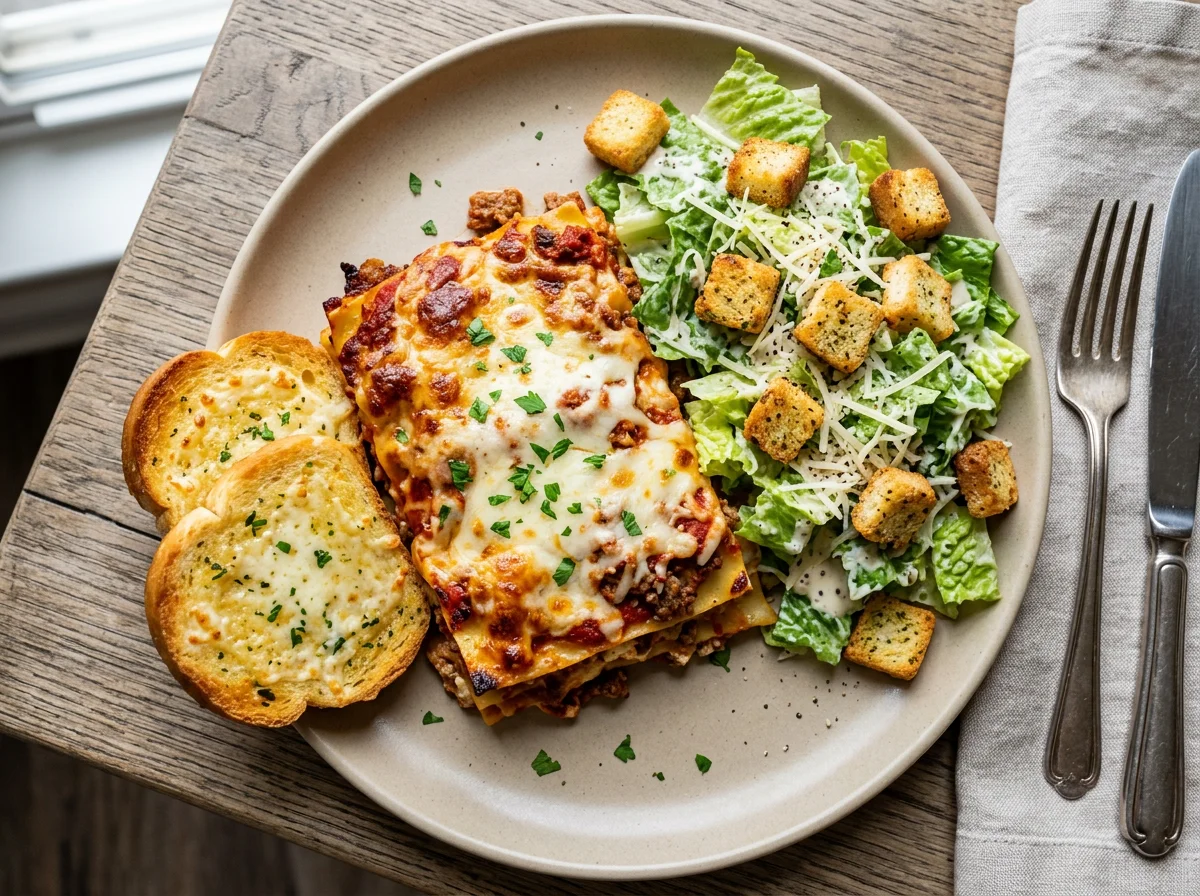
- Big green salad with a tangy vinaigrette
- Garlic bread or warm crusty bread for sauce swiping
- Roasted broccoli or roasted zucchini
- A simple bowl of fruit for dessert if you want to keep it easy
Later
Storage, Freezing and Reheating
- Refrigerate: Cool completely, then cover and refrigerate for up to 4 days.
- Freeze baked lasagna: Cool completely, wrap tightly (plastic wrap plus foil works well), and freeze up to 3 months. Thaw overnight in the fridge before reheating for best texture.
- Freeze unbaked lasagna: Assemble in a freezer safe pan, wrap tightly, and freeze up to 3 months. Thaw overnight in the fridge, then bake. It may need an extra 10 to 20 minutes.
- Reheat slices: Cover and warm in a 350°F oven until hot in the center, about 20 minutes depending on thickness. For microwave reheating, use medium power and cover so it heats evenly.
Watch out
Common Mistakes to Avoid
- Using a thin sauce: If the sauce is watery, the lasagna will slide. Simmer until it is thick and spoonable.
- Overcooking the noodles: Very soft noodles turn mushy after baking. Stop at barely al dente.
- Dry no boil noodles: If any noodle corners stick up uncovered, they can bake dry and chewy. Make sure every piece is fully sauced.
- Skipping the rest: Cutting right away makes the layers spill. Resting is not optional if you want clean squares.
- Too much grease in the sauce: If your meat releases a lot of fat, drain some off before adding tomatoes so the lasagna does not feel oily.
Questions
Frequently Asked Questions
How many layers should classic lasagna have?
For a 9 x 13 inch pan, I like three noodle layers and two ricotta layers, finished with sauce and cheese on top. It is tall, sturdy, and still easy to serve.
Can I assemble lasagna the day before?
Yes. Assemble, cover, and refrigerate up to 24 hours. Let it sit at room temperature for 30 minutes while the oven preheats, then bake. You may need 5 to 15 extra minutes covered if it is very cold from the fridge.
Why is my lasagna watery?
Common causes are a sauce that was not simmered long enough, ricotta with a lot of liquid, or cutting before resting. Thicken the sauce, strain ricotta if needed, and rest 20 to 30 minutes before slicing.
Can I use no boil noodles with homemade sauce?
Absolutely. Just make sure the sauce is not overly thick and that the noodles are fully covered. In this recipe I add a little water to the sauce specifically to help no boil noodles hydrate properly.
How do I know it is fully cooked in the middle?
The most reliable way is an instant read thermometer in the center aiming for 165°F. Without a thermometer, look for bubbling closer to the center and use the hot knife test described in the tips section.
The recipe
Classic Meat Lasagna
A classic layered meat lasagna with rich homemade sauce, creamy ricotta, and a golden mozzarella top. Includes options for traditional or no boil noodles and clear doneness cues for a hot center and clean slices.
Ingredients
- 1 tablespoon olive oil
- 1 large yellow onion, finely chopped
- 5 cloves garlic, minced
- 1 pound ground beef (85 to 90 percent lean)
- 1 pound Italian sausage (mild or hot), casings removed
- 2 tablespoons tomato paste
- 1 teaspoon kosher salt, plus more as needed
- 1/2 teaspoon black pepper
- 2 teaspoons dried Italian seasoning
- 1/4 teaspoon crushed red pepper flakes (optional)
- 2 cans (28 ounces each) crushed tomatoes
- 1 can (15 ounces) tomato sauce
- 1/2 cup water (use if using no boil noodles, optional for traditional)
- 1 teaspoon granulated sugar (optional, to balance acidity)
- 12 lasagna noodles (traditional) or 12 no boil lasagna sheets
- 15 ounces whole milk ricotta cheese
- 1 large egg
- 1/2 cup grated Parmesan cheese, divided
- 2 tablespoons chopped fresh parsley (optional)
- 1 pound (4 cups) shredded low moisture mozzarella cheese, divided
- 2 tablespoons chopped fresh basil (optional, for serving)
Instructions
- Heat the oven. Arrange a rack in the center of the oven and preheat to 375°F.
- Start the meat sauce. Heat olive oil in a large skillet or Dutch oven over medium heat. Add onion and cook until softened, about 5 minutes. Add garlic and cook 30 seconds, stirring.
- Brown the meat. Add ground beef and sausage. Cook, breaking it up, until browned and cooked through, 8 to 10 minutes. If there is a lot of grease, carefully spoon off excess, leaving a little for flavor.
- Build flavor. Stir in tomato paste, salt, pepper, Italian seasoning, and red pepper flakes (if using). Cook 1 minute, stirring, to toast the paste.
- Simmer. Add crushed tomatoes and tomato sauce. If using no boil noodles, stir in 1/2 cup water. Add sugar if using. Bring to a gentle simmer, then reduce heat to low and simmer uncovered until thick and spoonable, 15 to 20 minutes. Taste and adjust salt.
- If using traditional noodles, boil them. While the sauce simmers, bring a large pot of salted water to a boil. Cook lasagna noodles 1 to 2 minutes less than package directions for al dente. Drain and rinse with cool water. Lay noodles flat on a baking sheet or clean kitchen towel so they do not stick.
- Mix the ricotta layer. In a bowl, combine ricotta, egg, 1/4 cup Parmesan, and parsley (if using). Stir until well mixed.
- Assemble, layer 1. Spread about 1 cup of meat sauce in the bottom of a 9 x 13 inch baking dish. Add a single layer of noodles (about 4 noodles). Spread half the ricotta mixture over the noodles. Sprinkle about 1 1/3 cups mozzarella over the ricotta. Spoon about 1 1/2 cups sauce over the cheese and spread to cover.
- Assemble, layer 2. Add another layer of noodles. Spread the remaining ricotta mixture. Sprinkle about 1 1/3 cups mozzarella. Top with about 1 1/2 cups sauce.
- Finish the top. Add the final layer of noodles. Spoon remaining sauce on top and spread evenly. Sprinkle remaining mozzarella over the sauce, then sprinkle remaining 1/4 cup Parmesan.
- Bake covered, then uncovered. Cover tightly with foil (tent slightly so cheese does not stick if you can). Bake 35 minutes. Remove foil and bake 15 to 20 minutes more, until the top is browned in spots and the lasagna is bubbling.
- Check the center is hot. The most reliable check is an instant read thermometer inserted into the center, aiming for 165°F. If you do not have one, insert a thin knife into the center for 5 seconds, then carefully touch the blade. It should feel very hot.
- Rest, then slice. Let the lasagna rest 20 to 30 minutes before cutting. Garnish with basil if you like, then slice and serve.
Recipe notes
No boil noodles: The added 1/2 cup water helps them hydrate. Also make sure every noodle is fully covered with sauce, especially at the corners.
Make ahead: Assemble up to 24 hours in advance and refrigerate covered. Bake as directed, adding 5 to 15 minutes covered if needed.
Clean slices: Resting is the secret. If you want extra tidy edges, chill leftovers and reheat squares in the oven. They hold together beautifully.