

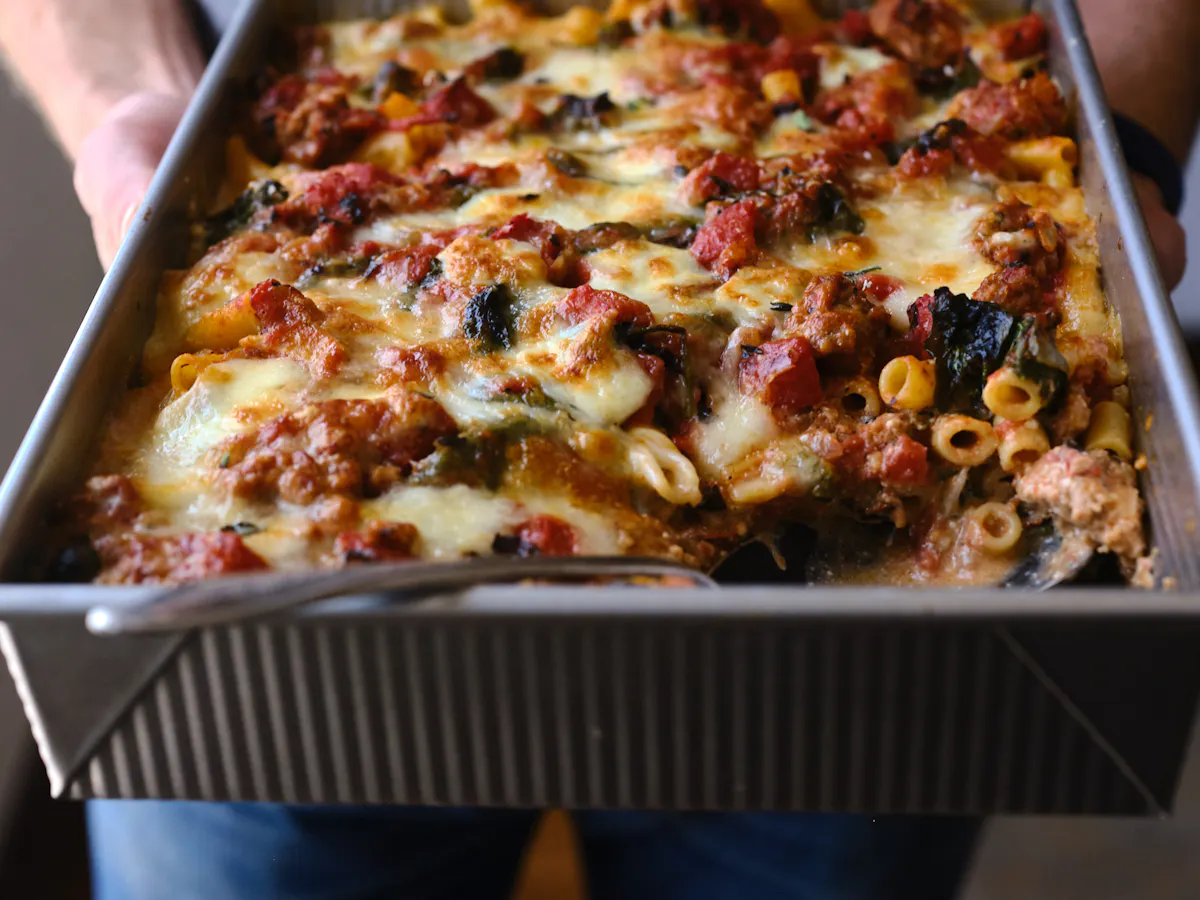

Leftover baked ziti is one of my favorite kinds of leftovers because it somehow tastes even cozier the next day. But reheating it can be a little tragic if you do it the wrong way: the edges turn into chewy bricks, the center stays cold, and the cheese on top can separate and go slick with oil.
The good news is you do not need fancy tricks. You just need moisture, gentle heat, and a cover for most of the reheat. This guide starts from a chilled pan of baked ziti (not fresh from the oven), and I will show you the best ways to reheat a whole pan or one perfect square so it stays saucy.
Why baked ziti dries out when you reheat it
Baked pasta is basically a sponge. Overnight in the fridge, the noodles continue to absorb sauce, and the starches firm up. When you reheat without adding any moisture, you are asking the pasta to warm up while the little bit of sauce that is left evaporates. That is when the perimeter dries out first, and the cheese can break and turn greasy.
The fix: add a small amount of liquid, cover for most of the reheat, then uncover briefly at the end to bring back that just-baked top.
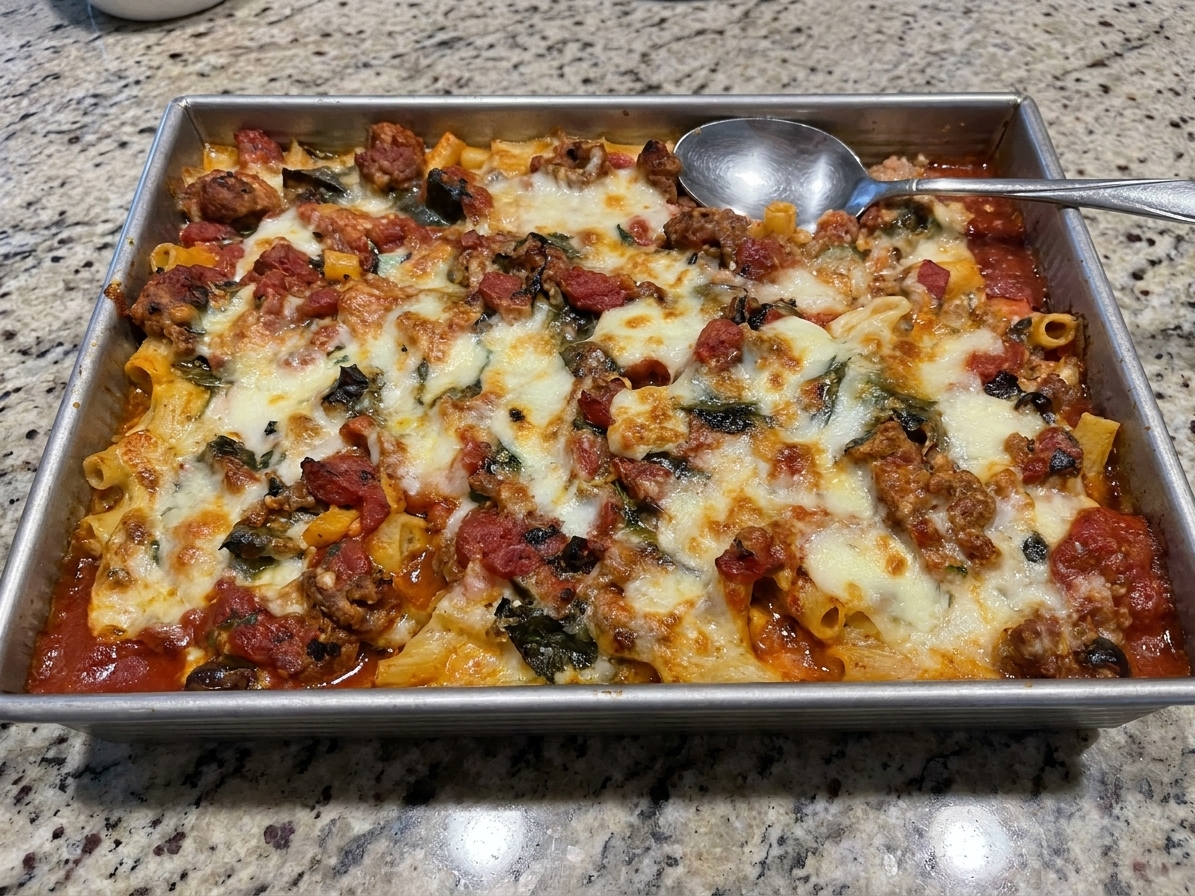
Before you reheat: 3 quick steps that make a big difference
- Let it sit 10 to 20 minutes on the counter if you have time. Taking the chill off helps it heat evenly. (Do not leave it out for more than 2 hours.)
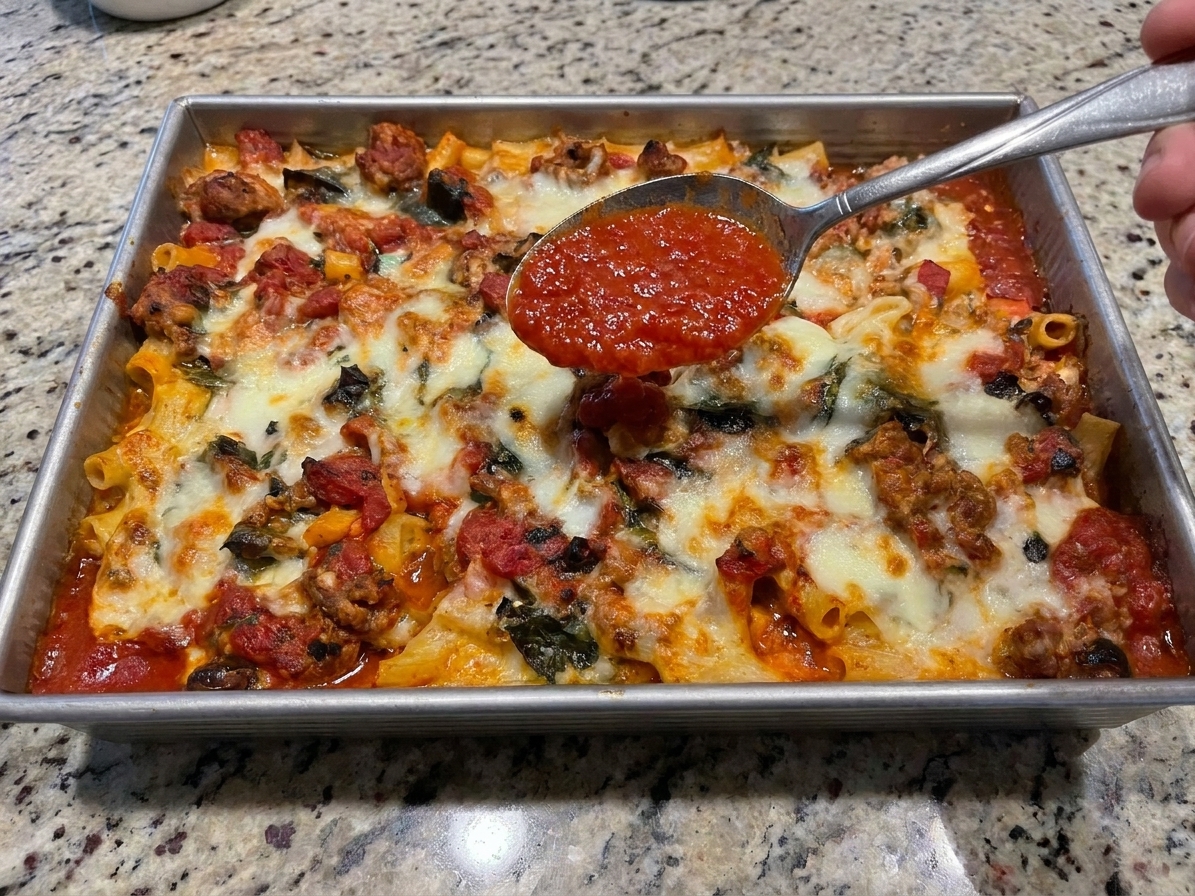
- Add moisture around the edges where drying happens fastest. A few tablespoons goes a long way.
- Cover tightly with foil or a lid to trap steam and keep the cheese from overcooking before the center is hot.
If your ziti looks tight or the sauce seems “missing” because it soaked in, that is normal. Think of the added liquid as the little bit of help it needs to become saucy again.
How much sauce or water to add (my rule of thumb)
You can use marinara, a spoonful of leftover meat sauce, water, or broth. I most often use water because it is always there, and it loosens the existing sauce without changing the flavor much.
| What you are reheating | Liquid to add | Where to add it |
|---|---|---|
| One square (about 1 serving) | 1 to 2 tablespoons | Drizzle along the sides of the pasta, not right on top cheese |
| Half pan | 3 to 6 tablespoons | A few spoonfuls around the perimeter and one down the middle |
| Full 9x13 pan | 1/4 to 1/3 cup | Mostly around edges, plus a small drizzle across the top gaps |
Tip: If you have extra sauce, use it. A thin layer of sauce under the foil is like insurance against dry corners.
Best method: Reheat baked ziti in the oven (whole pan or big portions)
If you want the most even heat and the least chance of dry edges, the oven wins. It is slower than the microwave, but it is very forgiving.
For a whole chilled pan (9x13)
- Preheat the oven to 350°F.
- Add moisture: Spoon 1/4 to 1/3 cup water or sauce around the edges and a little across the top where you see exposed pasta.
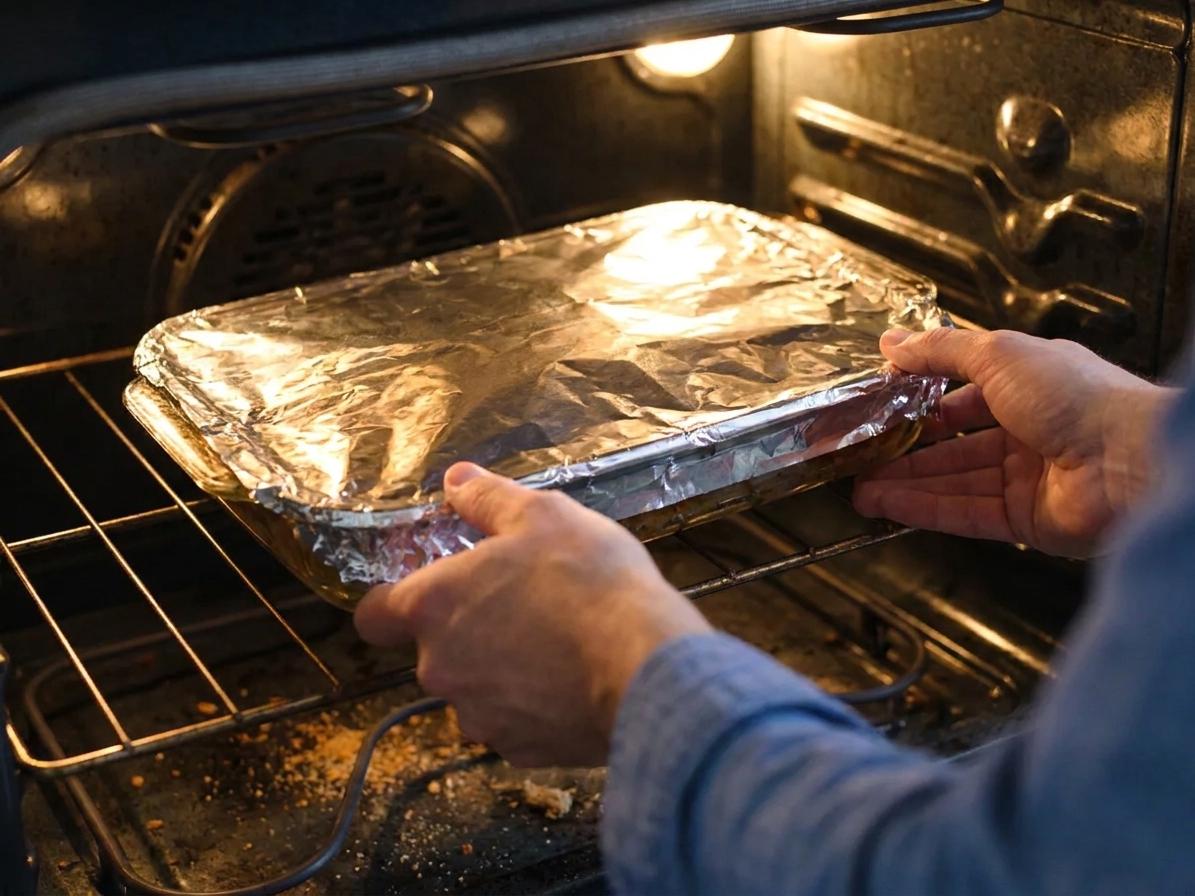
- Cover tightly with foil. Press the foil down around the rim so steam cannot escape.
- Bake 25 to 35 minutes until the center is hot. If your pan is very full or straight from a very cold fridge, it can take closer to 40 minutes.
- Uncover for 5 to 10 minutes to re-melt and lightly re-brown the top.
- Rest 5 minutes before cutting. This helps the sauce settle back in so your slice stays together.
For a smaller portion in an oven-safe dish
- Place 1 to 3 portions in a small baking dish.
- Add 1 to 3 tablespoons water or sauce, focusing on the edges.
- Cover with foil.
- Bake at 350°F for 15 to 25 minutes, then uncover for 3 to 5 minutes.
How to know it is truly hot: The sauce should be bubbling at the edges, and the center of the portion should feel hot when you slide a knife into the middle and touch the blade carefully.
Fast method: Reheat baked ziti in the microwave (without rubbery edges)
The microwave is the best choice for one serving when you want lunch now. The key is to add moisture and use lower power so the cheese melts instead of splitting.
How to reheat one square in the microwave
- Cut a square and move it to a microwave-safe plate or shallow bowl.
- Add 1 to 2 tablespoons water or sauce around the ziti. Try not to pour it directly on the cheese cap.
- Cover with a microwave-safe lid or a damp paper towel. The cover is what keeps the edges tender.
- Microwave at 70% power for 2 minutes.
- Rest 1 minute, then heat in 30-second bursts until hot. Most servings take 3 to 4.5 minutes total, depending on thickness and your microwave.
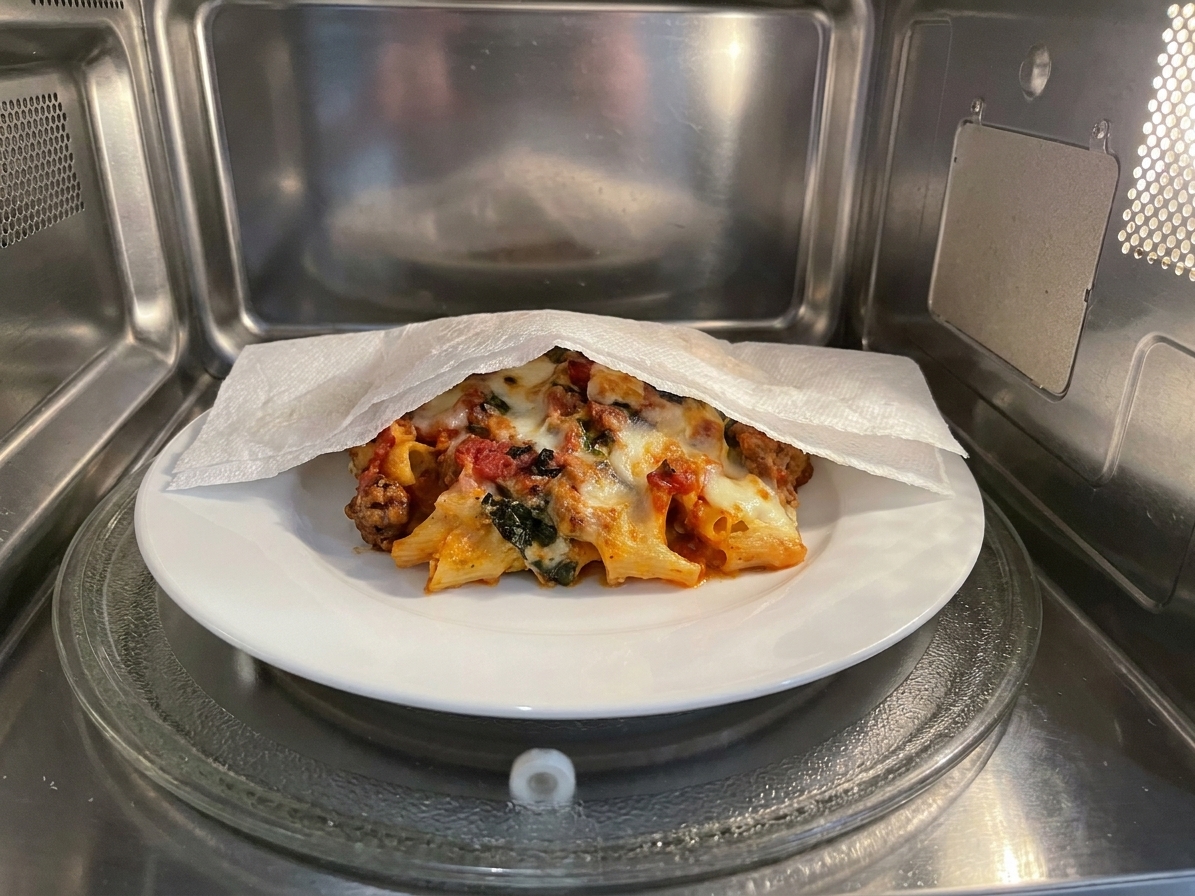
If the center is cold but the edges are hot: Cut the square in half, rotate the pieces, add a teaspoon more water, cover again, and continue in short bursts.
Microwave plus toaster oven trick (best of both worlds)
When I have an extra 5 minutes, I do this: microwave covered until warmed through, then pop it in a toaster oven or under a broiler for 1 to 2 minutes to refresh the top. You get speed and that bubbly cheese finish.
How to keep the cheese from oiling off
That orange-y oil slick happens when the cheese gets too hot too fast, especially in the microwave or under a broiler before the pasta is warm. Here is what helps:
- Reheat covered first. Steam gently warms the whole portion before the cheese takes the full heat.
- Use lower microwave power. 60 to 80% power melts cheese more evenly.
- Uncover only at the end. Think 3 to 10 minutes in the oven, or the last 30 to 60 seconds in the microwave if you need it.
- Add moisture before heat. A dry surface encourages overheating and separation.
If your baked ziti has fresh mozzarella, it is especially prone to releasing liquid and oil when overheated. Gentle is the name of the game.
Reheating a pan with hard edges (rescue mode)
If the perimeter already feels dry, you can bring it back.
- Preheat oven to 325°F (a little lower helps).
- Use a spoon to drizzle warm water or warm sauce along the edges, slipping it between the pasta and the side of the pan.
- Cover tightly with foil and bake 20 to 30 minutes.
- Uncover for 5 minutes to re-melt the top.
My Pacific Northwest potluck trick: If I am reheating a pan that has been in the fridge for days and looks parched, I will add a few tablespoons of sauce, then dot the top with a tiny bit of butter before foiling. It is not mandatory, but it makes the whole thing taste freshly made again.
Storing leftovers so they reheat better
Reheating starts with how you store it. A few small habits make a big difference the next day:
- Cool, then cover tight. Once the pan is cool, press plastic wrap or foil directly against the surface, then add the lid or another layer of foil.
- Save extra sauce if you have it. Even a half cup in a jar is gold for reheating.
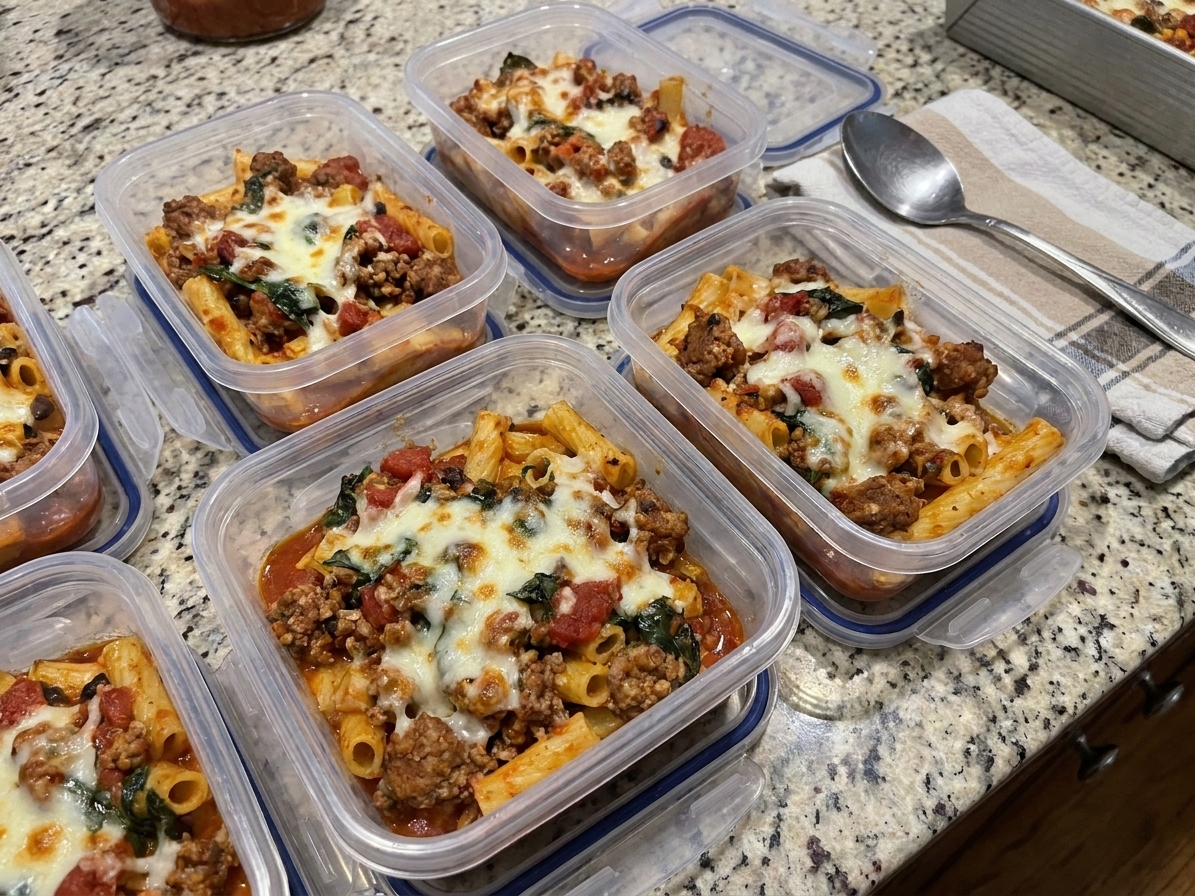
- Slice portions before chilling if you know you will be microwaving lunches. Pre-cut portions reheat faster and more evenly.
FAQ
What temperature should reheated baked ziti be?
For food safety, leftovers should be reheated until steaming hot. If you use a thermometer, aim for 165°F in the center of the portion.
Can I reheat baked ziti at 375°F to make it faster?
You can, but it is more likely to dry out the edges and make the cheese oil off before the center is hot. If you do use 375°F, keep it covered, add a little extra liquid, and start checking early.
Should I reheat baked ziti covered or uncovered?
Covered for most of the time, uncovered only at the end. Covering traps steam, which warms the pasta gently and keeps the sauce from evaporating.
Is it better to reheat baked ziti in the oven or microwave?
Oven is best for a whole pan or when you want the most even, saucy results. Microwave is best for one serving when you add a little moisture and cover it.
How do I reheat a single square without it falling apart?
Let it firm up in the fridge first (cold slices cleanly), then lift out a square with a spatula. Reheat it covered with a tablespoon or two of water or sauce, then let it rest a minute before eating. Resting helps it hold together.
What liquid is best to add when reheating?
Extra marinara or meat sauce is ideal. Water works surprisingly well too, especially if your ziti already has plenty of seasoning. Broth is nice if your sauce is on the lighter side and you want a savory boost.