

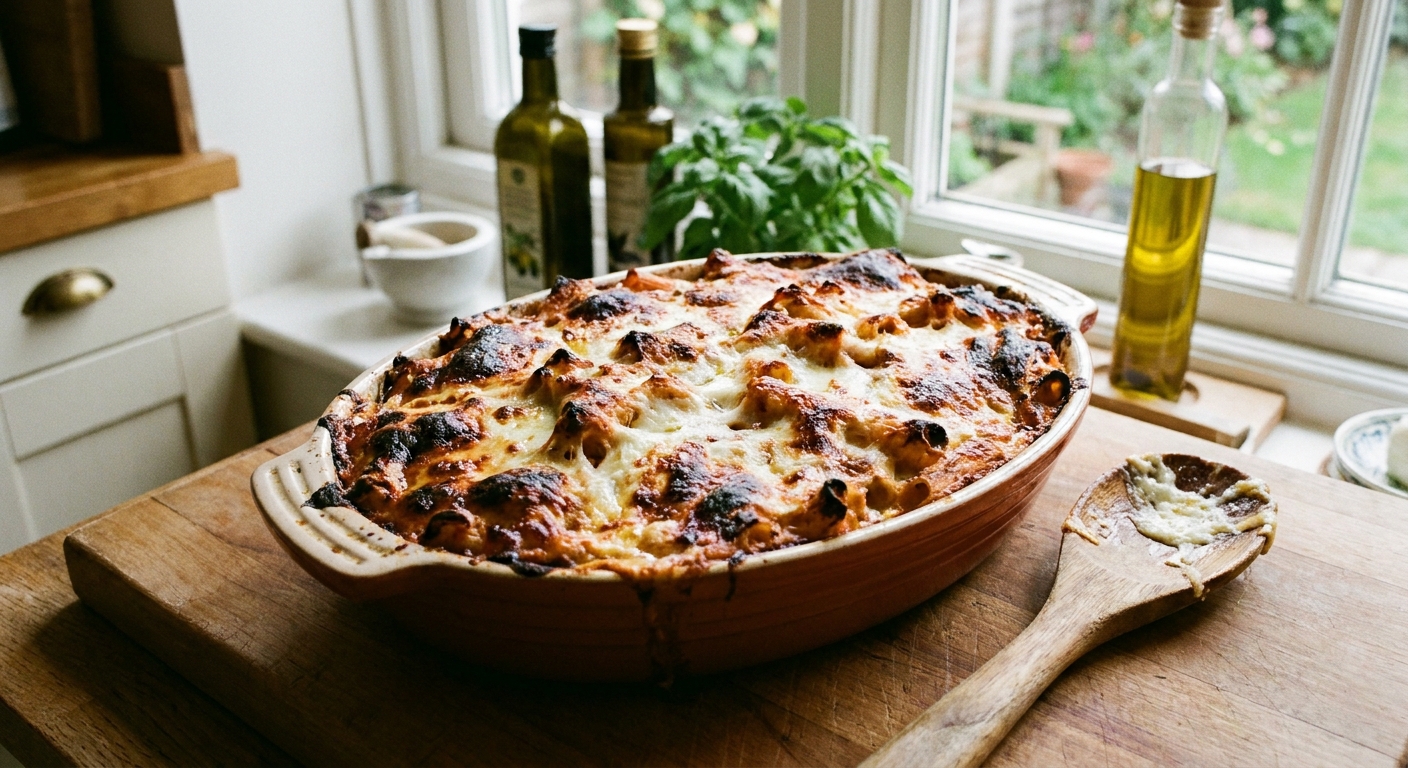
The first time I tried the no-boil baked ziti thing, I was feeling so smug. One less pot, fewer dishes, dinner in the oven, done. But when I pulled it out, half the pan was perfect and the other half had those stubborn little crunchy pasta cores that make you question all your life choices.
So let’s settle it like we’re standing together at the stove: you can bake ziti with dry pasta or parboiled pasta. They just need different sauce amounts, different bake times, and a different mindset. Here’s how to choose the method that gets you bubbling edges and tender noodles every single time.

The quick answer
If you want the best texture with the least stress, parboil your ziti.
Baseline for the times below: bake at 375°F in a 9x13-inch casserole dish (or something close). If your pan is deeper, your sauce is cold from the fridge, or your sauce is very thick, plan on the longer end.
- Parboiled pasta (recommended): Boil until very al dente, then bake. Most reliable for tender, not mushy pasta.
- No-boil (dry) pasta: Put pasta in the pan uncooked, but you must add extra liquid and bake longer, tightly covered, so it hydrates evenly.
- Fully boiled pasta: Usually a mistake for baked ziti. It tends to turn soft, puffy, and sometimes split or “blow out” in the oven.
What happens in the oven
Baked ziti is a hydration plus heat-transfer game.
- Dry pasta needs water. In baked ziti, that water comes from your sauce, any added water or broth, and moisture released from ingredients like meat and ricotta.
- Pasta keeps cooking after it is drained. If you boil it all the way to “perfect” and then bake it, it pushes past perfect into overdone.
- Starch thickens your sauce as it bakes. That is delicious, but it also means the sauce gets tighter over time. If you start with too little liquid, dry pasta may never fully hydrate.
This is why the method matters: you are deciding where the pasta finishes cooking, and how much liquid it has access to while it does.
Parboiled pasta baked ziti (my go-to)
Parboiling means you boil the pasta briefly, drain it, then let it finish cooking in the oven. For baked ziti, this is the sweet spot.
How long to parboil ziti
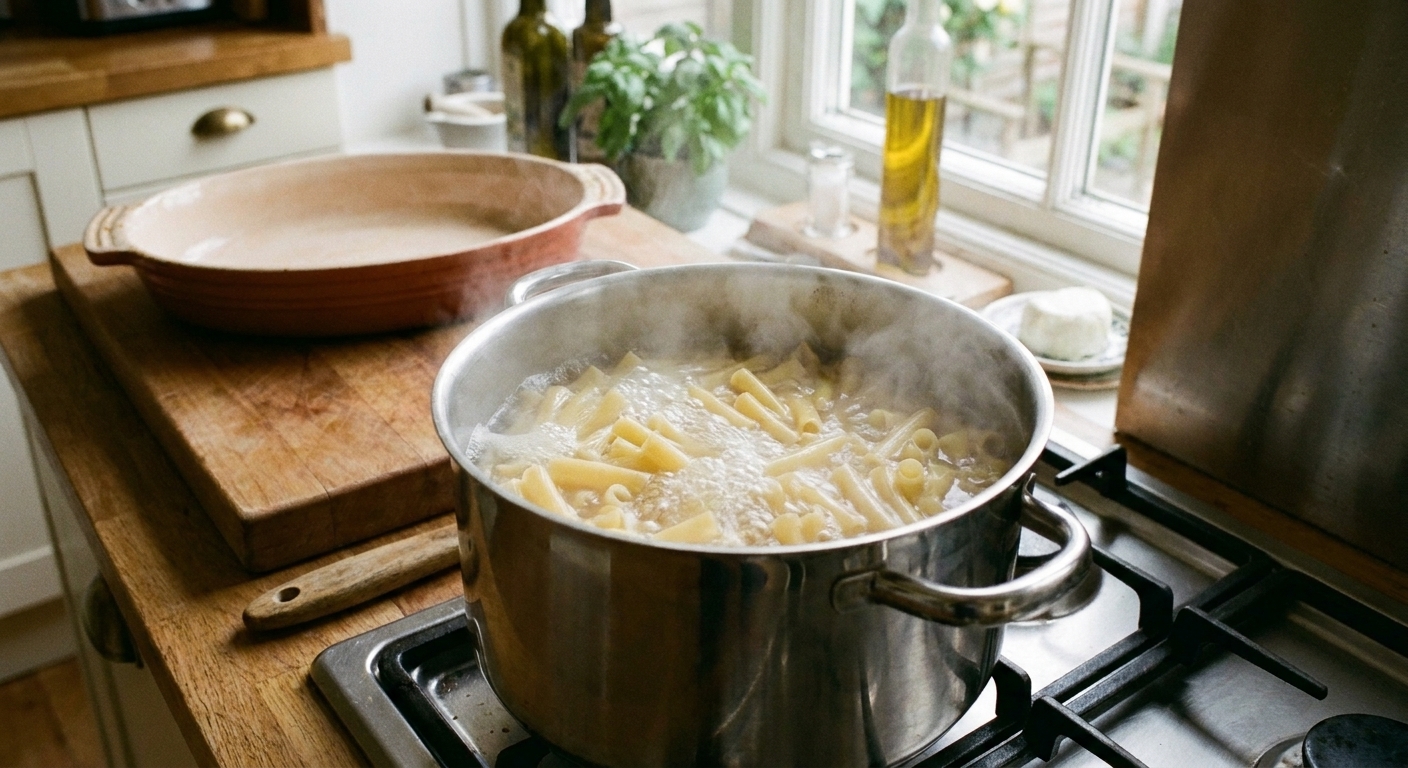
Boil in well-salted water until very al dente, typically 2 to 3 minutes less than the package directions. If the box says 10 to 11 minutes, I usually pull it at 8.
- The pasta should be flexible but still have a firm bite.
- If you cut a piece, you should still see a slightly lighter, drier-looking center.
Sauce amount with parboiled pasta
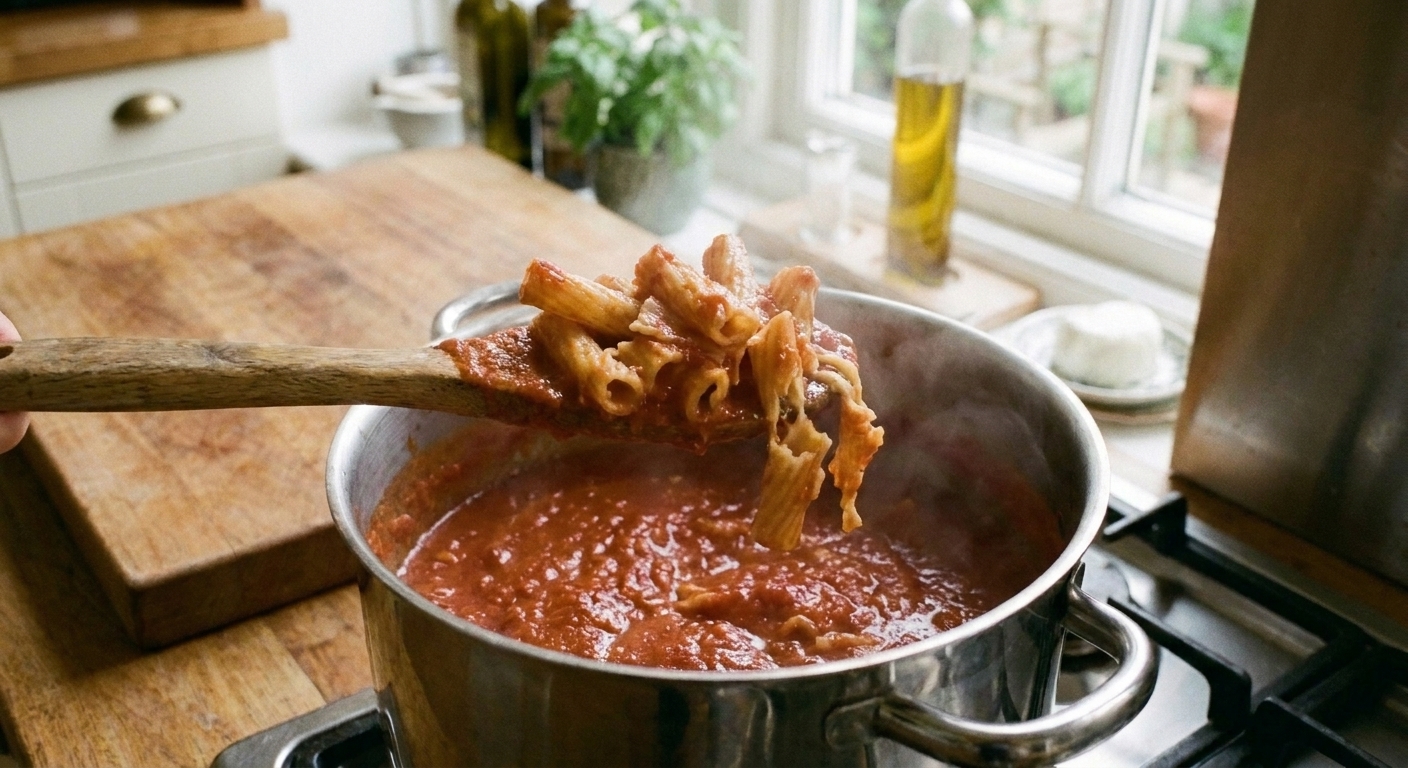
As a general rule, parboiled pasta usually does not need extra water added to the pan. That said, if your sauce is very thick (especially a reduced meat sauce) or you are going heavy on cheese and ricotta, a small splash of water or broth can help keep everything loose enough to bake up tender. Before it goes in the oven, you want the pasta generously coated, not dry or clumpy.
Bake time with parboiled pasta
Because the pasta is already partially cooked, you are mostly heating through and marrying flavors. At 375°F, most pans do well with:
- Covered: about 20 to 30 minutes
- Uncovered: about 10 to 15 minutes to brown the cheese
Your exact timing depends on how hot your sauce was when assembled, how cold your cheese mixture is, and how deep your casserole dish is.
No-boil baked ziti (dry pasta)
No-boil baked ziti can be great, especially on busy nights. The trick is giving the pasta enough liquid and enough time, then holding that moisture in with a tight cover.
How much extra liquid dry pasta needs
Dry pasta needs more moisture than you think. If you only use thick marinara and a little meat sauce, the noodles will steal liquid, the sauce will tighten up, and you can end up with crunchy centers.
For a typical baked ziti (about 1 pound of pasta), plan on one of these approaches:
- Extra sauce approach: Add an additional 1 to 2 cups of sauce beyond what you would use for parboiled pasta.
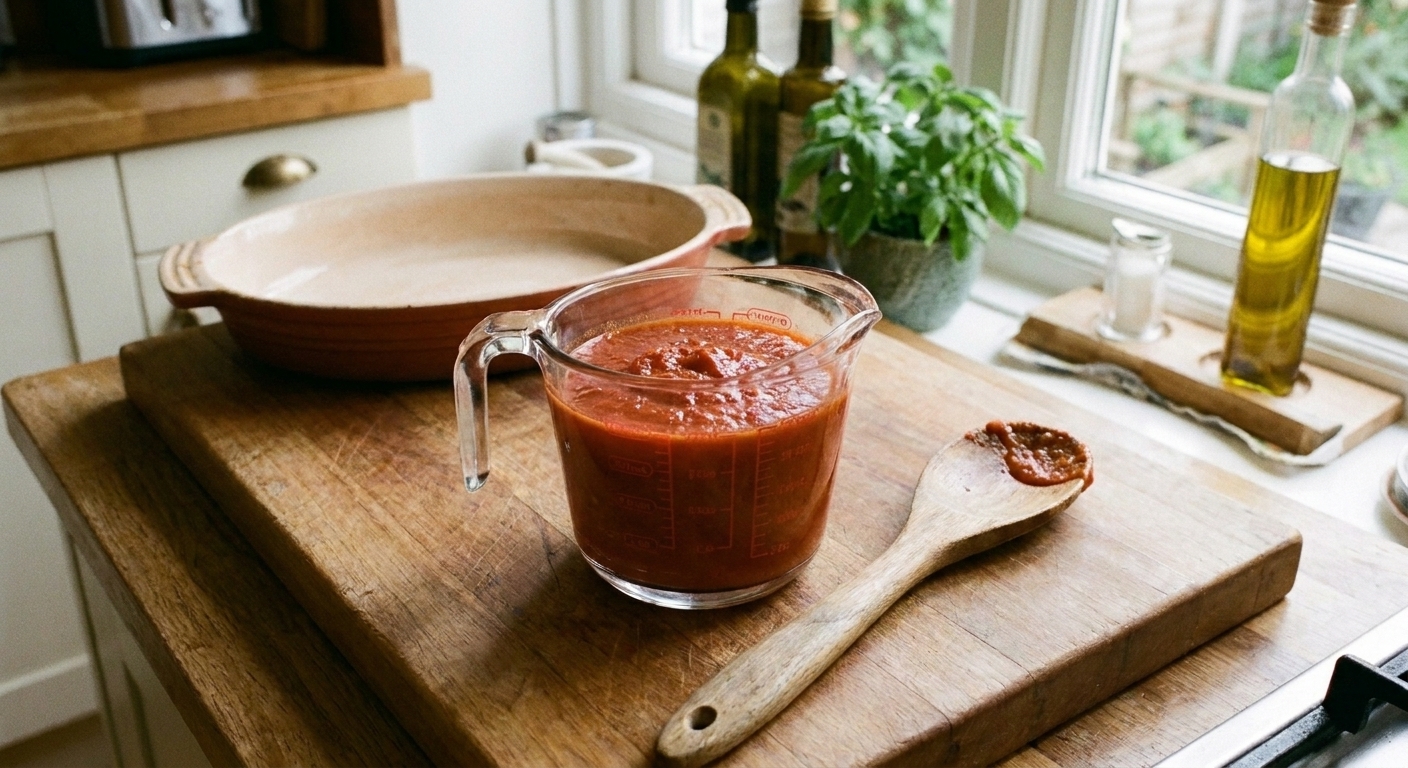
- Sauce plus water approach (my favorite): Keep your normal sauce amount, then stir in 1 to 1 1/2 cups water or broth so the mixture looks looser than you think it should.
Very thick sauces usually need the higher end of that range. If your sauce is already on the thin side, start closer to 1 cup. The goal is not “soupy,” it is “well-hydrated.”
That added water will not automatically make your ziti watery. The pasta will absorb a lot of it, and the starch will help the casserole thicken as it bakes. If you do go a little looser than intended, it typically just means you may need a few extra minutes uncovered at the end.
Bake time with dry pasta
Dry pasta needs time to hydrate and cook through. At 375°F, expect to add 15 to 25 minutes compared to parboiled pasta.
- Covered: about 45 to 60 minutes
- Uncovered: about 10 to 15 minutes to brown the top
If your ziti is packed into a deeper dish, or your sauce started cold from the fridge, lean toward the longer end.
How to avoid crunchy centers
Crunchy centers usually come from dry spots and insufficient cover, not just “not enough time.” Here’s what actually fixes it:
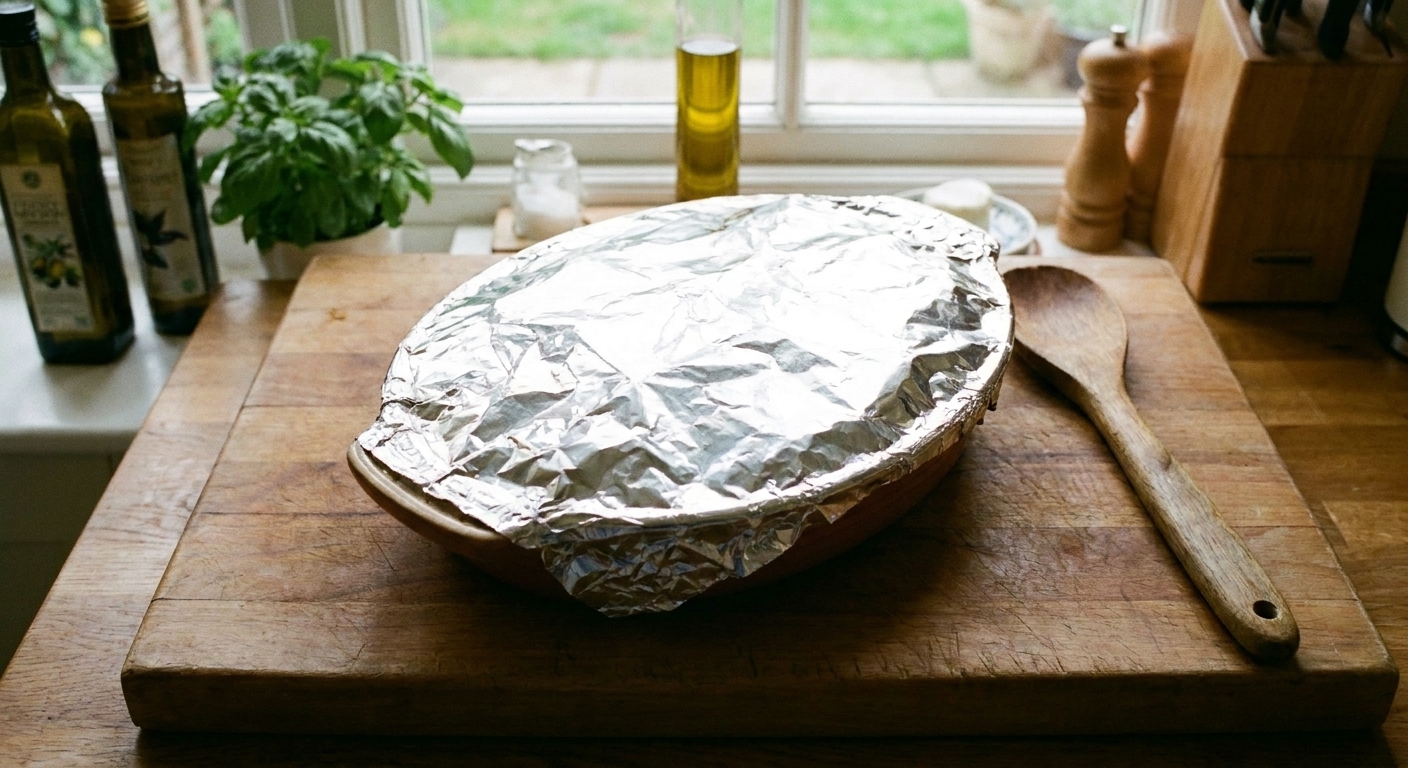
- Use a tight cover for most of the bake. Foil pressed snugly around the rim is your friend. Steam helps cook the pasta.
- Make the sauce mixture looser than normal. If it looks perfect going in, it will likely be too thick coming out.
- Stir the dry pasta into the sauce well. You want every tube coated and surrounded by liquid, not sitting in a dry clump.
- Let it rest before serving. Give it 10 to 15 minutes on the counter. This finishes hydration and lets the sauce set up.
- Check the center, not the edges. Test a noodle from the middle. That is where undercooking hides.
If you test and the center is still too firm, add a splash of hot water around the edges, cover again, and bake 10 more minutes.
Why fully cooked pasta gets mushy
If you boil ziti to normal doneness and then bake it, you are asking it to keep absorbing moisture and keep softening.
- Carryover cooking: The pasta is already hot and keeps cooking after draining.
- It keeps absorbing liquid in the oven: Sitting in hot sauce, pasta continues to take on moisture as starches swell and soften.
- Tubes can split: Fully cooked ziti is more fragile. In the oven it can expand, soften, and tear, which looks like “blown out” noodles.
- More stirring equals more breakage: Mixing a casserole with fully cooked pasta often breaks the noodles and turns the bake dense.
It will still taste good, because cheese and sauce cover many sins. But if you want that classic baked ziti bite, do not fully cook the pasta first.
Which method should you use?
Choose parboiled pasta if:
- You want the most reliable texture.
- You are using a thicker sauce, a lot of cheese, or a drier meat mixture.
- You are baking in a wide, shallow dish where moisture can evaporate faster.
- You are making it for guests and do not want surprises.
Choose no-boil (dry) pasta if:
- You want fewer dishes and a more hands-off prep.
- You can commit to a tight cover and a longer bake.
- You are comfortable loosening your sauce with water or broth.
- You are baking it right after assembling and want the pasta to hydrate in the oven.
Make-ahead and leftovers
This is the part that saves weeknights, and also the part that can quietly ruin a no-boil plan.
- Parboiled pasta is the safest make-ahead move: You can assemble, refrigerate, then bake. Add 10 to 20 minutes covered if it is going in cold.
- No-boil is best assembled close to baking: If you mix dry pasta with sauce and refrigerate overnight, the pasta can start hydrating unevenly before the oven ever hits it, which increases the odds of mushy edges and firm centers.
- If you must prep no-boil ahead: Use the lower end of added water, cover tightly, and be prepared to add a splash of hot water at bake time if it looks tight.
Leftovers keep well, but pasta will keep softening as it sits. Reheat gently, and if it looks dry, loosen it with a spoonful of water or extra sauce before warming.
Tips that help every time
- Salt matters (even when baking): If you parboil, salt your water well. If you no-boil, make sure your sauce is well seasoned because that is what seasons the pasta.
- Warm sauce helps: Starting with warmed sauce shortens bake time and improves even cooking, especially for no-boil.
- Do not skimp on coverage: Sauce should surround the pasta, not just coat it. This is the main cause of dry, hard noodles.
- Rest the casserole: A 10 to 15 minute rest makes the texture more even and stops the “soupy scoop.”
- Use foil smartly: Cover tightly, then uncover at the end for browning. If you worry about cheese sticking, spray the underside of foil with a little oil.
FAQ
Can I use oven-ready or no-boil lasagna noodles instead of ziti?
You can, but it becomes a different dish. Oven-ready noodles are formulated to hydrate quickly, while ziti is thicker and needs more time and moisture. If you are craving baked ziti texture, stick with ziti or penne.
Do I need to rinse parboiled pasta for baked ziti?
No. Rinsing cools the pasta and washes off surface starch that helps the sauce cling. Just drain well and toss with a little sauce right away so it does not stick.
How do I fix baked ziti that came out crunchy?
Add a splash of hot water or warm sauce around the edges, cover tightly with foil, and bake another 10 to 15 minutes. Let it rest 10 minutes before checking again.
Will dry pasta make my baked ziti bland?
It can if your sauce is under-seasoned. Because the pasta absorbs sauce as it hydrates, seasoning needs to be a little bolder than you think. Taste your sauce before assembling and adjust salt, pepper, garlic, and herbs.
Is there a best pasta shape for no-boil baked ziti?
Short tubes like ziti and penne work well because they hold sauce, but they also need enough liquid to hydrate all the way through. If you are going no-boil, choose a brand with a slightly thinner pasta wall if you have options, and be generous with liquid and coverage.
What oven temperature should I use for baked ziti?
375°F is my go-to because it heats through evenly without scorching the edges too fast. If you like a darker, more aggressive top, you can bake at 400°F and start checking a little earlier.