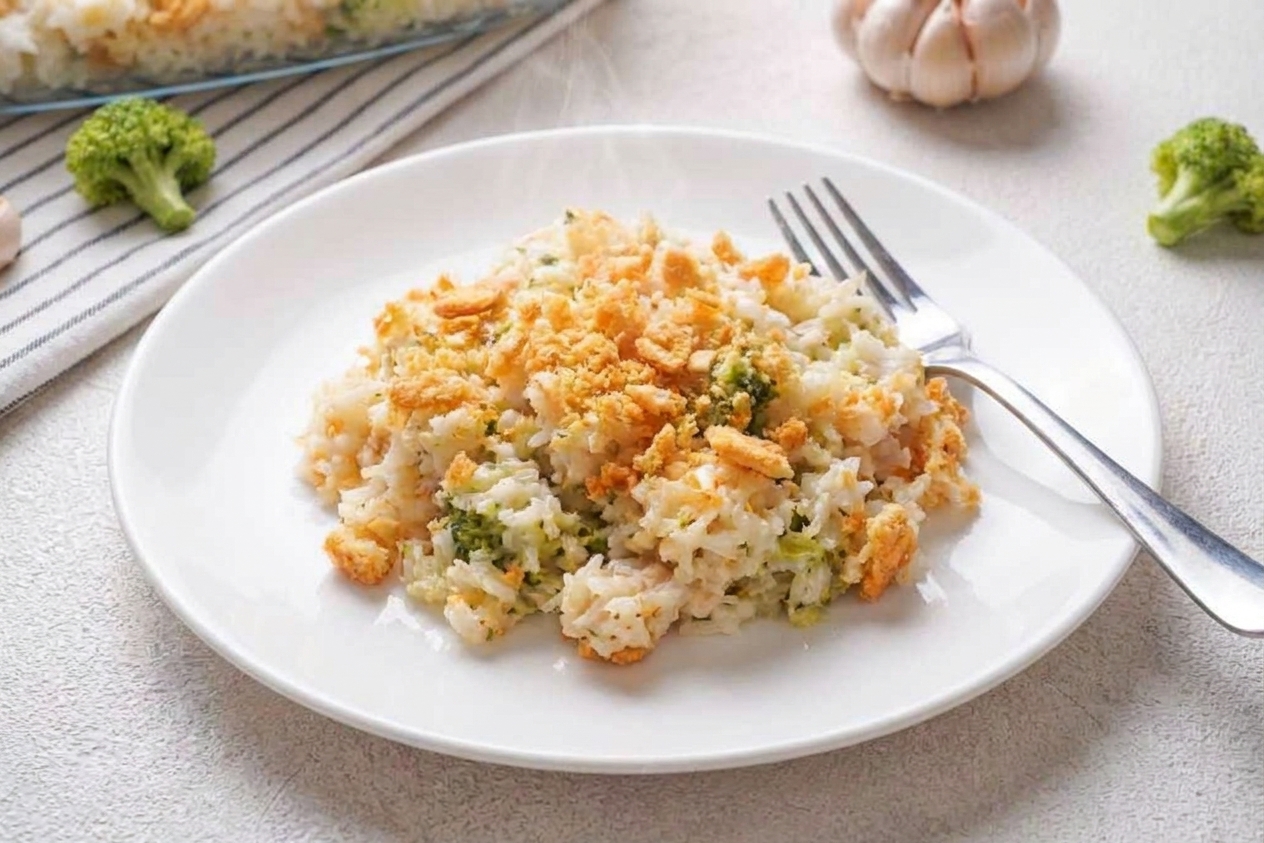

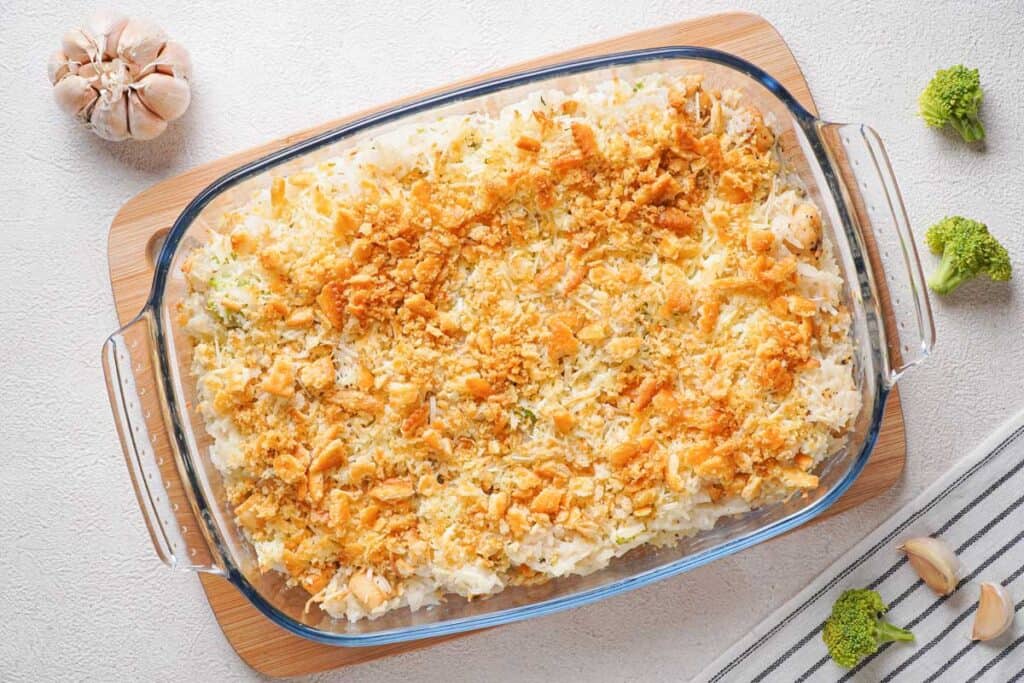
Broccoli rice casserole is one of those cozy, reliable dinners that tastes even better the next day. The only problem is reheating. The rice wants to drink up every drop of sauce, the edges dry out first, and the broccoli can take on that sad gray-green vibe if it gets blasted with heat too long.
I have reheated more casserole leftovers than I can count from family potlucks, teacher-lounge lunches, and the classic weeknight “I can’t cook again” scenario. The good news is that you do not need to accept dry, crumbly squares. You just need a little moisture, gentler heat, and the right cover at the right time.

The simple rule: add moisture, then reheat gently
Most broccoli rice casseroles are a mix of cooked rice, broccoli, cheese, and a creamy sauce. Overnight, the rice keeps absorbing that sauce, which is why the casserole feels thicker and drier on day two. Reheating is less about cooking it again and more about restoring moisture and warming it through without overcooking the broccoli.
Before you choose a method, decide if you are reheating:
- The whole pan: Best in the oven.
- A single serving: Best in the microwave or skillet.
- A dry corner only: Use a quick steam trick (I will walk you through it below).
Best method: oven reheat
If you have time, the oven gives the most even results and keeps the texture closest to freshly baked.
How to reheat broccoli rice casserole in the oven
- Preheat to 325°F. Lower heat is your friend here. It warms the casserole without aggressively drying out the top.
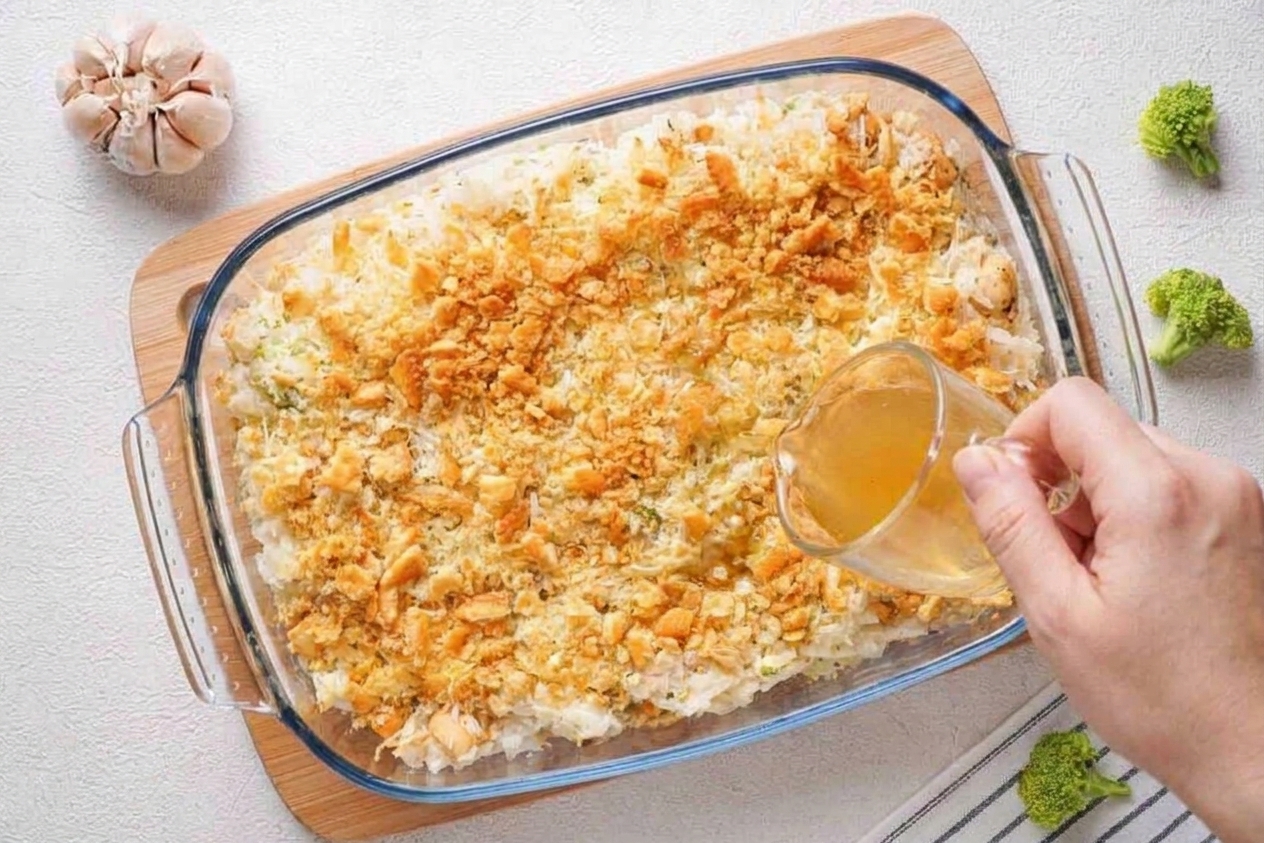
- Add moisture. Drizzle 1 to 3 tablespoons of liquid over the top, depending on how much you are reheating. Good options: chicken broth, milk, half-and-half, or a little water in a pinch.
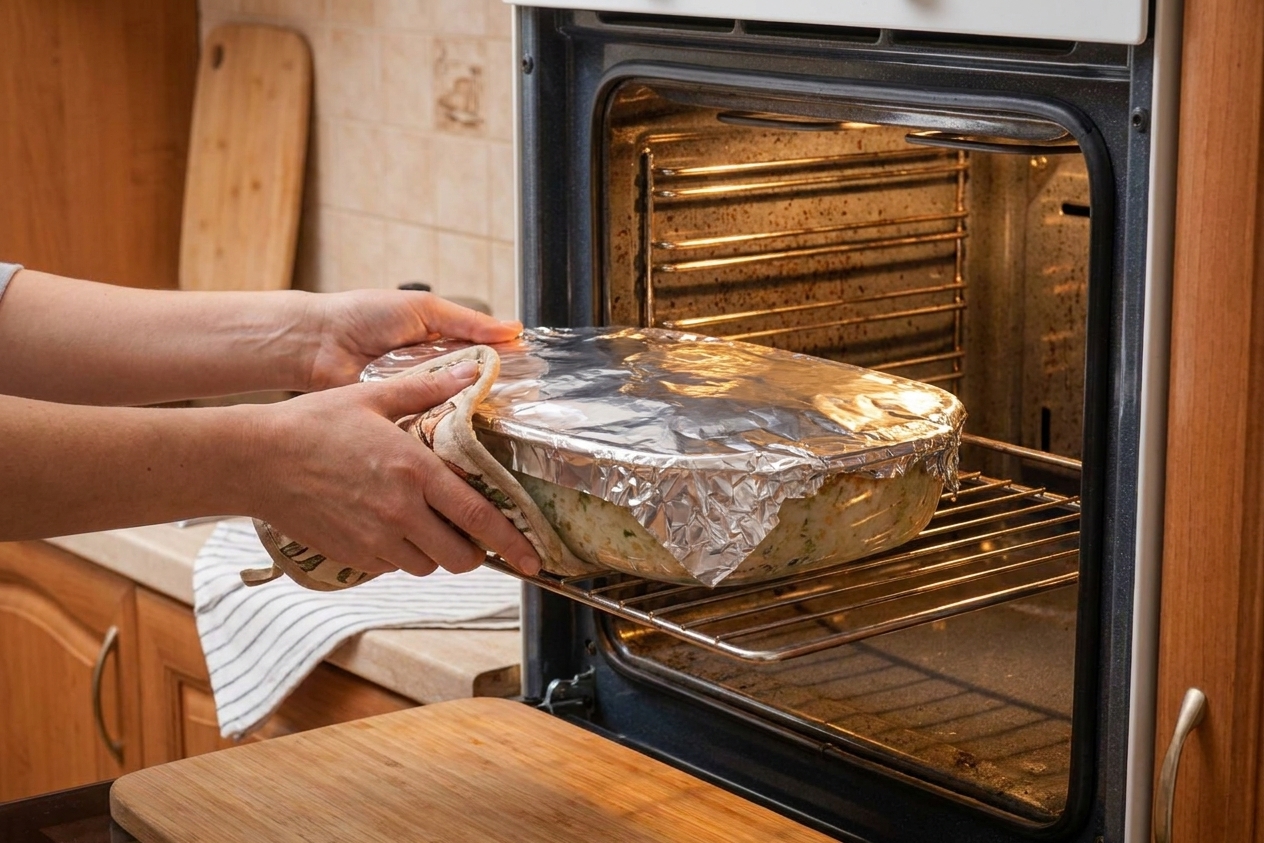
- Cover tightly with foil. This traps steam, which rehydrates the rice and warms the middle before the top dries out.
- Bake until hot in the center. For a full 9x13 pan straight from the fridge, plan on 25 to 40 minutes. For a smaller portion in a baking dish, 15 to 25 minutes. (If it is extra thick or still a little icy-cold in the middle, it may take longer, so start checking early.)
- Optional: crisp the top. Uncover for the last 5 to 8 minutes if you want a lightly golden top. Watch it closely so it does not dry out.
- Rest 5 minutes. This helps the sauce settle back into the rice so it feels creamy, not runny.
Fast method: microwave reheat
The microwave is perfect for a quick lunch, but it is also the easiest place to dry out rice if you go too long, too fast. The trick is to add moisture and cover, then heat in short bursts.
How to reheat a single serving in the microwave
- Portion it out. Put your serving in a microwave-safe bowl or plate with a slight rim.
- Add a splash of liquid. Start with 1 to 2 teaspoons of broth or milk per cup of casserole. If it looks very dry, go up to a tablespoon.
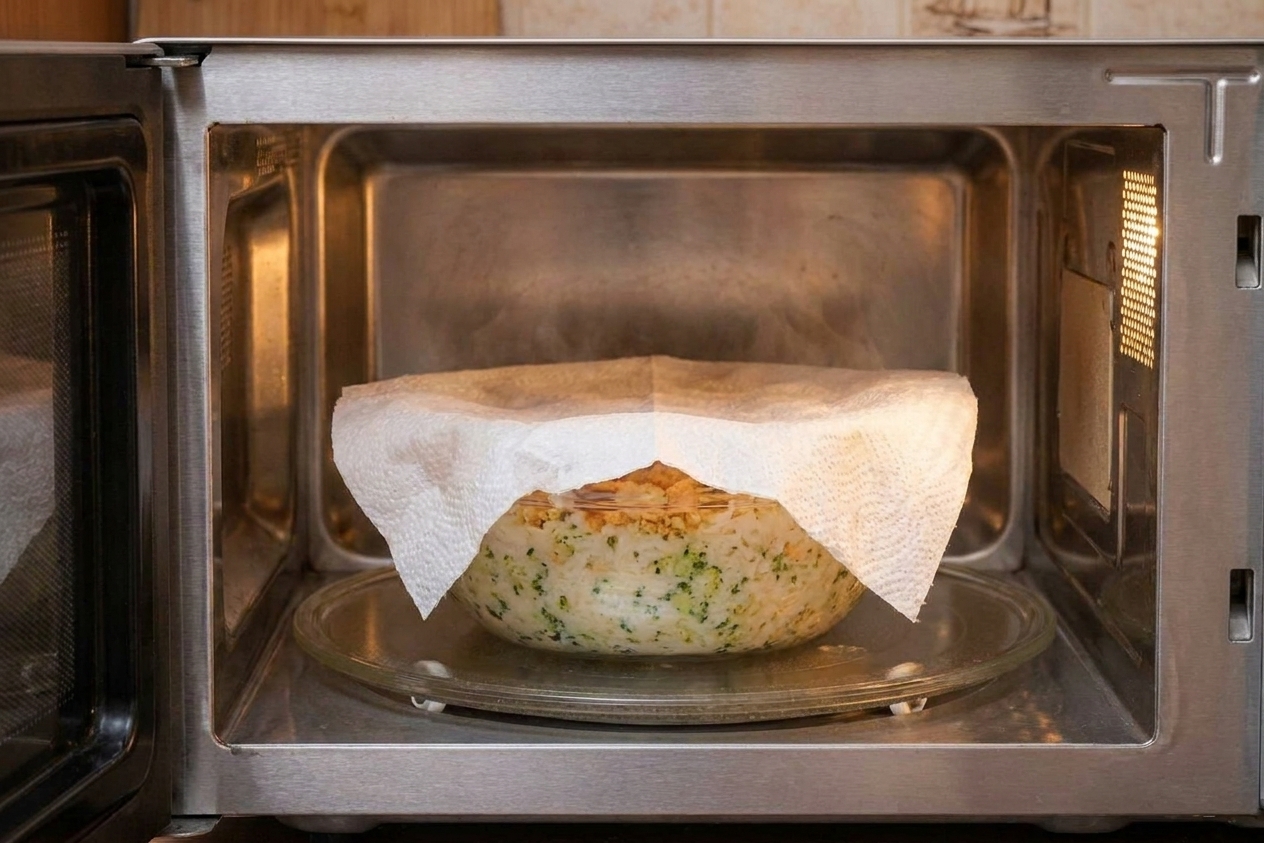
- Cover. Use a vented microwave cover, or loosely lay a damp paper towel over the top. You want trapped steam, not a tight seal.
- Microwave at 50 to 70% power. Heat in 45-second bursts, stirring gently in between if you can. Most servings take 2 to 3 minutes total, but microwave wattage (and casserole thickness) varies a lot, so start checking early and add time as needed.
- Rest for 1 minute. The steam finishes the job and evens out the temperature.
My go-to trick for broccoli staying green: lower power plus shorter bursts. Overheating is what pushes broccoli toward olive-gray and makes it smell stronger.
Skillet method: crispy edges
If you love those browned bits on the edge of the pan, the skillet method is a sneaky little upgrade. It is also great when you only have a cup or two of leftovers.
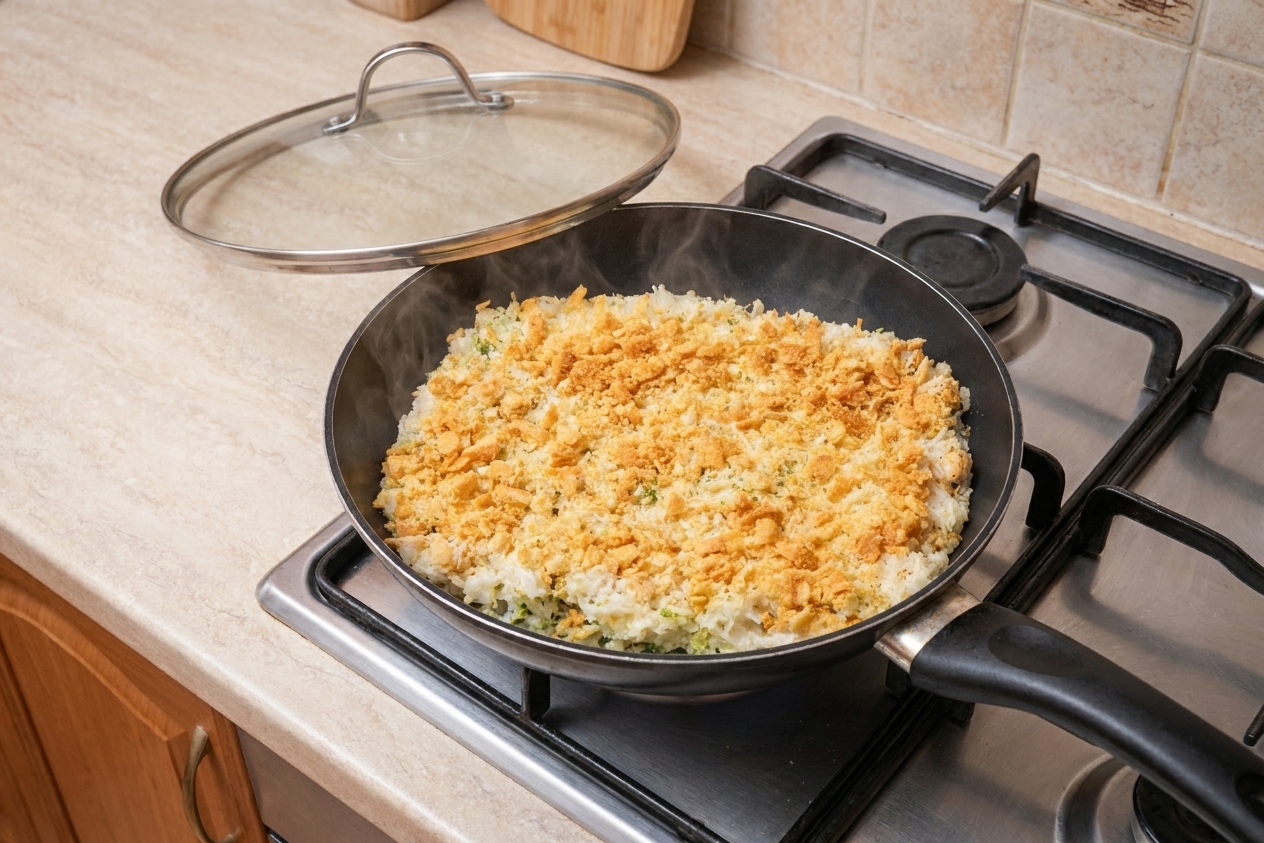
How to reheat broccoli rice casserole on the stove
- Use a nonstick skillet with a lid. A 10-inch skillet works well for 1 to 3 servings.
- Add fat plus moisture. Melt 1 teaspoon butter or warm 1 teaspoon olive oil, then add the casserole. Drizzle in 1 to 3 tablespoons broth or milk.
- Press into an even layer. This helps it heat evenly.
- Cover and steam on medium-low. Cook for 4 to 6 minutes, then check the center. (If it is a thicker mound, it may need a couple more minutes.)
- Uncover to crisp (optional). If you want browning, uncover and let it cook another 1 to 3 minutes. Turn or flip sections gently once so it crisps without scorching.
Tip: Keep the heat medium-low. High heat can scorch the dairy-based sauce before the middle is warm.
Food safety and storage
If your casserole has been refrigerated properly, it is usually best within 3 to 4 days. Reheat leftovers until they are steaming hot throughout, and check the center of the thickest part (especially for microwave reheating, where hot spots are common). A good target temperature for reheated leftovers is 165°F, particularly for casseroles with meat, poultry, seafood, or eggs.
One more thing I have learned the hard way: try to reheat only what you plan to eat. Reheating the same pan over and over is how you end up with dry rice and tired broccoli.
If it was frozen
If your broccoli rice casserole is frozen, the best results come from thawing overnight in the fridge first, then reheating using the oven method above (with a splash of liquid and foil). If you need to reheat from frozen, keep it covered, use a lower temperature like 325°F, and expect it to take significantly longer. Stirring partway through (once it softens enough) helps the center catch up.
Keep broccoli from going gray
That dull green color usually comes from overheating and extended time in dry heat. The broccoli is already cooked, so your goal is simply to warm it through.
- Cover for most of the reheating time. Steam is gentler than direct dry heat.
- Use lower heat. In the oven, 325°F is plenty. In the microwave, reduce power.
- Reheat only what you will eat. Repeated reheating cycles are what really dull the color and flavor.
- Avoid broiling leftovers. Broiling is fast, but it can overcook broccoli and split creamy sauces.
Fix a dry corner
We have all been there: one corner looks like it lived through a desert windstorm while the rest is fine. The fix is targeted moisture, not a full pan flood.
The targeted steam fix
- Scoop and loosen. Use a spoon to gently lift that dry section and break it up slightly. This creates space for moisture to move in.
- Add liquid a teaspoon at a time. Drizzle 1 to 2 teaspoons broth or milk directly onto the dry area. Let it sit for a minute.
- Cover and warm. Cover the pan with foil and warm at 325°F for 8 to 12 minutes, or microwave that portion covered for 30 to 60 seconds at reduced power.
- Reassess before adding more. You can always add another teaspoon. It is much harder to take liquid away.
If the top is dry but the inside is fine: brush the top lightly with a little melted butter, then cover and warm. This softens the surface without thinning the sauce.
Quick timing guide
| Method | Best for | How to prevent dryness | Typical time |
|---|---|---|---|
| Oven (325°F, covered) | Whole pan or large portions | Add 1 to 3 tbsp liquid and cover tightly | 15 to 40 min* |
| Microwave (50 to 70% power, covered) | Single servings | Splash of liquid and short bursts | 2 to 3 min* |
| Skillet (covered, medium-low) | 1 to 3 servings, crispy edges | Add broth plus lid to steam | 5 to 9 min* |
*Timing varies based on portion size, dish depth, starting temperature, and microwave wattage, so start checking early and add time as needed.
Troubleshooting
Why is my broccoli rice casserole dry after reheating?
Usually it is a combination of rice absorbing sauce overnight plus reheating uncovered or at too high a heat. Add a small amount of broth or milk, cover to trap steam, and reheat gently.
What liquid should I add to keep it creamy?
Chicken broth is my favorite because it loosens the casserole without making it taste milky. Milk or half-and-half brings back creaminess. Water works in a pinch, but it dilutes flavor fastest.
Can I reheat broccoli rice casserole at 350°F?
Yes, but watch the time carefully and keep it covered most of the way. At 350°F, the edges dry out faster. If your casserole is in a deep dish, 350°F can be fine as long as you add moisture and cover tightly.
How do I know it is heated through?
The center should be steaming hot and the sauce should look glossy again, not chalky or clumpy. If you have a thermometer, aim for 165°F in the center, especially for casseroles with meat, poultry, seafood, or eggs.
Why does my broccoli turn gray when reheated?
Broccoli turns dull when it is heated too long. Lower power in the microwave, or cover and reheat at a lower oven temperature so it warms through without continued cooking.
My favorite leftover move
If I am reheating a square for lunch, I do this: microwave at 60% power with a damp paper towel, then finish in a skillet for one minute to get those toasty edges. It takes an extra step, but it feels like a fresh dinner, not just leftovers.
And if you are wondering, yes, I add a little extra garlic powder and a pinch of salt after reheating. Leftovers love a tiny refresh.