The first time my pumpkin roll cracked, I stood there in my kitchen like it had personally betrayed me. I had plans. I had cream cheese filling. I had a nice little powdered sugar vibe going. Then I tried to roll and it split right across the top like a fault line.
Here is the good news: cracking is common, it is fixable, and most of the time it is caused by just one or two small timing issues. Let’s walk through what actually makes pumpkin rolls crack, how to prevent it next time, and exactly what to do if yours already has a few battle scars.

What causes a pumpkin roll to crack?
A pumpkin roll is basically a very thin sponge cake. It is flexible when warm and freshly baked, but it becomes more rigid as it cools. Cracks happen when the cake is a little too dry, a little too cool, or asked to bend too sharply all at once.
These are the most common culprits.
1) Overbaking (the number one cause)
If the cake bakes even a few minutes too long, it loses moisture and elasticity. A dry sponge cannot bend, so it splits.
- What it looks like: The cake feels a bit stiff, edges look curled or extra browned, and the surface springs back less.
- Why it cracks: Dry cake cannot stretch during rolling.
2) Rolling it after it cooled too much
Pumpkin roll cakes need to be rolled while they are still warm. Warm cake fibers are pliable. Cool cake fibers are stubborn.
- What it looks like: Cracks appear immediately as you start the roll, often across the top surface.
- Why it cracks: The cake is setting in a flat position and resists the new shape.
3) Skipping the warm towel step (or doing it half way)
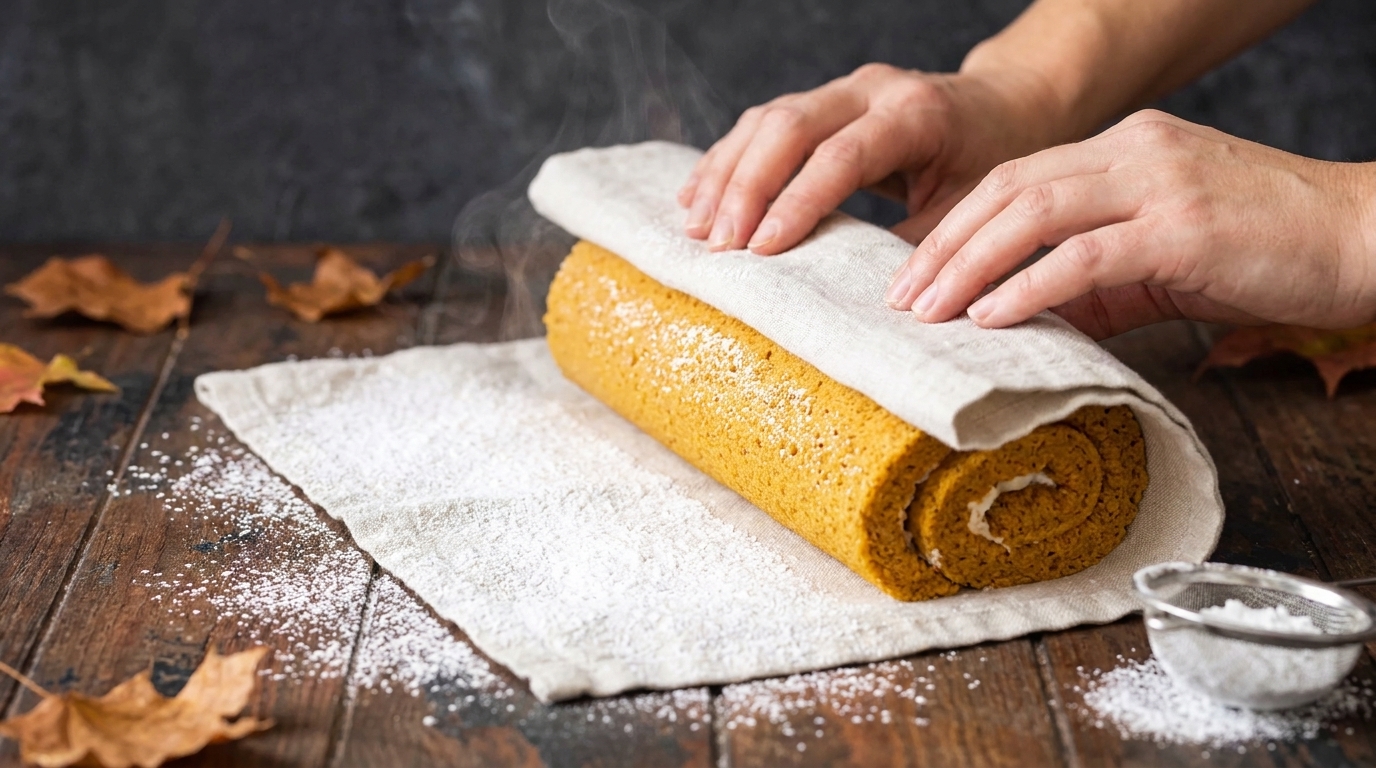
The towel is not just for tradition. It helps with three things: it prevents sticking, it holds gentle warmth, and it encourages the cake to bend gradually.
- What it looks like: The cake sticks to the parchment, or you feel like you are wrestling it off the pan.
- Why it cracks: Pulling and tugging creates stress points, and the cake cools too quickly without insulation.
Other sneaky reasons pumpkin rolls split
Your cake is too thin or baked in the wrong size pan
If the batter is spread too thin, it dries faster and bakes faster. If the pan is larger than the recipe intends, you end up with a fragile sheet that cracks easily.
- Fix: Use the pan size the recipe calls for, and spread batter evenly into the corners without scraping it paper thin.
Uneven baking or hot spots
Thin cakes are sensitive. A slightly too hot oven, a dark pan, or a rack that runs hot can dry out the edges while the center is just right.
- Fix: Use an oven thermometer if you suspect temperature swings. Rotate the pan once if your oven bakes unevenly.
Not enough powdered sugar on the towel
If the cake sticks to the towel, you will be tempted to peel it away, and peeling leads to tears and cracks.
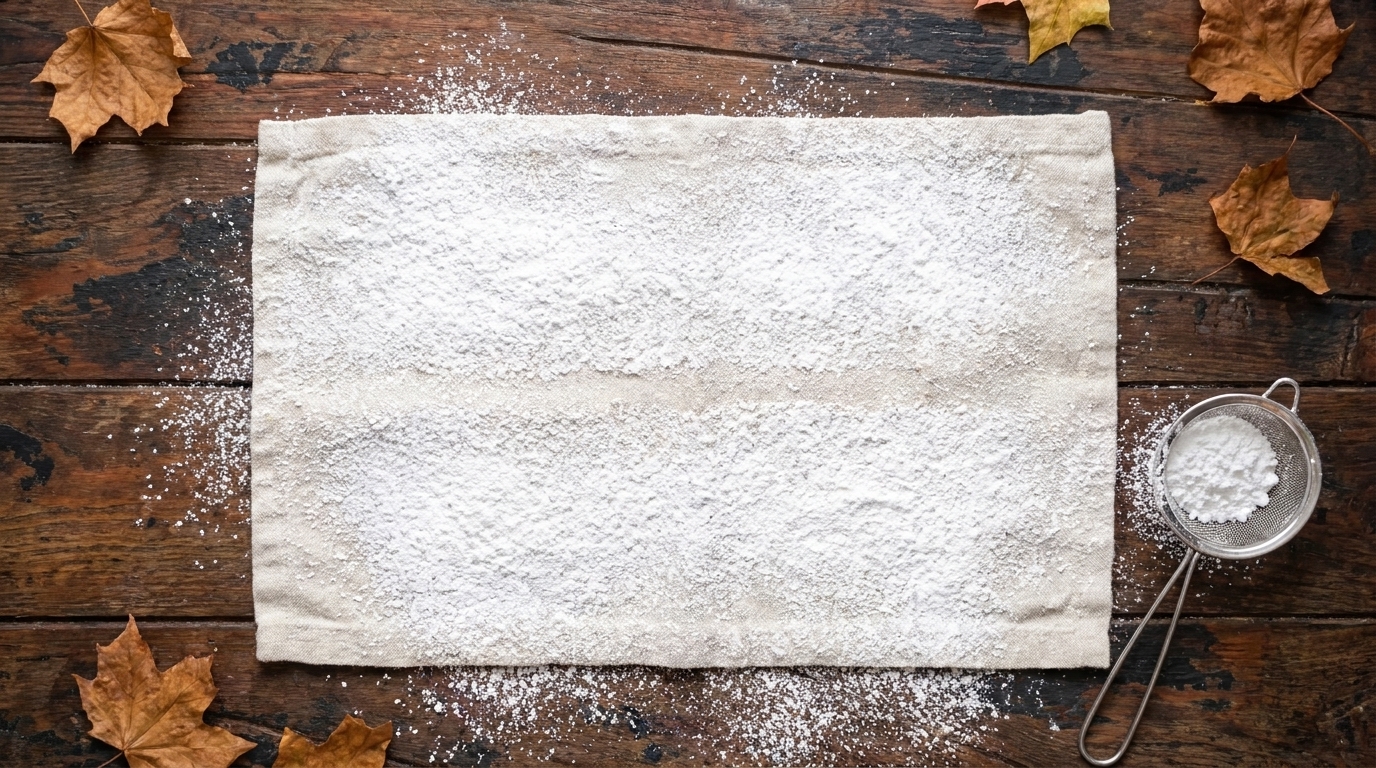
- Fix: Dust the towel generously. Think snowfall, not a light sprinkle.
Rolling too tightly, too fast
A tight first roll can create a harsh bend, especially at the first turn.
- Fix: Use the towel to guide a gentle first curl, then keep rolling with even pressure.
How to prevent cracks next time (my simple checklist)
If you only change a few things, make them these. This is my reliable, no-drama approach.
1) Pull it when it is just done
Look for a cake that springs back lightly when touched in the center. The edges should not be brittle or deeply browned. Set a timer on the earlier end and check.
- Tip: Thin cakes carryover bake quickly in a hot pan. A minute too long is all it takes.
2) Roll immediately, while warm
Once the cake comes out, give it a minute or two to settle, then invert and roll. You want it warm enough to flex but not so hot that it steams aggressively.
3) Use a powdered sugar towel and parchment
Parchment in the pan helps release. A well sugared towel helps roll without sticking. This is the duo that saves you from tearing and tugging.
4) Do a gentle first turn
The first curl is where cracks start. Use the towel to help you ease the cake into that first bend.
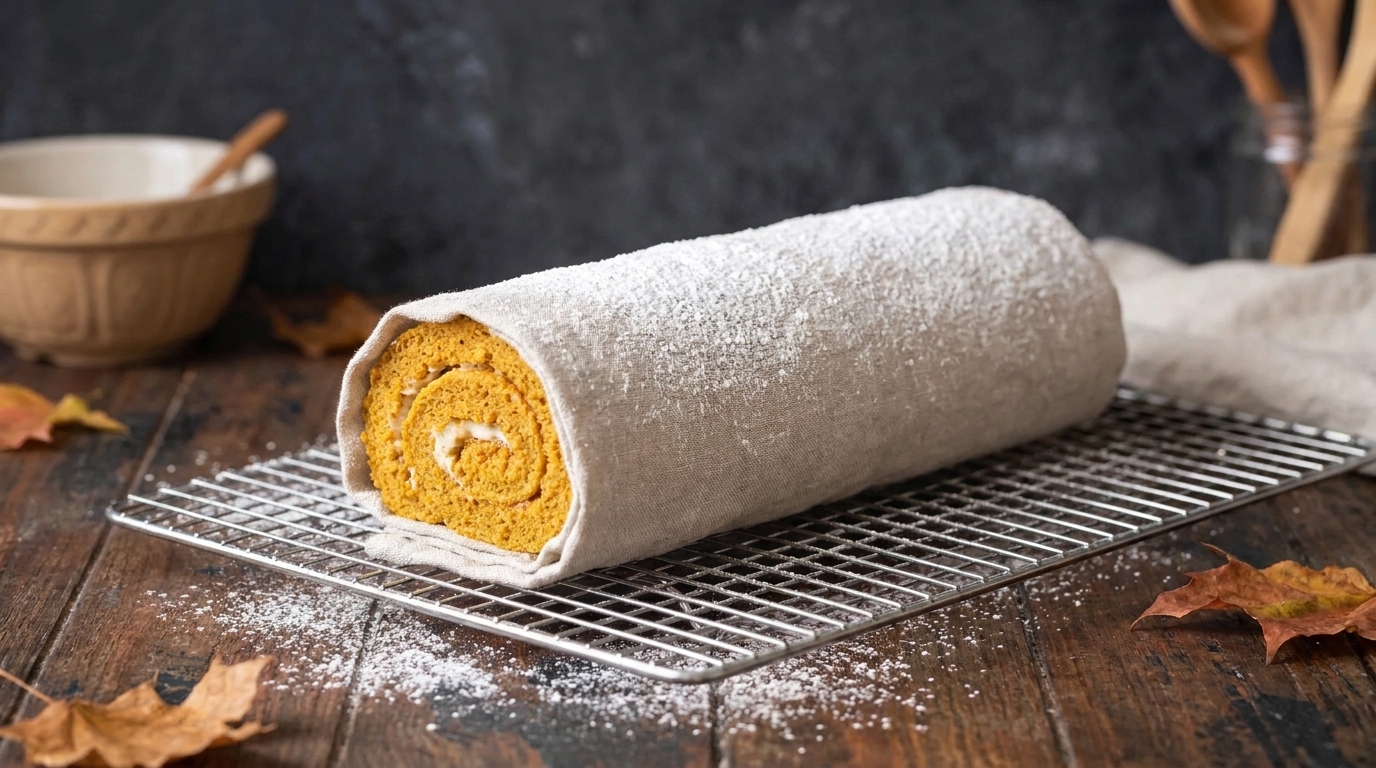
5) Cool completely in the rolled shape
Let it cool seam-side down, still wrapped in the towel. This “sets” the roll memory, so unrolling to fill is less risky.
My quick triage: what kind of crack do you have?
Not all cracks are equal. Use this to diagnose what went wrong and what to do next.
- Cracks the moment you start rolling: Usually rolled too cool, or overbaked.
- Hairline cracks only on the surface: Often slightly dry edges, rolling a bit too fast, or not enough towel sugar.
- Big split across the middle: Overbaked plus rolled late, or uneven baking that dried one area.
- Tears and missing patches: Stuck to parchment or towel and pulled away.
How to fix a pumpkin roll that already cracked
Even a cracked pumpkin roll can still be beautiful and absolutely delicious. My goal is always to stabilize it, then disguise it.
Option 1: Fill it and let the filling act like glue
If the cake is cracked but still mostly together, proceed.
- Unroll slowly. If it resists, pause for a moment. Let it relax.
- Spread filling evenly. Keep a slightly thicker layer where the crack runs. That extra filling helps support weak spots.
- Roll seam-side down. Use the towel to help you roll it back up with even pressure.
- Wrap and chill. Refrigerate at least 1 to 2 hours before slicing. Chilling firms the filling and helps everything hold together.
Option 2: Patch with a “crumb spackle”
If you have a piece that broke off, you can patch it like a cake decorator would.
- Spread a thin smear of cream cheese filling over the cracked area.
- Press the broken piece or loose crumbs gently into the filling.
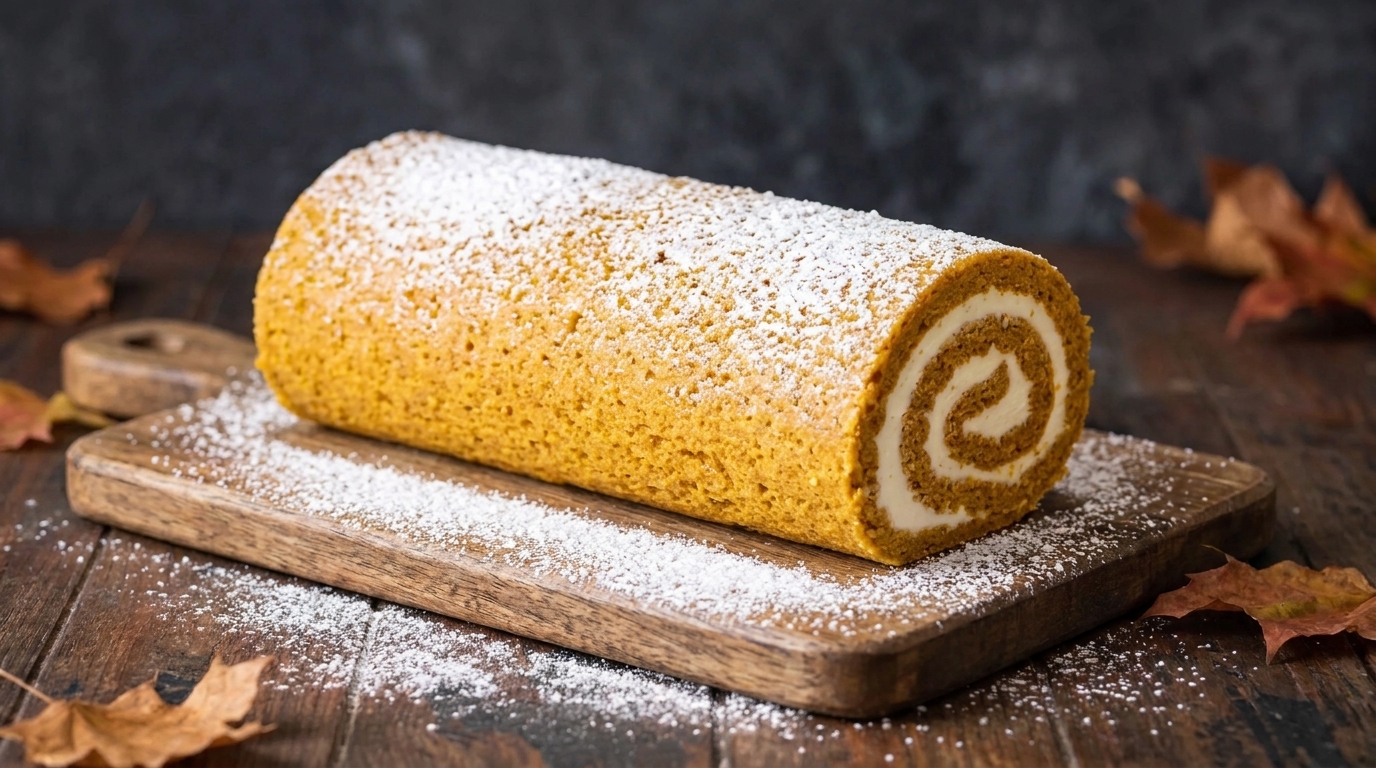
- Chill to set, then dust with powdered sugar.
This works especially well if the crack is on top and you want it to look neat for serving.
Option 3: Hide the crack (my go-to party trick)
- Powdered sugar: A generous dusting softens the look of surface cracks.
- Whipped cream: A simple dollop on each slice covers a lot of sins.
- Chopped pecans or walnuts: Sprinkle over the top for texture and camouflage.
- Caramel drizzle: A thin drizzle draws the eye away from a crack line.
Option 4: Turn it into a trifle or parfait if it is truly shattered
If the cake broke into multiple pieces, do not force it. Layer chunks of pumpkin cake with cream cheese filling in a bowl or jars. It tastes exactly the same, and it looks intentional.
The towel method, step by step
This is the method I teach friends because it is simple and repeatable.
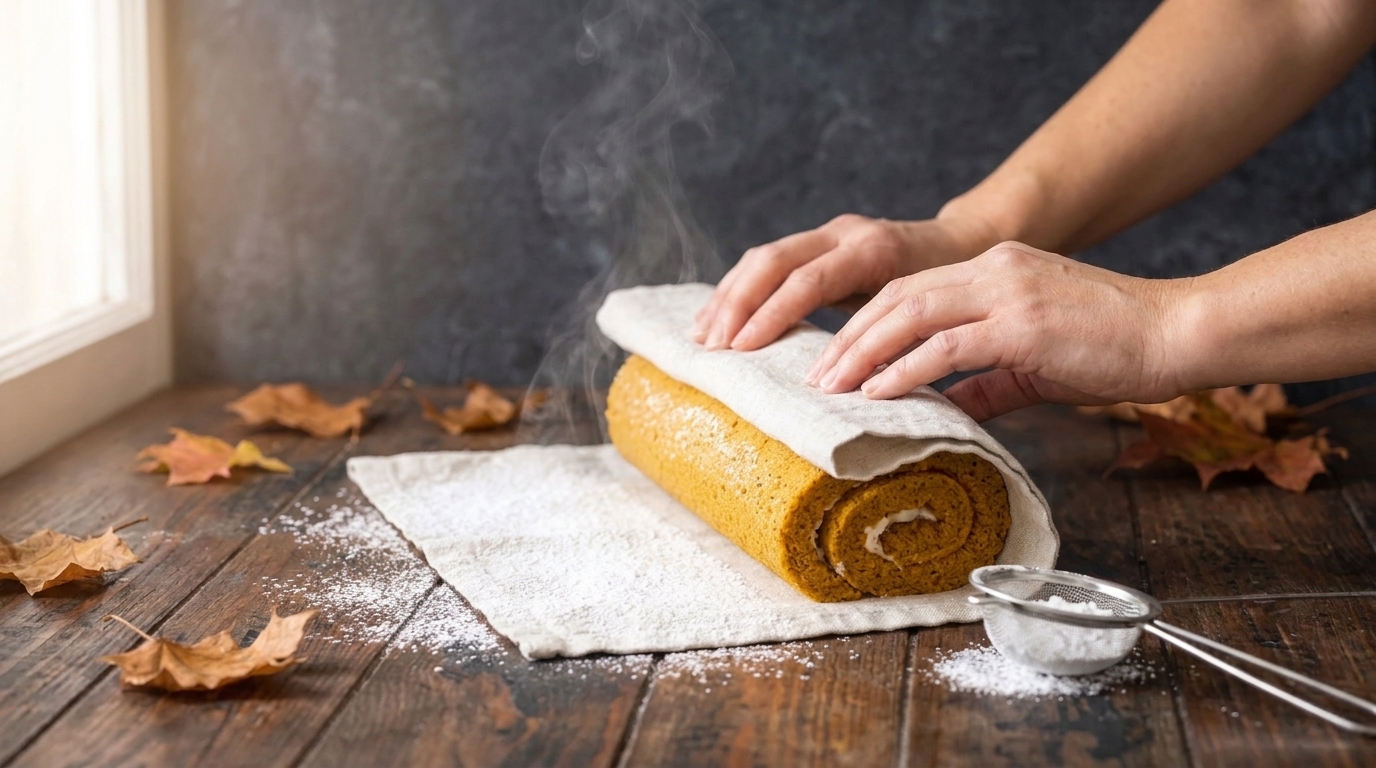
- Prep the towel first. Lay a clean, thin kitchen towel flat and dust generously with powdered sugar.
- Invert while warm. Turn the warm cake out onto the sugared towel.
- Peel parchment carefully. If it sticks, peel slowly and low to the surface rather than pulling straight up.
- Roll with the towel. Start at a short end. Use the towel to help lift and guide that first curl.
- Cool completely. Leave it rolled and wrapped until fully cool before adding filling.
Pumpkin roll cracking FAQs
Why did my pumpkin roll crack even though I used a towel?
Usually it is timing or bake level. If the cake baked a touch too long or sat too long before rolling, it can still crack even with a towel. Next time, shorten the bake by a minute or two and roll sooner.
Can I roll a pumpkin roll when it is cold?
I do not recommend it. Cold sponge cake is much more likely to split. If you need to pause, roll it warm, let it cool rolled, then chill. Unroll only to fill.
Is it better to roll a pumpkin roll from the long side or short side?
Short side is the classic approach because it gives you a thicker spiral and fewer turns, which is generally easier and less crack-prone for beginners.
My cake cracked but tastes fine. Is it safe to eat?
Yes. Cracks are a texture and moisture issue, not a safety issue. Fill it, chill it, slice carefully, and no one will complain.
Why is my pumpkin roll sticky and tearing?
That is usually not enough powdered sugar on the towel, or the cake was underbaked and too moist. Next time, dust the towel more generously and bake until the center springs back lightly.
How do I slice a cracked pumpkin roll neatly?
Chill it first so the filling is firm, then use a sharp serrated knife and a gentle sawing motion. Wipe the blade clean between slices for the prettiest spirals.
My pep talk before you try again
If your pumpkin roll cracked, you are in excellent company. This dessert has a learning curve because it is all about timing and warmth, not fancy skills. The next one gets easier, and I promise the towel roll moment becomes weirdly satisfying once you have done it a couple of times.
And if yours is cracked right now, fill it, chill it, dust it with powdered sugar, and call it rustic. In my house, rustic disappears just as fast.