A simple vanilla syrup recipe that tastes bakery-level but is weeknight easy. Learn the best sugar ratios, how to store it, and fun flavor variations.
Recipeva
Praline Pecans
Buttery, crisp praline pecans with a glossy caramel shell. Learn the easiest stovetop method, how to prevent grainy sugar, and the best ways to store and use them.

Maya Reynolds
Maya Reynolds is a passionate home cook, recipe developer, and the creative voice behind Recipeva. With over a decade of experience translating complex culinary techniques into approachable weeknight meals, she focuses on creating dishes that bring joy to the dinner table without the stress.
Created September 24, 2026
Updated September 24, 2026
Praline pecans are one of those little kitchen miracles: plain pecans turn into glossy, caramel-coated gems with a buttery crunch and just enough salt to keep you reaching back into the jar. They are perfect for gifts, snacking, topping salads, and tossing over ice cream. And yes, they feel fancy, but I promise they are very doable on a weeknight.
Below is my go-to method, plus the practical troubleshooting I wish someone had handed me the first time I made them.
What are praline pecans?
Praline pecans are pecan halves coated in a cooked sugar mixture that sets into a crisp shell. Depending on the recipe, that shell can be smooth and glassy like caramel, or slightly sandy and crystalline like traditional Southern pralines. This version leans glossy and crunchy, with butter for richness and a pinch of salt to keep the sweetness balanced.
Think: kettle-corn energy, but make it pecans.
Ingredients you need
You can absolutely make praline pecans with supermarket basics. Here is the lineup and why each matters.
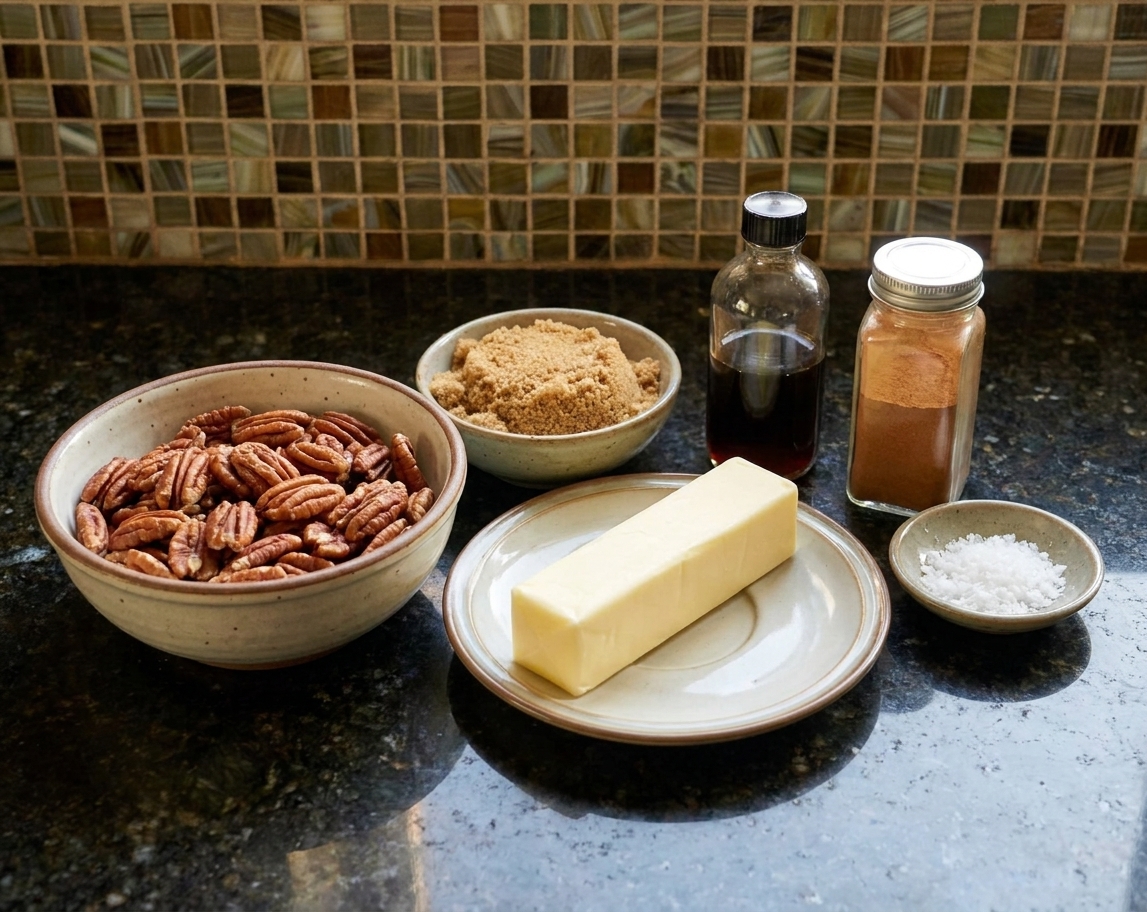
- Pecan halves: Fresh matters here. If your pecans smell even a little stale, the finished candy will taste flat.
- Brown sugar: Adds deeper caramel notes and helps prevent a harsh, one-note sweetness.
- Granulated sugar: Helps the coating set crisp.
- Butter: Richness and that praline flavor you cannot fake.
- Water: Just enough to get the sugar dissolving evenly at the start.
- Vanilla : Adds warmth. Stir it in at the end.
- Salt: Non-negotiable. Even sweet pecans need salt.
- Cinnamon (optional): Cozy, especially in fall and winter.
Quick ratio if you need it: For every 2 cups pecan halves, plan on about 1/2 cup total sugar (a mix of brown and white), 2 tablespoons butter, and 2 tablespoons water, plus vanilla and salt. You can scale up or down from there.
How to make praline pecans
This method is fast, but it rewards attention. Once the sugar is bubbling, do not wander off to fold laundry. Ask me how I know.
- Prep your landing zone. Line a baking sheet with parchment paper or a silicone mat. Lightly butter the parchment if you want extra insurance.
- Toast the pecans (highly recommended). Toast in a dry skillet over medium heat for 3 to 5 minutes, stirring often, until fragrant. This step makes the final flavor pop.
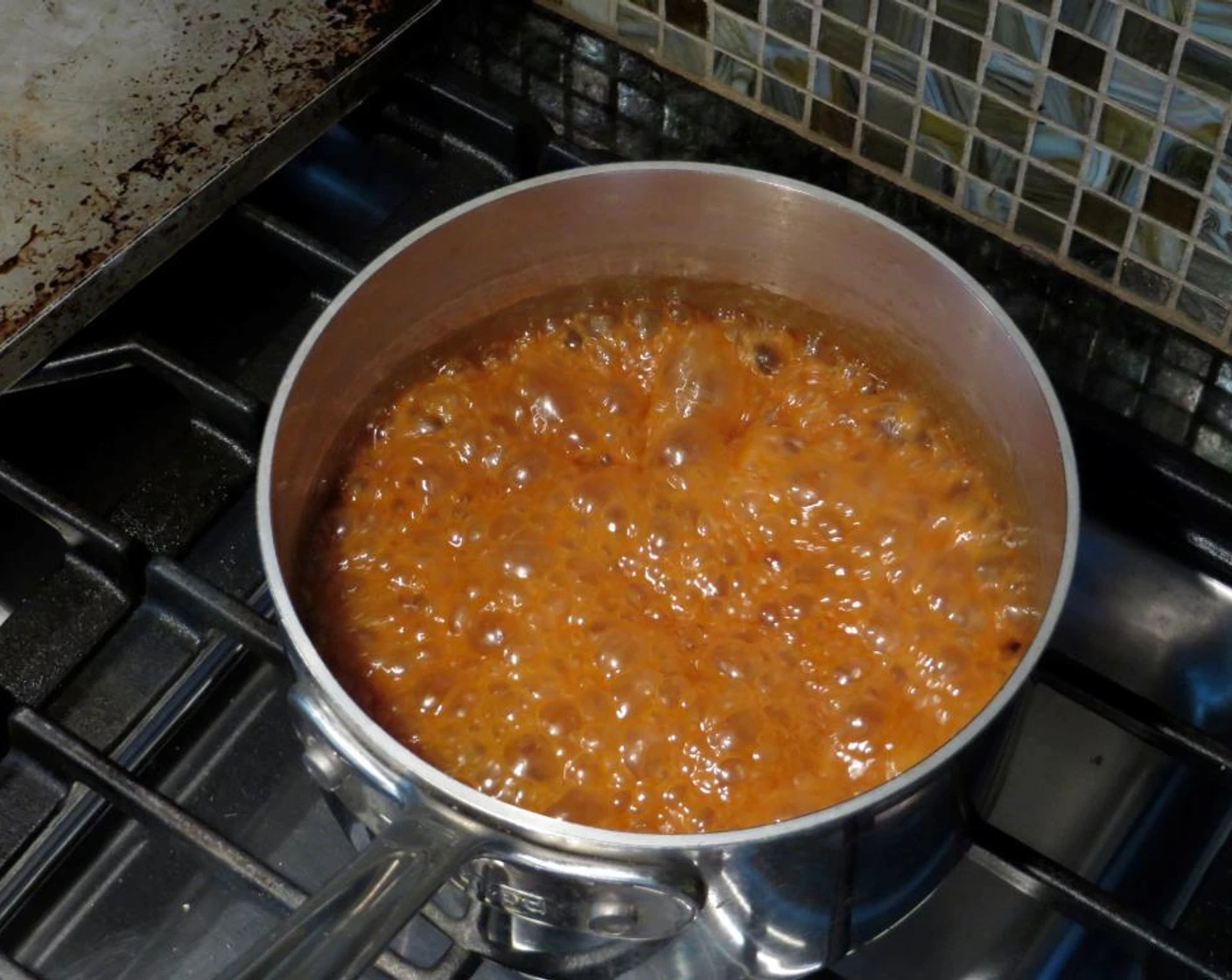
- Dissolve the sugars. In a heavy-bottomed saucepan, add brown sugar, granulated sugar, water, and butter. Cook over medium heat, stirring until the sugars dissolve and the mixture looks smooth. If you see sugar crystals clinging to the sides, brush them down with a little water using a pastry brush.
- Cook to doneness. Once it starts boiling, stop stirring constantly. Stir occasionally and gently to prevent hot spots, but let it boil so it can thicken. For a truly glassy crunch, cook the syrup to about 300°F (hard crack) on a candy thermometer. No thermometer? Watch for a deep amber color and a thicker, slower bubble. Avoid scraping down the sides while it boils, since that can pull crystals back into the syrup.
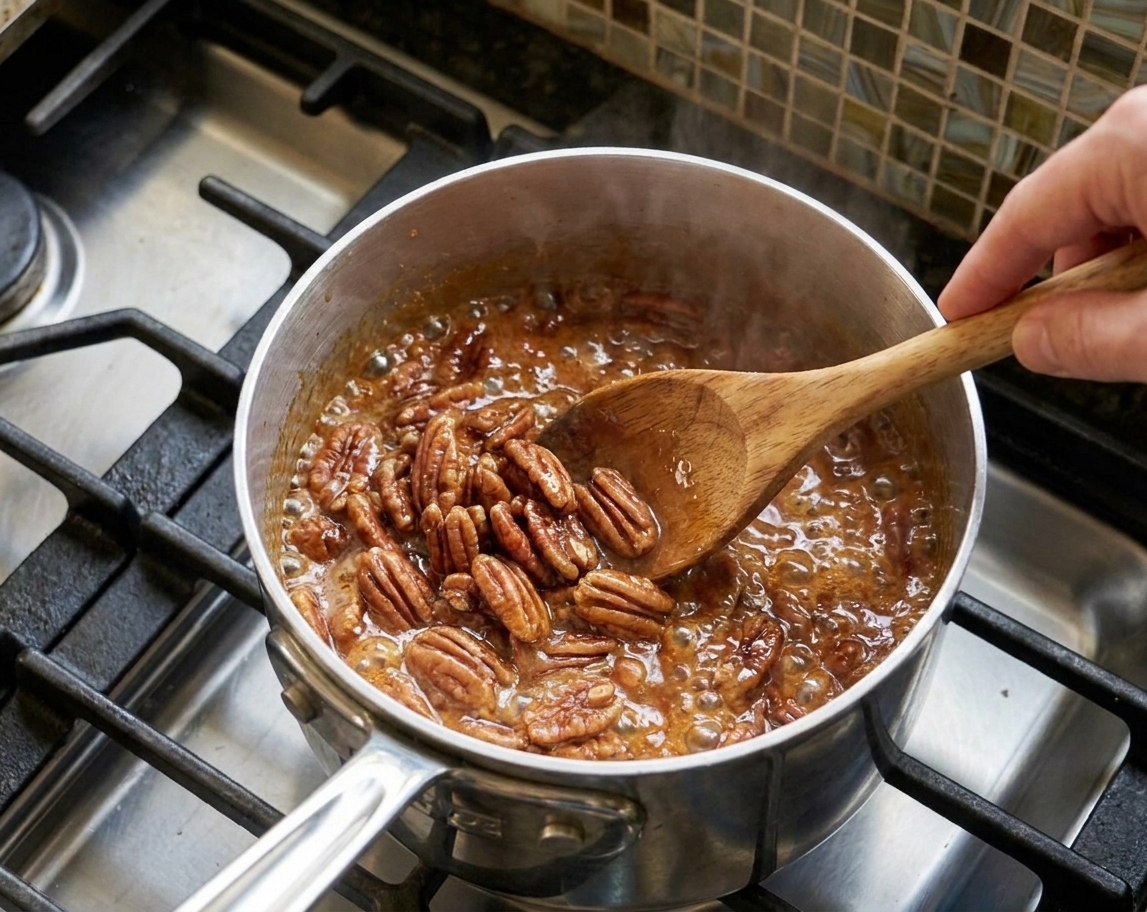
- Add pecans. Stir in the toasted pecans until every piece is coated and glossy. Keep the pecans moving so the coating does not over-darken on the bottom of the pan.
- Finish with vanilla and salt. Remove from heat, then quickly stir in vanilla and salt. Be careful: vanilla can cause extra bubbling.
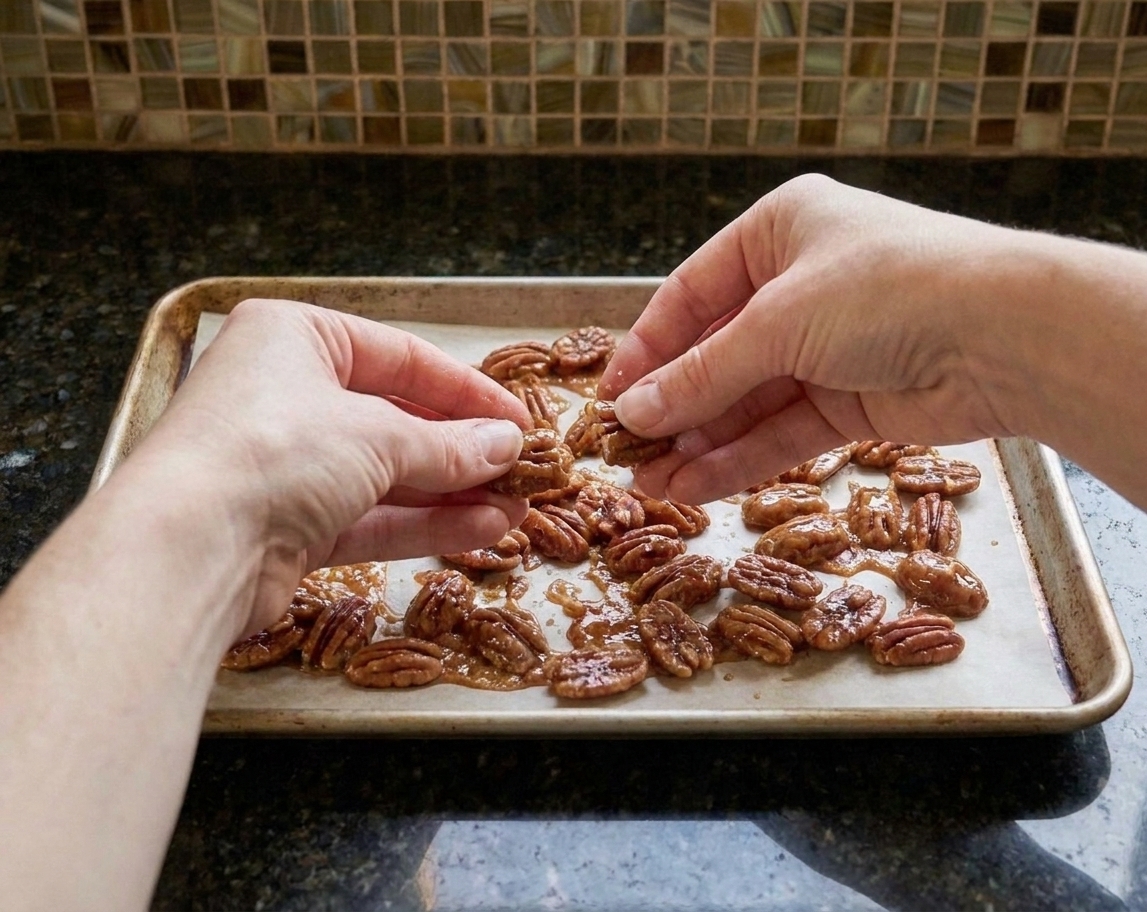
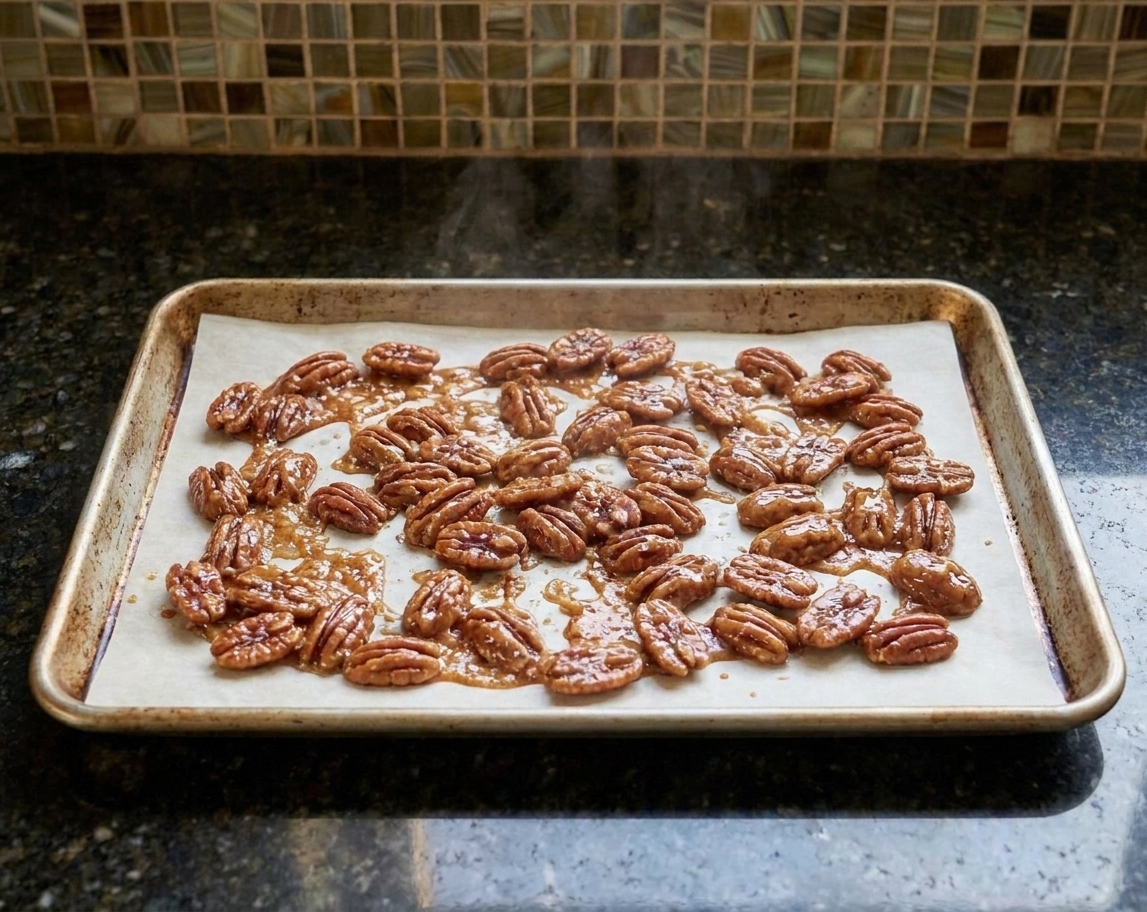
- Spread and separate. Immediately pour onto the lined sheet. Use two forks to separate the pecans before the coating sets.
- Cool completely. Let them cool until crisp, about 20 to 30 minutes.
Best tips
- Use a heavy pan. Thin pans create hot spots, which can burn sugar fast.
- Start with fully dissolved sugar. Grainy sugar early often leads to grainy coating later.
- Keep a close eye on color. You want deep amber, not mahogany. If it smells sharp or bitter, it is heading toward burnt.
- Work quickly once the pecans go in. The coating sets fast as it cools.
- Salt at the end. A pinch of flaky salt on top while they are still tacky is a chef’s kiss move.
Troubleshooting
Why did my praline coating turn grainy?
Grainy sugar usually means crystallization. Common causes: sugar was not fully dissolved at the start, the mixture was stirred too aggressively while boiling, or sugar crystals were on the sides of the pan. If you see crystals on the pan, you can brush the sides with a little water using a pastry brush while it cooks. Also, avoid scraping the sides of the pan once the mixture is boiling.
Why are my pecans sticky instead of crisp?
The sugar likely did not cook long enough to reach a crisp set, but stickiness can also come from humidity or a syrup that contains extra water (like maple syrup). You can often fix it by spreading the pecans on a lined sheet and baking at 250°F to 300°F for 10 to 15 minutes, then cooling completely again. If they are just slightly tacky, sometimes they simply need more time to cool and dry.
Why did they taste bitter?
That is usually burnt sugar. Next time, lower the heat slightly and watch the color closely. Sugar goes from perfect to burnt in a blink.
Why are my pecans clumped together?
Totally normal if you do not separate them fast enough. Use two forks right after spreading. If they set into clusters, you can gently break them apart once fully cool.
Flavor variations
Once you have the basic technique down, it is fun to play.
- Cinnamon-vanilla: Add 1/2 teaspoon cinnamon with the salt.
- Maple: Swap a portion of brown sugar for maple syrup. Since syrups add water, expect a slightly longer cook time and use a thermometer if you can.
- Spicy-sweet: Add a pinch of cayenne and a little extra salt.
- Bourbon: Stir in 1 to 2 teaspoons bourbon off heat with the vanilla.
- Orange zest: Add finely grated zest at the end for a bright, holiday vibe.
How to use them
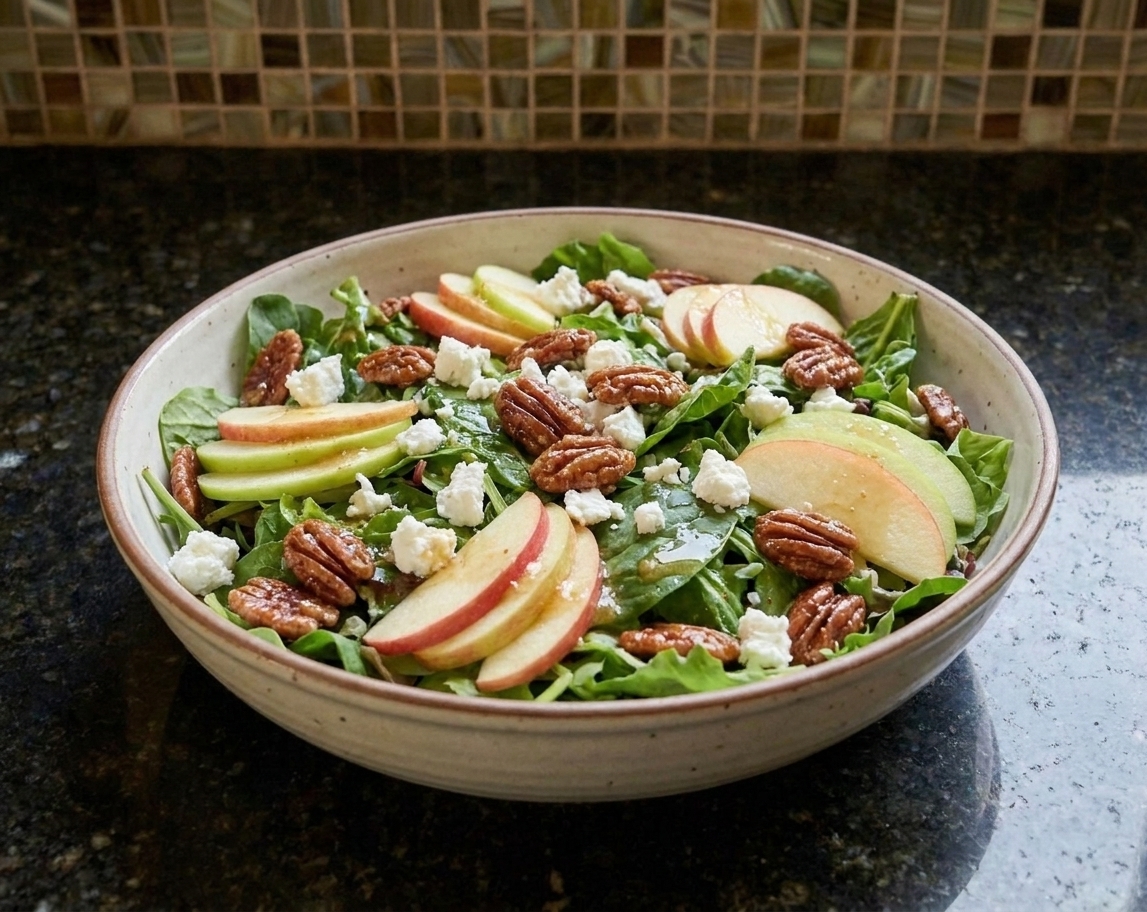
- Snack bowl: Put them out with dried fruit and sharp cheese.
- Salads: Especially great with apples, pears, goat cheese, or blue cheese.
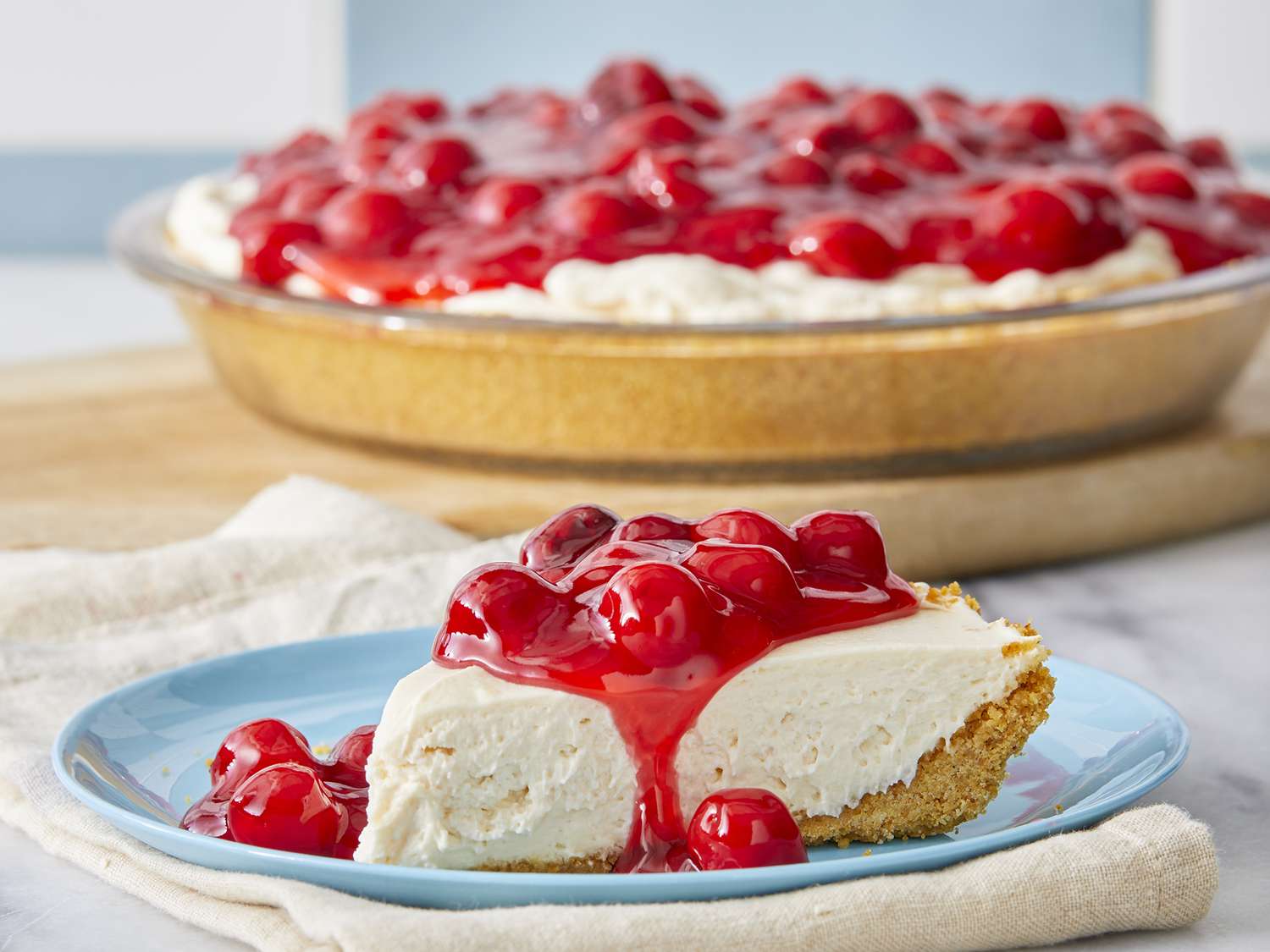
- Desserts: Sprinkle over ice cream, cheesecake , brownies, or pudding.
- Breakfast: Yogurt, oatmeal, pancakes, or French toast.
- Gifts: Pack in jars or cellophane bags with a ribbon. They feel special with almost no extra effort.
Storage and make-ahead
Once fully cooled, store praline pecans in an airtight container at room temperature for about 1 to 2 weeks. Keep them in a cool, dry spot away from steam and heat. In humid kitchens, they may lose crispness sooner. If that happens, pop them in a low oven (250°F to 300°F) for a few minutes, then cool again.
If you want to make them further ahead, freeze them in a freezer bag with as much air pressed out as possible for up to 2 months. Thaw at room temperature uncovered so condensation does not make them sticky.
Safety note
Molten sugar is no joke. Keep sleeves snug, use a long-handled spoon, and be careful when adding vanilla since the steam and bubbling can surge. If you have kids in the kitchen, this is a great “helper can stir the cooled pecans on the tray” recipe rather than “helper stands by the pot” recipe.
FAQ
Do I have to toast the pecans first?
You do not have to, but I strongly recommend it. Toasting wakes up the natural oils in the nuts and makes the finished praline taste deeper and more buttery.
Can I use pecan pieces instead of halves?
Yes. Pieces coat well and are great for topping salads and desserts. Since they are smaller, they can darken faster and clump more easily, so keep them moving and spread them out quickly.
Can I make these without butter?
Butter is a big part of the classic praline flavor, but you can use a plant-based butter substitute. The taste will shift a bit, but the technique still works.
How do I clean the pan easily?
Fill the pan with water and bring it to a simmer. The hardened sugar will dissolve, and cleanup becomes effortless.
Do I need a candy thermometer?
It helps, especially if you want consistent crunch. Aim for about 300°F for that glossy, crisp shell. You can still do it by color and texture cues, just know the window between “perfect” and “oops” is small.
If you take one thing from me: set up your parchment-lined tray before you turn on the stove. Praline pecans wait for nobody.