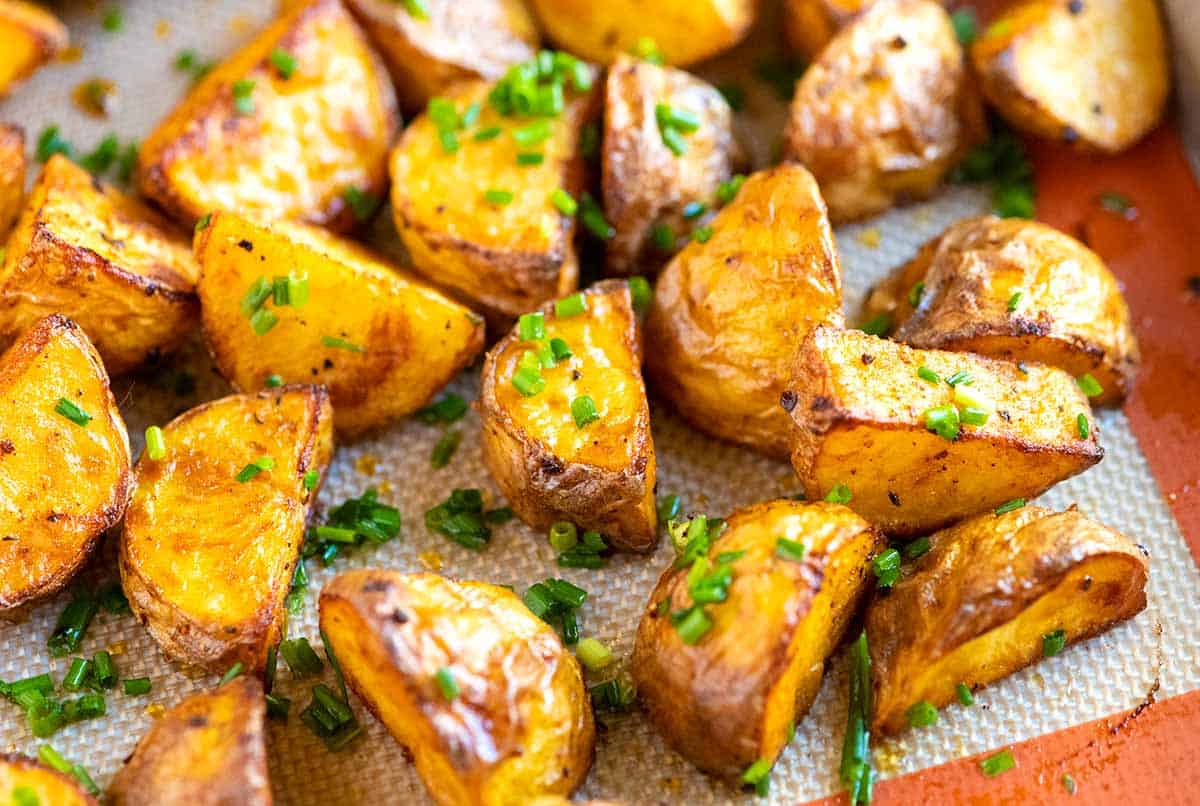
Golden, crunchy, and fluffy-centered roasted potatoes with an easy method that works on busy weeknights. Includes the best potato types, temperatures, and ma...
Recipeva
Oven Baked Potatoes
Crispy skin, fluffy centers, and all the best topping ideas. Learn Maya’s reliable method for perfect oven baked potatoes, plus timing, temperatures, and make-ahead tips.

Maya Reynolds
Maya Reynolds is a passionate home cook, recipe developer, and the creative voice behind Recipeva. With over a decade of experience translating complex culinary techniques into approachable weeknight meals, she focuses on creating dishes that bring joy to the dinner table without the stress.
Created September 24, 2026
Updated September 24, 2026
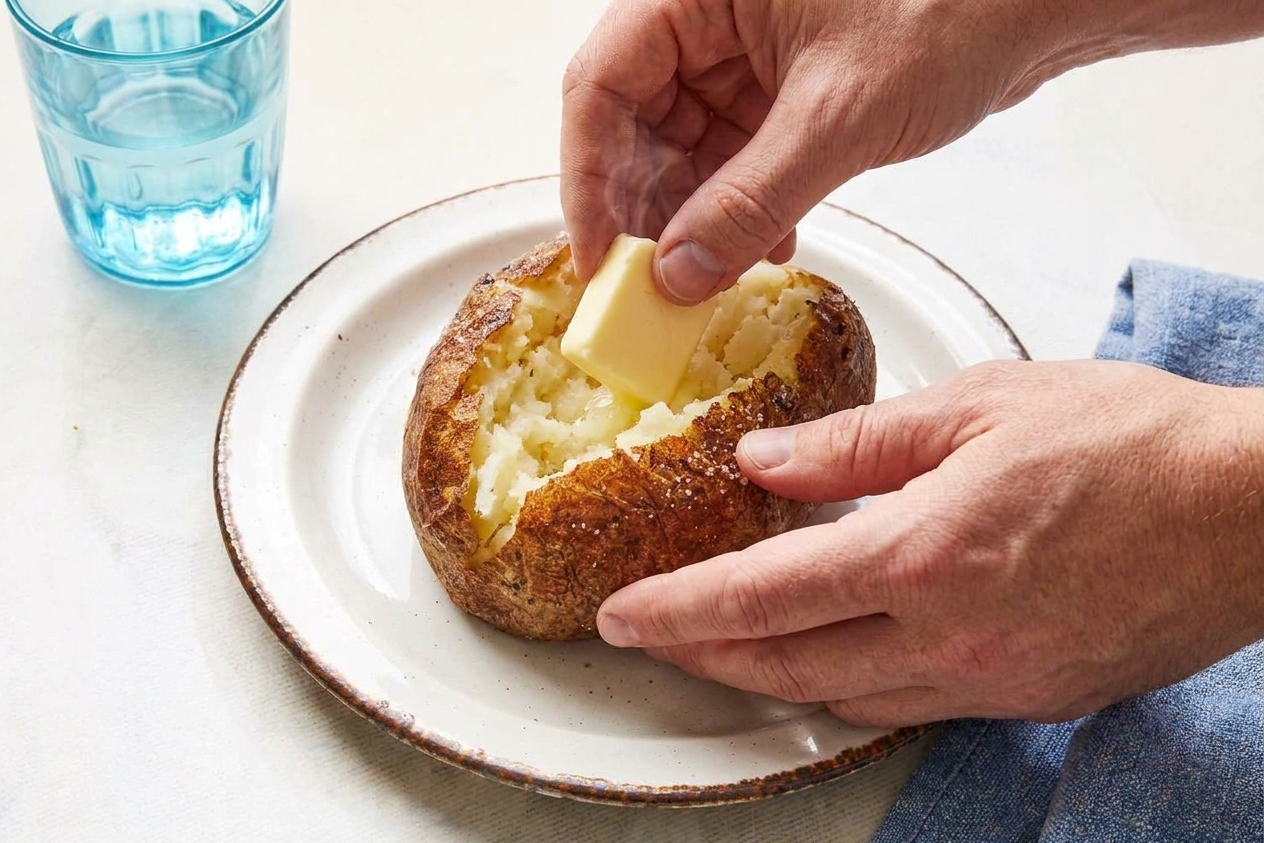
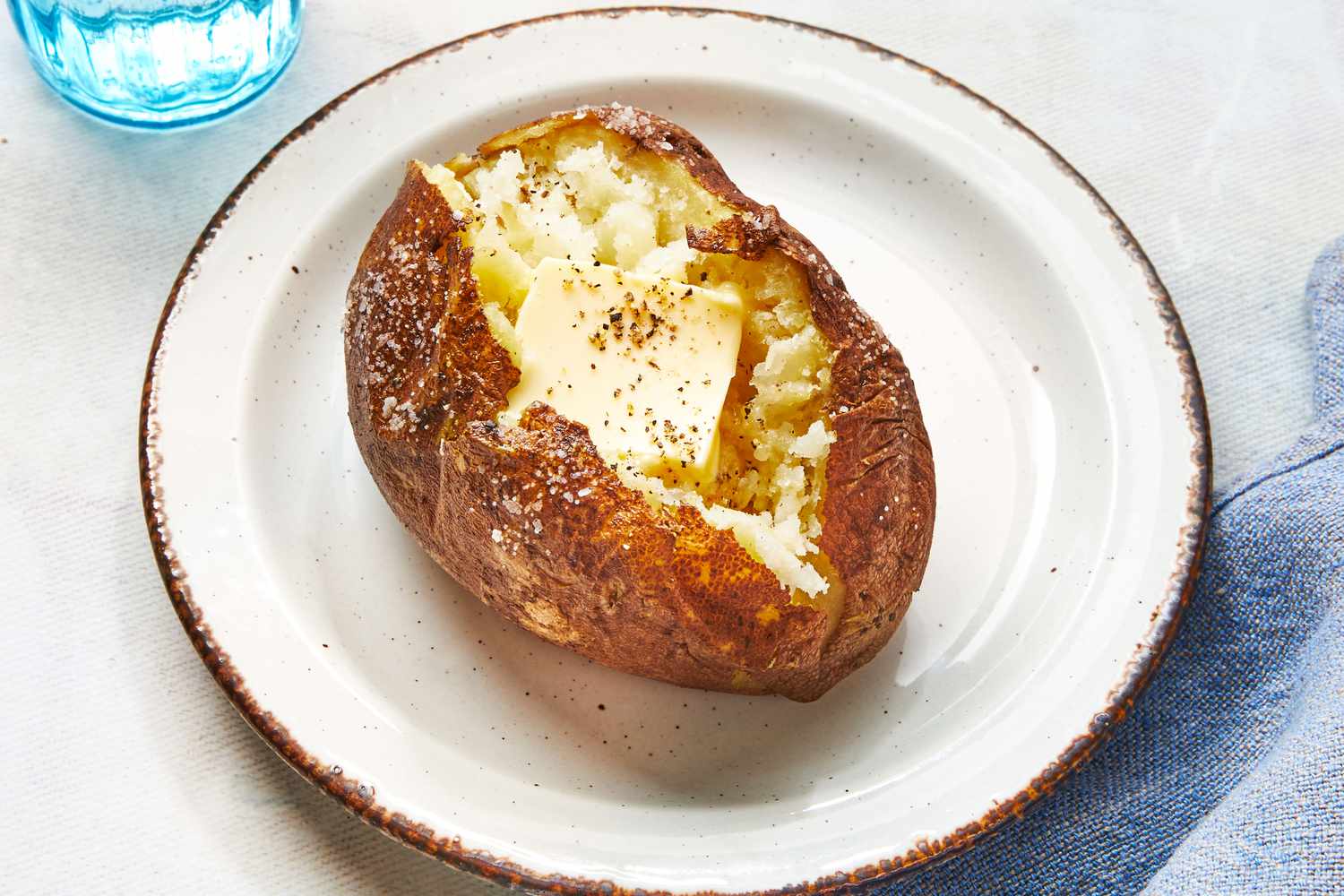
There are few kitchen wins as satisfying as a truly great oven baked potato. You know the kind: shatter-crisp skin, steamy fluffy middle, and enough buttery potato goodness to make even a simple Tuesday dinner feel like a treat.
This is my go-to method when I want dependable results without fuss. I will walk you through exactly what to do, why it works, and how to tweak it based on the potato size you have on hand. (And yes, we are going to use a generous amount of salt. The potato deserves it.)
What you need
You only need a handful of basics, but each one matters. This is one of those recipes where technique does most of the heavy lifting.
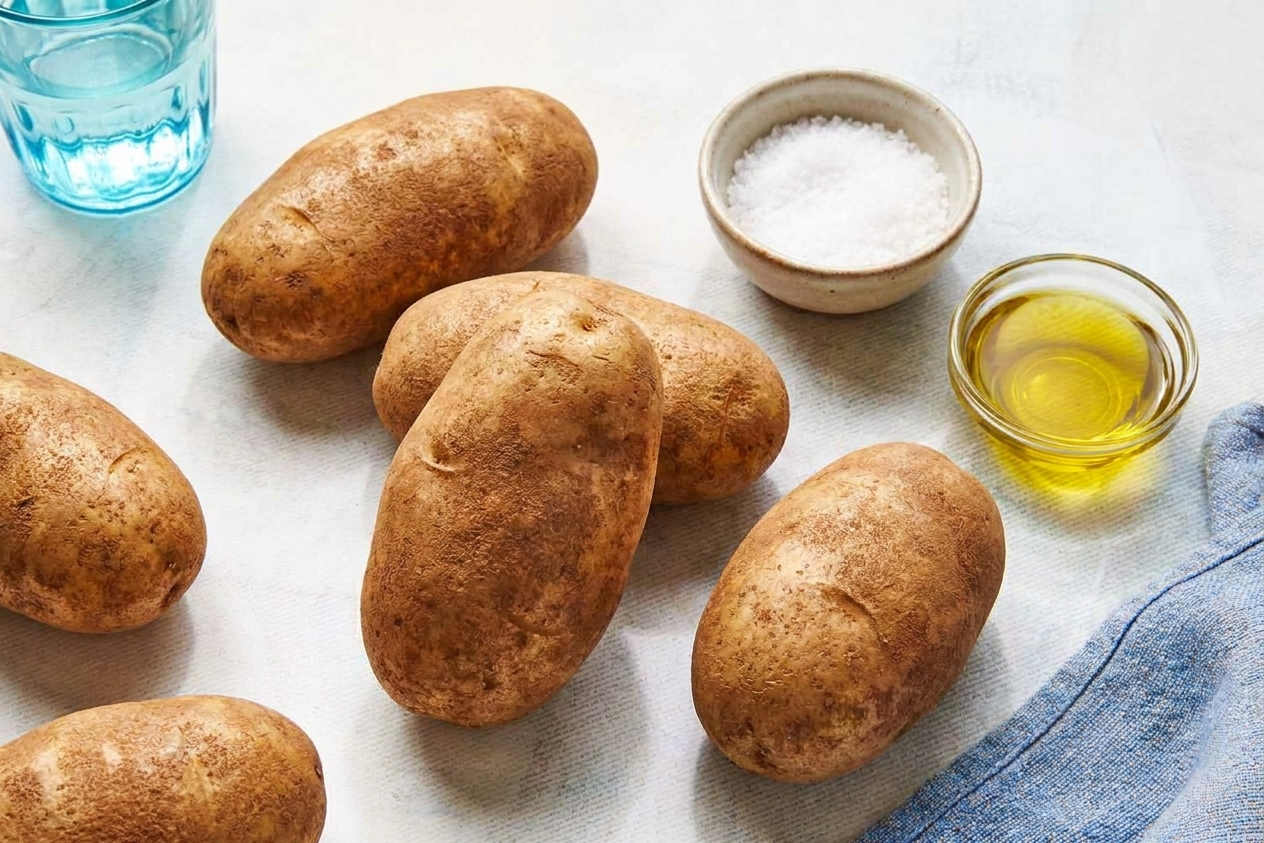
- Russet potatoes: Best for that classic baked potato texture, fluffy and light.
- Olive oil or neutral oil: Helps the skin crisp and gives the salt something to cling to.
- Kosher salt: For a craveable, seasoned skin you actually want to eat.
- Optional: Fresh cracked pepper, garlic powder, or smoked paprika for the skin.
Potato note: Yukon Golds can be baked too, but the inside will be more creamy and dense, not as fluffy as a russet. Still delicious, just different.
Quick prep note: Scrub well, trim off any eyes or rough spots, and make sure the skins are fully dry before oiling. Water is the enemy of crisp.
Best oven temp
For the most consistent results, I bake potatoes at 425°F. It is hot enough to crisp the skin while giving the inside time to soften all the way through.
- 425°F: My favorite balance of crisp skin and fluffy interior.
- 400°F: Works fine if the oven is already there, just expect a longer bake.
- 450°F: Faster, crispier skin, but keep an eye on smaller potatoes so they do not over-dry.
How to bake potatoes
This is the method I teach friends who swear they cannot cook. It is forgiving, and it turns out beautifully.
- Heat the oven to 425°F. Place a rack in the middle of the oven.
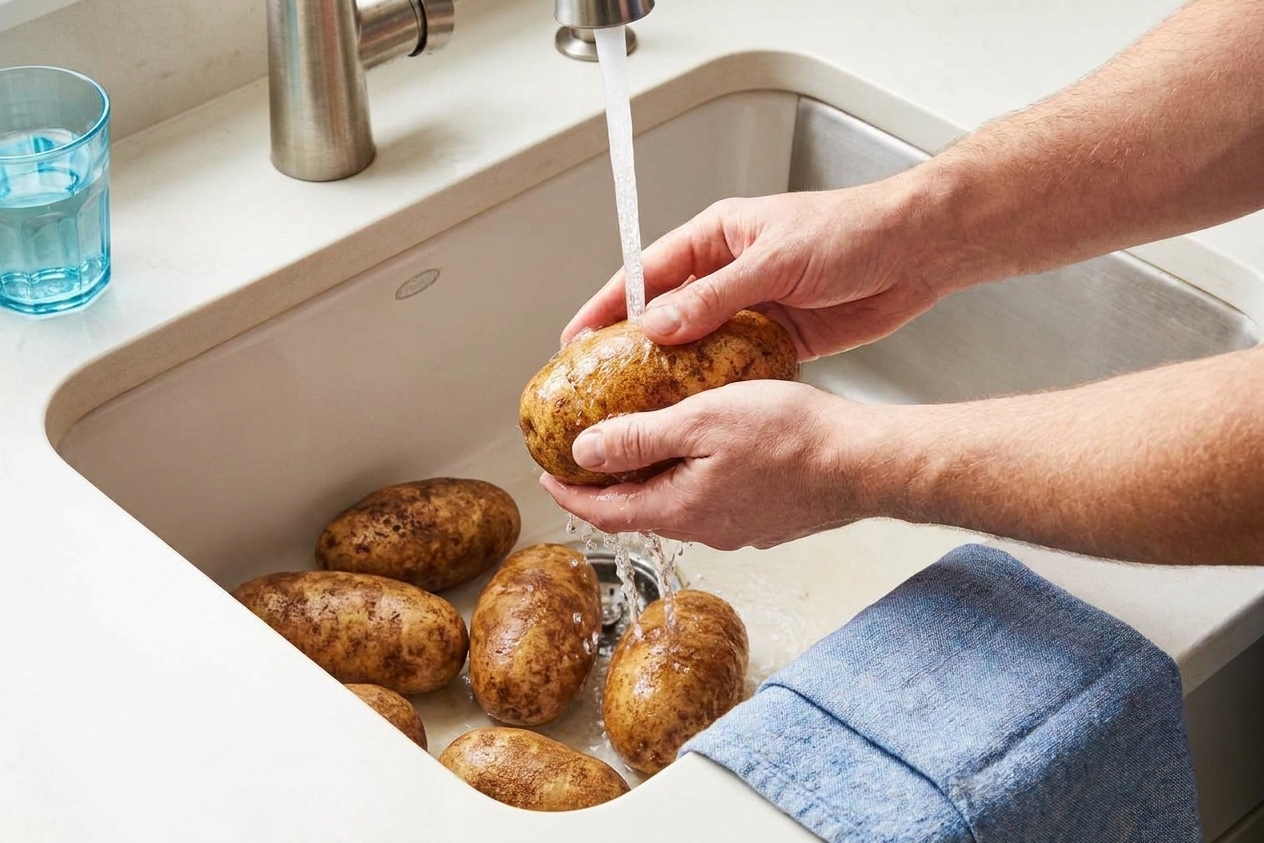
- Scrub the potatoes under cool water. Trim any blemishes, then dry them very well. Dry skin crisps better.
- Pierce each potato 6 to 10 times with a fork. This prevents pressure buildup so steam can escape.
- Oil and salt: Rub each potato with a thin coat of oil, then sprinkle generously with kosher salt. I like to do this right on a sheet pan for easy cleanup.
- Bake directly on the oven rack for maximum airflow and crispness. Slide a foil-lined sheet pan on the rack below to catch any drips, or bake on a sheet pan if you prefer. (Rack-baked is crispier.)
- Bake until tender: Start checking at the times below. A knife should slide in easily, and the skin should feel crisp.
- Split and fluff: Slice open immediately. Use a fork to gently fluff the inside, then add butter and toppings while the potato is piping hot.
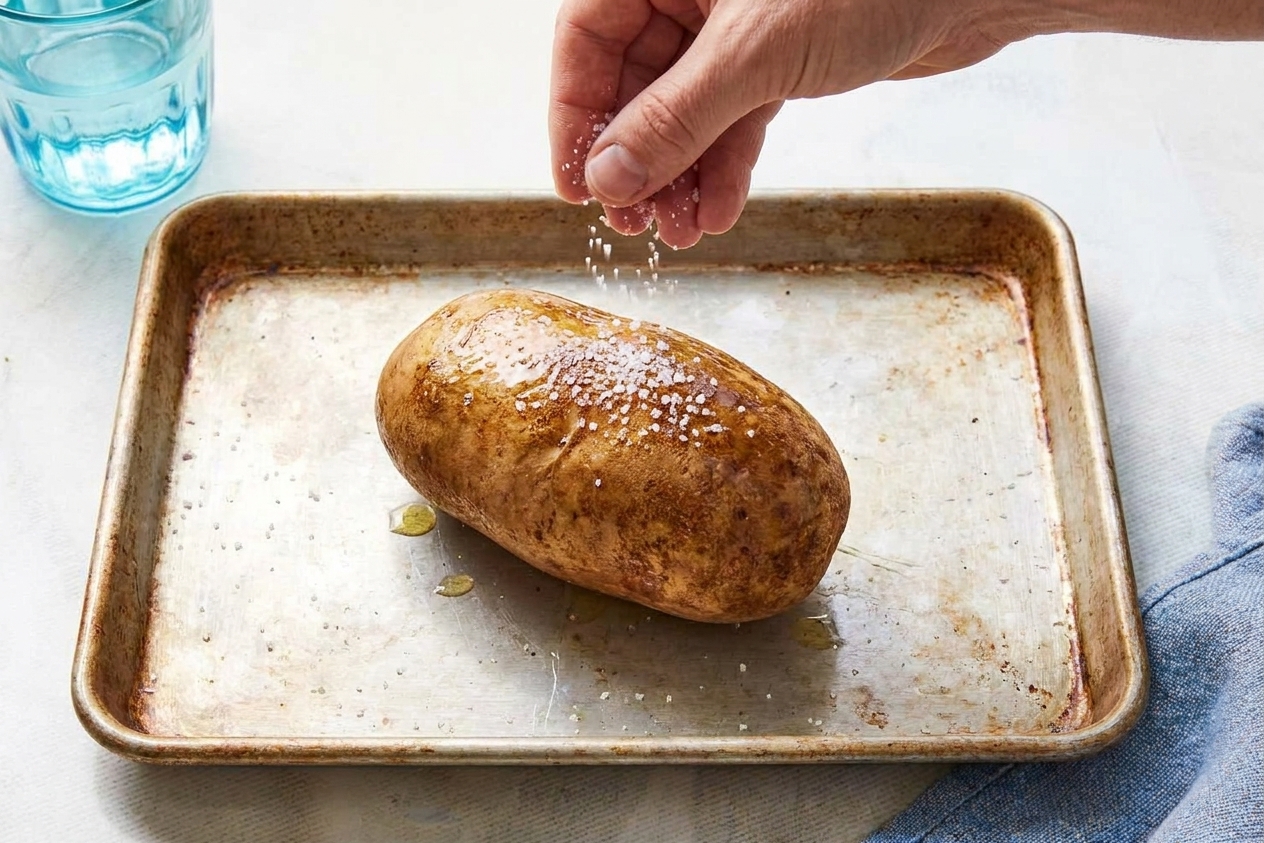
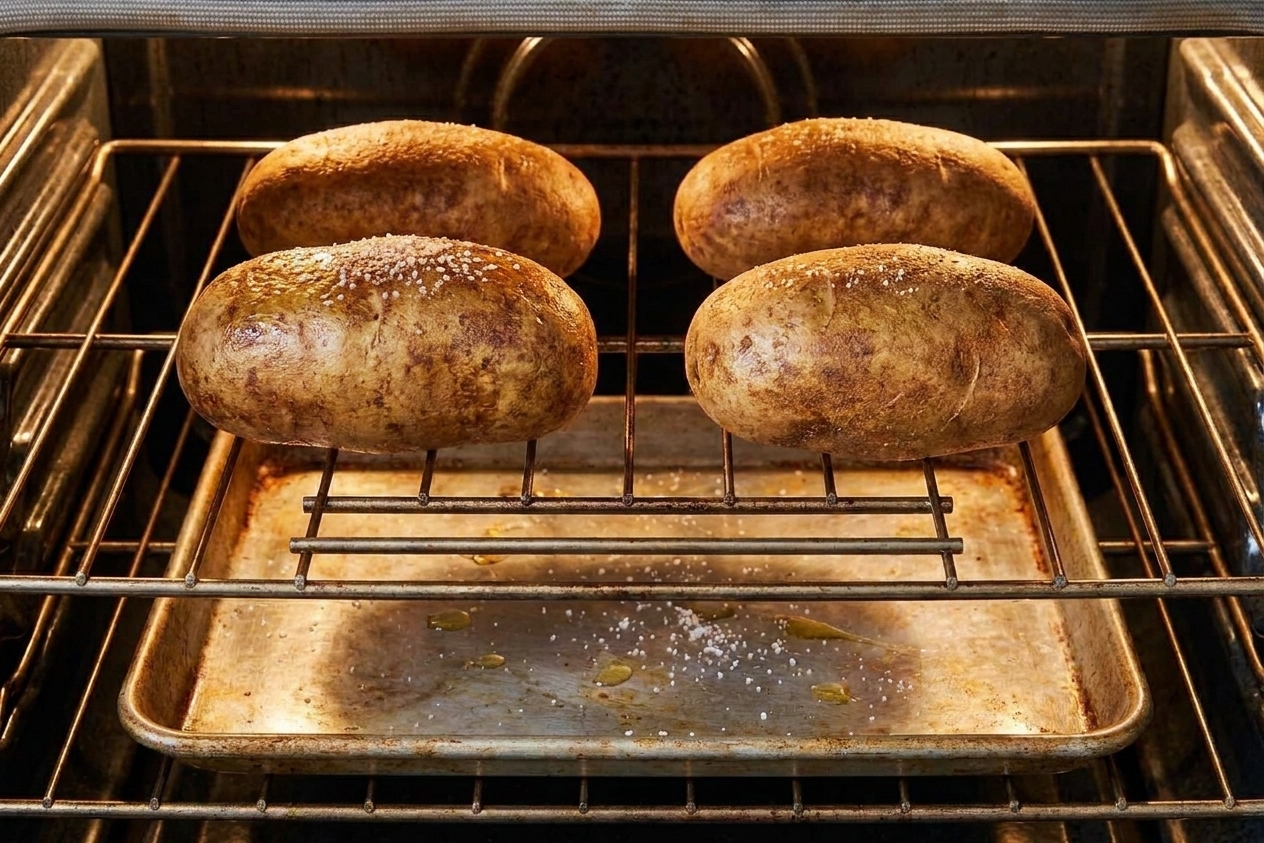
Maya tip: For the fluffiest interior, do not wrap potatoes in foil. Foil traps steam and gives you softer, sometimes soggy skin.
How long to bake
The exact time depends on size more than anything. Here is a reliable guide for russets at 425°F:
- Small (5 to 6 oz): 40 to 50 minutes
- Medium (7 to 9 oz): 50 to 65 minutes
- Large (10 to 12 oz): 65 to 80 minutes
If your potatoes are all different sizes (it happens), pull the smaller ones first. I do a quick squeeze with an oven mitt, but do not squeeze hard. Hot steam can surprise you. They should give slightly and feel soft inside, not firm.
How to tell they are done
Here are the checks I trust most, in order:
- Knife test: A paring knife should slide into the center with little resistance.
- Skin test: The outside looks dry and lightly wrinkled, and feels crisp.
- Internal temp (optional): If you like precision, aim for about 205°F to 210°F in the center.
If the skin is browned but the inside is still firm, your potato is not done. Give it more time. Potatoes are patient. So are we.
Crispy skin secrets
When someone tells me they hate potato skins, it is usually because they have only had steamed, foil-wrapped skins. Here is how to get that crisp, salty jacket that tastes like the best part of the potato.
- Dry thoroughly after washing.
- Oil the skin lightly, then salt generously.
- Bake unwrapped.
- Use airflow: Bake directly on the rack if you can.
- Do not underbake: Crisp skin happens when moisture has time to cook off.
Extra-crispy option: If you baked on a sheet pan, move the potatoes directly to the rack for the last 5 to 10 minutes to help the skin dry and crisp even more.
Favorite toppings
A baked potato can be a side dish or the whole meal. Here are my favorites, including a few that feel like a cozy restaurant situation at home.
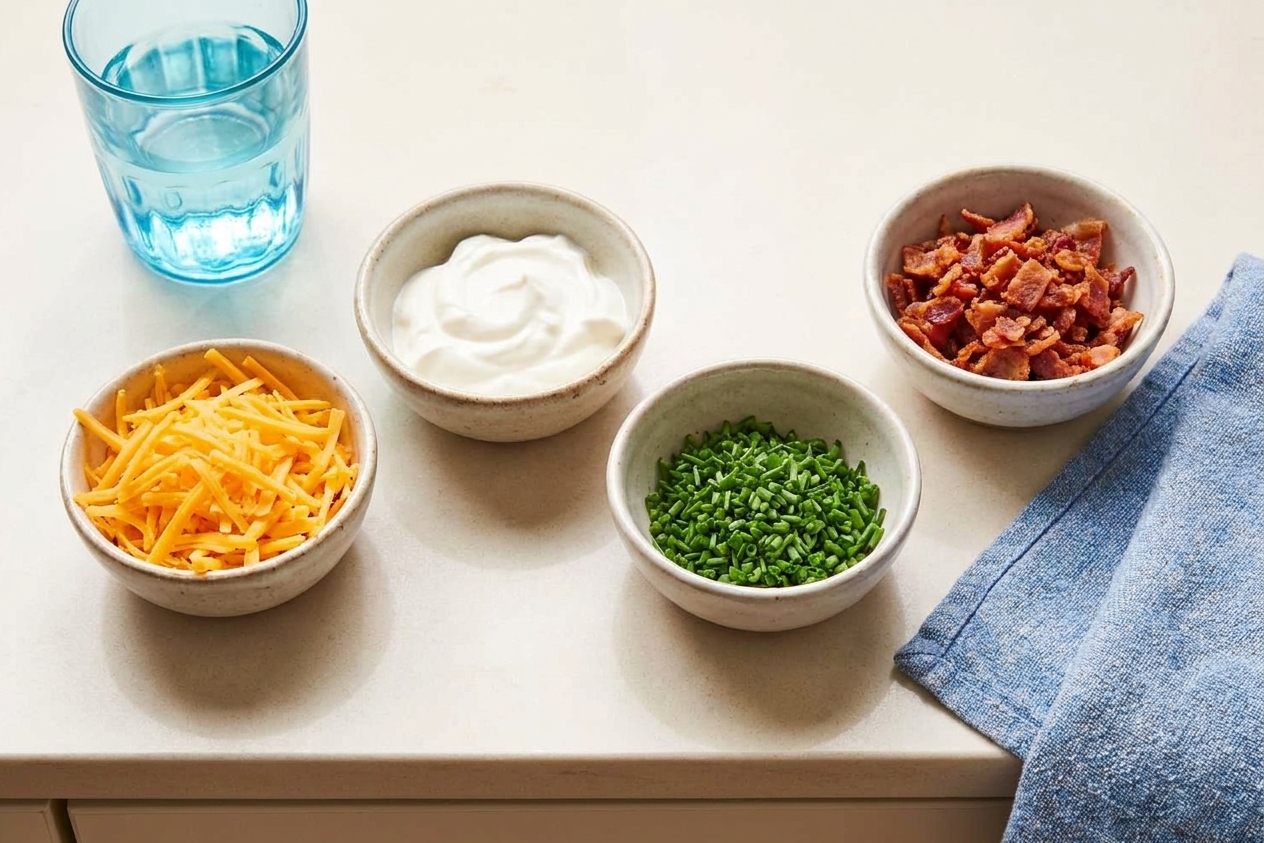
Classic steakhouse vibes
- Butter + sour cream + chives
- Cheddar + bacon + scallions
- Salted butter + lots of black pepper
Comfort food upgrades
- Broccoli + cheddar sauce
- Chili + shredded cheese + diced onion
- Shredded rotisserie chicken + barbecue sauce + pickled jalapeños
Veg-forward and hearty
- Sautéed mushrooms + garlic butter
- Black beans + salsa + avocado
- Spinach + feta + a squeeze of lemon
My forever opinion: If you think you added enough garlic, add one more clove.
Make-ahead and reheating
Baked potatoes are surprisingly meal-prep friendly if you do it the right way.
To make ahead
Bake as directed, let cool, then refrigerate in an airtight container for up to 4 days.
To hold for serving
If you need a little breathing room, let them sit for 10 to 20 minutes on a rack at room temp so the skins stay crisp. If you need them warm longer, keep them in a 200°F oven on a rack, uncovered or very loosely tented. Tight foil traps steam and softens the skin.
To reheat (best method)
Heat the oven to 400°F. Place potatoes directly on the rack and reheat for 15 to 30 minutes, depending on size, until hot all the way through. Start checking at 15 minutes. Very large, fridge-cold potatoes can take longer.
Microwave option
If speed is the goal, microwave until hot, then pop into a 450°F oven for 5 to 10 minutes to re-crisp the skin.
Food safety note: Do not leave baked potatoes sitting at room temperature for hours. Cool and refrigerate within about 2 hours.
Common problems and fixes
If your baked potatoes have ever been disappointing, it is almost always one of these issues.
- Hard or crunchy in the middle: Underbaked. Put it back in the oven and give it time.
- Skin is tough: Usually from baking too low or not using oil. Bake hotter next time and lightly oil the skin.
- Skin is soft: Foil wrapping, crowding, or not enough time in the oven. Bake unwrapped with good airflow and a bit longer.
- Inside is dense or a little gluey: The potato variety may be too waxy (russets are best), the potato may be older, or the flesh got overworked. Fluff gently with a fork instead of stirring aggressively.
- Not enough flavor: Salt the skin well, then season the inside after fluffing with butter and a pinch of salt.
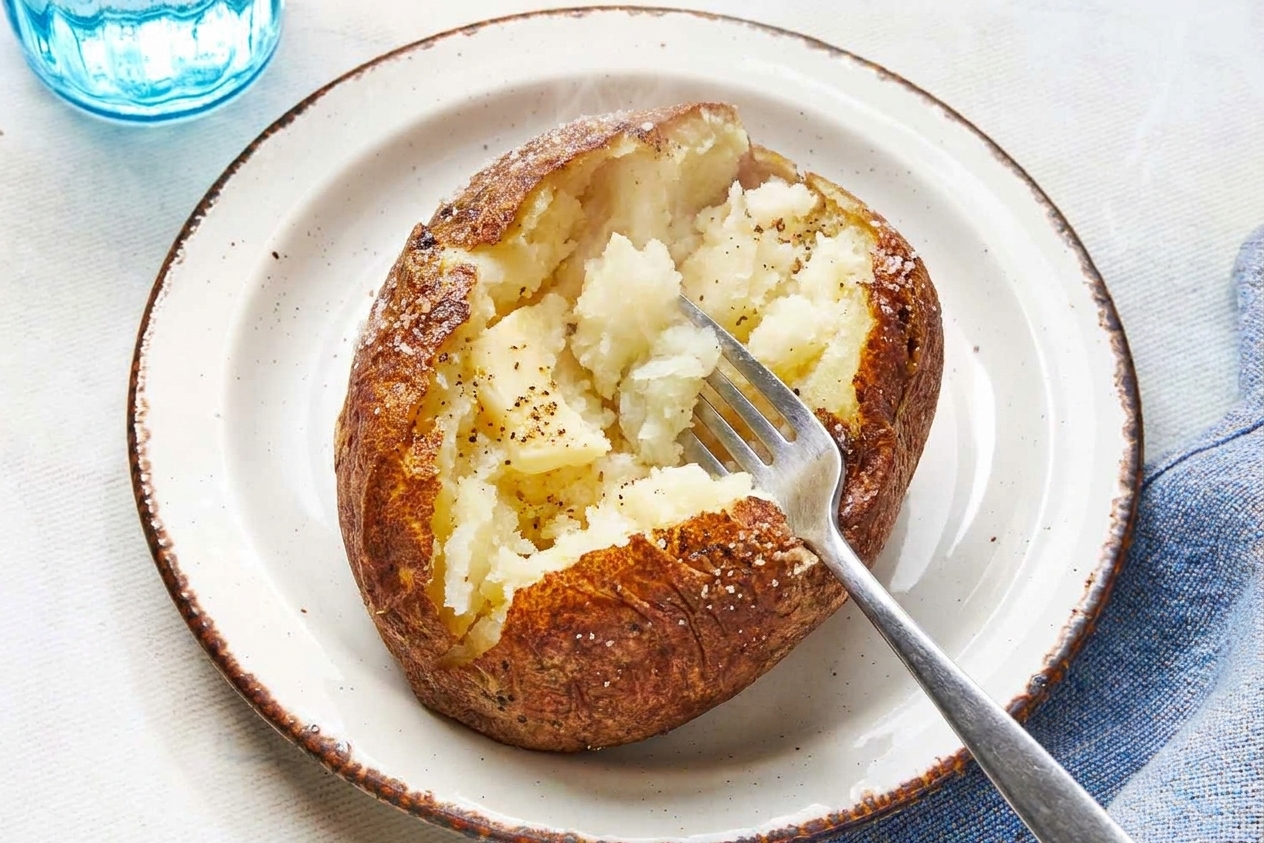
Recipe
This is the streamlined version you can screenshot in your brain and make on autopilot.
Ingredients
- 4 russet potatoes (medium to large)
- 1 to 2 tablespoons olive oil
- 1 tablespoon kosher salt, plus more as needed (most will fall onto the pan)
- Butter and toppings of choice, for serving
Instructions
- Preheat oven to 425°F.
- Scrub potatoes, trim any blemishes, and dry very well.
- Pierce each potato 6 to 10 times with a fork.
- Rub with oil and sprinkle generously with kosher salt.
- Bake directly on the oven rack (sheet pan below to catch drips) for 50 to 80 minutes, depending on size, until a knife slides in easily.
- Split open, gently fluff with a fork, add butter, and serve hot.
Serving idea: Make it a simple weeknight dinner by topping with leftover chili or shredded chicken and a big handful of cheddar.
FAQ
Should I wrap potatoes in foil?
Not if you want crispy skin. Foil traps steam and makes the skin soft. If you need to hold potatoes warm for a bit, you can loosely tent with foil after baking, but do not wrap tightly while baking.
Can I bake potatoes at 350°F?
You can, but it takes longer and the skin is less crisp. If 350°F is what you have (maybe something else is baking), plan on roughly 75 to 100 minutes depending on size.
Do I need to poke holes?
Yes. It lets steam escape and prevents pressure buildup.
Why are my baked potatoes not fluffy?
Usually they are underbaked, or they are not russets. Bake until truly tender in the center and choose russets for the fluffiest texture.
Can I use convection?
Absolutely. Convection helps crisp the skin. Reduce the temperature by about 25°F and start checking a little early.
Final note
If you take nothing else from this page, let it be this: baked potatoes want a hot oven, a little oil, a generous salt shower, and enough time to become their best selves. Put on some music, roast a tray of broccoli or chicken thighs alongside, and you have a dinner that feels both easy and deeply satisfying.