

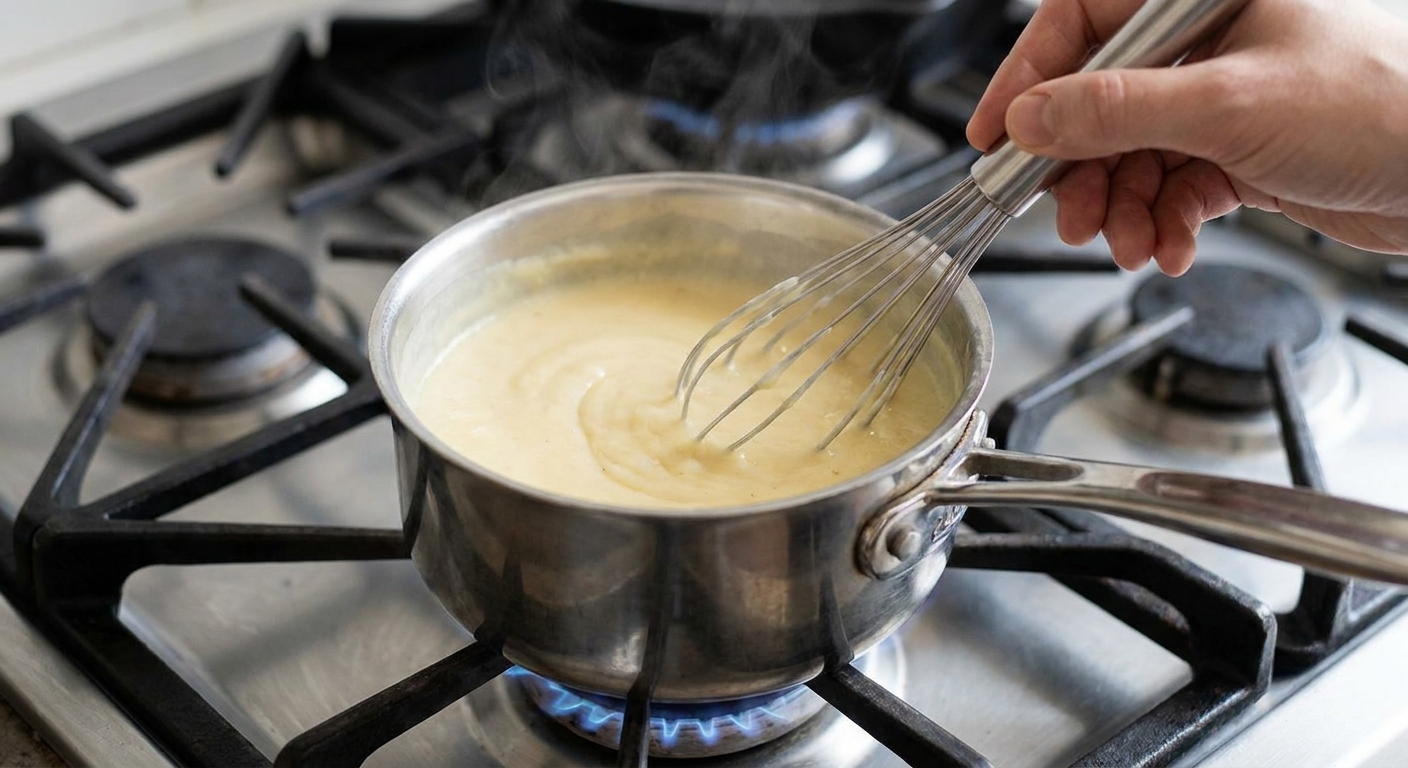
When a cozy casserole recipe calls for a can of condensed cream of chicken soup, it is usually not about “soup” at all. It is about a thick, savory binder that turns rice, broccoli, and chicken into something scoopable and creamy instead of dry and crumbly. This homemade version is my go-to when I want that same reliable texture without opening a can.

We build it the classic way with a quick butter and flour roux, then whisk in broth and milk until it reduces into a thick, glossy condensed consistency, like the canned version. I season it like the best part of a roast chicken dinner: onion, garlic, a little poultry seasoning, and black pepper. The end result is rich, spoon-coating, and thick enough to mound slightly on a spoon before it relaxes, which is exactly what baked casseroles need.
This is designed for casseroles first, but you can also thin it with extra broth and turn it into an easy bowl of soup when you want something warm and simple. Most importantly, the full batch is intended to replace one standard 10.5-ounce can (about 1 1/3 cups) of condensed cream of chicken soup. Because simmering can vary slightly by pan and heat level, I lean on the thickness cues in the recipe to help you land that can-style result every time.
The idea
Why This Recipe Works
- Condensed thickness on purpose: We use a higher roux-to-liquid ratio than a typical bowl-of-soup recipe, so it bakes like the canned binder casseroles expect.
- Real chicken flavor: Chicken broth plus a pinch of poultry seasoning gives you that savory “cream of chicken” vibe without needing mystery ingredients.
- Smooth, lump-free texture: Cooking the roux briefly and whisking in liquid gradually keeps it silky, even if you are a little distracted.
- Salt cues built in: Casseroles can go bland fast. This recipe tells you when to taste and how to adjust based on your broth and your add-ins.
Shopping
Ingredient Notes
Butter and flour
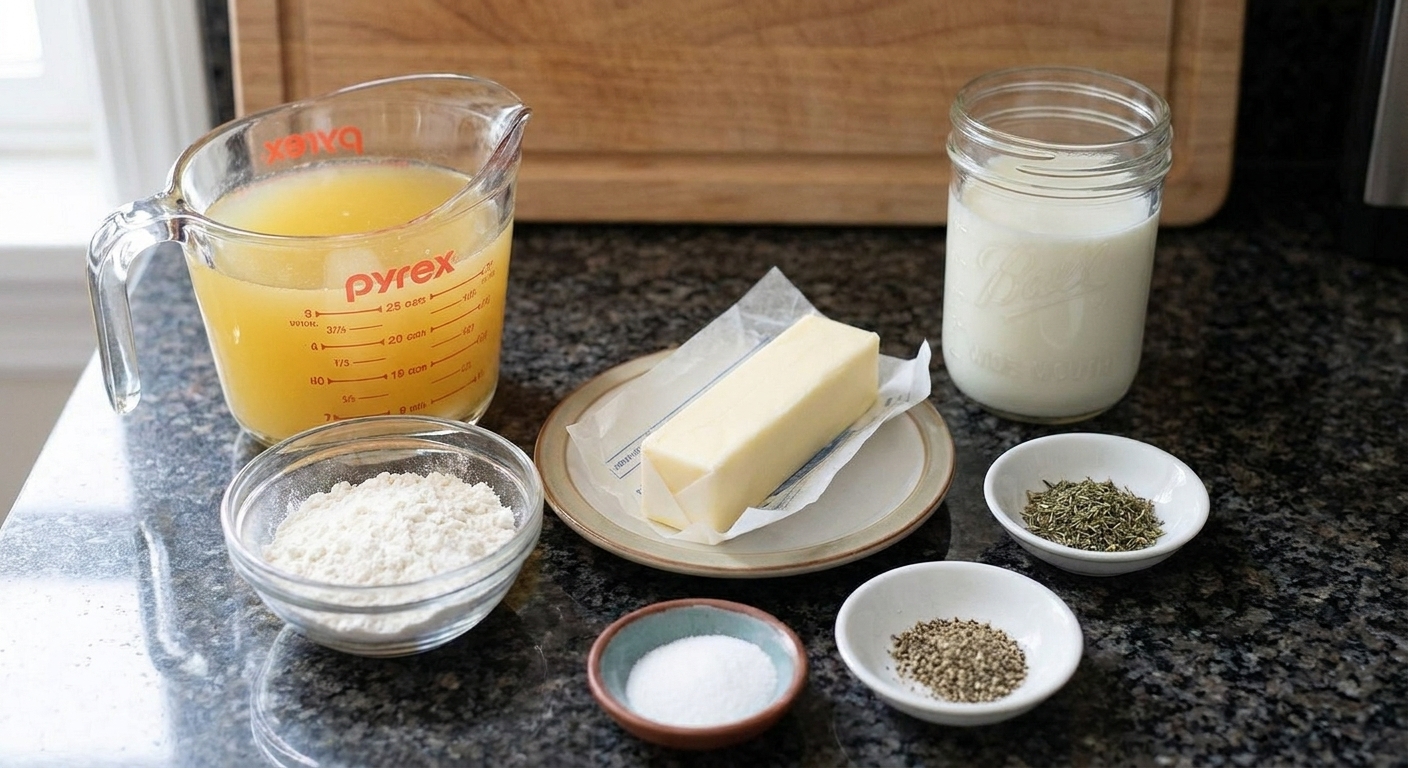
This is the backbone of the condensed texture. Cook the butter and flour together for about a minute to remove the raw flour taste, but do not brown it. We want a creamy, pale soup.
Chicken broth
Broth brings the chicken-forward flavor. If you use low-sodium broth, you will almost certainly need more salt at the end. If you use regular broth, taste first before adding extra.
Milk
Whole milk makes the richest, closest-to-the-can result. 2% works too, just slightly less lush. I do not recommend skim for casseroles because it can taste thin.
Seasonings
Onion powder and garlic powder keep things easy and smooth. Poultry seasoning usually includes herbs like sage and thyme and makes it taste like Sunday chicken. If you do not have it, dried thyme is a good backup.
Salt
Because this “soup” is often the main seasoning vehicle in a casserole, you want it to taste pleasantly savory on its own. Aim for “tastes like a creamy chicken gravy” when you sample it off the spoon.
Get set up
Equipment You Will Need
- Small saucepan (2 to 3 quart)
- Whisk
- Measuring cups and spoons
- Rubber spatula for scraping the pan corners
Technique
Tips for Getting It Right
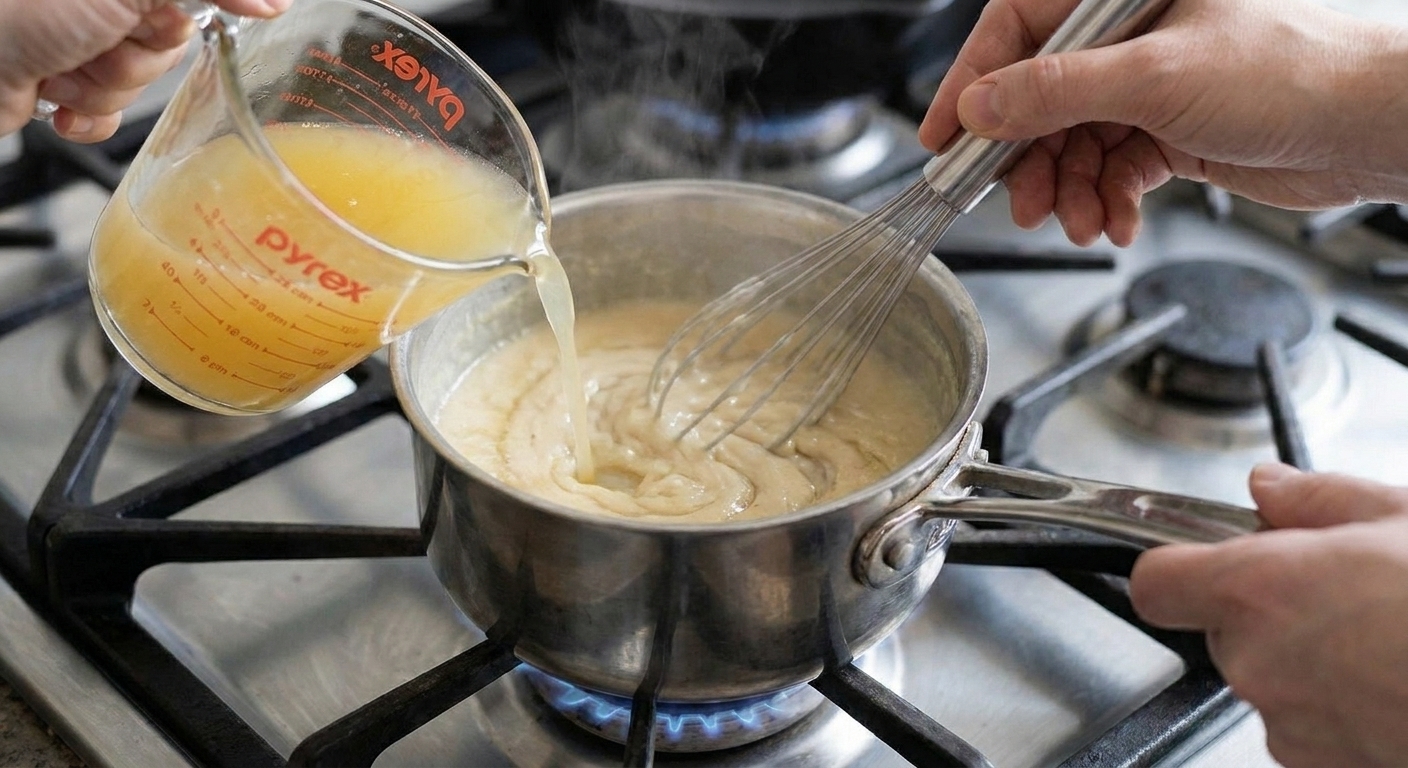
- Whisk in the liquids gradually: Start with a small splash of broth, whisk smooth, then add the rest. This is the fastest way to avoid lumps.
- Simmer to the right thickness: It should be thick enough that the whisk leaves brief trails. If you spoon it, it should mound slightly before settling.
- Taste after it thickens: Salt reads differently once the soup is thick. Season at the end for the most accurate result.
- Let it cool a few minutes before mixing: If you are combining it with eggs, sour cream, or cheese, a short cool-down helps prevent curdling.
Maya’s casserole cue: If your casserole also includes salty ingredients like cheese, deli ham, or seasoned rotisserie chicken, keep the soup seasoning on the lighter side. If your casserole is mostly rice, chicken, and veggies, season the soup more boldly.
Flexibility
Substitutes That Work
- Milk substitute: Half-and-half makes it extra rich. 2% milk works fine. Unsweetened plain oat milk can work in a pinch, but the flavor will be less classic and the thickening can vary by brand.
- Butter substitute: You can use an equal amount of neutral oil, but butter tastes best here.
- Seasoning substitutes: No poultry seasoning? Use 1/4 teaspoon dried thyme plus a pinch of rubbed sage if you have it. No onion powder? Use 2 tablespoons very finely minced onion and cook it in the butter for 2 to 3 minutes before adding flour.
- Broth options: Chicken stock is great. Better Than Bouillon-style paste is fine too, mixed according to the label, but watch the salt.
Make it yours
Variations to Try
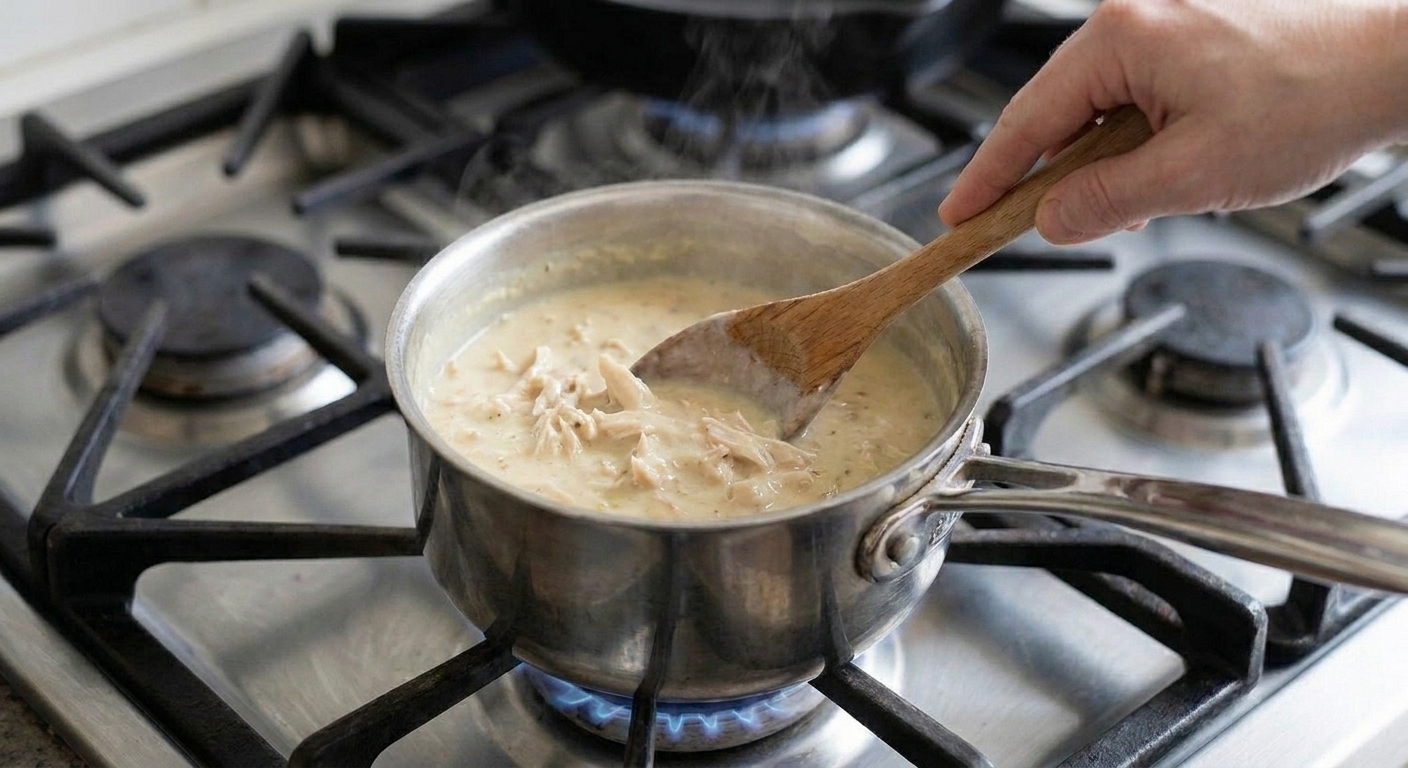
- Extra chicken-y: Stir in 1/4 cup very finely shredded cooked chicken at the end for more flavor, especially nice if your broth is mild.
- Herby: Add 1/2 teaspoon dried parsley or a pinch of rosemary.
- Black pepper gravy style: Double the black pepper for a more peppery, Southern-style vibe.
- With sauteed aromatics: Cook 1 minced garlic clove and 2 tablespoons minced onion in the butter before the flour for a more from-scratch flavor profile.
On the table
What to Serve It With
- Use as the binder in broccoli rice casserole, chicken and wild rice casserole, or tuna noodle casserole (swap broth type as needed).
- Stir into cooked rice or quinoa with steamed broccoli for a fast side dish.
- Thin with extra broth to make a quick bowl of creamy chicken soup, then add shredded chicken and peas.
Later
Storage, Freezing and Reheating
- Refrigerate: Cool completely, then store in an airtight container up to 4 days. It will thicken as it chills.
- Reheat: Warm gently in a saucepan over low heat, whisking. Add a splash of broth or milk if needed to loosen.
- Freeze: You can freeze it up to 2 months, but dairy-based sauces can separate slightly. Thaw overnight in the fridge and whisk while reheating to bring it back together.
- Make-ahead for casseroles: If you are prepping a casserole the next day, make this soup, chill it, then use it cold. It mixes easiest if you let it sit at room temperature for 10 minutes first.
Watch out
Common Mistakes to Avoid
- Not cooking the flour: Give the roux at least 60 seconds of cooking so the soup does not taste floury.
- Pouring all the liquid in at once: That is the fastest route to lumps. Add gradually and whisk steadily.
- Boiling hard: A gentle simmer thickens smoothly. A hard boil can scorch the bottom and make the texture grainy.
- Under-seasoning: Remember, this is often the main seasoning in a casserole. Taste and adjust before you pour it into the mix.
Questions
Frequently Asked Questions
How much homemade substitute equals one can of condensed cream of chicken soup?
This recipe makes about 1 1/3 cups, which is the same as a standard 10.5-ounce can. Use the full batch to replace one can.
Can I use this in a casserole without thinning it?
Yes. It is intentionally thick, so your casserole bakes up creamy instead of watery. If you thin it, you may need to reduce other liquids in the casserole.
My casserole recipe calls for two cans. Should I double it?
Yes, double all ingredients. Use a slightly larger saucepan and expect an extra minute or two to come back to a simmer and thicken.
What if my soup gets too thick?
Whisk in broth or milk 1 tablespoon at a time over low heat until it is thick but pourable. For casseroles, it should flow slowly off a spoon.
Can I make it gluten-free?
You can try a gluten-free all-purpose flour blend cup-for-cup in the roux. Results vary by brand. If it thickens less, simmer a bit longer and expect a slightly different texture.
Do I need to add chicken bouillon?
Not if your broth tastes good. If your broth is bland, a small pinch of bouillon can help, but add carefully because it can quickly make things too salty.
The recipe
Homemade Cream of Chicken Soup (Condensed Substitute)
A thick, savory, from-scratch substitute for condensed cream of chicken soup that swaps 1:1 for one 10.5-ounce can in casseroles.
Ingredients
- 3 tablespoons unsalted butter
- 3 tablespoons all-purpose flour
- 3/4 cup chicken broth (regular or low-sodium)
- 1/2 cup whole milk (or 2%)
- 1/4 teaspoon onion powder
- 1/4 teaspoon garlic powder
- 1/4 teaspoon poultry seasoning
- 1/8 teaspoon black pepper, plus more to taste
- 1/4 teaspoon kosher salt, plus more to taste (see notes)
Instructions
- Make the roux. In a small saucepan over medium heat, melt the butter. Sprinkle in the flour and whisk constantly for about 1 minute, until smooth and bubbling, but still pale.
- Whisk in broth gradually. While whisking, pour in a small splash of chicken broth to loosen the paste, then slowly whisk in the remaining broth until smooth.
- Add milk and seasonings. Whisk in the milk, onion powder, garlic powder, poultry seasoning, black pepper, and 1/4 teaspoon kosher salt.
- Simmer until condensed-thick. Bring to a gentle simmer, whisking frequently, then cook 3 to 6 minutes until thickened to a condensed soup consistency. The whisk should leave trails that briefly hold, and the sauce should fall off a spoon in slow ribbons.
- Taste and adjust salt. Taste once thick. Add more salt a pinch at a time until it tastes pleasantly savory on its own. Remove from heat.
- Use or cool. Use right away as a 1:1 replacement for one 10.5-ounce can of condensed cream of chicken soup (about 1 1/3 cups). If making ahead, cool to room temperature, then refrigerate.
Recipe notes
Yield and swap: This batch is intended to replace 1 can (10.5 ounces) condensed cream of chicken soup. It yields about 1 1/3 cups.
Salt cue: If using low-sodium broth, you will likely need an extra 1/4 teaspoon salt. If using regular broth and your casserole includes salty cheese or seasoned chicken, you may not need more than the 1/4 teaspoon listed. Always taste after thickening.
Thickness cue for casseroles: Keep it thick. If you can easily pour it like heavy cream, it is too thin for most baked casseroles.