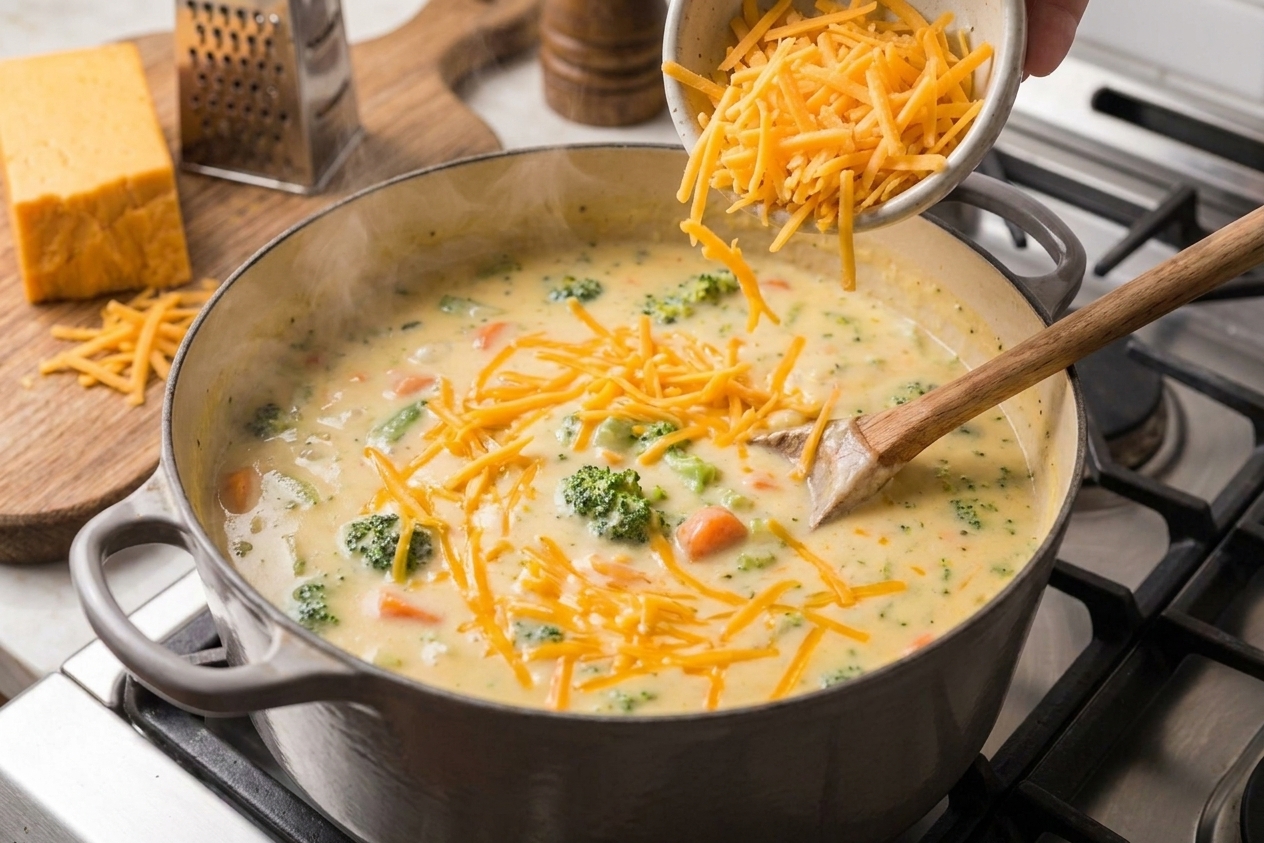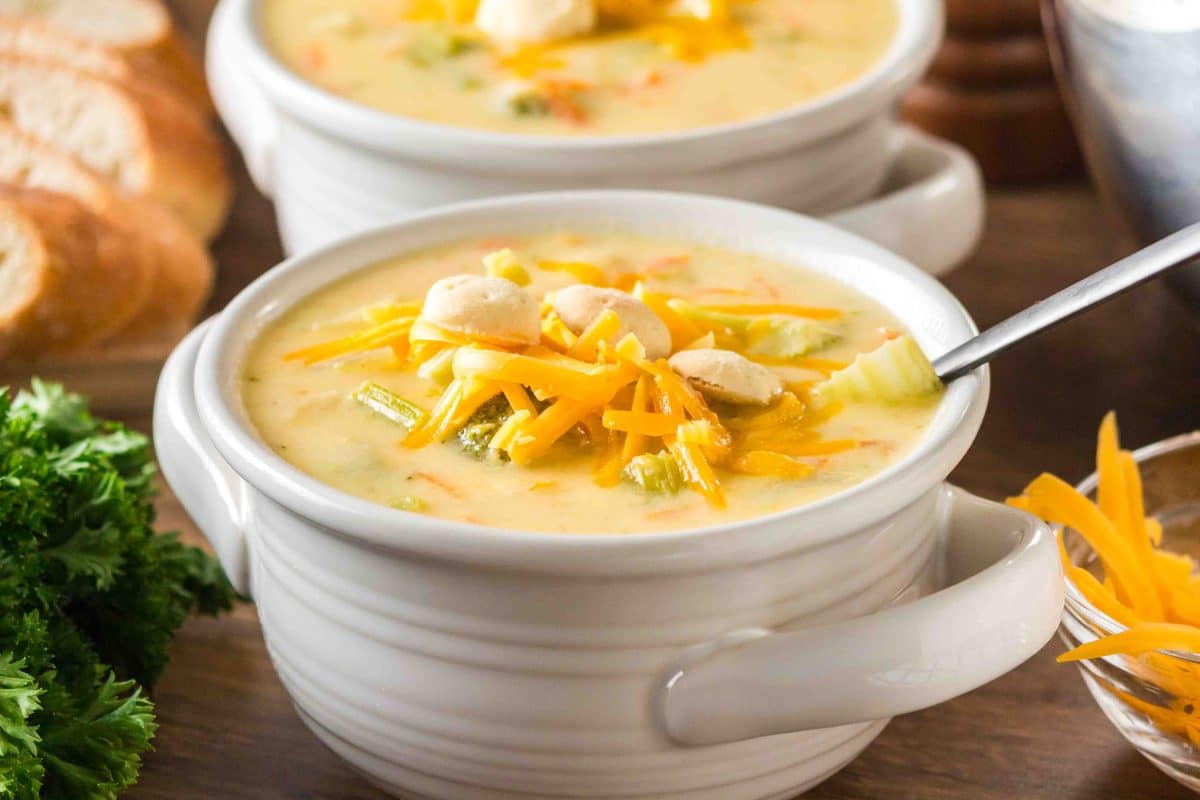
Broccoli cheddar soup is one of those recipes that feels like a warm hug, right up until your beautiful pot of soup turns a little grainy or the cheese clumps instead of melting in like a dream. I’ve made this soup more times than I can count, usually on a rainy Pacific Northwest weeknight, and the truth is: the cheese you choose matters just as much as the broccoli.
Below, I’ll break down sharp cheddar, mild cheddar, white cheddar, and blends so you can pick the best option for the flavor you want and the texture you deserve.

What “best” means here
When we’re talking broccoli cheddar soup, “best” usually comes down to three things:
- Flavor: Cheddar should taste bold and cheesy, not flat or overly salty.
- Melt: It should melt smoothly without turning stringy or separating into oily puddles.
- Smoothness: You want a velvety finish, not a grainy, gritty texture.
Cheddar is the classic choice because it brings that familiar tang and richness. But age, moisture, and additives can change how cheddar behaves in hot soup.
Sharp cheddar: best overall
If you want your soup to taste like it came from a cozy café, sharp cheddar is usually the best choice. It delivers that signature cheddar tang, even after it’s diluted by milk, broth, broccoli, and any extra vegetables you add (carrots, onions, celery, I see you).
Why it works
- Bigger flavor per bite, so the soup tastes “cheddar-y” without needing a mountain of cheese.
- Balances broccoli nicely. Broccoli can read slightly bitter, especially if it’s very fresh or cooked a touch too long. Sharp cheddar rounds that out.
What to watch for
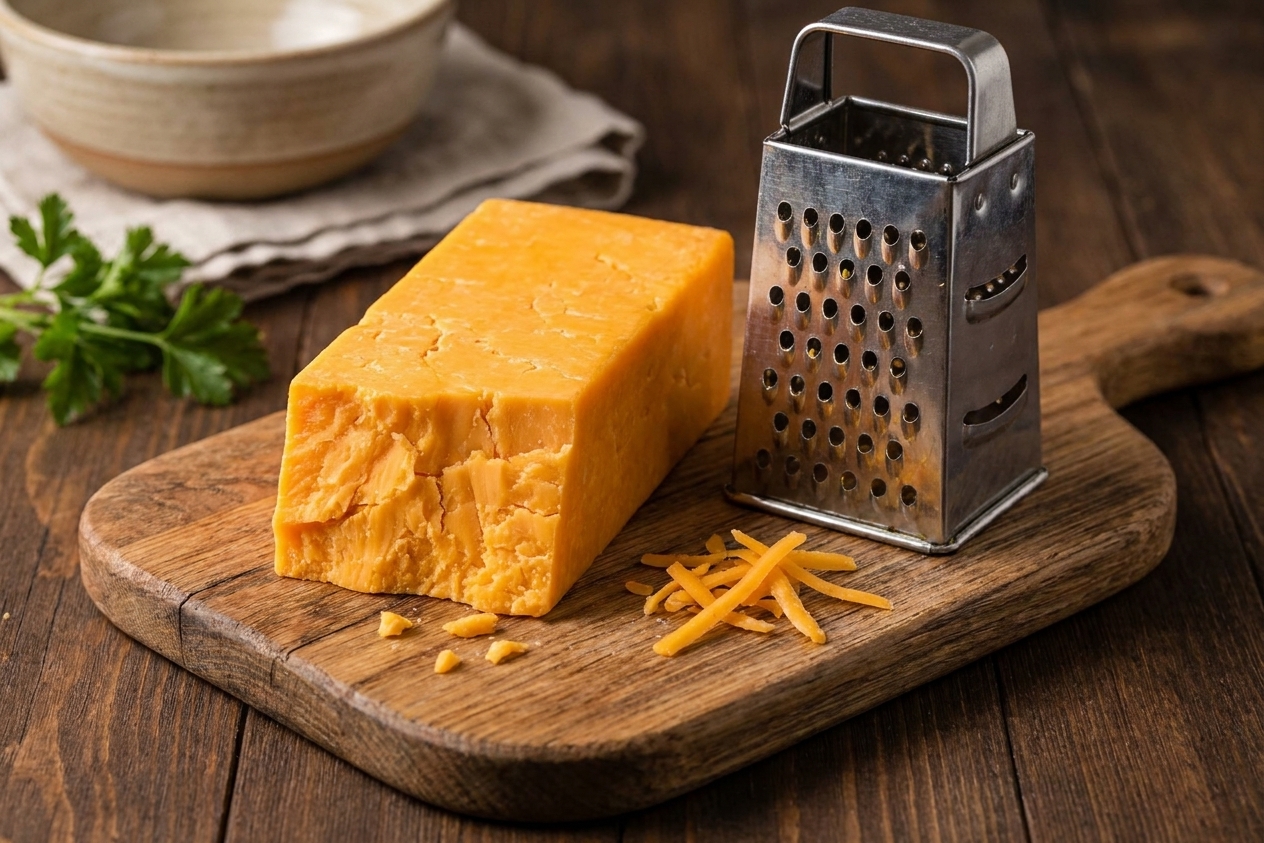
Very aged cheddar (extra sharp, vintage, clothbound) can be more likely to turn slightly grainy or separate if the soup is too hot when you add it. You can still use it, just be gentle with heat and add it slowly.
Mild cheddar: best for smooth melt
Mild cheddar is the friendliest option, especially if you’re cooking for kids or anyone who finds sharp cheddar “too much.” It’s also less aged, which often means a more forgiving melt.
Why it works
- Softer, creamier vibe with less tang.
- Typically melts easily because it’s not as aged.
The tradeoff
Mild cheddar can taste a bit muted once it’s in a full pot of soup. If you go mild, I recommend boosting flavor with one or two of these:
- A small spoonful of Dijon mustard
- A pinch of smoked paprika
- More garlic, always more garlic
- A little grated Parmesan stirred in at the end
White cheddar: best for clean tang
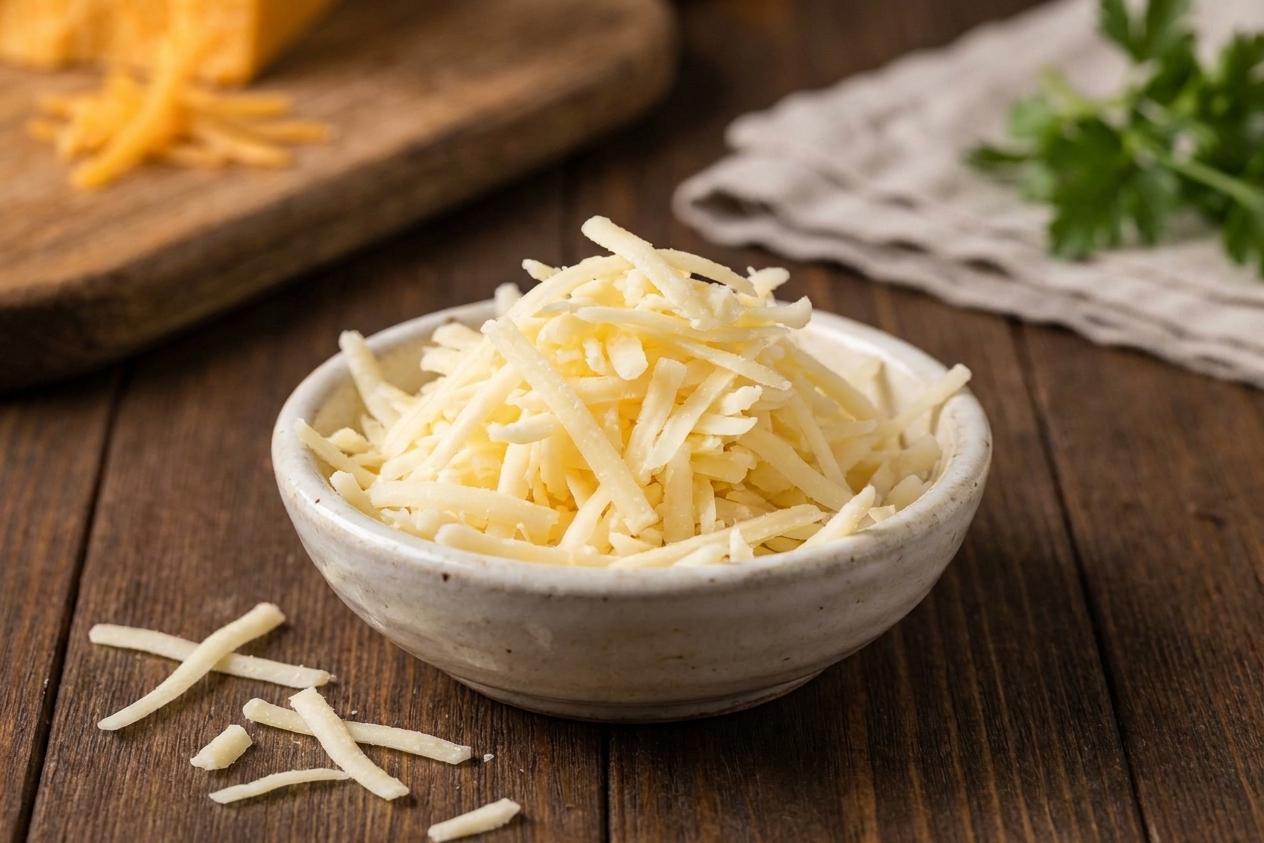
White cheddar is typically uncolored cheddar (no annatto). Flavor-wise, it depends on age and brand, but white cheddar often tastes a little cleaner and tangier, which can be so nice with broccoli.
Why it works
- Great cheddar flavor without the orange color.
- Beautiful presentation if you want a pale golden soup (especially with a drizzle of cream or a few broccoli florets on top).
What to watch for
Some white cheddars are quite aged and firm. That’s not bad, but it means you need to be extra careful about low heat and slow melting.
Cheddar blends: most foolproof
If you’ve ever had broccoli cheddar soup that’s unbelievably silky, there’s a decent chance it used more than one cheese. Blends can be the easiest path to smoothness because you can pair cheddar’s flavor with a cheese that melts like a champ.
My favorite blend ratio
- 75 to 85% cheddar for classic flavor.
- 15 to 25% “helper” cheese for extra-smooth melt.
Good helper cheeses
- Gruyère: nutty, ultra-melty, makes the soup taste a little fancy without being weird.
- Fontina: mild, buttery, and very smooth melting.
- Monterey Jack: gentle flavor, great melt, budget-friendly.
- Low-moisture mozzarella: melty but can get stretchy, so use a smaller amount.
If you want to keep it super traditional, you can absolutely do all cheddar. Blends just make the melt a little more forgiving.
Quick comparison
| Cheese | Flavor | Meltability | Best for |
|---|---|---|---|
| Sharp cheddar | Bold, tangy | Good (watch the heat) | Classic broccoli cheddar taste |
| Mild cheddar | Gentle, creamy | Very good | Kids, sensitive palates, smooth texture |
| White cheddar | Clean, tangy (varies by age) | Good (can be firmer if aged) | Slightly sharper finish, paler color |
| Cheddar blend | Balanced | Excellent (most forgiving) | Silky soup with reliable melt |
Base tip: keep it stable
If you want a little “insurance” against graininess, build your soup on a thickened base. A simple roux (butter + flour cooked briefly before adding milk/broth) or any starch-thickened base helps keep the soup emulsified so the cheese is less likely to separate.
Also, I’ve noticed higher-quality blocks tend to melt better than bargain cheese with a long ingredient list. If your cheddar contains firming agents like calcium chloride, it can still work, but you may need lower heat and more patience.
Shredding tips for smooth soup
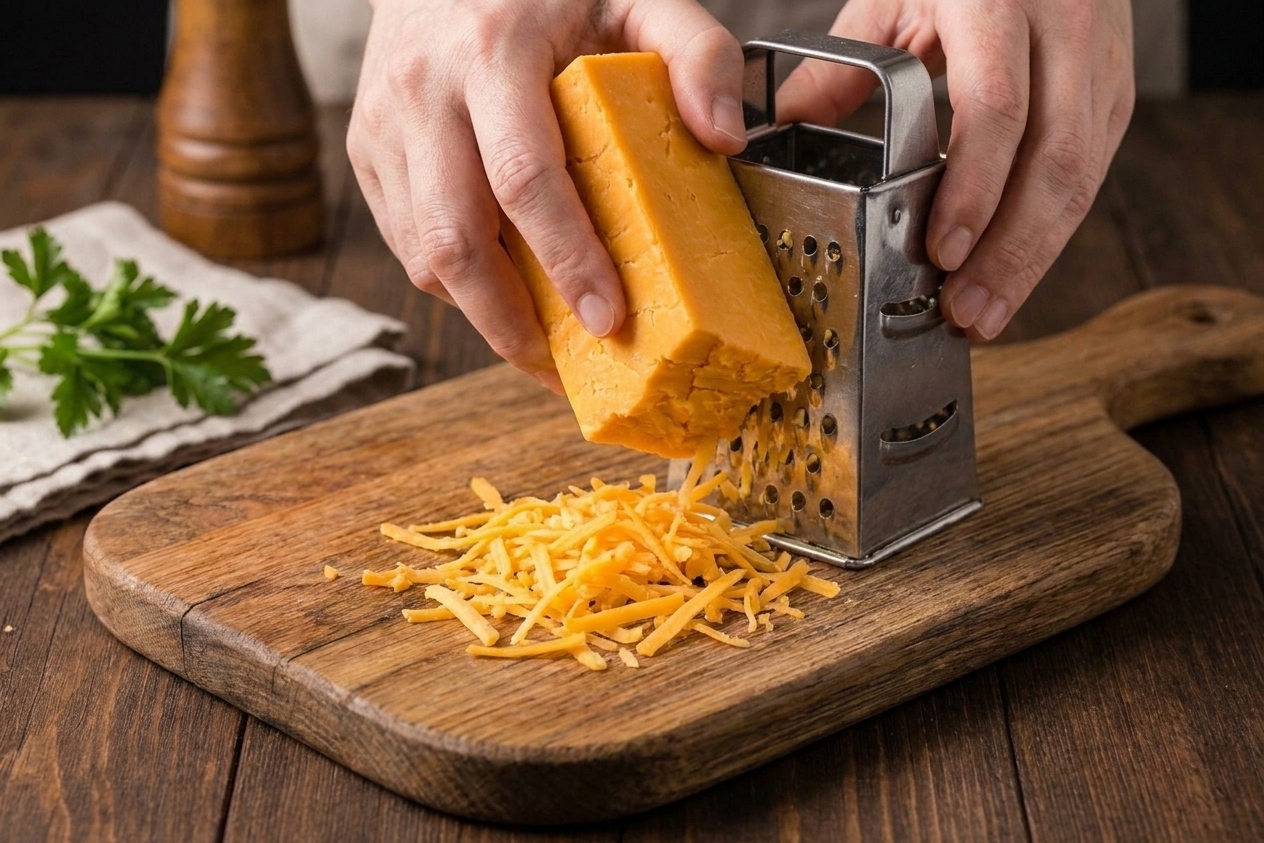
If you take one thing from this page, let it be this: grate your own cheese. It’s the simplest upgrade for better texture.
How to shred cheese easily
- Use the large holes on a box grater. Fine shreds melt fast, but they can mat together if you add them too quickly.
- Chill the cheese first. Cold cheese grates cleanly and doesn’t smear.
- Shred only what you need and keep it in the fridge until the moment you add it.
Pro move for extra-smooth melting
Toss your shredded cheese with 1 to 2 teaspoons of cornstarch before stirring it in. The cornstarch helps bind a little moisture and supports emulsification, which can reduce clumping. It’s especially helpful if you’re using a sharper, more aged cheddar.
Why pre-shredded can turn grainy
Pre-shredded cheese is convenient, and I’m not here to shame anyone’s weeknight shortcuts. But it’s important to know what you’re trading for that convenience.
Many bags of pre-shredded cheese are coated with anti-caking agents (often potato starch or cellulose) to keep the shreds from clumping in the bag. Depending on the brand, you may also be dealing with drier shreds or less melt-friendly formulations. In a hot, creamy soup, that combo can make the melt less smooth and more prone to clumping.
If you must use pre-shredded, choose the best-quality brand you can, keep the heat low, and add it slowly. It can work, it’s just less predictable.
Add cheese without clumps
Even perfect cheese can misbehave if it’s added the wrong way. Here’s my no-stress method:
- Take the pot off the heat or reduce to the lowest possible heat. Boiling is the enemy of smooth cheese.
- Add cheese a handful at a time, stirring until it melts before adding more.
- Stir gently to keep the emulsion stable. Vigorous agitation can sometimes encourage separation once the cheese is hot.
- Do not re-boil after adding cheese. Keep it at a bare simmer at most.
If your soup includes something acidic (a splash of wine, lots of Dijon, or anything tomato-based), add it before the cheese and keep it modest. Too much acid can make dairy more likely to separate.
My go-to picks
- Most classic: Sharp cheddar, freshly grated.
- Ultra-smooth and cozy: Mild cheddar plus a little Monterey Jack.
- “Grown-up” flavor: Sharp white cheddar plus a small handful of Gruyère.
- Using what’s in the fridge: Any combination of cheddar with one mellow melter, as long as you add it slowly over low heat.
FAQ
Can I use extra sharp cheddar?
Yes. Extra sharp cheddar tastes amazing, but it’s more likely to turn grainy if the soup is too hot. Lower the heat, add it gradually, and consider tossing the shreds with a bit of cornstarch first.
What if my soup turns grainy anyway?
First, lower the heat immediately. Sometimes you can smooth things out by stirring in a splash of warm milk or cream, then stirring gently. If it’s very grainy, an immersion blender can help, but it won’t always fix a fully “broken” cheese sauce. For next time: grate your own cheese, avoid boiling, and add cheese off heat.
Is Velveeta a good choice?
Velveeta melts extremely smoothly because it’s processed to do exactly that. If you love that texture, you can replace a small portion of the cheddar with it for insurance. Flavor-wise, I still prefer real cheddar as the main cheese.
What about American cheese?
Yes, in the same spirit as Velveeta. A slice or two of processed American cheese can help emulsify and smooth out the soup, especially if you are working with a very sharp cheddar. Keep it as a small portion so it does not take over the flavor.
Can I make this with just one cheese?
Absolutely. All sharp cheddar is a wonderful, classic choice. Blends simply make melting a little easier and can add a more complex flavor.
Bottom line
If you want the most reliable, classic broccoli cheddar soup: buy a block of sharp cheddar and shred it yourself. If you want the silkiest melt with minimal fuss: use a blend by pairing mostly cheddar with a melt-friendly helper like Monterey Jack, fontina, or a little Gruyère.
And if you remember nothing else, remember this: low heat, slow cheese, lots of stirring love.