

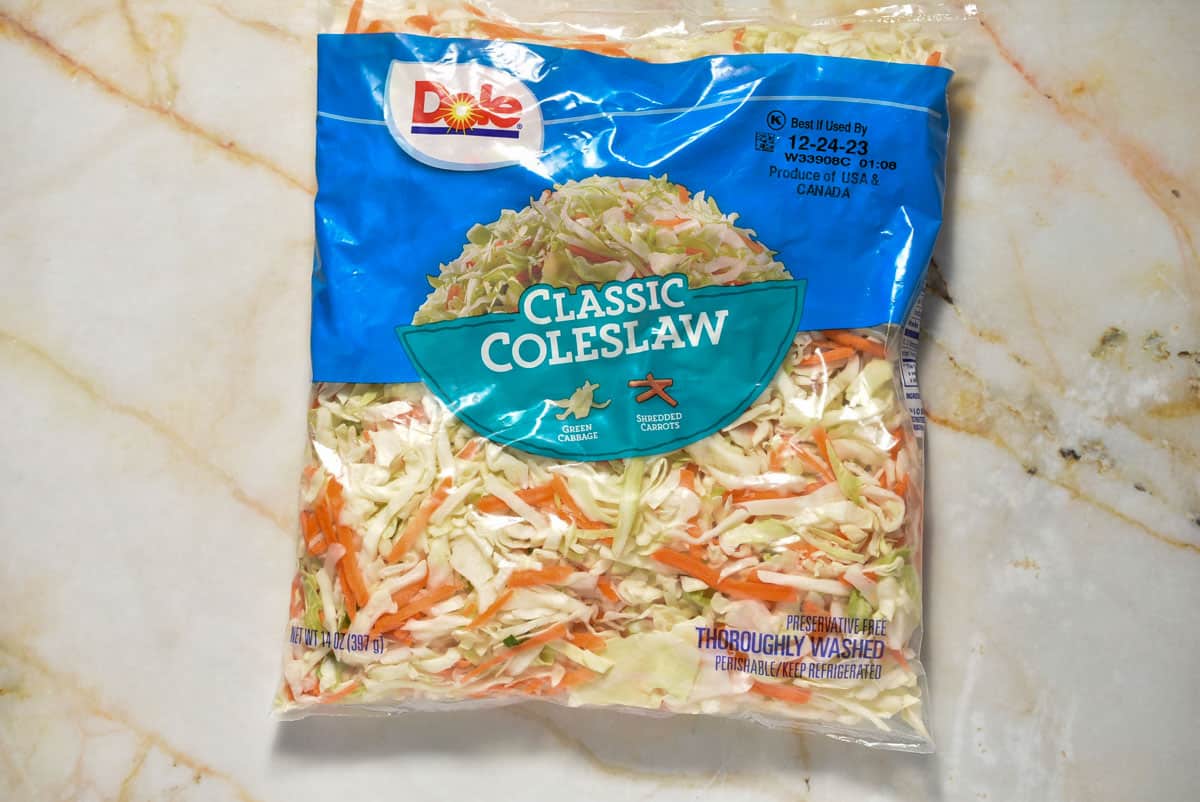
I love a good coleslaw moment. It is the quiet hero next to pulled pork, grilled chicken, fish tacos, and basically anything that comes off a smoky backyard grill. But at the grocery store, I always pause in the produce aisle: do I grab the bagged coleslaw mix for speed, or a whole head of cabbage for maximum crunch?
Both can make fantastic slaw. The difference is mostly about moisture, shred size, and how the slaw behaves after you dress it. Here’s how I decide, plus a few tricks to get the best texture either way.

At a glance
If you want the quick answer, here’s my real-life rule of thumb:
- Buy bagged mix when you need slaw on the table fast, you’re cooking on a weeknight, or you only need a small amount.
- Buy a head of cabbage when crunch is the priority, you want control over shred thickness, or you’re making slaw for a crowd.
Now let’s break down what actually changes between the two options.
Moisture matters
Bagged coleslaw mix
Bagged mix is pre-shredded, which means the cabbage has more cut surface area sitting in the bag. Even when it looks fresh, it can carry a little extra moisture from the shredding process and from natural juices that collect during storage.
What that means for your slaw: once you add dressing, bagged mix tends to release water faster. The slaw can look “wet” sooner, especially if the shreds are thin.
Head of cabbage
A whole head stays intact until you cut it, so it holds onto its crisp texture and internal moisture balance better. When you shred it yourself, it usually starts drier and sturdier.
What that means for your slaw: freshly shredded cabbage generally stays snappier after dressing and is less likely to get watery quickly.
Shred size
Bagged coleslaw mix
Most bagged mixes are cut into fairly thin, short shreds designed to be tender and easy to eat. Many bags also include carrots, and some include red cabbage for color.
The upside: consistent, ready-to-go texture with zero knife work.
The downside: you’re stuck with the cut. If you like thicker shreds with extra crunch, bagged mix can feel a little soft once dressed.
Head of cabbage
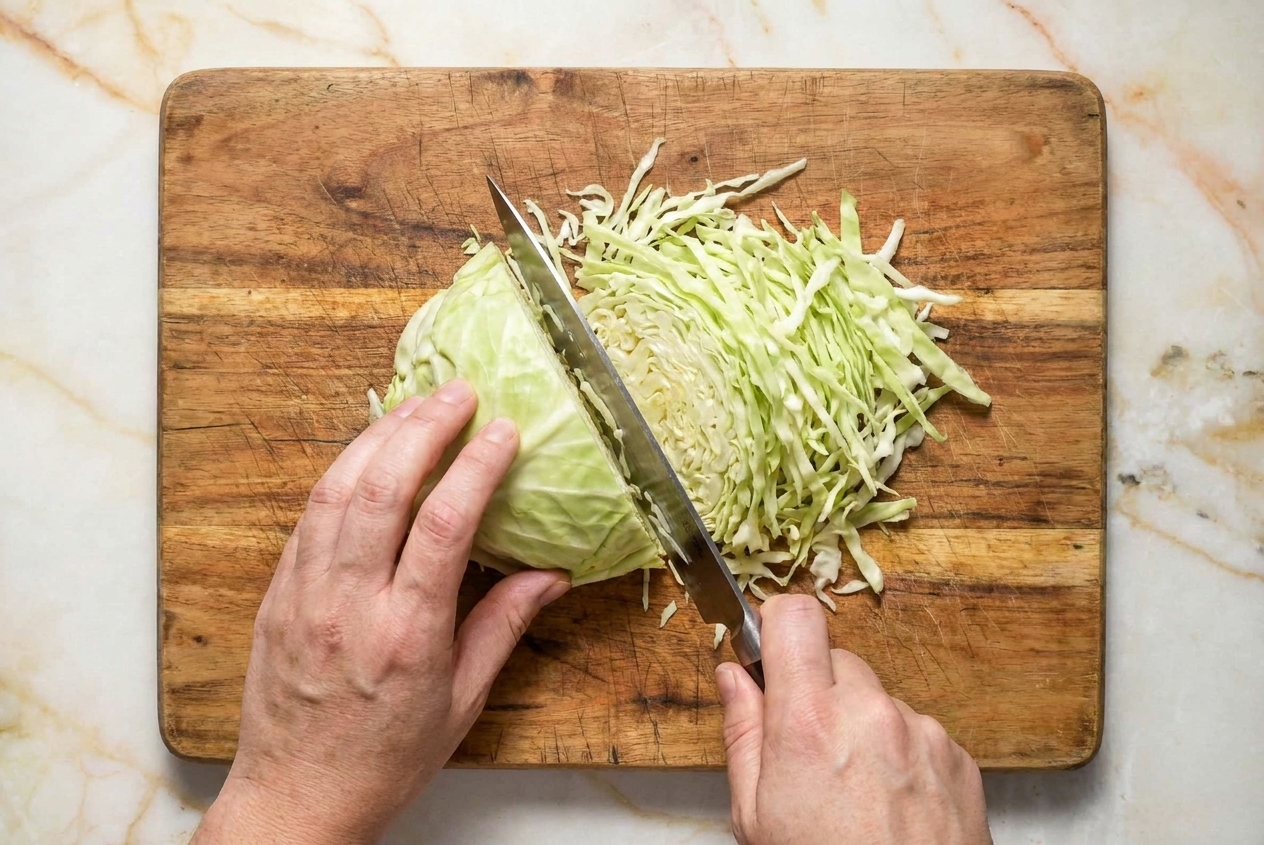
This is where a whole head shines. You can go thin and delicate for a more tender slaw, or thicker and hearty for that steakhouse-style crunch. You can also decide if you want all green cabbage, a mix of green and red, or add carrots yourself.
My personal preference: for creamy slaw textures, I like a medium shred. Thin enough to scoop easily, thick enough to stay crisp.
How long it stays crisp
Setting dressing style aside, let’s talk in general texture terms. Any slaw starts to soften once dressing hits the cabbage because salt (and to a lesser extent acidic dressings) encourages moisture release over time.
Bagged mix after dressing
- Softens sooner because the shreds are often thinner and already a bit stressed from pre-cutting.
- Gets watery sooner because extra moisture in the bag plus more cut edges means more liquid release.
- Best for: serving fairly soon after mixing, or using a technique like drying the mix first (more on that below).
Head of cabbage after dressing
- Stays crunchy longer because you cut it fresh and can choose a thicker shred.
- Holds structure better in the bowl, which is especially nice for potlucks where slaw sits out a bit before everyone eats.
- Best for: make-ahead prep where you still want good texture at serving time.
When bagged mix wins
I buy bagged mix all the time, with zero guilt. It’s a smart shortcut when you use it intentionally.
- You need slaw fast: if dinner is in 20 minutes, pre-shredded wins.
- You’re only making a small amount: a bag is often just right for a quick side without committing to a whole cabbage.
- You want built-in color: many blends include carrots and red cabbage, which makes the bowl look instantly more vibrant.
- You’re short on tools or space: no cutting board, no big knife, no cleanup.
- You’re making slaw for sandwiches: thin shreds tuck into buns beautifully and feel more “deli style.”
Maya tip: if you want extra crunch, choose a bag that looks like it has slightly thicker shreds, and skip bags with lots of tiny broken bits at the bottom.
Fix bagged mix texture
If you’ve ever made bagged mix and thought, “Why is this kind of wet already?” this is for you.
1) Dry it well
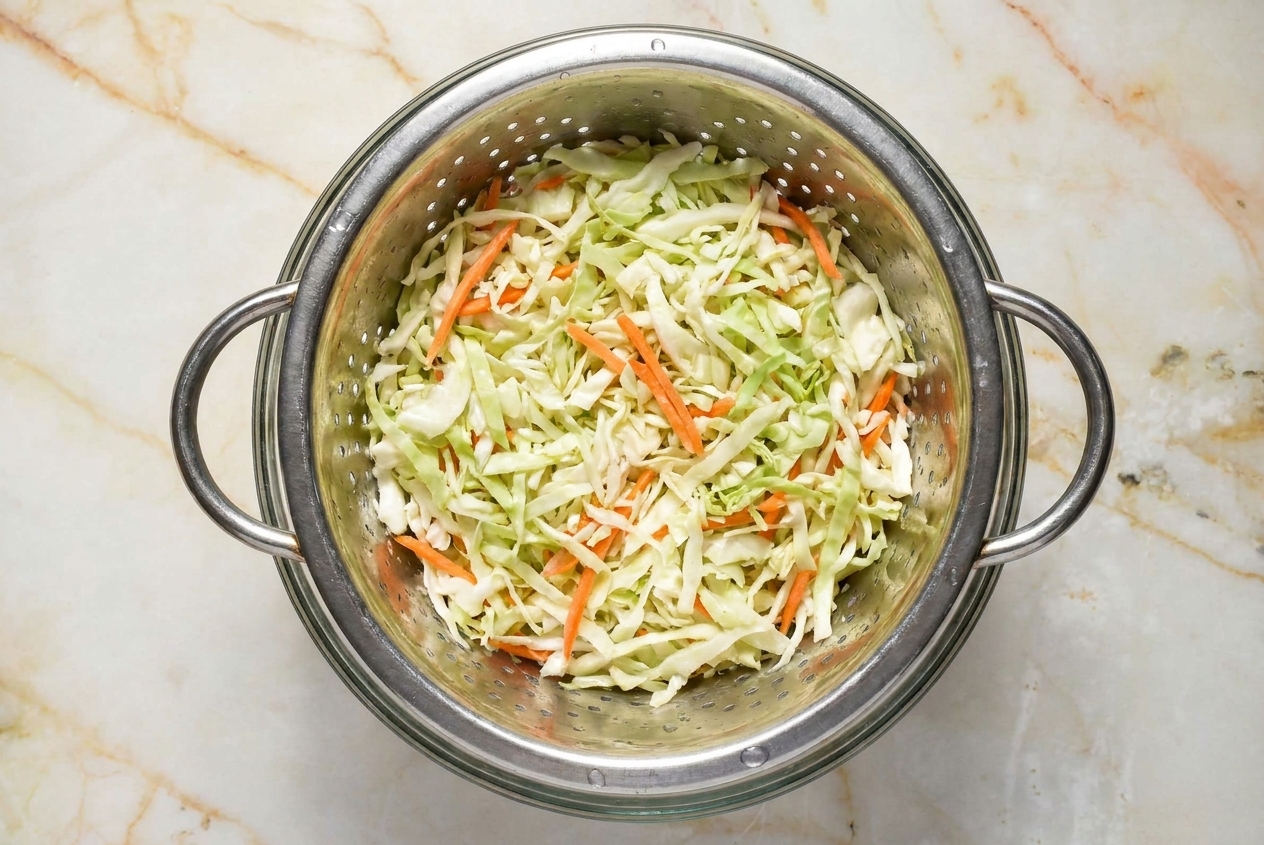
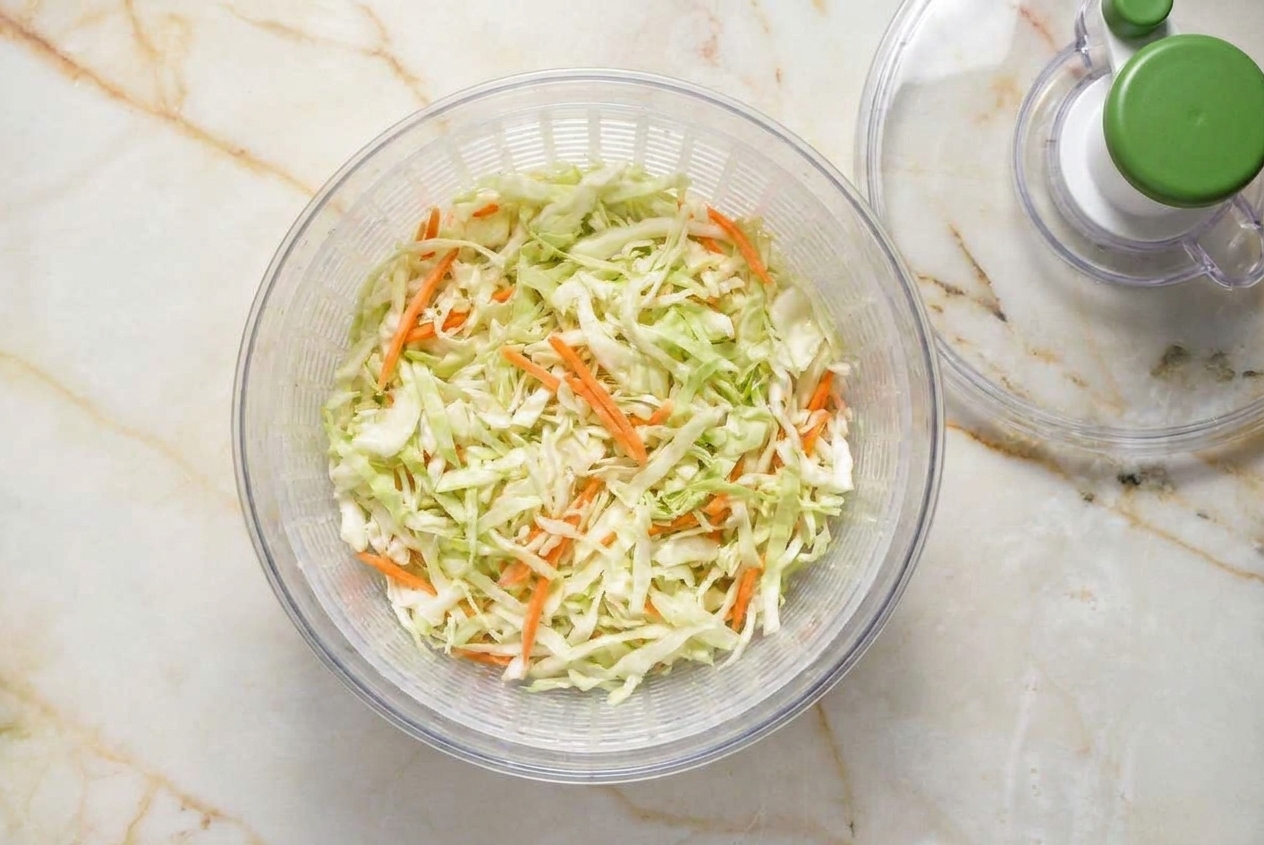
Open the bag and dump the mix into a salad spinner or a colander. Give it a quick spin, or let it sit and drain for a few minutes. Then blot with a clean kitchen towel or paper towels.
2) Toss, then pause
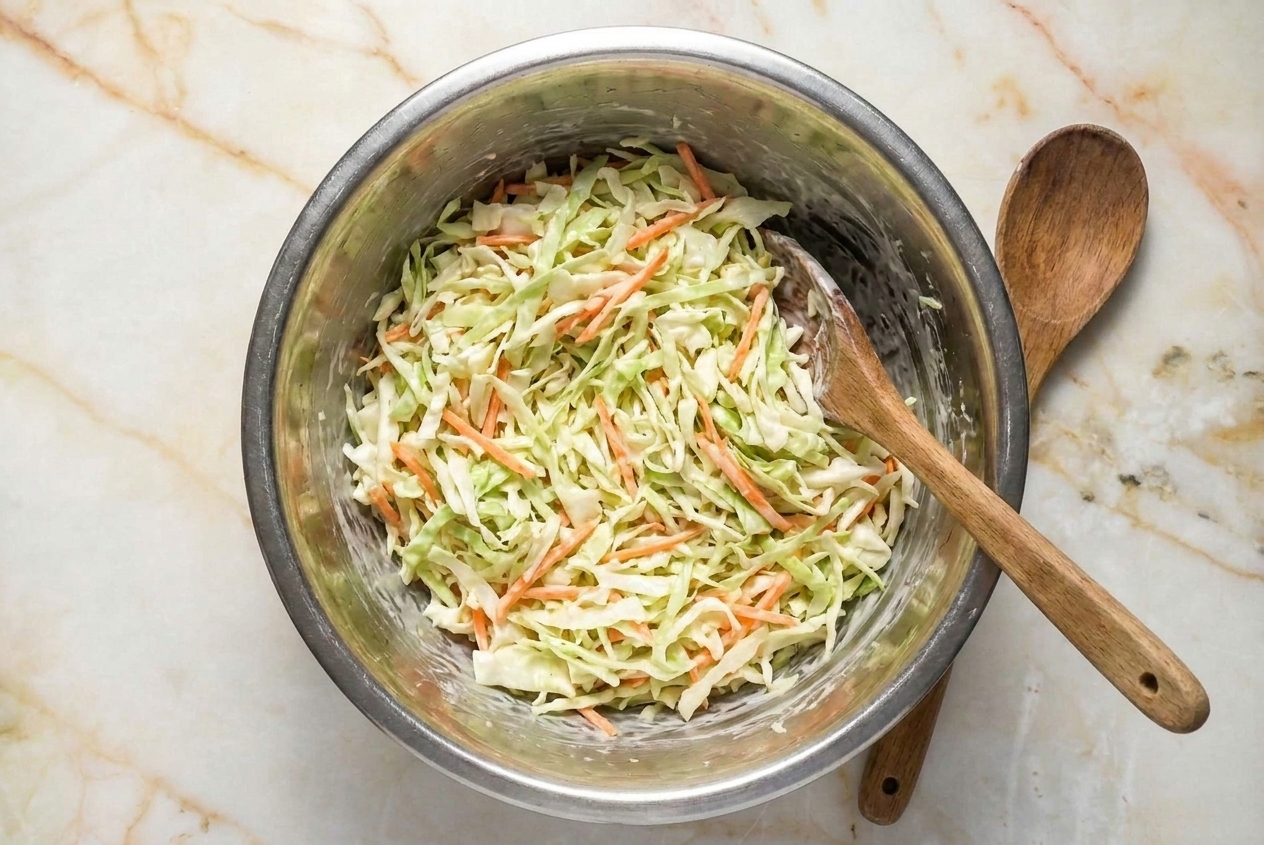
After you mix in dressing, let the slaw sit for 5 to 10 minutes, then toss again. This redistributes any liquid that starts to pool at the bottom so it coats the cabbage more evenly instead of turning into a puddle.
When a head of cabbage wins
If you’re chasing that ultra-crisp, just-cut bite, a head of cabbage is hard to beat.
- You want maximum crunch: freshly cut cabbage has a springy snap that lasts.
- You want control: you choose the thickness, length, and overall texture.
- You’re feeding a crowd: cabbage is economical, and a medium head can yield roughly 8 to 10 cups shredded.
- You like to prep components: you can shred exactly what you need and keep the rest of the cabbage intact for other meals.
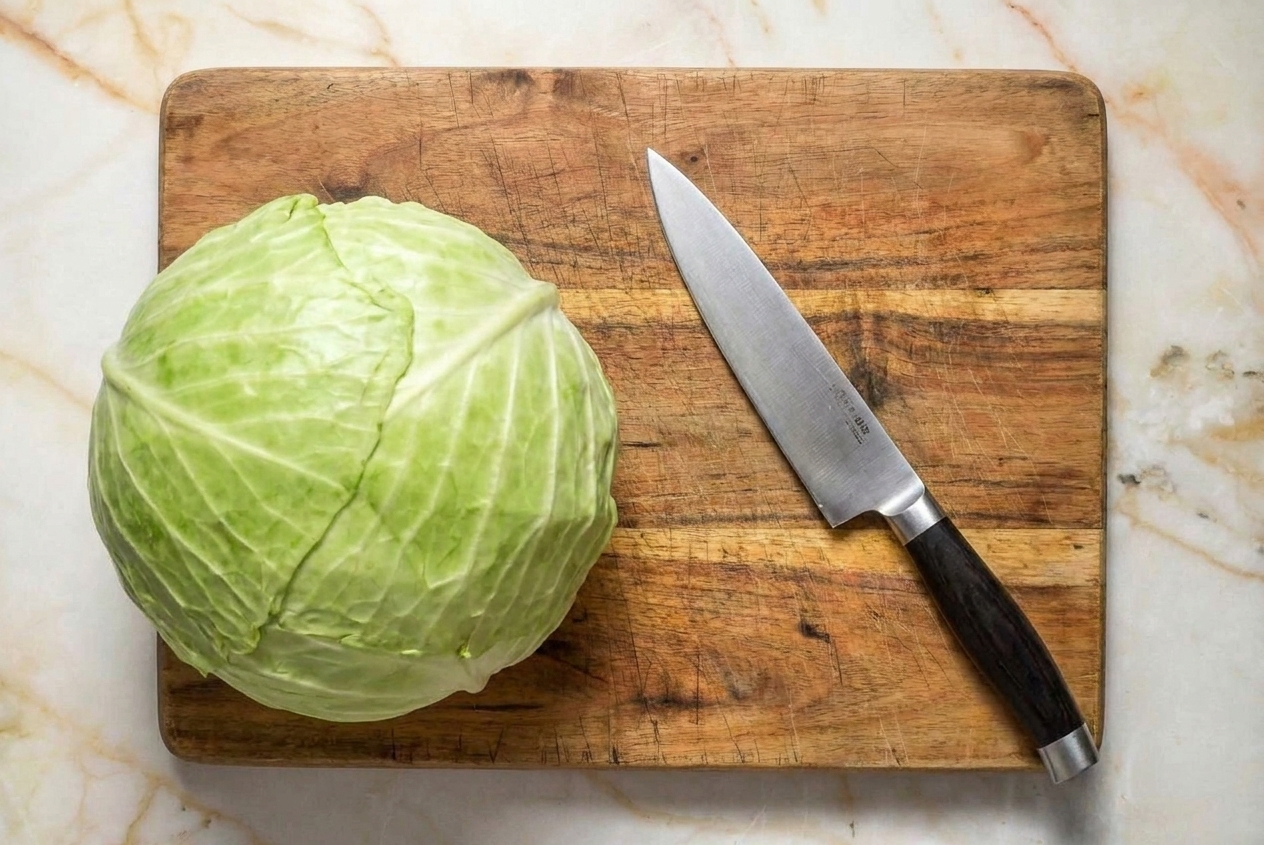
Maya tip: if you want a really clean shred without fuss, slice the cabbage into wedges, remove the core from each wedge, then lay a wedge flat and slice across it. It’s stable and fast, even on a weeknight.
What to look for at the store
Choosing a bag
- Look for dry leaves: avoid bags with lots of condensation or visible pooled liquid.
- Check for browning: browned edges mean the cabbage has started oxidizing.
- Scan the bottom: too many tiny fragments can turn mushy quickly once dressed.
- Trust your nose: if it smells off, sulfur-y, or feels slimy, skip it.
- Avoid puffed bags: an inflated bag can be a sign the contents are past their prime.
Choosing a cabbage
- Pick it up: it should feel heavy for its size.
- Look for tight leaves: tight, compact heads stay crisper.
- Avoid splits and limp outer leaves: minor scuffs are fine, but big cracks can mean faster drying.
Storage and make-ahead tips
Bagged coleslaw mix
- After opening: squeeze out excess air, reseal tightly, and keep it cold. Use it as soon as you can for the best crunch.
- Keep it dry: if there’s visible moisture in the bag, spin or blot before storing again.
Head of cabbage
- Store the head: keep it whole until you’re ready to shred.
- Store a cut wedge: wrap it tightly so the cut side doesn’t dry out, then refrigerate.
Make-ahead slaw without the sog
If you want to prep early, keep the cabbage and dressing separate and toss shortly before serving. For extra insurance, lightly salt the shredded cabbage, let it sit 15 to 30 minutes, then drain and pat dry before dressing.
Quick questions
Is bagged coleslaw mix just cabbage?
Most mixes are mostly green cabbage plus carrot, and sometimes red cabbage. Ingredients vary by brand, so if you’re trying to match a specific texture or color, check the front of the bag and the ingredient list.
Does bagged mix taste different than fresh-shredded cabbage?
It can. Pre-shredded cabbage is more exposed to air, so it may taste a little more “vegetable-forward” and less sweet-crisp than freshly cut. Dressing and seasoning cover a lot, but if you’re sensitive to flavor, a head of cabbage usually tastes fresher.
Can I mix the two?
Absolutely. This is one of my favorite shortcuts for parties: use a bag for speed, then add a couple handfuls of freshly shredded cabbage for extra crunch and a more homemade texture.
Should I rinse bagged coleslaw mix?
Usually, no. If it looks fresh and smells clean, I just dry it well. If it smells off or feels slimy, I discard it instead of trying to rinse it back to life.
Which is better for super-fine slaw?
If you want very fine, uniform shreds, bagged mix is convenient. If you want fine shreds but extra crispness, a head of cabbage plus a sharp knife gives you the best of both worlds.