Dinner in 15 minutes is possible. Here are 10 cozy, kid-friendly recipes with smart shortcuts and big flavor, plus swap ideas for picky eaters.
Recipeva
Ultimate Glazed Meatloaf (Never Dry)
This glazed meatloaf stays juicy every time thanks to the right meat-to-fat ratio, a simple panade, gentle mixing, and a tangy-sweet staged glaze. Foolproof, comforting, and weeknight-friendly.

Maya Reynolds
Maya Reynolds is a passionate home cook, recipe developer, and the creative voice behind Recipeva. With over a decade of experience translating complex culinary techniques into approachable weeknight meals, she focuses on creating dishes that bring joy to the dinner table without the stress.
Created September 21, 2026
Updated September 21, 2026
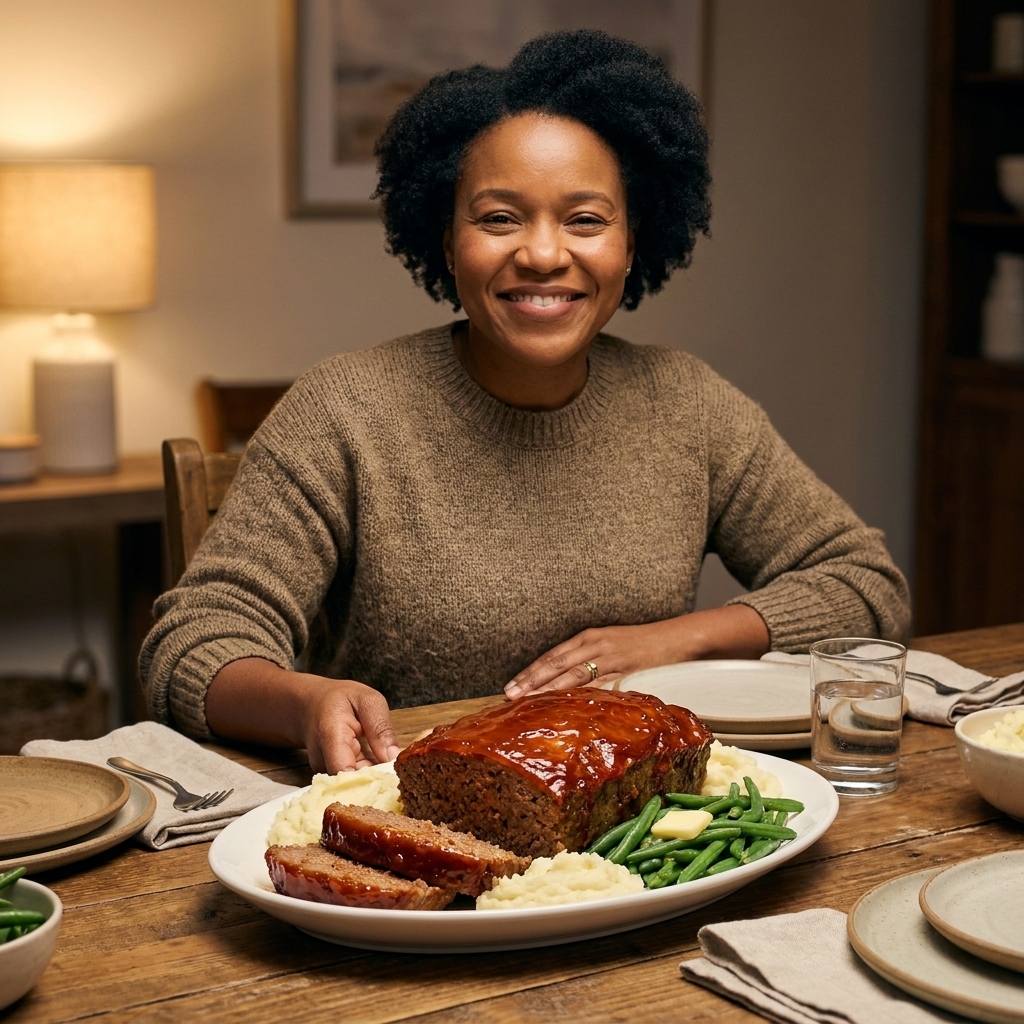
Meet your forever meatloaf
If you have ever had meatloaf that was dry, crumbly, or weirdly dense, I have good news: it is not you. It is usually just a little balance issue with fat, moisture, mixing, and bake time. This is my ultimate glazed meatloaf recipe, the one I make when I want cozy comfort food that slices cleanly but stays tender and juicy.
We are going to use a simple kitchen science approach: the right meat-to-fat ratio, a quick panade (fancy word, easy trick), gentle mixing, and a two-stage glaze so it bakes into that glossy, tangy-sweet coat that makes everyone sneak the end pieces.
The science of juicy meatloaf
1) The right meat-to-fat ratio
Dry meatloaf is often too lean. For reliably juicy results, aim for 80/20 ground beef (that is 80 percent lean, 20 percent fat). You can also do a blend like 85/15 beef plus a little pork, but if you only buy one thing, buy 80/20 beef and call it a day.
- Too lean (90/10): bakes up tight and dry because there is not enough fat to lubricate the proteins as they firm up.
- Just right (80/20): tender, moist, flavorful, still slices beautifully.
- Too fatty (70/30): can shrink a lot and feel greasy unless balanced carefully.
2) Panade: moisture insurance
A panade is simply breadcrumbs mixed with liquid (milk, broth, even yogurt in some recipes). The breadcrumbs soak up liquid and hold onto it while the meat cooks, which helps prevent that “sawdust loaf” problem. In this recipe we use panko + milk. It takes 2 minutes and makes a huge difference.
3) Gentle mixing keeps it tender
When ground meat is mixed aggressively, proteins link up and the loaf turns springy and dense. Mix just until everything is evenly distributed. I like to use my hands, but think “fold and squeeze lightly,” not “knead bread dough.”
4) Temperature beats the clock
Meatloaf is done when it hits the right internal temperature in the center, not when the timer says so. For beef meatloaf, bake to 160°F in the thickest part, then rest it. A little carryover cooking can happen while it rests, and that is exactly why pulling it at the right moment matters.
Ingredients
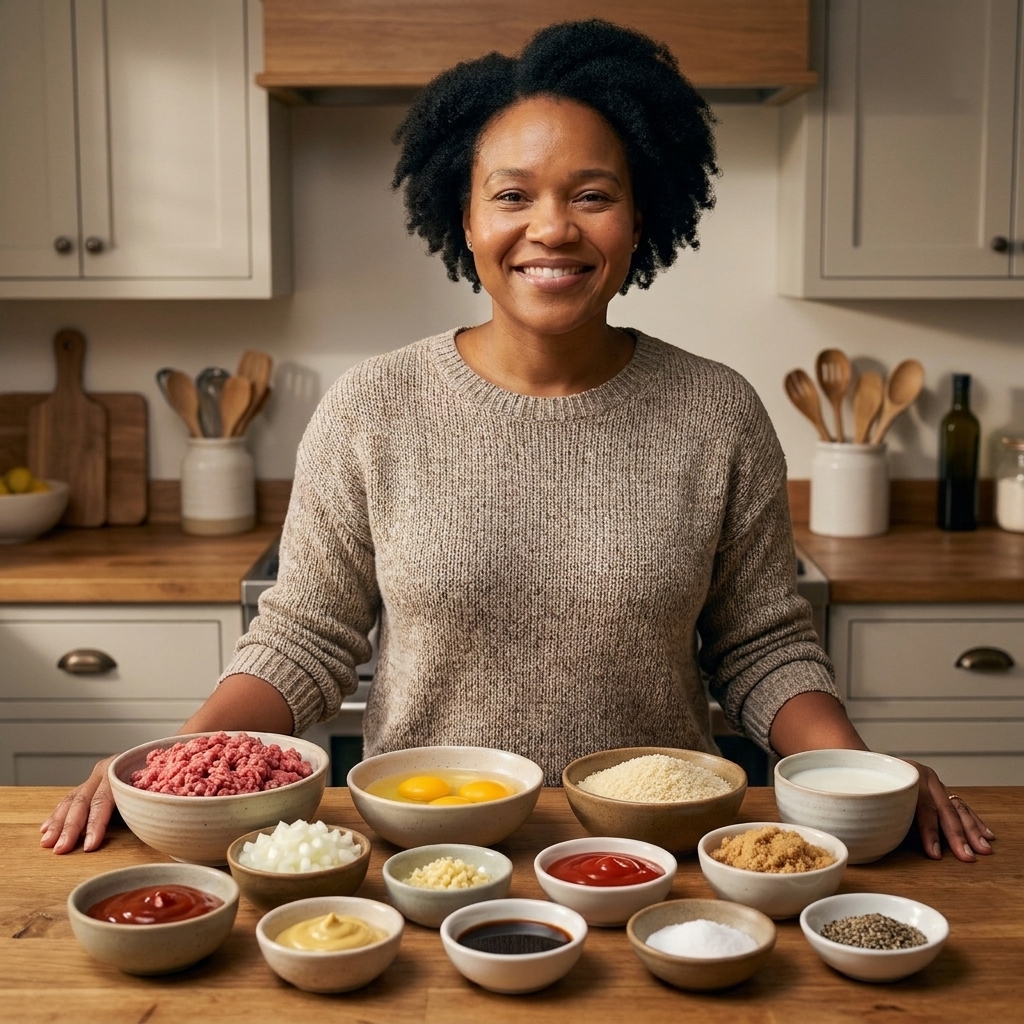
For the meatloaf
- 2 pounds ground beef 80/20
- 1 cup panko breadcrumbs
- 1/2 cup milk
- 2 large eggs
- 1 small yellow onion, finely grated or very finely minced
- 4 to 6 garlic cloves, minced (yes, really)
- 2 tablespoons Worcestershire sauce
- 1 tablespoon Dijon mustard
- 1 1/2 teaspoons kosher salt
- 1/2 teaspoon black pepper
- 1 teaspoon smoked paprika (optional but lovely)
For the tangy glaze
- 1/2 cup ketchup
- 2 tablespoons brown sugar
- 1 tablespoon apple cider vinegar
- 1 tablespoon Dijon mustard
- 1 teaspoon Worcestershire sauce
- 1/4 teaspoon garlic powder (optional)
Ingredient note: Grating the onion seems fussy, but it is the sneakiest moisture trick. It melts into the loaf and adds tons of flavor without chunks that fall out.
Easy swaps: No panko? Use fine dry breadcrumbs, crushed crackers, or quick oats. No dairy milk? Use an unsweetened non-dairy milk or broth.
How to make it
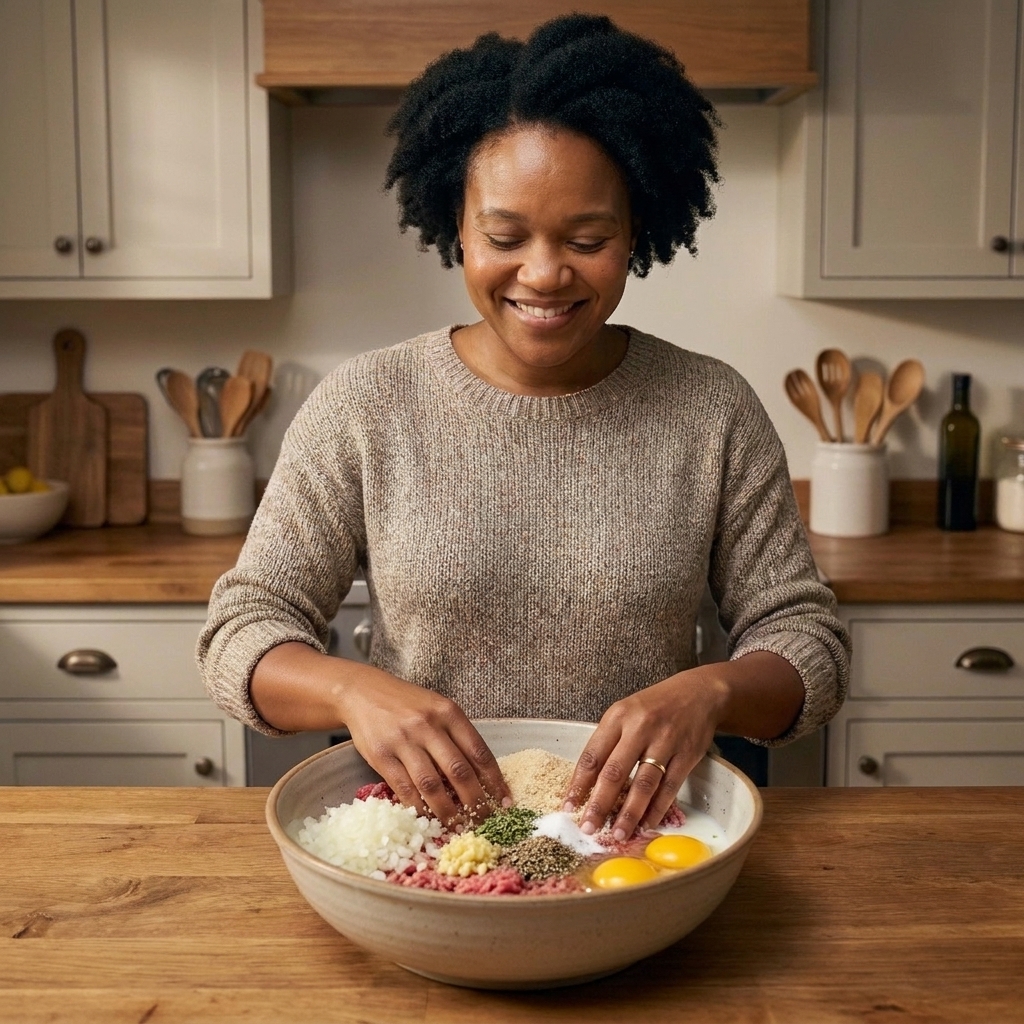
1) Prep the oven and pan
Heat oven to 375°F. Line a rimmed baking sheet with foil for easy cleanup, then set a wire rack on top if you have one. A rack helps fat drip away so the loaf roasts instead of steaming.
No rack? Shape the loaf on foil or parchment and crimp the foil up around it a bit to create a small “moat” for the drippings.
2) Make the panade
In a large bowl, stir together panko and milk. Let it sit for 2 to 3 minutes until the crumbs look evenly hydrated.
3) Add seasonings and binders
To the same bowl, add eggs, grated onion, garlic, Worcestershire, Dijon, salt, pepper, and paprika (if using). Stir until well combined.
4) Mix in the beef gently
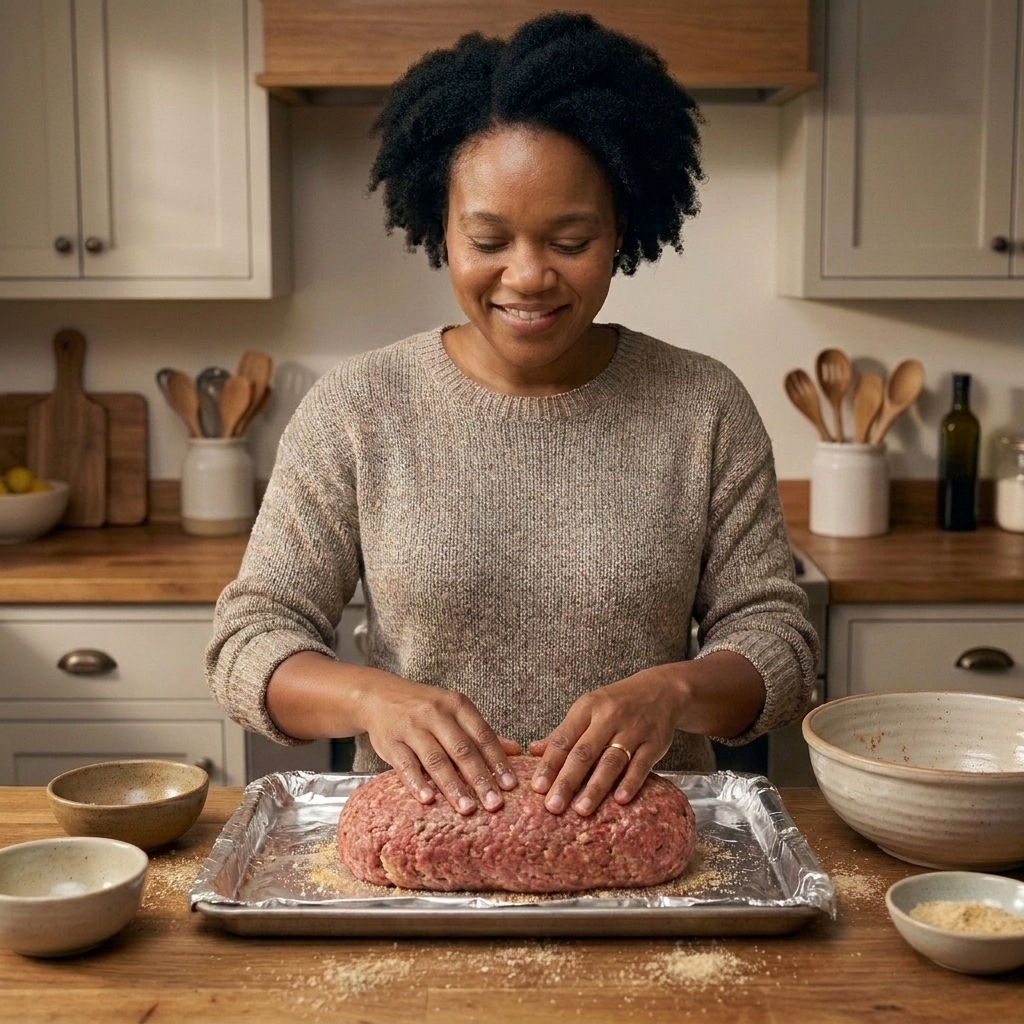
Add ground beef and use your hands to mix just until everything looks evenly distributed. Stop the moment it comes together.
5) Shape for even baking
Turn the mixture onto the prepared rack or sheet and shape into a loaf about 9 inches long and 4 inches wide. A flatter, free-form loaf cooks more evenly and gives you more glaze surface area, which is never a bad thing.
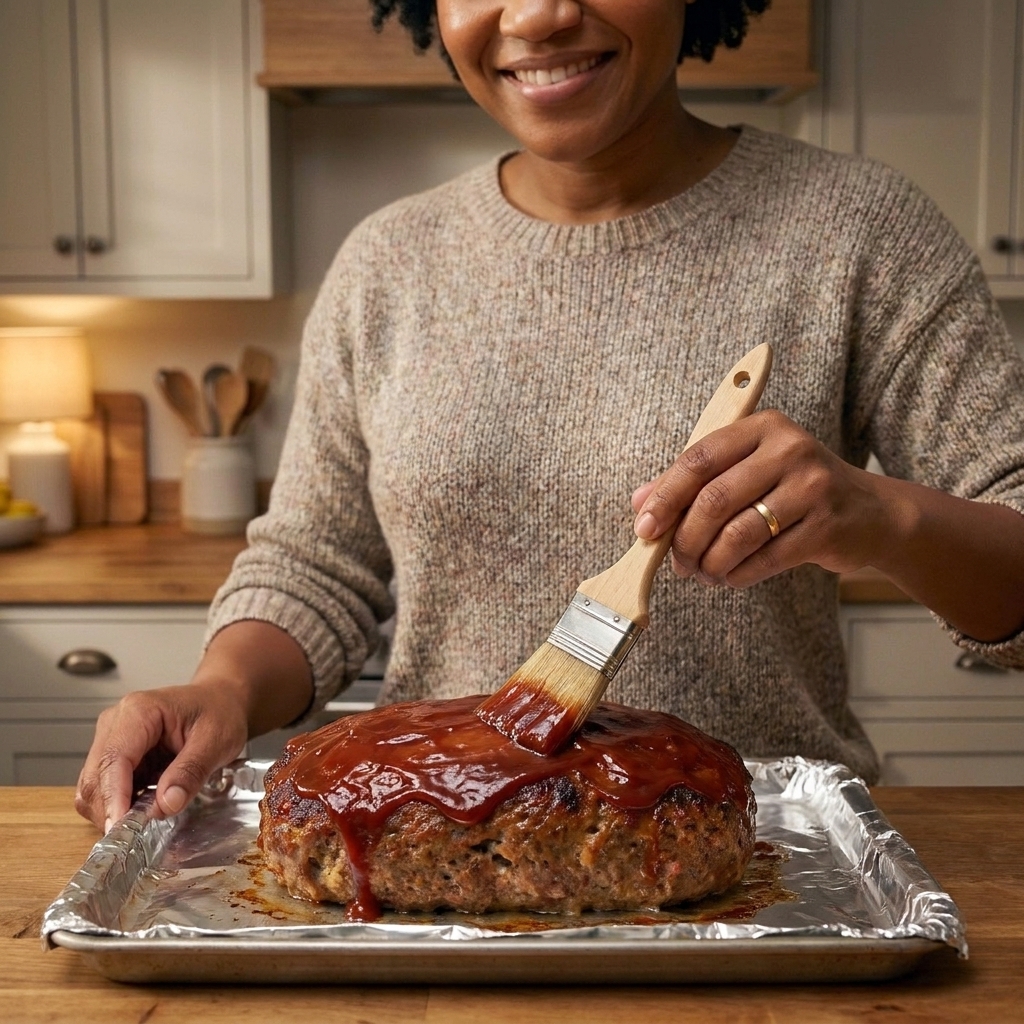
6) Bake with a staged glaze
Whisk glaze ingredients in a small bowl.
- Bake meatloaf 20 minutes (uncovered).
- Brush with about 1/3 of the glaze and bake 15 minutes.
- Brush with another 1/3 of the glaze and bake 10 to 20 minutes more, until the center reaches 160°F.
- Brush with the remaining glaze right when it comes out, for extra shine.
Timing tip: Start checking the internal temp around the 45-minute mark, especially if your loaf is a little flatter or your oven runs hot.
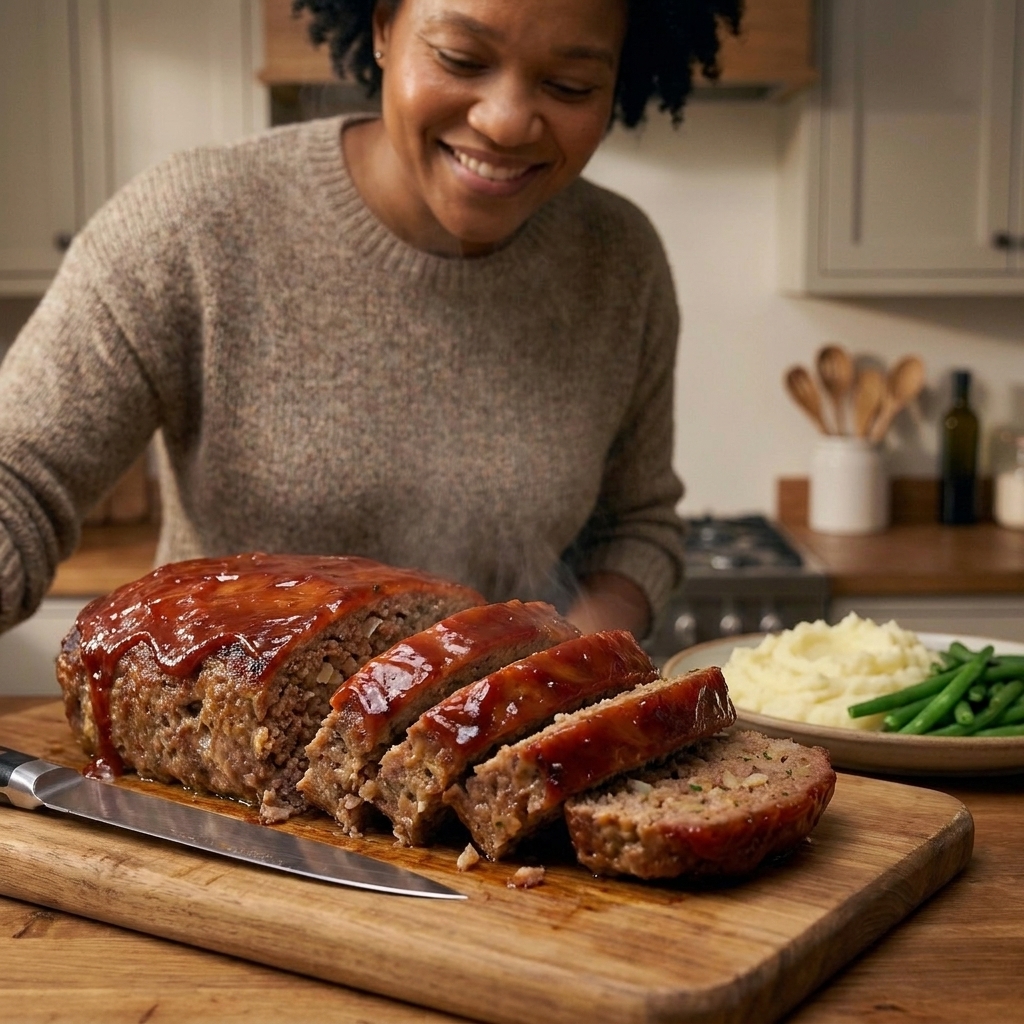
7) Rest, then slice
Let the meatloaf rest for 10 to 15 minutes before slicing. Resting keeps the juices inside the loaf instead of on the cutting board.
Thermometer tip: Insert the thermometer into the thickest part of the loaf and aim for the center, not the pan or rack.
Glaze tips
This glaze is balanced: sweet from brown sugar, tangy from vinegar and mustard, savory from Worcestershire. If you like it:
- Sweeter: add 1 more tablespoon brown sugar.
- Tangier: add 1 more teaspoon vinegar.
- Spicier: whisk in a pinch of cayenne or a little hot sauce.
Why glaze in stages? A single thick layer can slide off early in baking. Building it up creates that sticky, lacquered finish that clings.
Keep it juicy
- Use 80/20 beef (or add pork if using leaner beef).
- Do not skip the panade. It is your moisture buffer.
- Grate the onion for moisture and even texture.
- Mix gently and stop as soon as it comes together.
- Bake free-form on a sheet or rack for better texture and even cooking.
- Use a thermometer and pull at 160°F in the center.
- Rest before slicing, always.
Make ahead and store
Make ahead
You can assemble and shape the loaf up to 24 hours ahead. Cover tightly and refrigerate. Let it sit on the counter for 20 to 30 minutes before baking so it starts cooking evenly. Mix the glaze and refrigerate separately.
Store leftovers
Refrigerate slices in an airtight container for up to 4 days.
Freeze
- Unbaked: Shape the loaf, wrap well, and freeze up to 3 months. Thaw overnight in the fridge before baking.
- Baked: Cool completely, slice, and freeze in a single layer before transferring to a freezer bag.
Reheat without drying
Warm slices in a covered dish at 325°F with a tiny splash of broth, or microwave gently at 50 to 70 percent power. Add a little extra ketchup or reserved glaze if you want that just-baked vibe.
Serving ideas
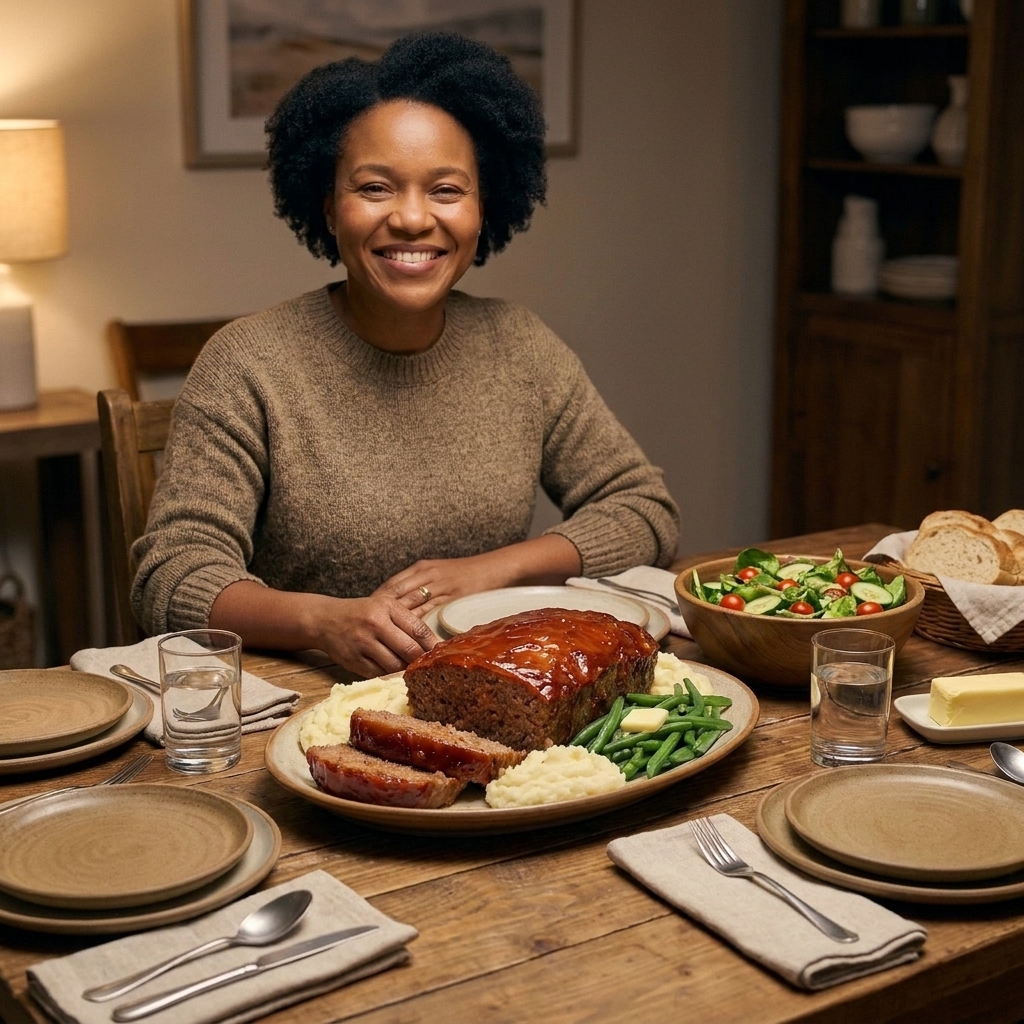
- Classic: mashed potatoes and green beans
- Cozy upgrade: buttered egg noodles and roasted broccoli
- Sandwich night: thick slices on toasted bread with extra glaze and pickles
- Fresh balance: a crisp vinaigrette salad and roasted carrots
Troubleshooting
Why did my meatloaf fall apart?
Common causes are not enough binder (eggs/panade), onion pieces that are too large, overmixing, or slicing before resting. This recipe is built to slice well, but give it that 10 to 15 minute rest.
Why is it greasy?
Either the beef was extra fatty or the loaf baked in a pan where it sat in rendered fat. Try the rack method or shape it free-form on a sheet.
Can I use turkey instead?
You can, but turkey is leaner and dries faster. If you swap, use dark meat ground turkey if possible, and add 2 tablespoons olive oil or a little grated zucchini for extra moisture.
What internal temp should it be?
For a beef meatloaf like this, bake to 160°F in the center, measured in the thickest part with an instant-read thermometer.
Ultimate glazed meatloaf
Yield: 6 to 8 servings
Time: 15 minutes prep, 55 to 70 minutes bake, 10 to 15 minutes rest
Instructions
- Heat oven to 375°F. Line a rimmed baking sheet with foil. Add a wire rack if you have one.
- In a large bowl, stir together panko and milk. Rest 2 to 3 minutes.
- Add eggs, onion, garlic, Worcestershire, Dijon, salt, pepper, and paprika. Stir until combined.
- Add ground beef. Mix gently just until evenly combined.
- Shape into a loaf (about 9 x 4 inches) on the rack or sheet.
- Whisk glaze ingredients in a bowl.
- Bake 20 minutes. Brush with 1/3 glaze. Bake 15 minutes. Brush with another 1/3 glaze. Bake 10 to 20 minutes more, until the center reaches 160°F. Start checking around the 45-minute mark.
- Brush with remaining glaze. Rest 10 to 15 minutes. Slice and serve.
Maya tip: If you want extra crisp edges, shape the loaf a little flatter and wider. More surface area equals more glaze and more caramelized bits. Nobody complains about that.